ADHD Waiting Mode: Why a 3 p.m. Appointment Eats the Whole Day
ADHD waiting mode is when one afternoon appointment freezes your entire day. Here's the science of why waiting feels unbearable, and what actually helps.
By Kurt Woleret
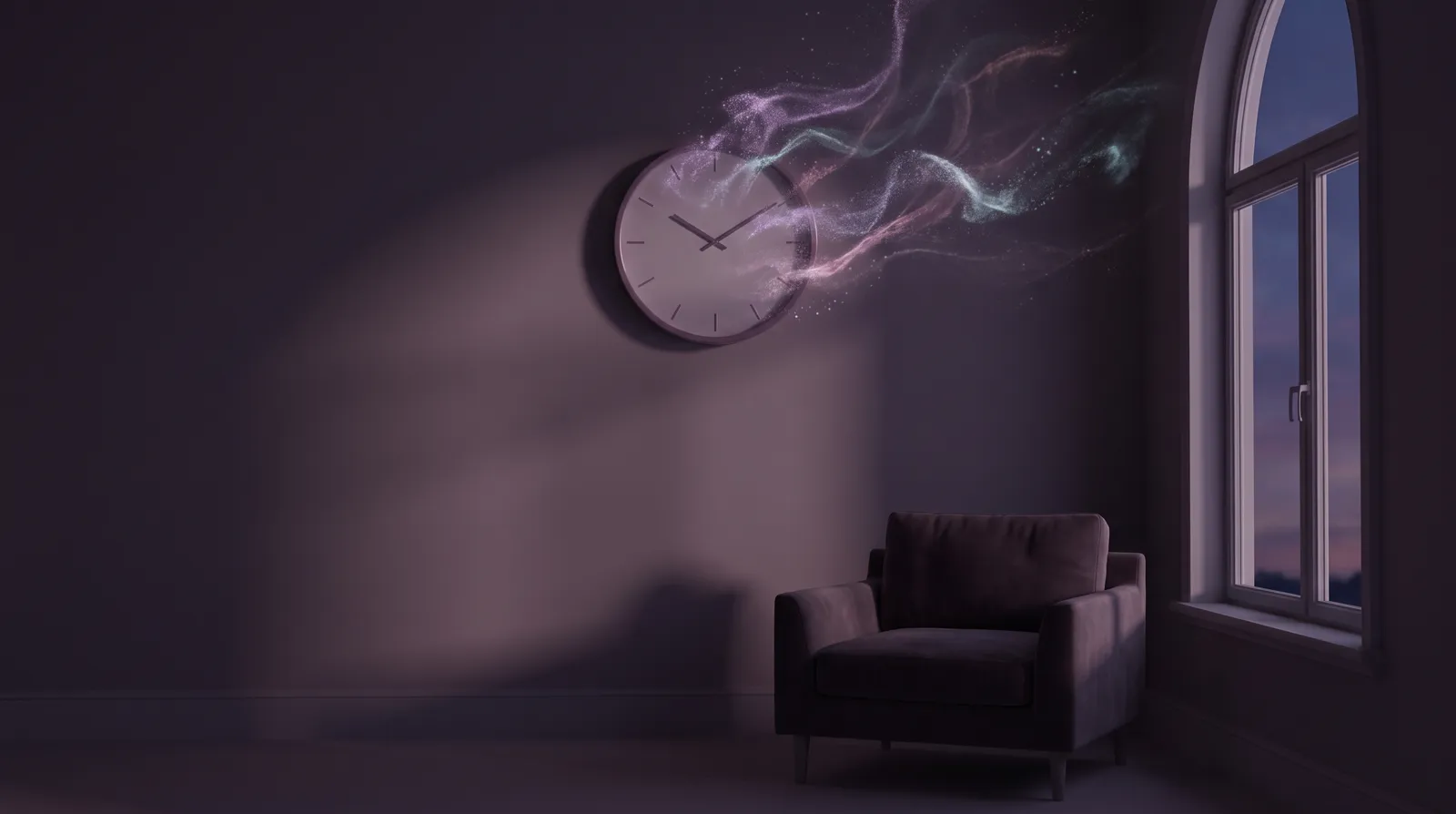
Today I have a dentist appointment at 3 p.m. It is currently 9:40 a.m., and I have accomplished the following: I have thought about the dentist. That's the list. There are five and a half open hours between me and a routine cleaning, hours in which I could write, run errands, or finally deal with the box that has been the centerpiece of my apartment since March. Instead I'm orbiting the appointment like it's a small sun. If you have ADHD, you know this state intimately. The internet calls it waiting mode: one scheduled thing later in the day, and every hour before it becomes unusable. It looks irrational from outside. It has an internal logic worth understanding, because understanding it is most of the fix.
What waiting mode actually is
Waiting mode is the inability to engage with anything else while a future commitment is pending. Not reluctance. Inability, or close to it. You can't start the report, because the dentist. You can't watch a movie, because the dentist. The appointment isn't even unpleasant; the waiting itself is the problem. What you do instead is a strange vigil: checking the clock, re-reading the confirmation email, doing tiny tasks that don't count, maintaining a low hum of readiness for an event that needs zero preparation beyond leaving the house at 2:30. It's the cognitive equivalent of standing by the door with your coat on for six hours.
Two gears grinding: time blindness and delay aversion
Two well-documented features of the ADHD brain conspire here. The first is time perception. ADHD makes the felt distance to a future event unreliable: 3 p.m. isn't experienced as five hours away, it's experienced as looming, now-adjacent, already almost happening. If you can't feel the size of the gap, you can't confidently fit anything inside it. Starting a two-hour task inside what your brain insists is a ten-minute window feels reckless, so you don't.
The second gear is older in the literature. Research going back decades found that children with hyperactivity didn't simply fail to wait; they organized their choices around escaping delay, finding the experience of waiting itself aversive (Sonuga-Barke et al., 1992, Journal of Child Psychology and Psychiatry). That framing, delay aversion, holds up as one of the core motivational features of ADHD. Waiting isn't neutral dead time for this nervous system; it's actively uncomfortable, something to be escaped or, failing that, endured with full attention. Which explains the vigil. You're not wasting the day around the appointment. Your brain is spending the day managing the discomfort of an open delay, and that management is a full-time job.
It's the cognitive equivalent of standing by the door with your coat on for six hours.
Why 'just do something' doesn't work
The standard advice, use the time, it's five whole hours, misunderstands the machine. Engaging deeply with a task means letting go of the appointment thread, and the ADHD brain has learned, through years of missed buses and forgotten meetings, that letting go of the thread is exactly how things get missed. Waiting mode is, in a bleak way, a coping strategy: if I hold the appointment in working memory continuously, I can't forget it. The cost is that working memory is now fully booked. This is why waiting mode gets worse after a recent miss, and why it eases when the remembering is handled by something other than you. The fix isn't discipline. It's outsourcing.
What actually helps
Nothing below is a cure, but together they reliably shrink the vigil:
- Outsource the remembering completely. Two alarms: one to start getting ready, one for leaving. Named specifically, 'leave for dentist,' not a mystery beep. The appointment is now the alarm's job, and the vigil has nothing to guard.
- Do the pre-work now. Clothes chosen, route checked, documents in the bag by the door. Waiting mode feeds on unresolved logistics; starve it.
- Match tasks to the mode. The hours before an appointment are wrong for deep work but fine for shallow, interruptible tasks: dishes, email triage, a walk. Give the day a B-list and stop grieving the A-list.
- Book appointments at the edges. First slot of the morning or last of the afternoon leaves the day's big block intact. If waiting mode is going to eat a stretch of time, hand it the smallest one available.
The vigil hours are also recovery hours
One more reframe that took me embarrassingly long: if the pre-appointment hours can't be productive, they can at least not be corrosive. My default waiting-mode behavior was doomscrolling, which manages to burn the hours and arrive at the appointment more frayed than when I started. The upgrade is treating vigil time as nervous-system downtime on purpose. Ten minutes with a slow visual texture in Feelsy, the kind of drifting, no-plot movement that doesn't ask for working memory I don't currently have, does more for the 3 p.m. version of me than 40 more confirmation-email checks. A round of box breathing helps too; four counts in, hold, out, hold, it's the one task that fits perfectly inside a brain that refuses to start anything. The alarm is set. The bag is packed. The clock-watching job has been automated away, and the only thing left to do while waiting is the one thing waiting mode is secretly good at: nothing much, gently.
The dentist, for the record, took 40 minutes. The waiting took five and a half hours. I can't promise you'll ever flip those numbers all the way. But the day I stopped treating waiting mode as a character flaw and started treating it as a predictable system behavior with workarounds was the day I got most of my afternoons back. The box from March is still there. One system at a time.
Feelsy is a wellness product, not medical advice. If stress, anxiety or sleep problems persist, please speak with a qualified professional.
References
- Sonuga-Barke, E. J. S., et al. (1992). Hyperactivity and delay aversion I: The effect of delay on choice. Journal of Child Psychology and Psychiatry, 33(2), 387-398.
Frequently Asked Questions
What is ADHD waiting mode?
Waiting mode is the common ADHD experience of being unable to engage with anything else while a future commitment is pending. One afternoon appointment can make the whole day before it feel unusable: instead of working or relaxing, you keep a low-level vigil, watching the clock and staying ready for an event that needs no preparation.
Why can't I do anything before an appointment?
Two ADHD traits combine. Unreliable time perception makes a 3 p.m. appointment feel now-adjacent rather than hours away, so nothing seems to fit in the gap. And research on delay aversion shows waiting itself is actively uncomfortable for ADHD brains, so the hours get spent managing that discomfort and holding the appointment in working memory so it can't be forgotten.
Is waiting mode just procrastination?
No. Procrastination is avoiding a task; waiting mode is a form of vigilance that blocks all tasks, including enjoyable ones. It works like a coping strategy: keeping the appointment continuously in mind guarantees you won't miss it, but the cost is that your working memory is fully occupied and nothing else can start.
How do I get out of ADHD waiting mode?
Outsource the remembering: set two specifically named alarms, one to get ready and one to leave, and finish all the logistics, clothes, route, bag, well in advance. Then give the remaining hours shallow, interruptible tasks rather than deep work, and where possible book appointments at the very start or end of the day so the biggest block of time stays intact.
What should I do with the hours I can't use?
Treat them as recovery instead of loss. Since deep work is off the table, use the time for gentle, low-demand activities: a walk, light chores, slow visuals or a few rounds of box breathing. Arriving at the appointment calm beats arriving frayed from hours of clock-checking and scrolling.

About the author
Contributing writer
Kurt is a New York based writer covering the practical science of stress, sleep and focus. He is the resident sceptic of the Journal: if a technique cannot survive a crowded subway commute and a deadline week, he is not interested in it.
Feel it for yourself.
Feelsy turns reading about calm into practising it. Two minutes of a slow texture is often the whole difference.


Related reading
 Breath & Body
ADHD Task Paralysis: Why You Can't Just Start
Task paralysis is knowing exactly what to do and being unable to begin. Here's the brain science behind ADHD freeze, and the on-ramps that actually work.
 Breath & Body
ADHD Time Blindness: Why Hours Vanish and How to Get Them Back
Time blindness makes hours vanish and deadlines ambush you. Here's the science of ADHD time perception, and practical ways to make time visible again.
 Breath & Body
Box Breathing: A Four-Count Reset for High-Alert Days
Box breathing is the four-count reset used by Navy SEALs and ER nurses. How to do it, why it works, and when a longer exhale is the better tool for the job.
 Breath & BodyNew
Do Cold Showers Actually Work? A Skeptic Reads the Evidence
Cold showers are pitched as a cure for everything from low energy to weak character. Here's what the actual research says, and how to try one without the cult.
 Breath & Body
Dopamine Detox: What It Gets Right and What It Gets Wrong
Dopamine detox promises a factory reset for your distracted brain. Here's what the neuroscience actually says, what helps, and what's just rebranded boredom.
 Breath & Body
How to Stop Overthinking: Quieting a Mind That Will Not Move On
Why overthinking loops and how to interrupt it: what rumination research shows, why you cannot argue with a spiral, and gentler ways to change the channel.