ASMR for Sleep: What the Research Actually Says
Millions fall asleep to whisper videos every night. Here's what research says about ASMR for sleep, who it helps, and how to use it without staying up later.
By Kurt Woleret
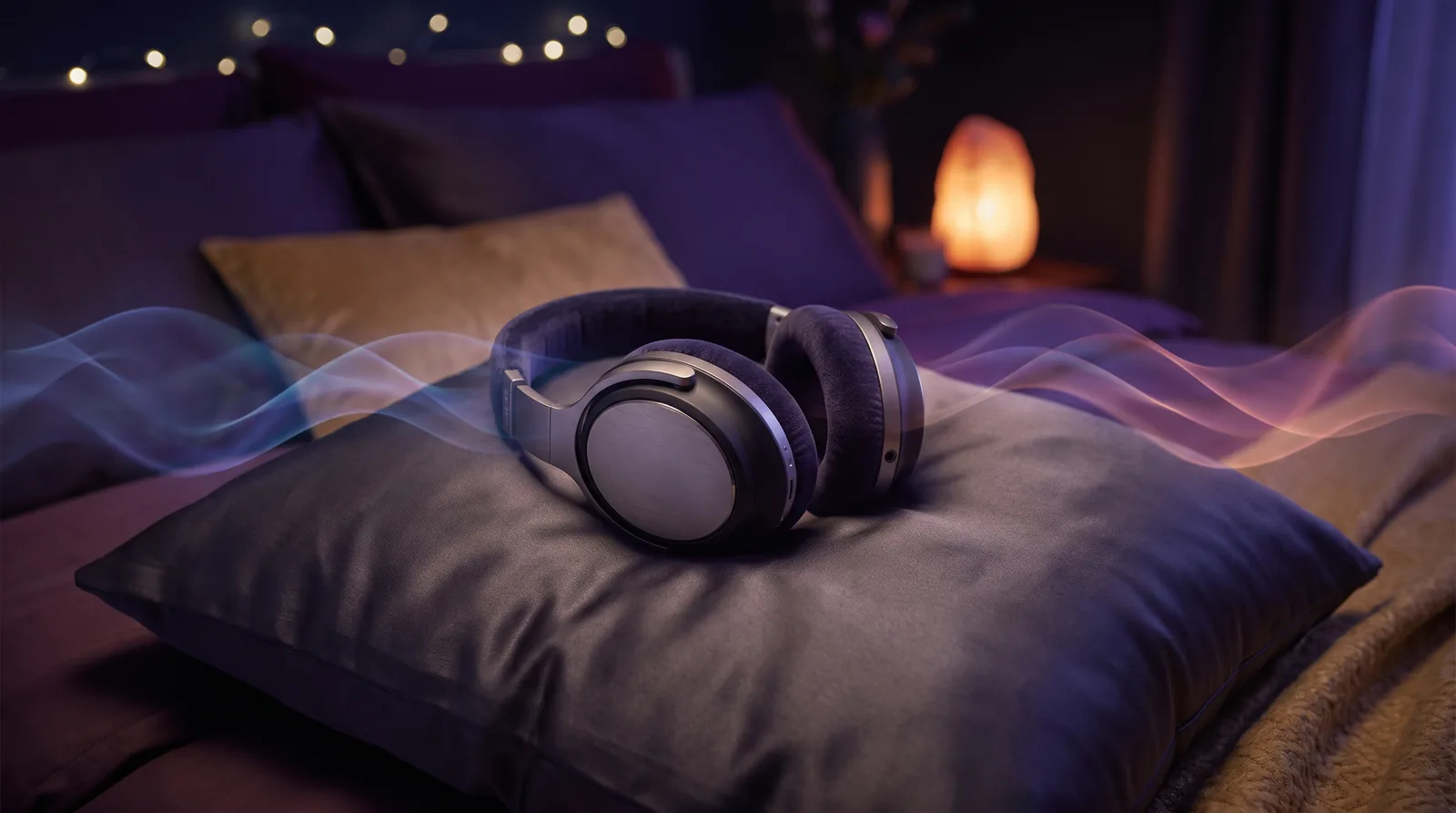
Search any video platform for 'ASMR sleep' and you'll find a number with more digits than my rent. Millions of people end their day with a stranger whispering into an expensive microphone, and most of them will tell you it's the only thing that works. As the house sceptic, my job is to ask the annoying question: does it, though? Or is this just the placebo effect wearing headphones? I went looking for actual research, and the answer turns out to be more interesting than either the fans or the eye-rollers would have it.
Why ASMR and sleep got married in the first place
Quick refresher for the uninitiated: ASMR, autonomous sensory meridian response, is the soft tingling wave some people feel across the scalp and neck in response to certain gentle triggers, whispering, tapping, slow hands, close personal attention. Not everyone gets the tingles; plenty of people just get pleasantly sleepy, which is its own data point. And when researchers survey ASMR viewers about why they watch, bedtime dominates. The overwhelming majority queue these videos up in the last hour of the day, using them essentially as a lullaby with production values.
That makes intuitive sense. The trigger list, quiet voices, unhurried movement, someone calmly tending to something, is basically an inventory of signals that say nothing dangerous is happening here. It's the sensory grammar of being a kid half-asleep in the back seat while adults murmur in the front. Of course people aim it at insomnia.
What the research actually shows
The study I kept coming back to tested this directly. Researchers had adults, some with insomnia and depression symptoms, some without, watch ASMR videos and then measured pre-sleep arousal and mood. The videos reliably dialed down that keyed-up, mind-racing state that keeps people staring at the ceiling, and improved mood, with the strongest effects in people who actually experience ASMR (Smejka & Wiggs, 2022, Journal of Affective Disorders). That's a real, measured effect on exactly the thing that makes falling asleep hard, in exactly the population that struggles most.
The honest caveats: this is one study with a modest sample, it measured the wind-down state rather than full nights of tracked sleep, and 'lowers pre-sleep arousal' is a narrower claim than 'cures insomnia.' Nobody should be replacing actual treatment with tapping sounds. But as evidence that the whisper-video ritual is doing something physiological rather than nothing, it's considerably better than most bedtime hacks can produce.
The videos dialed down exactly the keyed-up, mind-racing state that keeps people staring at the ceiling.
One more nuance worth keeping: the response is wildly individual. Some people's nervous systems downshift within a minute of soft speaking; others feel nothing, and a meaningful minority find whispering actively irritating, which is roughly the opposite of a sleep aid. If you're in the nothing camp, that's not a defect and no amount of exposure therapy will install the tingles. The wind-down effect rides on the calm, not the shiver, so the practical question isn't whether you're wired for ASMR. It's whether any soft, steady, predictable sound settles you, and that's a much bigger tent.
The catch: the delivery vehicle fights the medicine
Here's my problem with the standard setup, and it's not the ASMR, it's the platform. The calming content arrives inside an app whose entire business model is keeping you awake. Bright screen an inch from your face, autoplay queued to something louder, a sidebar of thumbnails engineered by very smart people to cost you one more click. Using a video platform as a sleep aid is like holding your meditation retreat in a casino. The whispering may be lowering your arousal while everything around it works the opposite shift.
How to use ASMR for sleep without staying up later
- Go audio-first. Once the video starts, screen face-down or off. The triggers are mostly sound anyway; the visuals are what the algorithm needs, not what you need.
- Kill autoplay, or use a source that drifts rather than escalates. The next video is never as sleepy as the current one. That's not an accident.
- Set a sleep timer. The goal is for the sound to outlast your consciousness, not to run a whisper marathon until 3 a.m.
- Keep the volume barely there. Triggers work at the threshold of hearing; loud ASMR is just a stranger being weirdly intimate at full volume.
- No tingles? Don't force it. A steady soundscape or slow texture can do the same wind-down work; the tingle is a bonus, not the mechanism.
Purpose-built beats repurposed
This is the honest case for tools designed for sleep rather than adapted to it. Feelsy sits in that lane: slow close-up textures and soft, crisp sounds with the ASMR grammar built in, minus the ads, the comments, and the thumbnail casino. Autoplay mode drifts gently between scenes instead of escalating toward whatever keeps you watching, which at midnight is the entire difference. My routine on the bad nights: one round of the 4-7-8 exercise to slow the breath, then a soundscape at whisper volume, phone face-down, and the last thing my brain audits before it clocks out is something that was actually built to let it leave.
The bottom line
So, does ASMR work for sleep? For a real slice of the population, yes, and there's measured evidence behind it: lower pre-sleep arousal, better mood, exactly the runway a tired brain needs. It's not universal, it's not a treatment, and served through an attention-economy platform it can quietly cost more sleep than it delivers. Strip the delivery problem away, keep the soft sounds and slow hands, and you're left with a modest, real, screen-optional tool for ending the day. In sleep, as in most things, modest and real beats magical and imaginary every single night.
Feelsy is a wellness product, not medical advice. If stress, anxiety or sleep problems persist, please speak with a qualified professional.
References
- Smejka, T., & Wiggs, L. (2022). The effects of Autonomous Sensory Meridian Response (ASMR) videos on arousal and mood in adults with and without depression and insomnia. Journal of Affective Disorders, 301, 60-67.
Frequently Asked Questions
Does ASMR actually work for helping you fall asleep?
Research had adults, some with insomnia and depression symptoms, watch ASMR videos and measured pre-sleep arousal and mood, finding the videos reliably dialed down the keyed-up, mind-racing state that keeps people staring at the ceiling and improved mood, with the strongest effects in people who actually experience ASMR (Smejka and Wiggs, 2022). It's one study with a modest sample measuring wind-down state rather than full tracked sleep, so it shouldn't replace actual treatment.
What if I don't feel ASMR tingles, does that mean it won't help my sleep?
No, the wind-down effect rides on the calm rather than the tingle itself, so the practical question isn't whether you're wired for the tingles but whether any soft, steady, predictable sound settles you, which is a much bigger group of people.
Why might watching ASMR videos on a phone or app actually hurt your sleep?
The calming content arrives inside a platform whose business model is keeping you awake, with a bright screen close to your face, autoplay queued to louder content, and thumbnails engineered to get one more click. The whispering may lower arousal while everything else around it works the opposite shift.
How can you use ASMR for sleep without staying up later than intended?
Go audio-first by turning the screen face-down once the video starts, kill autoplay or use a source that drifts rather than escalates, set a sleep timer so the sound outlasts your consciousness, and keep the volume barely there since triggers work at the threshold of hearing.

About the author
Contributing writer
Kurt is a New York based writer covering the practical science of stress, sleep and focus. He is the resident sceptic of the Journal: if a technique cannot survive a crowded subway commute and a deadline week, he is not interested in it.
Feel it for yourself.
Feelsy turns reading about calm into practising it. Two minutes of a slow texture is often the whole difference.


Related reading
 ASMR
ASMRASMR Triggers: A Field Guide to the Tingles
From whispers and tapping to slime and slow hands: the most common ASMR triggers, how to find yours, and why some people never feel tingles at all.
 ASMR
ASMRUnintentional ASMR: Why a Stranger Folding Towels Puts You to Sleep
The calmest videos online were never trying to relax you. Here's what unintentional ASMR is, why old how-to footage works so well, and how to find your triggers.
 ASMR
ASMRWhy You Don't Get ASMR Tingles (and Whether It Matters)
Watched hours of whispering and felt nothing? You may not be wired for tingles, and that may not matter. What research says about ASMR immunity.
 ASMRNew
Why Is Bob Ross So Relaxing? The Science of Happy Little Brushstrokes
Bob Ross has been putting people to sleep for four decades, and he'd take that as a compliment. Here's the science of why his painting videos work like ASMR.
 ASMRNew
What Is 8D Audio? The Science Behind the Spinning Sound
8D audio pans music around your head using binaural tricks. Here's how the illusion works, why it feels immersive, and whether it helps you relax or focus.
 ASMR
ASMRWhy Paint Mixing Videos Are So Satisfying
Why paint mixing videos feel so satisfying: the slow science of swirls and folds, what ASMR research suggests, and how to watch them as a mini meditation.