Caffeine Jitters: How to Calm Down When Coffee Hits Too Hard
Too much coffee and now you're buzzing? What caffeine jitters actually are, how long they last, and evidence-backed ways to come down without the panic.
By Kurt Woleret
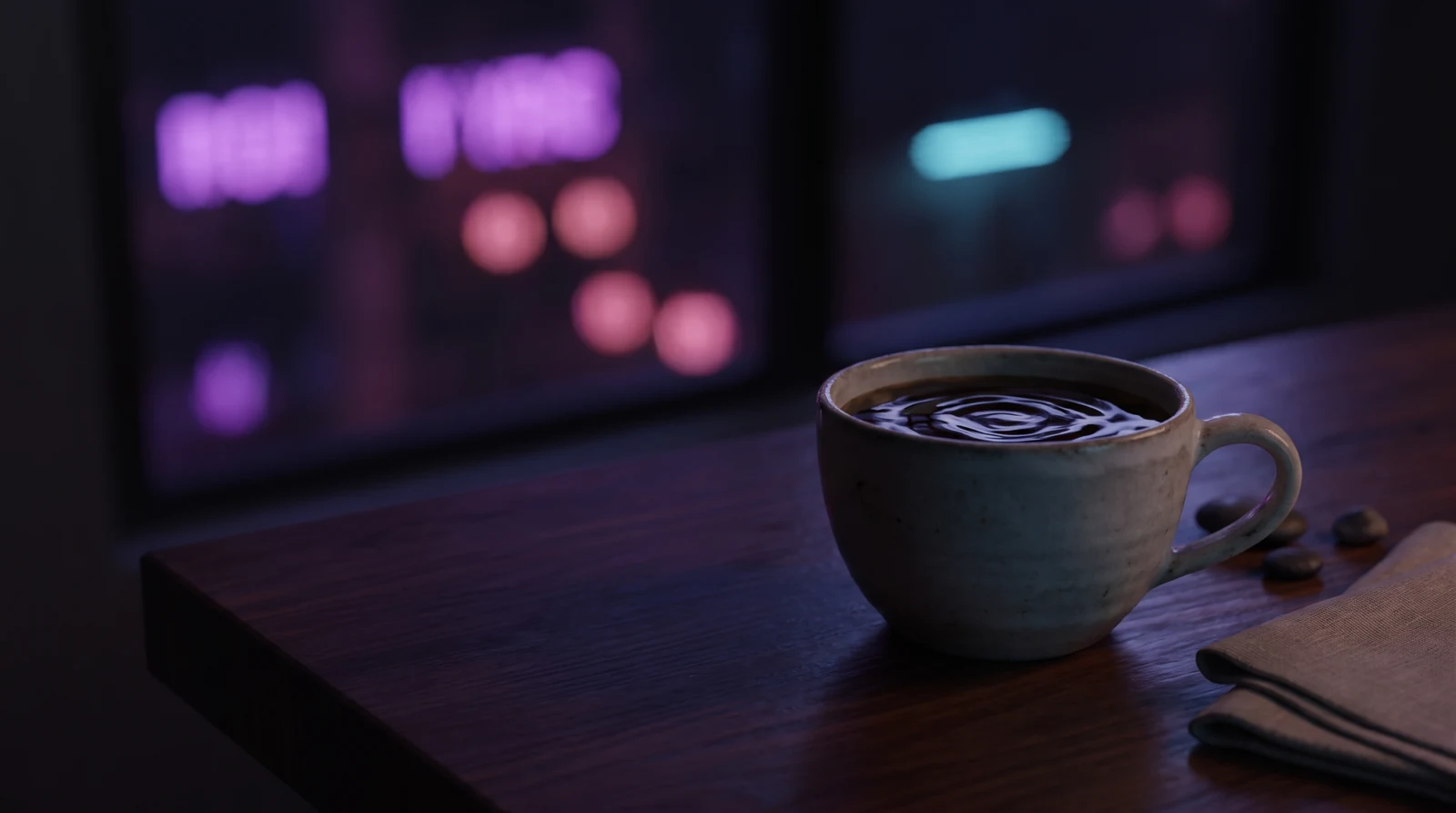
It's 11am and you've made a terrible mistake. The cold brew was large, it was strong, and it was your second. Now your heart is typing faster than you are, your leg is running its own meeting under the desk, and a small voice is asking whether this is what a medical event feels like. It isn't. It's caffeine jitters, you'll live, and the next two hours will go a lot better if you know what's actually happening in there.
I write this as a man who has personally over-caffeinated on every deadline week of his adult life, in coffee shops across three boroughs. Consider this the field guide I wish someone had handed me.
What the jitters actually are
Caffeine's main trick is blocking adenosine, the molecule that accumulates while you're awake and makes you feel sleepy. Block the brakes and the engine revs: more alertness, but also more of everything else. At higher doses, caffeine tips from pleasant lift into sympathetic overdrive. It nudges up heart rate, triggers adrenaline release, tenses muscles, and speeds the mental channel-changer. Research on caffeine's dose effects shows the curve clearly: moderate doses sharpen you, and larger doses start producing tension, racing sensations, and anxiety-like symptoms even in people with no anxiety history (Kaplan et al., 1997, Journal of Clinical Pharmacology).
The jitters are not dangerous for most healthy people. But your brain doesn't know that. The physical symptoms of too much caffeine, pounding heart, shaky hands, restlessness, are nearly identical to the physical symptoms of anxiety, so your threat-detection system often reads the coffee as fear and starts looking around for something to be afraid of. In studies of people with panic disorder, caffeine at high doses can trigger full panic attacks (Klevebrant & Frick, 2022, General Hospital Psychiatry). The feeling is real; the emergency is not.
Your body is doing coffee. Your brain thinks it's doing fear. Knowing the difference is half the cure.
How long you're stuck with it
Here's the honest, slightly annoying answer: caffeine's half-life is roughly five hours for the average adult, with a wide range depending on your genes, medications, and whether you smoke. That means the peak jitter window, usually 30 to 90 minutes after drinking, fades well before the caffeine is gone. You don't need to outlast the whole molecule. You need to get through the spike, and the spike is measured in minutes, not days. Everything below is about making those minutes suck less.
What actually helps
There's no off switch, but there are levers. In rough order of usefulness:
- Stop adding fuel. Obvious, routinely ignored. No topping off, no 'one more to even out'. That logic works for no substance and especially not this one.
- Eat something and drink water. Food slows the remaining absorption, and dehydration makes every symptom feel 20 percent worse. A real snack with some protein beats heroically chugging a liter of water, but do both.
- Move. Caffeine mobilizes fatty acids and glucose and primes your muscles for action; sitting still with all that is like revving in neutral. A brisk 15-minute walk gives the adrenaline a job and burns the edge off. Stairs work. Pacing works. Your apartment hallway has never been more useful.
- Slow your exhale. Long, slow breaths out are the most direct manual input to the calming side of your nervous system. Try a few minutes of a paced pattern: in for 4, hold, out slow. I use the guided 4-7-8 exercise in Feelsy because following a visual beats counting when my brain is set to fast-forward, but any slow-exhale pattern moves the needle.
- Park your eyes on something slow. Jittery brains chase stimulation, and feeds are a slot machine. Five minutes watching something genuinely unhurried, a window, an aquarium, a drifting texture, tells your arousal system the environment is safe and boring. Boring is the goal.
One more that's less about the moment and more about the pattern: notice your personal line. Mine is two cups before noon, nothing after. Yours might be lower or higher; caffeine tolerance is largely genetic, and the dose your coworker handles fine can send you into orbit. The jitters are data. Expensive, unpleasant data.
The afternoon problem nobody budgets for
A detail people miss: the jitters end, but the caffeine doesn't. With a five-hour half-life, half of that noon cold brew is still on board at 5pm, and a quarter at 10pm, quietly blocking the sleepiness you'll want at bedtime. The classic over-caffeination day has a second act where you sleep badly, wake up wrecked, and reach for more coffee, which is how a Tuesday mistake becomes a bad week. If you blew past your line today, treat tonight as recovery: dim the evening, skip the nightcap (alcohol fragments the sleep you're trying to save), and give yourself a long, boring wind-down.
And if what I'm describing as jitters is happening to you without the coffee, or the racing heart comes with chest pain, fainting, or real fear on the regular, that's not a caffeine problem and it deserves a professional's attention, not a blog post. For the ordinary oversized-cold-brew variety: walk, exhale, hydrate, and let the clock do the rest. The machine is fine. You just gave it too much gas.
Feelsy is a wellness product, not medical advice. If stress, anxiety or sleep problems persist, please speak with a qualified professional.
References
- Kaplan, G. B., Greenblatt, D. J., Ehrenberg, B. L., Goddard, J. E., Cotreau, M. M., Harmatz, J. S., & Shader, R. I. (1997). Dose-dependent pharmacokinetics and psychomotor effects of caffeine in humans. Journal of Clinical Pharmacology, 37(8), 693–703.
- Klevebrant, L., & Frick, A. (2022). Effects of caffeine on anxiety and panic attacks in patients with panic disorder: A systematic review and meta-analysis. General Hospital Psychiatry, 74, 22–31.
Frequently Asked Questions
How do I get rid of caffeine jitters fast?
You can't delete caffeine, but you can burn off its edge. Stop drinking more, eat something, hydrate, and move: a brisk 15-minute walk gives the adrenaline a job. Then slow your breathing with long exhales, like a 4-7-8 pattern, and rest your eyes on something slow and unstimulating. The worst of the spike usually passes within an hour or two.
How long do caffeine jitters last?
The peak usually hits 30 to 90 minutes after drinking and fades over the next couple of hours, even though caffeine's half-life is around five hours. That half-life matters later: half a noon coffee is still in your system in the evening, which is why an over-caffeinated day often ends in a poor night's sleep.
Can caffeine cause anxiety or panic attacks?
At high doses, yes. Caffeine's physical effects, racing heart, shaky hands, restlessness, closely mimic anxiety symptoms, and the brain can interpret them as fear. Research shows high doses can produce anxiety symptoms in healthy people and can trigger panic attacks in people with panic disorder. If you're prone to anxiety, your comfortable caffeine dose is probably lower than average.
Why does coffee affect me more than other people?
Caffeine sensitivity is largely genetic. People metabolize it at very different speeds, and the dose a friend handles easily can push you into jitters. Medications, sleep debt, and drinking on an empty stomach also amplify the effect. The practical move is to find your own line, the amount and cutoff time that lifts you without the buzz, and treat it as yours rather than comparing with anyone else's.
Does water flush out caffeine?
Not really. Your liver clears caffeine on its own schedule, and extra water doesn't speed that up much. Hydrating still helps because dehydration intensifies symptoms like headache and a racing sensation, so you'll feel better even though the caffeine leaves at the same pace. Pair water with food, movement, and slow breathing rather than relying on it alone.

About the author
Contributing writer
Kurt is a New York based writer covering the practical science of stress, sleep and focus. He is the resident sceptic of the Journal: if a technique cannot survive a crowded subway commute and a deadline week, he is not interested in it.
Feel it for yourself.
Feelsy turns reading about calm into practising it. Two minutes of a slow texture is often the whole difference.


Related reading
 Sleep
How Late Is Too Late for Coffee? Your Caffeine Cutoff, Explained
Caffeine six hours before bed can still cut an hour of sleep. What the research says about your last-cup cutoff, half-lives, and smarter timing.
 Breath & Body
The Physiological Sigh: A 30-Second Breath That Actually Works
The physiological sigh is a double inhale and long exhale that calms you in under a minute. Here's the science behind it and exactly how to do it right.
 Breath & Body
Box Breathing: A Four-Count Reset for High-Alert Days
Box breathing is the four-count reset used by Navy SEALs and ER nurses. How to do it, why it works, and when a longer exhale is the better tool for the job.
 Breath & Body
Time Blocking: The Calendar Trick That Makes Your To-Do List Tell the Truth
Time blocking puts your to-do list on the clock, where it has to be honest about your day. Why the method works, the research behind it, and how to start.
 Breath & Body
The Two-Minute Rule: The Only Productivity Trick I Haven't Quit
The two-minute rule says if a task takes under two minutes, do it now. Why this tiny rule beats fancy systems for procrastination and mental clutter.
 Breath & Body
Why You Work Better Under Pressure (and Why That's Half a Lie)
Deadline pressure really does sharpen focus, and it quietly costs you. The science of arousal, procrastination and borrowing urgency without panic.