What Are Morning Pages? Three Longhand Pages That Clear the Head
Morning pages are three longhand pages written first thing each day. What the practice is, where it comes from, why it steadies a busy mind, and how to begin.

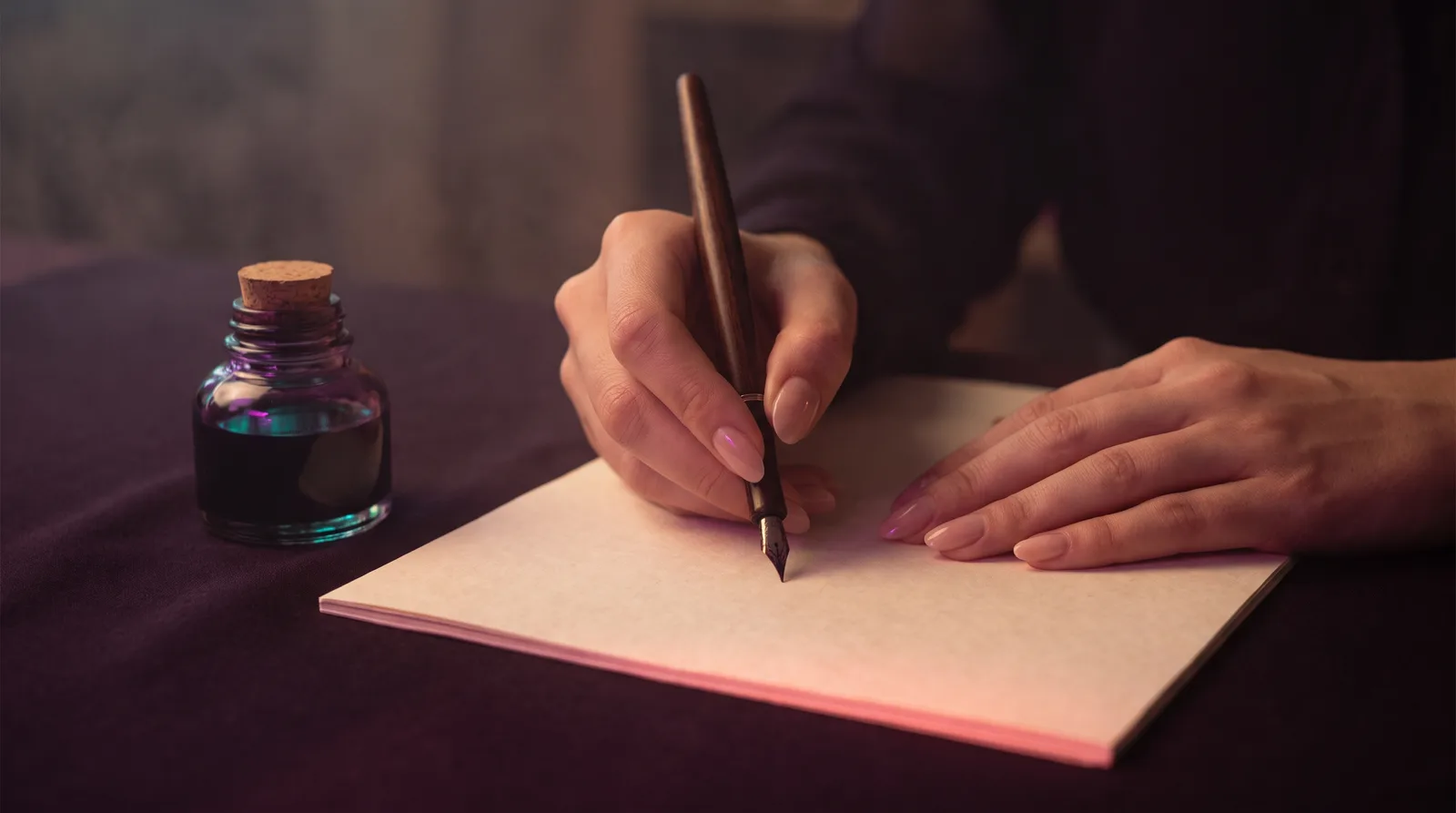
Of all the rituals that writers have smuggled out of their own profession and into general circulation, morning pages may be the most generous. The instruction fits on a postage stamp: every morning, as early as you can manage, write three pages by hand about absolutely anything, and show them to no one. That is the whole practice. No prompts, no structure, no quality control. The pages can be dull, repetitive, ungrammatical and whiny, and in fact they are supposed to be, because their purpose is not to produce writing. Their purpose is to produce the person who exists after the writing: slightly emptier, slightly clearer, and noticeably less at the mercy of whatever the mind was chewing on at six in the morning.
Where morning pages come from
The practice was named and popularised by Julia Cameron in The Artist's Way, her 1992 book on creative recovery, and it has since escaped the world of blocked novelists entirely. Accountants write morning pages. Nurses write them. People who have not written anything longer than a text message in a decade write them, three pages at a time, in cheap notebooks they would be mortified to see published. Cameron's insight was that the mind wakes up full of sediment: worries, grudges, lists, rehearsals of conversations that will never happen. Left in place, that sediment colours the whole day. Poured onto a page, it loses most of its authority. She called the pages a form of meditation for people who cannot sit still, which is as good a description as any.
The rules, such as they are, matter less than their spirit. Three pages, because one page is too easy to fill with throat-clearing and five becomes a chore. Longhand, because the pen is slower than the keyboard and the slowness is doing real work. First thing, because the inner critic is still asleep and the sediment is still loose. And private, absolutely private, because the moment you imagine a reader you begin to perform, and performance is the one thing the pages cannot survive.
Why writing the rubbish down actually helps
It would be easy to dismiss all this as a charming superstition, except that the broader science of putting feelings on paper points the same way. In a landmark 1986 study, the psychologist James Pennebaker and his colleague Sandra Beall asked students to write about difficult experiences for a few sessions, and found measurable benefits to health and wellbeing in the months that followed, a result that launched four decades of research into what is now called expressive writing. The proposed mechanisms are surprisingly domestic. Naming a feeling in words appears to tame it somewhat. A worry that loops in the head has no full stop; a worry written down acquires one. And the act of translation, from fog to sentence, forces a kind of sorting that the mind will not do on its own.
Morning pages are not a clinical protocol and were never meant to be one. But they borrow the same machinery. Anyone who has kept them for a few weeks knows the characteristic effect: the first page is sludge, the second page is complaint, and somewhere on the third page a sentence arrives that you did not know you thought. The pages act as a net for the mind's loose threads, and a mind with fewer loose threads snags on less for the rest of the day.
A worry that loops in the head has no full stop. A worry written down acquires one.
What morning pages are not
They are not a diary. A diary records the day; morning pages drain the morning. They are not a gratitude journal, although gratitude often wanders in uninvited around page three. They are not affirmations, goal-setting, or content of any kind, and they are certainly not material to be reread each evening with a critical eye. Cameron suggests not rereading them at all for weeks, and many practitioners never reread them. The writing is the practice; the pages themselves are ash. This is also why the common objection, that one has nothing to write about, misses the point so completely. Nothing to write about is itself the subject. I have nothing to say this morning, written out ten different ways with increasing irritation, is a perfectly correct set of morning pages, and oddly enough it rarely lasts beyond the first page.
How to begin without dread
The practice asks for perhaps twenty to thirty minutes, which is honest about being a real cost. A few adjustments keep it kind:
- Use a notebook you do not treasure. Beautiful notebooks demand beautiful sentences, which is fatal.
- Write before the phone. The pages work on the mind's overnight sediment, and one glance at email replaces it with fresh sediment.
- If three pages is too steep, begin with one and let it grow. A kept small habit beats an abandoned grand one.
- Let the writing be genuinely bad. Spelling, repetition and self-pity are all allowed; the bin is the editor.
- Keep the pages private, even from yourself. No rereading for at least a month.
Some mornings the mind is too loud even to reach the page. On those days it helps to settle the body first. I sit with two or three minutes of something slow and wordless, most often one of Feelsy's drifting visual textures with the sound low, and let the eyes unclench before the hand starts. The pages that follow a settled minute are different pages: the sentences come out at walking pace rather than a sprint.
The quiet accumulation
Nothing dramatic happens on any single day of morning pages, which is precisely why people abandon them in week two and precisely why they reward people who do not. The practice works by accumulation, the way a path works: one crossing changes nothing, a hundred crossings make a track the mind starts to follow on its own. After a month or so, many practitioners report that the pages have begun writing back, surfacing decisions already half-made and worries already half-solved. The mind, it turns out, is a better companion once it has somewhere to put things down. Three pages, longhand, before the day begins. It is a small door, and it opens inward.
Feelsy is a wellness product, not medical advice. If stress, anxiety or sleep problems persist, please speak with a qualified professional.
References
- Pennebaker, J. W., & Beall, S. K. (1986). Confronting a traumatic event: Toward an understanding of inhibition and disease. Journal of Abnormal Psychology, 95(3), 274-281.
Frequently Asked Questions
What are morning pages?
Morning pages are three pages of longhand, stream-of-consciousness writing done first thing in the morning, about anything at all, and shown to no one. The practice was popularised by Julia Cameron in her 1992 book The Artist's Way. The pages are not meant to be good writing; they are meant to empty the mind's overnight clutter onto paper.
Do morning pages have to be three pages?
Three pages is the classic instruction because one page tends to stop at surface-level throat-clearing, while the third page is often where unexpected thoughts surface. That said, a single page kept daily beats three pages abandoned in a week, so it is sensible to start smaller and let the habit grow.
Should I reread my morning pages?
Not at first, and possibly never. The benefit is in the writing, not the record, and rereading too soon invites the inner critic into a space that only works when it is private. Many practitioners wait a month or more before looking back, and plenty simply throw the pages away.
Are morning pages the same as journaling?
They overlap, but the intent differs. A diary records events and a gratitude journal collects good things, while morning pages are a drain: unfiltered, unstructured and private, written to clear the mind rather than to keep anything. Research on expressive writing suggests that putting feelings into words is itself what helps.
When is the best time to write morning pages?
As early as practical, before the phone and before the day's inputs arrive. The pages work on whatever the mind accumulated overnight, and they work best while the inner critic is still groggy. If the mind is too loud to start, two minutes of slow breathing or a calm visual helps the first sentences out.

About the author
Contributing writer
Eleonor writes about contemplative traditions, attention and the cultural history of calm. She has spent two decades collecting the rituals humans use to slow down, from zazen halls to hammams, and translating them for modern, screen-lit lives.
Feel it for yourself.
Feelsy turns reading about calm into practising it. Two minutes of a slow texture is often the whole difference.


Related reading
 Breath & Body
Why Writing by Hand Calms a Busy Mind
Writing by hand engages the brain differently from typing. What the research on memory and learning shows, and how a pen and paper can slow a racing mind.
 Ancient Wisdom
How to Start a Gratitude Journal You Will Actually Keep
How to start a gratitude journal that actually helps: what the research found, why most lists go stale, and the very old art of counting blessings.
 Breath & Body
The Slow Morning Ritual: How to Start Your Day Without Rushing
A slow morning is not a long one. How a few unhurried minutes of warmth, breath and quiet before the scroll can change the shape of your entire day.
 Breath & Body
Time Blocking: The Calendar Trick That Makes Your To-Do List Tell the Truth
Time blocking puts your to-do list on the clock, where it has to be honest about your day. Why the method works, the research behind it, and how to start.
 Breath & Body
The Two-Minute Rule: The Only Productivity Trick I Haven't Quit
The two-minute rule says if a task takes under two minutes, do it now. Why this tiny rule beats fancy systems for procrastination and mental clutter.
 Breath & Body
Why You Work Better Under Pressure (and Why That's Half a Lie)
Deadline pressure really does sharpen focus, and it quietly costs you. The science of arousal, procrastination and borrowing urgency without panic.