Personal Attention ASMR: Why a Fake Haircut Relaxes Your Real Brain
Why fake haircuts and roleplay ASMR relax your brain: the science of personal attention triggers, simulated care, and how to use them for calm.
By Kurt Woleret
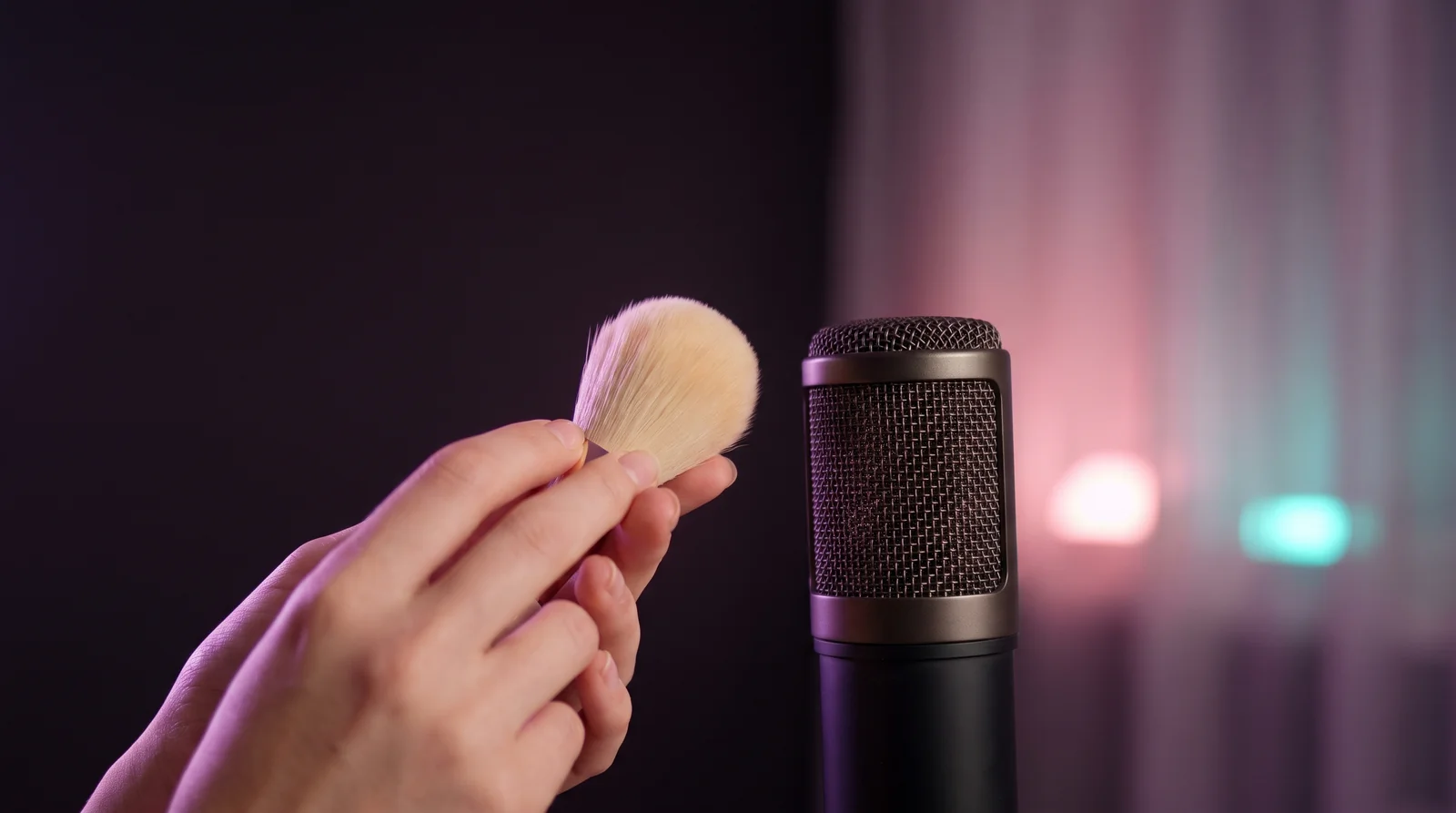
Somewhere on the internet right now, a stranger is pretending to cut your hair. Another one is pretending to check you in to a hotel that doesn't exist. A third is holding a light up to the camera and asking you, personally, to follow it with your eyes. These videos have hundreds of millions of views, and the comment sections are not full of confusion. They're full of people saying they fell asleep at minute four. I came to this genre as a professional skeptic, and I'm going to save you the suspense: the fake haircut works, there's a reasonable scientific story for why, and the embarrassment you feel about it is the least interesting thing in the room.
The trigger hiding in plain sight
When researchers first surveyed the ASMR community properly, in a 2015 PeerJ study by Emma Barratt and Nick Davis covering 475 people, they asked what actually sets off the tingles. Whispering came first, reported by 75 percent. But right behind it, ahead of the famous tapping and crinkling, was personal attention: 69 percent, versus 64 percent for crisp sounds and 53 percent for slow movements. Personal attention means the video is about you: someone measures your face for glasses, examines your scalp, draws your portrait, checks you in with terrible urgency about whether the room is to your liking. The production values vary from 'broadcast studio' to 'lamp in a bedroom in Ohio.' The attention is the product.
Why simulated care calms a real brain
Here's the theory I find most convincing, offered with the honest caveat that it is a theory. Primates spend enormous amounts of time grooming each other, and only a fraction of it is about hygiene. Grooming is social technology: it signals you are safe here, someone is minding you, you can stand down. Being gently attended to, touched around the head, spoken to softly at close range, is one of the oldest safety signals the mammal package includes. A personal attention video is a simulation of exactly that input: closeness, soft voice, careful slow hands near your face, undivided focus on your wellbeing. Your cortex knows it's a video. The older equipment underneath does not particularly care, the same way it doesn't care that the tearjerker movie is fictional. The signal lands anyway: someone is taking care of you, and nothing is being asked of you in return.
A fake haircut is a real signal: someone is taking care of you, and nothing is being asked of you in return.
The measurable part
If this were just people reporting cozy feelings in surveys, I'd stay skeptical. But in 2018, Giulia Poerio and colleagues put it to a physiological test, published in PLOS ONE: participants watched ASMR and control videos while their heart rate and skin conductance were recorded. People who experience ASMR showed heart rate reductions averaging about 3.14 beats per minute while watching ASMR videos, a drop the authors noted is comparable to effects seen in some clinical relaxation research. Interestingly, their skin conductance went up: alert and calm at the same time, roughly the profile of being pleasantly moved by music. That's a strange, specific signature, and it's not the signature of nothing happening. For a genre routinely dismissed as internet weirdness, 'slows the heart like a relaxation intervention' is a solid day in the lab.
About the awkwardness
Yes, it's a little strange that one of the most relaxing things available to a modern adult is a stranger with good lighting pretending you have an appointment. People who happily discuss their meditation practice at parties will take the fake-haircut thing to their grave. But consider what the genre actually is: a technology for receiving care without cost. Real personal attention is wonderful and also expensive, socially and literally; you can't book a face-measuring appointment every night at 11 p.m. The roleplay version is care with the demands removed, the way a fireplace video is warmth with the house fire removed. Nobody apologizes for the fireplace video.
If roleplay isn't your thing
Some brains bounce off the acting entirely, and that's fine; the same 2015 data shows triggers are a menu, not a prescription. Unintentional ASMR, real barbers and real optometrists filmed doing real jobs, delivers the attention signal without the fourth-wall breaking. Pure sound work skips the human entirely. And if what you want is the calm without any performer at all, that's roughly the corner Feelsy lives in: slow textures that respond to your touch, layered sounds mixed close to the ear, personal attention minus the person. The delivery mechanisms differ. The underlying transaction, gentle input, nothing demanded back, is the same one the fake haircut has been running all along.
Feelsy is a wellness product, not medical advice. If stress, anxiety or sleep problems persist, please speak with a qualified professional.
References
- Barratt, E. L., & Davis, N. J. (2015). Autonomous Sensory Meridian Response (ASMR): a flow-like mental state. PeerJ, 3, e851.
- Poerio, G. L., Blakey, E., Hostler, T. J., & Veltri, T. (2018). More than a feeling: Autonomous sensory meridian response (ASMR) is characterized by reliable changes in affect and physiology. PLOS ONE, 13(6), e0196645.
Frequently Asked Questions
What is personal attention ASMR?
It's the branch of ASMR where the video simulates someone caring for you directly: a haircut, a skin exam, an eye test, a hotel check-in. The performer speaks softly to the camera as if you were there. In a 2015 survey of ASMR experiencers it was one of the most common triggers, reported by 69 percent, just behind whispering.
Why do ASMR roleplays make me feel so relaxed?
The leading idea is that they simulate one of the oldest mammalian safety signals: being gently groomed and attended to at close range. Soft voice, slow careful hands, and undivided focus tell an older part of the brain that you're safe and being cared for, even while you know it's a video. The signal lands anyway, without anything being asked of you.
Does ASMR have measurable effects on the body?
Yes. A 2018 study recorded physiology while people watched ASMR videos: those who experience ASMR showed average heart rate reductions of about 3.14 beats per minute, comparable to effects in some clinical relaxation research, alongside increased skin conductance, a profile of being calm and pleasantly engaged at once.
Is it weird to watch fake haircut videos to relax?
It's unfamiliar, but not weird in any meaningful sense. The genre is a way of receiving the calming side of personal care without cost or social demand, much as a fireplace video delivers the cozy side of fire without the fire. The measured effects are real, and millions of people quietly use these videos to fall asleep.
What if roleplay ASMR doesn't work for me?
Triggers are a menu, not a prescription. Try unintentional ASMR, real professionals filmed doing careful work, which carries the attention signal without acting; or drop the human element entirely and use pure sound and texture work. The core ingredient is gentle, low-demand sensory input, and it comes in many forms.

About the author
Contributing writer
Kurt is a New York based writer covering the practical science of stress, sleep and focus. He is the resident sceptic of the Journal: if a technique cannot survive a crowded subway commute and a deadline week, he is not interested in it.
Feel it for yourself.
Feelsy turns reading about calm into practising it. Two minutes of a slow texture is often the whole difference.


Related reading
 ASMR
ASMRASMR Triggers: A Field Guide to the Tingles
From whispers and tapping to slime and slow hands: the most common ASMR triggers, how to find yours, and why some people never feel tingles at all.
 ASMR
ASMRWhisper ASMR: Why a Lowered Voice Quiets the Mind
Why whispering is so relaxing: the science behind whisper ASMR, care signals and close attention, and how to use soft-spoken audio for sleep and calm.
 ASMR
ASMRUnintentional ASMR: Why a Stranger Folding Towels Puts You to Sleep
The calmest videos online were never trying to relax you. Here's what unintentional ASMR is, why old how-to footage works so well, and how to find your triggers.
 ASMRNew
Why Is Bob Ross So Relaxing? The Science of Happy Little Brushstrokes
Bob Ross has been putting people to sleep for four decades, and he'd take that as a compliment. Here's the science of why his painting videos work like ASMR.
 ASMRNew
What Is 8D Audio? The Science Behind the Spinning Sound
8D audio pans music around your head using binaural tricks. Here's how the illusion works, why it feels immersive, and whether it helps you relax or focus.
 ASMR
ASMRWhy Paint Mixing Videos Are So Satisfying
Why paint mixing videos feel so satisfying: the slow science of swirls and folds, what ASMR research suggests, and how to watch them as a mini meditation.