Tapping ASMR: Why Fingernails on a Glass Jar Can Outperform a Lullaby
Tapping is one of the most popular ASMR triggers on earth. Here's why rhythmic little sounds calm your brain, and how to find the taps that work for you.
By Kurt Woleret
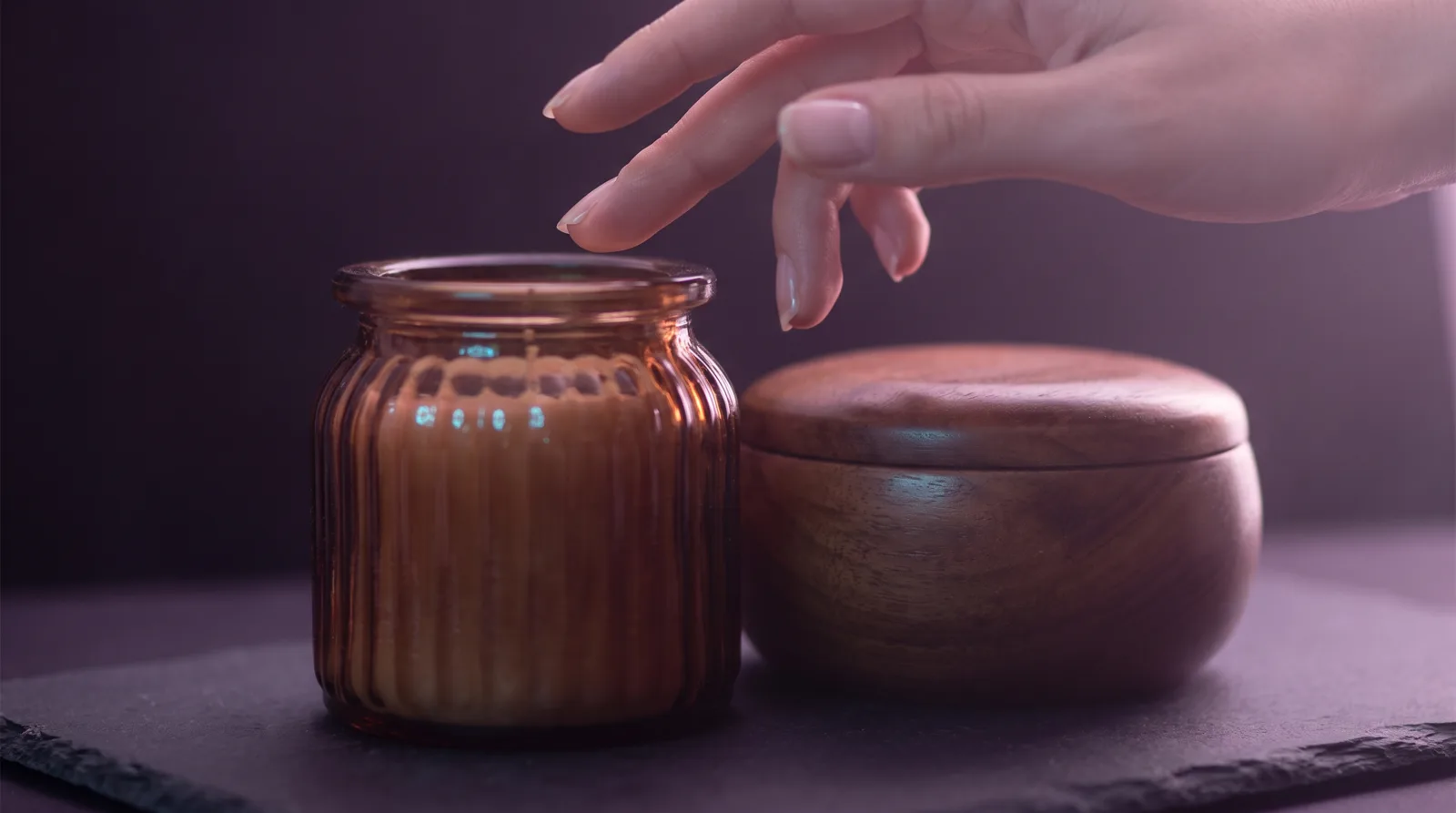
Explaining ASMR to a skeptic is hard enough. Explaining tapping is where you lose them completely. 'So someone taps their fingernails on a jar.' Yes. 'For forty-five minutes.' Yes. 'And millions of people watch this to relax.' Also yes, and I'm one of them, and I say that as the guy who fact-checks wellness claims for fun. Tapping is the meat and potatoes of ASMR: no roleplay, no props budget, no whispered dental exam. Just fingertips, surfaces, and rhythm. It's the trigger that looks most absurd from the outside and works most reliably on the inside, and there's real logic to why.
The most popular boring sound on the internet
When researchers first surveyed the ASMR community properly, tapping wasn't a footnote. In the first peer-reviewed ASMR study, Emma Barratt and Nick Davis surveyed nearly 500 people who experience ASMR and found that crisp sounds, the category that includes tapping and fingernails on hard surfaces, triggered the response in about 64 percent of them, right up there with whispering and personal attention (Barratt & Davis, 2015). That's not a niche kink of the algorithm; that's a majority of the ASMR-responsive population reporting that tiny percussive sounds give them calm, tingles, or both.
Look at what tapping actually is, acoustically: short, crisp, high-frequency transients arriving in a steady but slightly irregular rhythm, usually recorded close enough that it sounds like it's happening a foot from your ear. Every tap is a small event your auditory system can track without effort. Nothing about it demands analysis. There's no language to process, no melody to follow, no plot. Your attention gets something to hold, and nothing to do.
Why little sounds calm a loud brain
Here's my working theory, assembled from the research and a few hundred nights of field testing: tapping works because it occupies the exact channel your anxiety uses. A racing mind at midnight is an attention problem; your focus keeps lunging at thoughts like a dog at squirrels. Tapping gives that attention a soft, predictable target. Predictable enough to feel safe, varied enough to stay interesting, quiet enough to signal that nothing urgent is happening anywhere near you. Loud, sudden sound means alarm; soft, close, careful sound implies calm, unhurried hands, and by extension a calm, unhurried room. Your nervous system reads the acoustics and concludes there is nothing to defend against. It's the audio equivalent of watching someone slowly organize a drawer.
Tapping gives your attention a soft, predictable target: safe enough to relax around, interesting enough to hold on to.
A field guide to taps
Not all taps are equal, and finding your tap is half the fun. The variables that matter: the surface (glass is bright and clinky, wood is warm and round, plastic sits in between, books thud softly), the speed (fast flutters versus slow deliberate single taps), the pattern (steady rhythm or wandering), and fingertips versus nails, which changes the attack of each sound completely. Long-nail tapping on glass is basically tiny wind chimes; fingertip pads on a hardcover book is closer to a heartbeat. Some people need slow and sparse to unwind; fast tapping reads as impatient typing and ruins it. Others want density, a full drumroll of texture. There's no correct answer, which is exactly why the internet contains a functionally infinite supply of tapping videos: it's not repetition, it's a catalog.
Using tapping on purpose
If tapping does something for you, treat it like a tool instead of a rabbit hole. The failure mode of ASMR at bedtime is the search itself: forty minutes of skipping between videos with the screen a foot from your face is a stimulation session wearing a relaxation costume. Pick your reliable material ahead of time and let it run. This is what I like about pairing sound with something built to be passive; in Feelsy I'll set a soft tapping-adjacent soundscape under one of the slow textures, flip on autoplay mode, and put the phone face-down. The sound keeps going, the screen isn't begging to be touched, and there's no thumbnail gallery whispering 'but what about this one.' Headphones help if your taps are subtle; close-mic'd sound is a big part of the effect. And the volume rule is simple: barely there beats crisp and loud. You want your brain leaning in slightly, not being knocked on.
Tapping also moonlights as a focus tool, not just a sleep aid. The same qualities that quiet a racing mind at midnight, steady rhythm, zero semantic content, gentle novelty, make it a decent background layer for deep work, especially in a loud apartment or an open office. It occupies the restless edge of your attention the way a fidget toy occupies restless hands, leaving the main channel free for the actual task. Plenty of people who never get a single tingle still use tapping tracks this way, purely as cognitive white noise with better texture. If lyrics-free music feels too eventful and pure silence feels like a dare, an hour of unhurried wood-and-glass tapping sits in the useful middle.
One warning label: if tapping does nothing for you, or actively irritates you, that's normal and not fixable by trying harder. ASMR response varies wildly between people, and repetitive small sounds sit right next to misophonia territory for some brains. The tingle crowd and the rage crowd are both real. Find which one you're in cheaply, with the volume low, and act accordingly.
Feelsy is a wellness product, not medical advice. If stress, anxiety or sleep problems persist, please speak with a qualified professional.
References
- Barratt, E. L., & Davis, N. J. (2015). Autonomous Sensory Meridian Response (ASMR): a flow-like mental state. PeerJ, 3, e851.
Frequently Asked Questions
Why is tapping so satisfying in ASMR?
Tapping delivers soft, crisp, predictable little sounds that give your attention an easy target with nothing to analyze: no words, no melody, no plot. The quiet, close-up, unhurried quality also signals to your nervous system that nothing urgent is happening, which reads as safety. Together that combination calms a racing mind for many listeners.
Is tapping the most common ASMR trigger?
It's one of the top few. In the first peer-reviewed ASMR survey, crisp sounds such as tapping triggered ASMR in about 64 percent of nearly 500 respondents, alongside whispering and personal attention as the most common triggers. Which trigger works best still varies a lot from person to person.
Why does tapping annoy me instead of relaxing me?
ASMR response varies enormously, and repetitive small sounds sit close to misophonia territory for some brains: the same clip that gives one person tingles genuinely irritates another. Neither reaction is wrong, and you can't force yourself into the tingle camp by repeated exposure. If taps bug you, try broader steady sounds like rain or a fan hum instead.
What is the best way to listen to tapping ASMR for sleep?
Choose your material before you get into bed, keep the volume barely audible, use headphones if the taps are subtle, and let it run on autoplay with the screen face-down so you're not browsing thumbnails at midnight. The endless search for the perfect video is stimulation, not relaxation; the tapping only works once you stop scrolling.

About the author
Contributing writer
Kurt is a New York based writer covering the practical science of stress, sleep and focus. He is the resident sceptic of the Journal: if a technique cannot survive a crowded subway commute and a deadline week, he is not interested in it.
Feel it for yourself.
Feelsy turns reading about calm into practising it. Two minutes of a slow texture is often the whole difference.


Related reading
 ASMR
ASMRASMR Triggers: A Field Guide to the Tingles
From whispers and tapping to slime and slow hands: the most common ASMR triggers, how to find yours, and why some people never feel tingles at all.
 ASMR
ASMRWhisper ASMR: Why a Lowered Voice Quiets the Mind
Why whispering is so relaxing: the science behind whisper ASMR, care signals and close attention, and how to use soft-spoken audio for sleep and calm.
 ASMR
ASMRWhy You Don't Get ASMR Tingles (and Whether It Matters)
Watched hours of whispering and felt nothing? You may not be wired for tingles, and that may not matter. What research says about ASMR immunity.
 ASMRNew
Why Is Bob Ross So Relaxing? The Science of Happy Little Brushstrokes
Bob Ross has been putting people to sleep for four decades, and he'd take that as a compliment. Here's the science of why his painting videos work like ASMR.
 ASMRNew
What Is 8D Audio? The Science Behind the Spinning Sound
8D audio pans music around your head using binaural tricks. Here's how the illusion works, why it feels immersive, and whether it helps you relax or focus.
 ASMR
ASMRWhy Paint Mixing Videos Are So Satisfying
Why paint mixing videos feel so satisfying: the slow science of swirls and folds, what ASMR research suggests, and how to watch them as a mini meditation.