Exercise Snacks: The One-Minute Workout Science Takes Seriously
Exercise snacks are short bursts of movement scattered through the day: a stair climb, a brisk block. Why science takes one-minute efforts seriously.
By Kurt Woleret
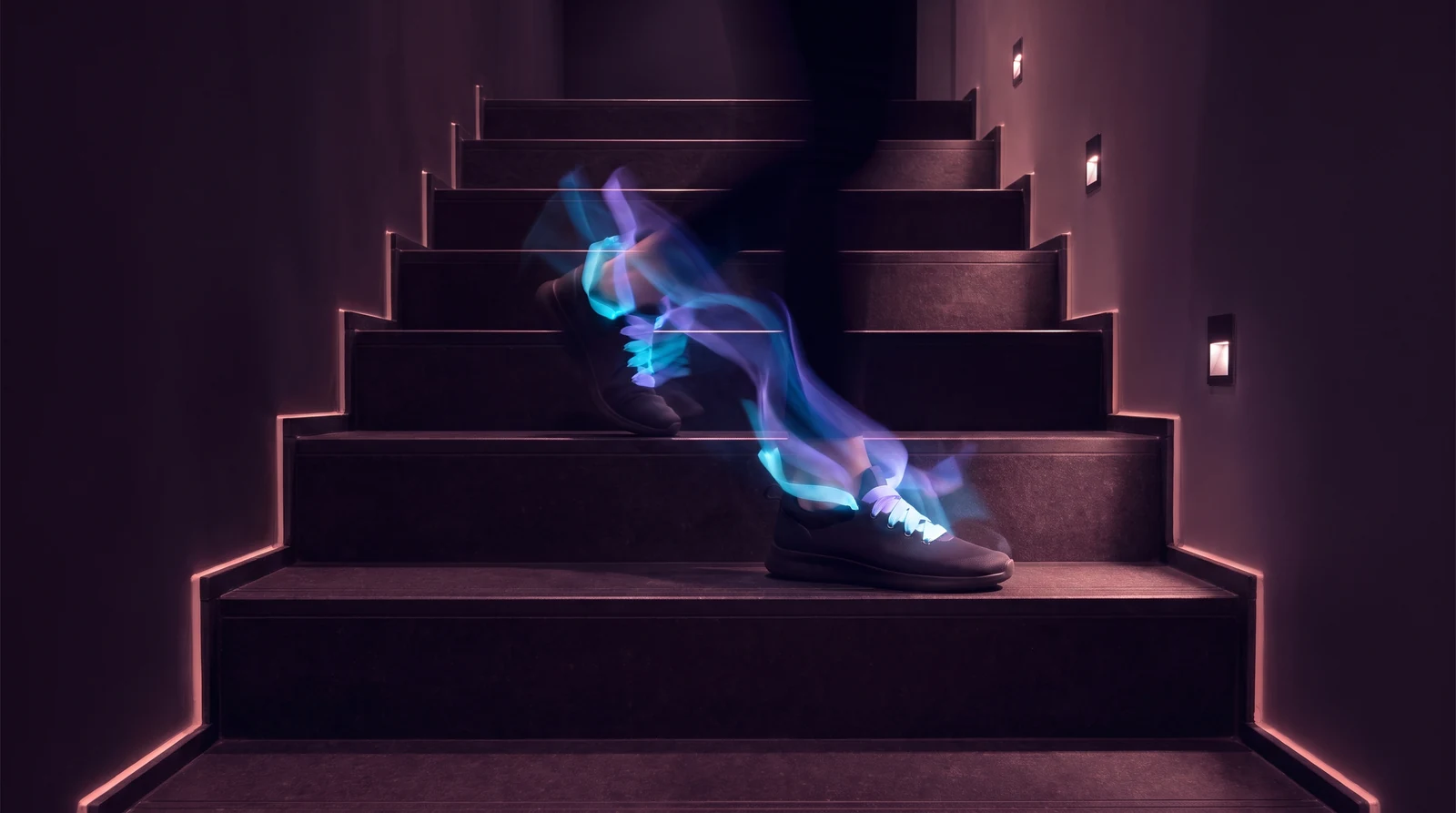
I have canceled more gym sessions than I've attended. It's not even close. The gym requires a bag, a window of time, a subway transfer, and a version of me that exists mostly in January. So when I first heard the term exercise snacks, short bursts of movement sprinkled through the day instead of one big scheduled workout, I assumed it was fitness-industry cope. A participation trophy for people like me. Then I read the research, and I owe the concept an apology.
What counts as an exercise snack
An exercise snack is any brief burst of reasonably vigorous movement, usually somewhere between twenty seconds and a couple of minutes, done as part of regular life. Taking the stairs like you're late. Carrying the groceries home at a pace. A fast walk to the far coffee place instead of the near one. No clothes change, no equipment, no block on the calendar. The snack framing is the whole idea: small, frequent, zero ceremony, and crucially, zero activation energy, which is the thing that actually kills workouts.
For years the assumption was that movement this short couldn't matter, because official guidelines used to count exercise only in ten-minute-plus chunks. Then accelerometers got cheap, researchers could finally see what people's days actually look like, and the picture changed.
The study that made everyone sit up
The headline evidence comes from a 2022 study in Nature Medicine. Researchers analyzed wrist-tracker data from over 25,000 UK adults who reported doing no exercise at all, no gym, no sport, nothing deliberate, and looked for what they called vigorous intermittent lifestyle physical activity: the accidental sprints of daily life, like running for a bus or hauling shopping up a hill. People who racked up just three or four one-to-two-minute bursts a day had substantially lower risk of death over the following years, including a roughly 48 to 49 percent lower risk of cardiovascular death, compared with people who had none (Stamatakis et al., 2022, Nature Medicine). These were observational data, not a trial, so the usual caveats apply. But the dose was tiny, the association was large, and the subjects were, by their own description, non-exercisers.
Let me translate the finding into New York: the difference between the elevator and the stairs, done with intent a few times a day, showed up in mortality statistics. That's a floor-of-effort result. It doesn't say more isn't better. It says the first minute matters far more than anyone assumed.
The first minute of hard movement buys more than anyone assumed. The gym was never the entry fee.
Why snacks beat the workout you keep postponing
The physiology makes sense: brief vigorous efforts stress the heart and muscles enough to trigger adaptation, and doing them repeatedly through the day keeps revisiting that stimulus. But the real advantage is behavioral. A workout is a decision you can fail. A snack is too small to fail. You're already standing at the bottom of the stairs. The decision window is two seconds, which is not enough time for your inner negotiator to build a case.
There's a second, sneakier benefit for desk workers: snacks break up sitting. Long unbroken stretches in a chair are their own problem independent of whether you exercised that morning, and a movement burst every hour or two resets the meter in a way the 7am workout can't. The snack model fits how days actually fall apart. Meetings move, deadlines land, the evening run dies quietly at 4pm. A unit of effort small enough to fit between two emails is a unit of effort that survives contact with a real schedule.
- Climb stairs with intent: two to four floors, fast enough that you're breathing hard at the top. That's one snack. Done.
- Walk one subway stop or one long avenue at a genuinely brisk pace, the kind where talking gets clipped.
- Carry things like it's a sport: groceries, laundry, the office water jug. Loaded carries are a gym exercise wearing street clothes.
- Do twenty bodyweight squats or a one-minute wall sit while the coffee brews. The kettle is a built-in interval timer.
The comedown is part of the snack
One practical note from someone who does these between deadline paragraphs: a vigorous ninety seconds leaves you buzzing, which is great at 10am and less great if you need to sit back down and think. I treat the downshift as part of the rep. A minute of slow exhaling, or the 4-7-8 breathing exercise I keep in Feelsy next to its slime textures, settles the heart rate and gets me back into the document instead of pacing the apartment like a triumphant gladiator. Spike, then settle. The pair works better than either half.
The honest pitch for exercise snacks isn't that they replace training. If you love the gym, keep the gym. The pitch is for the rest of us, the schedulers and cancelers: the evidence now says the smallest possible unit of effort, repeated, is not nothing. It might be the highest-interest investment in the whole fitness catalog. And you can make the first deposit at the next staircase you see.
Feelsy is a wellness product, not medical advice. If stress, anxiety or sleep problems persist, please speak with a qualified professional.
References
- Stamatakis, E., Ahmadi, M. N., Gill, J. M. R., et al. (2022). Association of wearable device-measured vigorous intermittent lifestyle physical activity with mortality. Nature Medicine, 28, 2521–2529.
Frequently Asked Questions
What are exercise snacks?
Exercise snacks are short bursts of reasonably vigorous movement, roughly twenty seconds to a couple of minutes, folded into ordinary life: climbing stairs quickly, walking a block at a brisk pace, carrying groceries with intent. No gym clothes, equipment or scheduled session required. The idea is to make movement so small and frequent that there's nothing to skip.
Do one-minute bursts of exercise actually do anything?
The best evidence says yes. A 2022 study of over 25,000 adults who did no deliberate exercise found that those whose trackers recorded just three or four one-to-two-minute vigorous bursts a day had substantially lower mortality risk, including roughly half the risk of cardiovascular death, compared with those who had none. It's observational data, but the dose was tiny and the association was large.
How many exercise snacks should I do a day?
The research observed meaningful differences at just three to four short vigorous bursts per day, so that's a sensible starting target. Think of it as a floor rather than a ceiling: a fast stair climb in the morning, a brisk walk at lunch, and carrying something heavy home already gets you there. More movement is still better if you enjoy it.
Are exercise snacks as good as going to the gym?
They're not a full replacement for structured training, and nobody claims they build serious strength or endurance the way dedicated workouts do. Their advantage is that they actually happen. For people who regularly cancel workouts, repeated small bursts provide a real, measurable stimulus with almost zero activation energy, which beats the perfect gym plan you keep postponing.

About the author
Contributing writer
Kurt is a New York based writer covering the practical science of stress, sleep and focus. He is the resident sceptic of the Journal: if a technique cannot survive a crowded subway commute and a deadline week, he is not interested in it.
Feel it for yourself.
Feelsy turns reading about calm into practising it. Two minutes of a slow texture is often the whole difference.


Related reading
 Breath & Body
Micro Breaks: The Case for Doing Nothing for Two Minutes
Breaks of ten minutes or less measurably restore energy and cut fatigue. What the research found, and how to take micro breaks that actually restore focus.
 Visual Meditation
The Five-Minute Reset: How to Calm Down When There's No Time
You don't need an hour of meditation to come down from a spike of stress. Research-backed ways to reset your nervous system in five minutes or less.
 Ancient Wisdom
Walking After Eating: The Wisdom of a Hundred Steps
An old Chinese saying promises that a hundred steps after a meal bring a long life. Modern research on post-meal walks agrees more than you might expect.
 Breath & Body
Time Blocking: The Calendar Trick That Makes Your To-Do List Tell the Truth
Time blocking puts your to-do list on the clock, where it has to be honest about your day. Why the method works, the research behind it, and how to start.
 Breath & Body
The Two-Minute Rule: The Only Productivity Trick I Haven't Quit
The two-minute rule says if a task takes under two minutes, do it now. Why this tiny rule beats fancy systems for procrastination and mental clutter.
 Breath & Body
Why You Work Better Under Pressure (and Why That's Half a Lie)
Deadline pressure really does sharpen focus, and it quietly costs you. The science of arousal, procrastination and borrowing urgency without panic.