Walking After Eating: The Wisdom of a Hundred Steps
An old Chinese saying promises that a hundred steps after a meal bring a long life. Modern research on post-meal walks agrees more than you might expect.
By Mei Lin
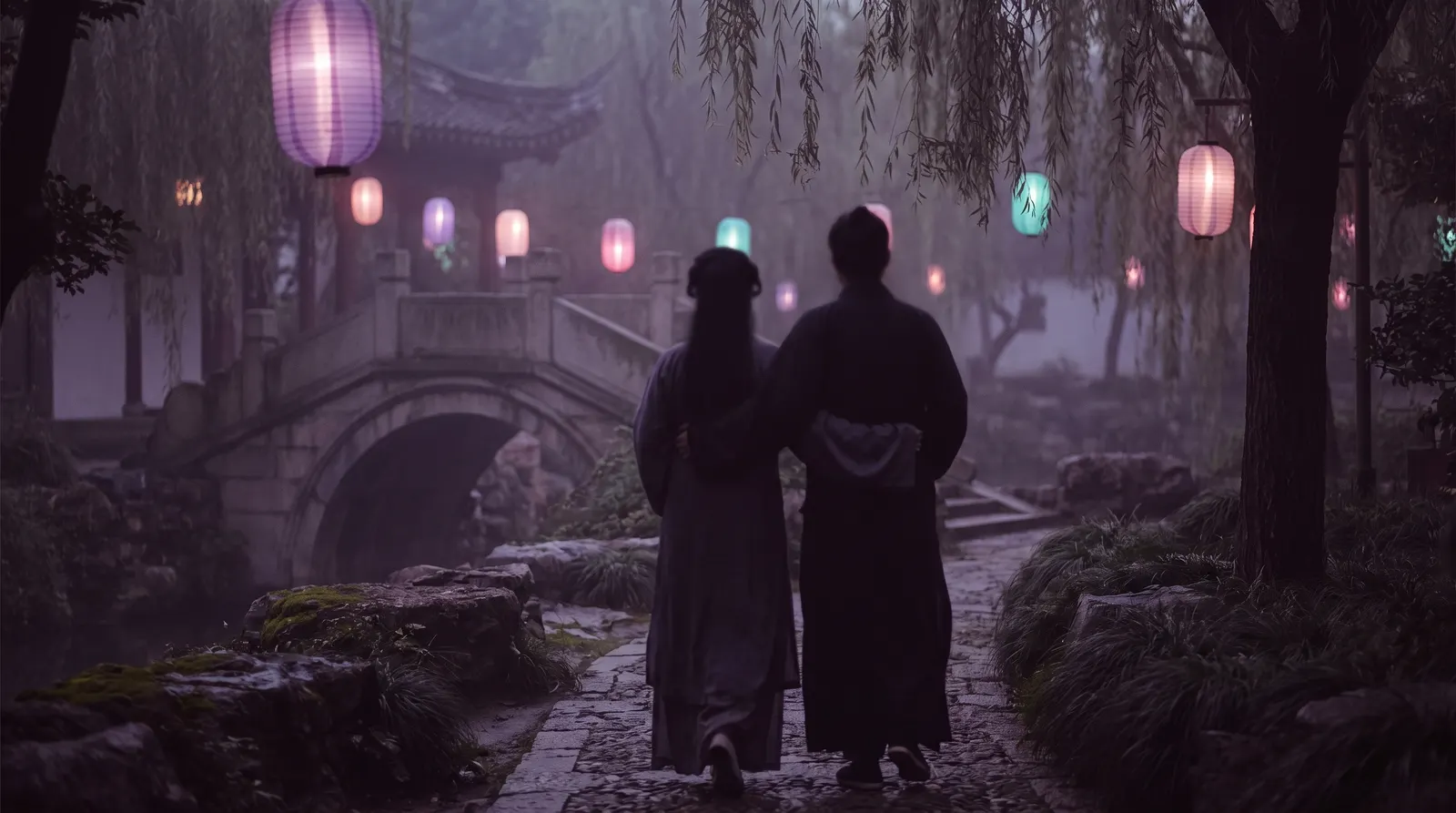
My grandmother never went straight from the dinner table to the sofa. In our Shanghai lane house, the last bowl was barely cleared before she was at the door, changing into her walking shoes, waving for me to follow. Around the block we would go, past neighbors doing exactly the same thing, the evening air full of half-finished conversations. She called it what everyone called it: fan hou bai bu zou. After a meal, walk a hundred steps.
The full saying goes further: walk a hundred steps after eating, and you will live to ninety-nine. As a child I assumed this was the kind of arithmetic grandmothers invent. As an adult, I have watched modern research arrive, slightly out of breath, at nearly the same conclusion.
A ritual older than the science
The after-dinner stroll is one of the most widely shared pieces of folk wisdom in the world. In China it produced the evening ritual of san bu, the leisurely walk that fills parks and riverfronts after dusk. Italians have the passeggiata. In India, the shatapavali, a hundred steps after a meal, is old enough to appear in Ayurvedic custom. Different kitchens, same prescription.
What these traditions understood without a single glucose monitor is that a meal is a transition, and transitions go better when they are walked, not slumped. The body has just been given work to do. Gentle movement, the old logic went, helps the work along.
What the research actually found
The modern evidence centers on blood sugar. After you eat, glucose from the meal enters your bloodstream, and the size of that rise, especially repeated day after day, matters for long-term metabolic health. Movement changes the curve, because working muscles pull glucose out of the blood directly, without waiting for insulin's full escort.
A meta-analysis in Sports Medicine compared sitting after meals with standing or light walking, and found that even a few minutes of gentle walking significantly lowered the post-meal glucose rise; standing helped, but walking helped more (Buffey et al., 2022, Sports Medicine). Timing matters too. In a study of older adults at risk of impaired glucose tolerance, three 15-minute walks taken shortly after each meal improved 24-hour blood sugar control, and the walk after dinner was particularly effective at blunting the evening rise (DiPietro et al., 2013, Diabetes Care).
Notice what the studies did not require: no pace, no gear, no distance worth bragging about. Light, unhurried walking, begun soon after the plate is empty. My grandmother's hundred steps, more or less exactly.
The proverb asked for a hundred steps, not a workout. The research, remarkably, asks for about the same.
Why it calms more than digestion
The metabolic story is the measurable half. The other half is what the walk does to the shape of an evening. A meal eaten at the end of a full day tends to arrive with the day still attached: the unfinished task, the conversation replaying, the screen waiting. Going straight from table to sofa carries all of it forward into the night.
The walk is a hinge between the day and the evening. The rhythm of unhurried steps gives restless thoughts something to match themselves to, the way a slow visual gives wandering eyes somewhere soft to rest. In the parks of Shanghai the evening walk is unmistakably social: couples, families, old friends in slow orbit. No one calls it meditation. It simply behaves like one.
It helps that the practice is porous to company. A post-dinner walk is one of the few forms of exercise that welcomes conversation, and one of the few forms of conversation that welcomes silence. Some of the most honest talks of my childhood happened at strolling pace, eyes forward, the block doing the work of loosening what the table could not. If you live with someone, invite them. If you do not, the streetlights and the season make adequate companions.
How to practice the hundred steps
There is almost nothing to learn, which is part of the charm. Finish eating, and within a short while, go. Ten to fifteen minutes is a generous hundred steps; five is better than none. Keep the pace conversational. This is a stroll, not exercise, and treating it as exercise misses the point twice: a hard effort right after eating sits poorly, and striving would spoil the hinge.
Leave your phone in your pocket if you can. Let your eyes rest on whatever the street or garden offers: a lit window, leaves moving, the sky changing shift. If the weather refuses you, walk your hallway, or simply stand and sway while the kettle heats water for tea. And if the evening still will not settle afterwards, a few minutes with a slow texture or the 4-7-8 breathing exercise in Feelsy makes a gentle second hinge before bed.
Ninety-nine, give or take
I do not know whether my grandmother's arithmetic will hold; she is working on it, still walking. But I no longer think the number was the point. The proverb smuggled a small, durable practice into millions of evenings by making it rhyme. Walk a little, after you eat, with people if you can. The glucose curve bends, the day detaches, and the evening arrives on foot.
Feelsy is a wellness product, not medical advice. If stress, anxiety or sleep problems persist, please speak with a qualified professional.
References
- Buffey, A. J., Herring, M. P., Langley, C. K., Donnelly, A. E., & Carson, B. P. (2022). The acute effects of interrupting prolonged sitting time in adults with standing and light-intensity walking on biomarkers of postprandial glucose and insulin: A systematic review and meta-analysis. Sports Medicine, 52(8), 1765–1787.
- DiPietro, L., Gribok, A., Stevens, M. S., Hamm, L. F., & Rumpler, W. (2013). Three 15-min bouts of moderate postmeal walking significantly improves 24-h glycemic control in older people at risk for impaired glucose tolerance. Diabetes Care, 36(10), 3262–3268.
Frequently Asked Questions
Is it good to walk after eating?
Yes. A meta-analysis of controlled studies found that even a few minutes of light walking after a meal significantly lowers the post-meal rise in blood sugar, doing more than either sitting or standing. Working muscles draw glucose out of the blood directly, so the walk does not need to be fast or long to change the curve.
How long should I walk after a meal?
Ten to fifteen minutes at a conversational pace is plenty, and five minutes is better than none. In one study of older adults, three 15-minute walks taken shortly after each meal improved blood sugar control across the whole day, with the after-dinner walk especially effective. The old proverb's hundred steps lands in the same modest range.
Should I walk immediately after eating or wait?
The research favors starting soon after the meal, while glucose from the food is entering the bloodstream, rather than waiting an hour. Keep it gentle: a stroll sits comfortably on a full stomach, while hard exercise right after eating usually does not.
What does the Chinese saying about walking a hundred steps mean?
The saying, fan hou bai bu zou, huo dao jiu shi jiu, translates as: walk a hundred steps after your meal and live to ninety-nine. It captures a folk practice found across cultures, from the Chinese evening stroll to the Italian passeggiata to the Ayurvedic shatapavali, all prescribing gentle movement as the proper way to end a meal.
Does an evening walk help you relax as well as digest?
It does double work. Beyond the measurable effect on blood sugar, the walk acts as a hinge between the day and the evening: the rhythm of unhurried steps gives restless thoughts something to settle into, and leaving the phone in your pocket lets the eyes rest on slow, ordinary sights. Many people find the day detaches by the time they are home.

About the author
Contributing writer
Mei grew up in Shanghai around tea that could not be hurried and grandmothers who considered stillness a skill. She writes about slow hands and sensory ritual: tea, calligraphy, qigong, and the quiet crafts that taught the world how to pay attention.
Feel it for yourself.
Feelsy turns reading about calm into practising it. Two minutes of a slow texture is often the whole difference.


Related reading
 Ancient Wisdom
Walking Meditation: The Art of Going Nowhere Slowly
Walking meditation turns an ordinary walk into practice. How kinhin works, what research says about mindful walking, and a simple way to begin today.
 Ancient Wisdom
Why Chinese Grandmothers Prescribe Hot Water for Everything
In China, plain hot water is comfort, care and daily ritual in a single cup. The story of he re shui, thermos culture, and what a warm slow sip can teach.
 Visual Meditation
Awe Walks: The Simple Practice of Walking Until the World Grows Large
An awe walk is an ordinary stroll taken with attention tuned to vastness and wonder. Here is the research behind awe walks and how to take one this week.
 Ancient Wisdom
Döstädning: The Gentle Swedish Art of Death Cleaning
What Swedish death cleaning really means: the calm philosophy of döstädning, how it differs from ordinary decluttering, and how to begin at any age.
 Ancient Wisdom
How to Start a Gratitude Journal You Will Actually Keep
How to start a gratitude journal that actually helps: what the research found, why most lists go stale, and the very old art of counting blessings.
 Ancient Wisdom
Haiku as Meditation: Seventeen Syllables of Attention
How writing haiku trains attention: why the tiny form works like meditation, what noticing small moments does for wellbeing, and how to write your first.