What Is Stimming? The Case for Letting Yourself Fidget
Stimming means repetitive self-soothing movement: rocking, tapping, pen clicking. What it is, why brains do it, and why suppressing it usually backfires.
By Kurt Woleret

Watch any subway car for three stops and you'll see it everywhere: the knee bouncing at 140 beats per minute, the pen cap clicking, the headphone cord being braided and unbraided, the guy rocking slightly to music only he can hear. We have a clinical-sounding word for this, stimming, and a long cultural habit of treating it as something to suppress. I'd like to make the opposite case. The repetitive little movements your body produces are mostly a feature, not a bug, and the evidence says the people we've told to sit still have been right about their own bodies all along.
What stimming actually is
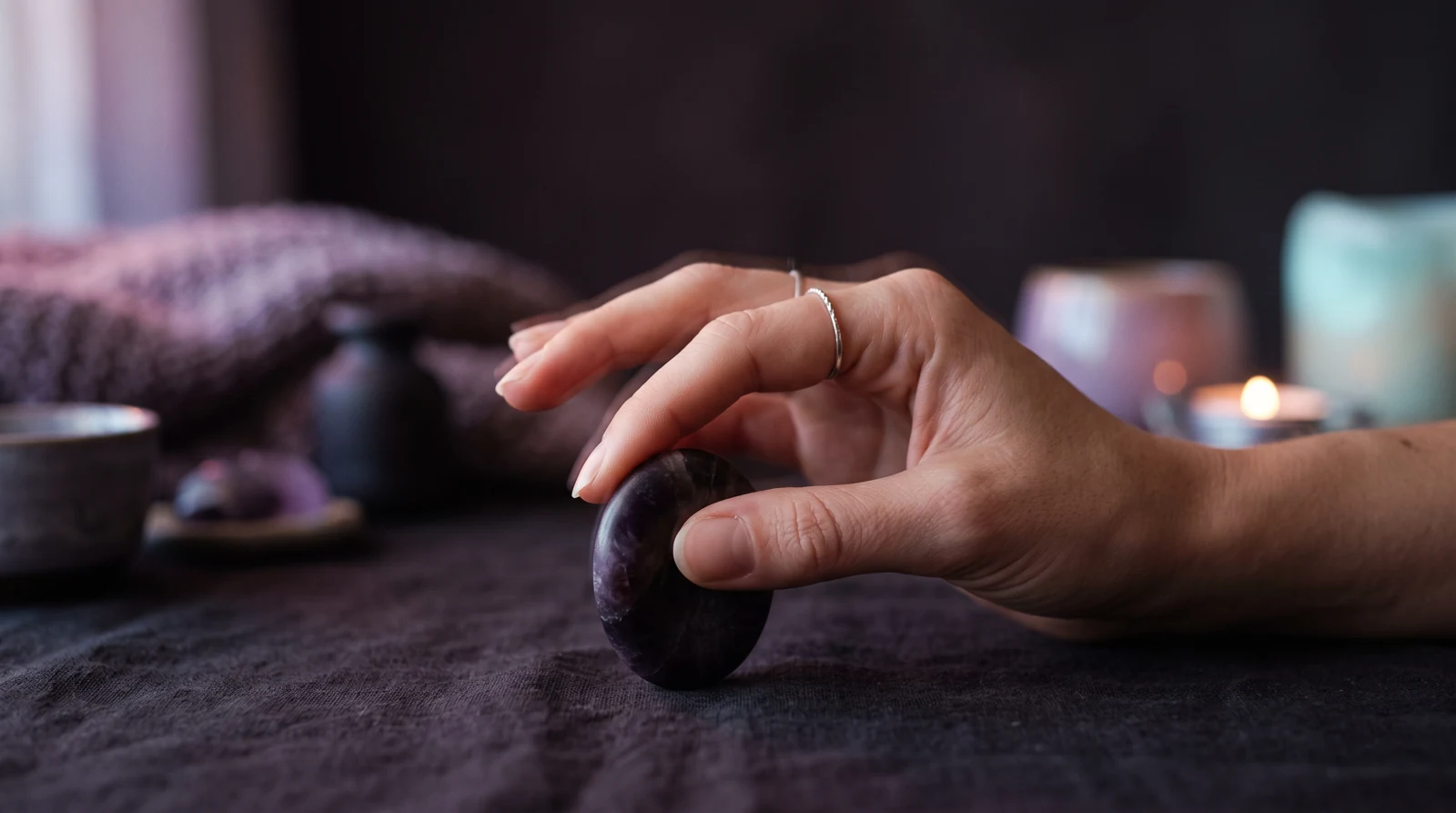
Stimming is short for self-stimulatory behavior: repetitive movements, sounds, or sensory actions a person does to regulate how they feel. The term comes from the autism world, where stimming is common and often more visible, think hand-flapping, rocking, repeating a satisfying phrase. But the behavior itself runs on a spectrum that includes basically everyone. Hair twirling, leg bouncing, knuckle cracking, humming the same four bars, rubbing a smooth stone in your pocket, clicking a retractable pen until a coworker stages an intervention: all the same family. The common thread isn't what the movement looks like. It's what it does: it feeds your nervous system a steady, predictable stream of sensation that you control.
Why brains do this
Think of your nervous system as having a comfortable operating band. Too much input, a loud open-plan office, a crowded train, a day of back-to-back video calls, and you're over the line into overwhelm. Too little, a long meeting about nothing, a waiting room, and you're under it, restless and crawling out of your skin. Stimming is a manual thermostat. A rhythmic, self-produced sensation is the most predictable input there is; your brain knows exactly what's coming because it's the one making it happen. That predictability is soothing when the world is too loud, and stimulating when the world is too flat. Same knob, turned from both directions.
Don't take my word for the soothing part. When researchers actually interviewed autistic adults about stimming instead of theorizing about it, the participants described it as a self-regulation tool: a way to manage overwhelming environments and too-big emotions, and often calming or comforting, with many objecting to being made to suppress it (Kapp et al., 2019). The study's title is a quote from a participant: 'People should be allowed to do what they like.' Hard to put it better.
Stimming is a manual thermostat: soothing when the world is too loud, stimulating when it's too flat.
The cost of forcing stillness
Here's the part the sit-still crowd misses. Suppressing a stim doesn't delete the need; it just reroutes the effort. Holding your body motionless while your nervous system is asking for input is active work, and that work comes out of the same budget you'd otherwise spend on listening, thinking, or keeping your cool. It's why the kid forced to sit on his hands hears less of the lesson, not more, and why your focus often improves the moment you start doodling in a meeting. The movement wasn't the distraction. The movement was the overhead that kept the rest of the machine running. There's a real distinction worth keeping: a stim is a problem if it causes harm, think skin picking that draws blood, or genuinely disrupts other people. Otherwise, the polite knee bounce under the desk is doing quiet maintenance work, and the professional thing to do is let it.
Stimming on purpose
Once you see stimming as regulation, you can be deliberate about it. A few upgrades worth stealing:
- Match the channel to the context. A silent stim for meetings (smooth stone, fidget ring, foot pressing into the floor), a motion stim for thinking (pacing, which has an ancient and distinguished history), a sound stim for alone time.
- Keep one in every location. Pocket, desk, bag, nightstand. The best stim is the one within reach when the overwhelm actually hits.
- Watch the difference between regulating and leaking. A steady rhythm that settles you is regulation; a frantic, escalating one is your body filing a report that the environment is too much. The second one is information: change the input, don't just stim harder.
- Let your eyes and ears stim too. Repetitive sensory input doesn't have to be motor. Slow-moving textures, steady rain, a loop of satisfying sound: same predictable-input principle, different port.
That last one is where I'll disclose my own habit: a lot of what people do with Feelsy is functionally visual stimming, and I mean that as a compliment. A slow slime texture folding over itself with a soft sound bed is repetitive, predictable, self-paced sensation, the exact recipe, without needing your hands free or a socially acceptable pen to click. On sensory-overload days I'll run it for five minutes with headphones like a palate cleanser for the nervous system.
The quiet rebrand stimming deserves
We already approve of stimming when it comes in sanctioned packaging. Worry beads have been around for centuries, rosaries and prayer beads before that, rocking chairs were standard equipment on every American porch, and nobody calls a runner's stride repetitive self-stimulatory behavior, even though the runner will tell you that's exactly what the calm is made of. The only thing that changed with the pen click and the knee bounce is that we forgot the category. So: notice what your body already does to keep you level. Keep the versions that work, swap the ones that hurt, and spend exactly zero additional energy performing stillness for an audience that was never grading you as closely as you feared.
Feelsy is a wellness product, not medical advice. If stress, anxiety or sleep problems persist, please speak with a qualified professional.
References
- Kapp, S. K., Steward, R., Crane, L., Elliott, D., Elphick, C., Pellicano, E., & Russell, G. (2019). 'People should be allowed to do what they like': Autistic adults' views and experiences of stimming. Autism, 23(7), 1782-1792.
Frequently Asked Questions
What does stimming mean?
Stimming is short for self-stimulatory behavior: repetitive movements, sounds, or sensory actions that help a person regulate how they feel. It ranges from hand-flapping and rocking, often discussed in the context of autism, to everyday versions like leg bouncing, hair twirling, pen clicking, and rubbing a smooth object.
Is stimming only an autism thing?
No. Stimming is common and often more visible in autistic people, and research with autistic adults shows it works as a valued self-regulation tool. But nearly everyone stims in some form: knee bouncing, humming, doodling, fiddling with jewelry. The underlying mechanism, steady self-produced sensation that settles the nervous system, is universal.
Why does stimming feel calming?
A rhythmic movement you produce yourself is the most predictable sensory input your brain can get, because it knows exactly what's coming. That predictability soothes an overloaded nervous system and tops up an understimulated one. Suppressing it tends to backfire: holding still takes active effort that drains focus from everything else.
Should I stop myself from stimming?
Usually not. A stim is only worth changing if it causes harm, like skin picking that damages skin, or genuinely disrupts others. Otherwise it's doing useful regulation work. If a stim bothers people around you, swapping it for a quieter channel, like a fidget ring, a smooth stone, or a slow visual loop, works better than forcing stillness.

About the author
Contributing writer
Kurt is a New York based writer covering the practical science of stress, sleep and focus. He is the resident sceptic of the Journal: if a technique cannot survive a crowded subway commute and a deadline week, he is not interested in it.
Feel it for yourself.
Feelsy turns reading about calm into practising it. Two minutes of a slow texture is often the whole difference.


Related reading
 Breath & Body
Fidgeting Isn't a Bad Habit: The Case for Stimming
Fidget toys, foot-tapping, doodling: focus problem or focus tool? What research on ADHD hyperactivity and stimming actually says about the wisdom of restless hands.
 Breath & Body
Sensory Overload: Why It Happens and How to Find Quiet
What sensory overload is, why crowded, noisy places can overwhelm the nervous system, and gentle, practical ways to come back when everything is too much.
 ASMR
ASMRMisokinesia: Why Watching Someone Fidget Drives You Up the Wall
If a bouncing knee across the room hijacks your whole brain, you may have misokinesia. Here's the research on fidget sensitivity and what actually helps.
 Breath & BodyNew
Decision Fatigue: Why You Can't Pick a Show at 9 p.m.
You made choices all day, and now picking dinner feels impossible. What decision fatigue is, what the science actually supports, and how to spend fewer choices.
 Breath & Body
How to Stop Procrastinating: What Actually Works
Procrastination isn't laziness, it's mood management with a bill attached. What the research says works: shrink the start, fix the friction, skip the shame.
 Breath & Body
Belly Breathing: A Beginner's Guide to Diaphragmatic Breathing
Diaphragmatic breathing, or belly breathing, is the quiet foundation under every calming technique. How to do it, what one study found, and when to use it.