The 3 P.M. Slump: Why Your Brain Clocks Out After Lunch
That mid-afternoon energy crash isn't your lunch, it's your circadian rhythm. Here's the science of the post-lunch dip and what actually gets you through it.
By Kurt Woleret
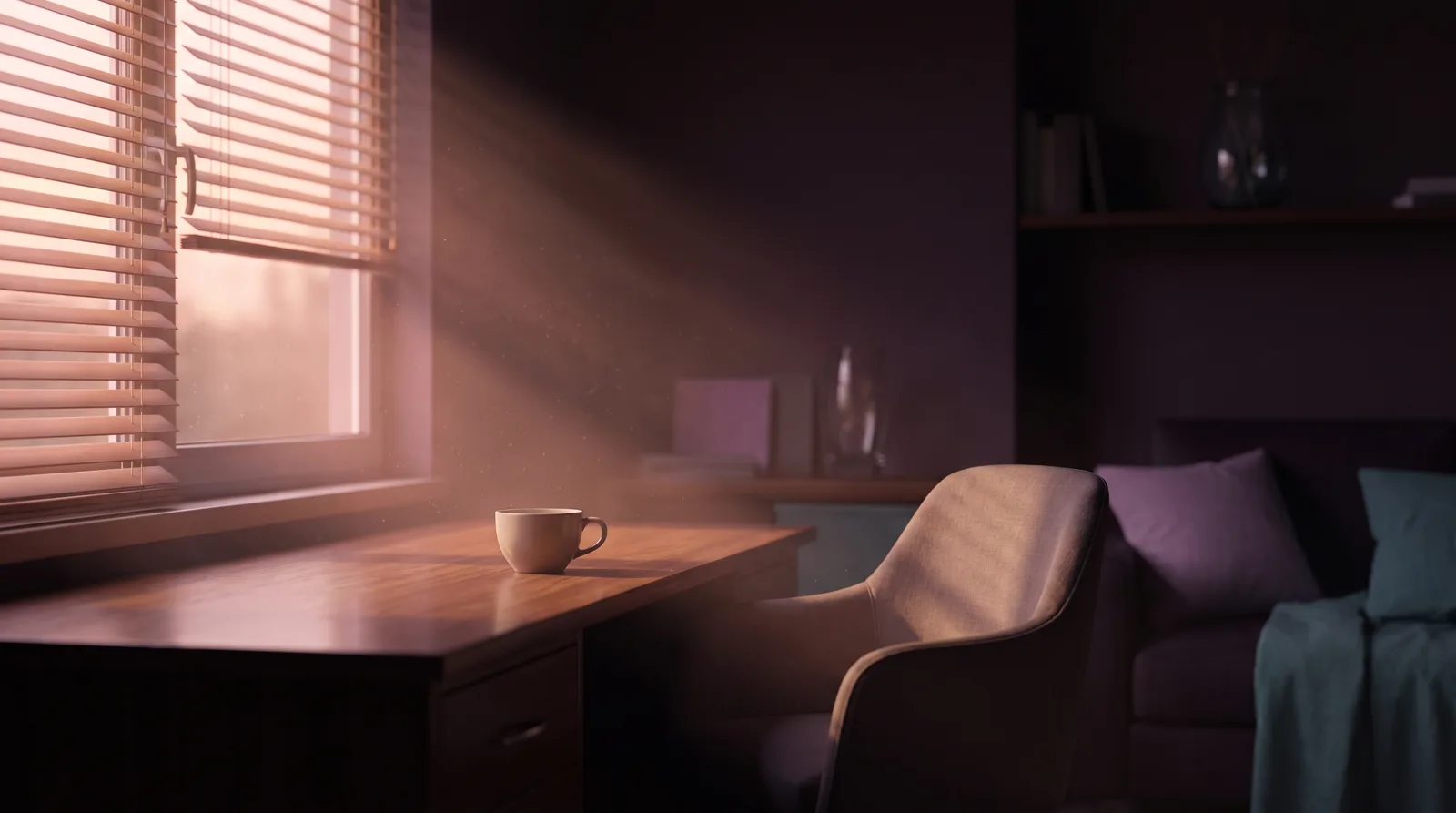
Every office I've ever worked in observes the same unofficial holiday, daily, at around 3 p.m. The Slack messages slow down. Someone makes the fourth coffee run. A guy in accounting reads the same email three times like it's written in Aramaic. For years I blamed lunch, specifically whatever heavy thing I'd eaten, and swore that tomorrow, salad. Then I actually read the research, and it turns out the salad was never going to save me. The afternoon slump isn't a food problem. It's a clock problem, and it's built into you.
It's not the burrito
Sleep researchers call it the post-lunch dip, and the name is a little unfair to lunch. Circadian rhythm research, summarized by chronobiologist Timothy Monk, shows the early-afternoon drop in alertness and performance is endogenous, meaning it's generated by your internal biological clock, and it shows up even in people who skipped lunch entirely (Monk, 2005). A big greasy meal can deepen the dip, but it doesn't cause it. The dip was already on your calendar when you woke up. Blaming the burrito is like blaming your umbrella for the rain.
What's actually happening
Two systems run your alertness. The first is sleep pressure: adenosine accumulating in your brain from the moment you wake, slowly cranking up the urge to sleep. The second is your circadian rhythm, a roughly 24-hour wave of alerting signals that pushes back against that pressure, keeping you functional across the day. The wave isn't flat. It surges in the late morning, and it sags in the early afternoon, roughly 1 to 4 p.m. for typical sleepers, before rising again into the evening.
During that sag, the alerting signal drops while sleep pressure keeps climbing, and for an hour or two the gap between them narrows. That gap is your subjective energy. Narrow gap, heavy eyelids, third read of the same email. This is also why the slump hits like a scheduled event rather than a random mood: it is scheduled. Siesta cultures didn't invent the afternoon rest out of laziness; they built the schedule around the biology instead of pretending the biology isn't there.
The dip was already on your calendar when you woke up. Blaming the burrito is like blaming your umbrella for the rain.
What doesn't work
The default office responses to the slump are mostly theater. The 3:30 p.m. large coffee works in the moment and then bills you at bedtime; caffeine hangs around for hours, and a late-afternoon dose is a classic way to shave depth off that night's sleep, which makes tomorrow's dip worse. The vending machine sugar run buys you twenty scattered minutes before dropping you lower than it found you. And white-knuckling through with sheer discipline mostly produces the discipline of reading the same paragraph five times. You can't argue with a circadian rhythm. It doesn't attend meetings.
What actually works
The dip is a wave, not a wall. The plays that work all share one idea: ride it instead of fighting it.
- Nap it, briefly. A 10-to-20-minute nap timed inside the dip is the single most direct fix; it trims sleep pressure right when the circadian signal is weakest. Keep it short to dodge deep-sleep grogginess.
- Get light and motion. Bright light is an alerting signal, and a ten-minute walk outside hits the clock, the muscles, and the mood at once. It's the cheapest stimulant you own.
- Schedule around it. Put deep, creative work in your late-morning surge and route the dip toward shallow tasks: email, filing, routine calls. Same total output, way less suffering.
- Time caffeine honestly. If you use coffee, use it at the start of the dip, not the end, and keep your sleep cutoff intact. Earlier and smaller beats later and desperate.
- Take a real reset instead of a doomscroll. Five minutes of genuine downshift, slow breathing, eyes on something calm and drifting, does more than fifteen minutes of feeds, which are stimulation dressed up as rest.
That last one is where I've changed my own routine the most. My old dip ritual was scrolling, which is like treating exhaustion with a strobe light. Now I put my headphones on, open Feelsy, and give it five minutes: one slow texture, the 4-7-8 breathing exercise, done. It's not a nap and doesn't pretend to be, but it takes the static out, and I come back to the keyboard less like a man reading Aramaic. On good weather days, the walk wins instead. Either way, the principle holds: the dip wants rest, so hand it a small, controlled dose of rest rather than more noise.
Design around the dip
Here's the reframe that made me stop resenting my own afternoons: the slump isn't evidence that you're low-energy, undisciplined, or aging poorly. It's evidence that you have a circadian rhythm, which every human who has ever lived also had. The 9-to-5 was designed around machines that run flat all day; you are not one. So stop scheduling like you are. Protect the morning surge for the hard stuff, meet the dip with light, motion, a short nap, or a five-minute reset, and let the second wind that follows carry the rest of the day. The wave is coming either way. You might as well surf it.
Feelsy is a wellness product, not medical advice. If stress, anxiety or sleep problems persist, please speak with a qualified professional.
References
- Monk, T. H. (2005). The post-lunch dip in performance. Clinics in Sports Medicine, 24(2), e15-e23.
Frequently Asked Questions
Why do I get tired at 3 p.m. every day?
Because of the post-lunch dip, a built-in sag in your circadian rhythm's alerting signal that typically lands between about 1 and 4 p.m. While that signal dips, sleep pressure from being awake keeps climbing, and the gap between them narrows, which you feel as heavy-eyed low energy. It's scheduled biology, not a personal failing.
Does eating lunch cause the afternoon slump?
No. Circadian research shows the early-afternoon dip in alertness is endogenous, generated by your internal clock, and it appears even in people who skip lunch entirely. A heavy meal can deepen the dip, but it doesn't create it. That's why changing what you eat rarely makes the slump disappear.
What is the best way to beat the afternoon slump?
Work with it rather than against it. A short 10-to-20-minute nap inside the dip is the most direct fix; bright light and a brisk ten-minute walk are close behind. Scheduling demanding work in your late-morning peak and routing shallow tasks into the dip also helps. Late-afternoon coffee and sugar tend to backfire by damaging that night's sleep.
Should I drink coffee during the afternoon slump?
Only early in the dip, and only if it stays at least 8 hours before your bedtime. Caffeine lingers for hours, so a late-afternoon cup quietly shallows your sleep that night and makes tomorrow's slump worse. If you're near the cutoff, light, movement, or a five-minute rest beats another coffee.
Is the afternoon dip a sign of bad sleep?
Not by itself; the dip is universal and happens even in well-rested people. But its depth reflects your sleep debt. If you're crashing hard every afternoon, struggling to keep your eyes open in meetings, the dip is probably amplifying real sleep deprivation, and the fix is more night sleep, not more afternoon countermeasures.

About the author
Contributing writer
Kurt is a New York based writer covering the practical science of stress, sleep and focus. He is the resident sceptic of the Journal: if a technique cannot survive a crowded subway commute and a deadline week, he is not interested in it.
Feel it for yourself.
Feelsy turns reading about calm into practising it. Two minutes of a slow texture is often the whole difference.


Related reading
 Sleep
SleepThe Coffee Nap: Why Drinking Coffee Before a Nap Actually Works
A coffee nap means drinking caffeine right before a 20-minute nap. It sounds backwards, but the timing is the trick. Here's the science and how to do it.
 Sleep
SleepHow Long Should a Nap Be? The Science of Waking Up Better
Ten minutes, twenty, ninety? Nap length decides whether you wake up sharp or wrecked. Here's what sleep research says about the ideal nap, and how to time it.
 Visual Meditation
The Five-Minute Reset: How to Calm Down When There's No Time
You don't need an hour of meditation to come down from a spike of stress. Research-backed ways to reset your nervous system in five minutes or less.
 Breath & BodyNew
Do Cold Showers Actually Work? A Skeptic Reads the Evidence
Cold showers are pitched as a cure for everything from low energy to weak character. Here's what the actual research says, and how to try one without the cult.
 Breath & BodyNew
Dopamine Detox: What It Gets Right and What It Gets Wrong
Dopamine detox promises a factory reset for your distracted brain. Here's what the neuroscience actually says, what helps, and what's just rebranded boredom.
 Breath & Body
How to Stop Overthinking: Quieting a Mind That Will Not Move On
Why overthinking loops and how to interrupt it: what rumination research shows, why you cannot argue with a spiral, and gentler ways to change the channel.