Bhramari: The Humming Bee Breath That Quietens a Racing Mind
Bhramari, the humming bee breath, uses your own voice to settle the nervous system. Here is how to practise it, why humming soothes, and what research suggests.
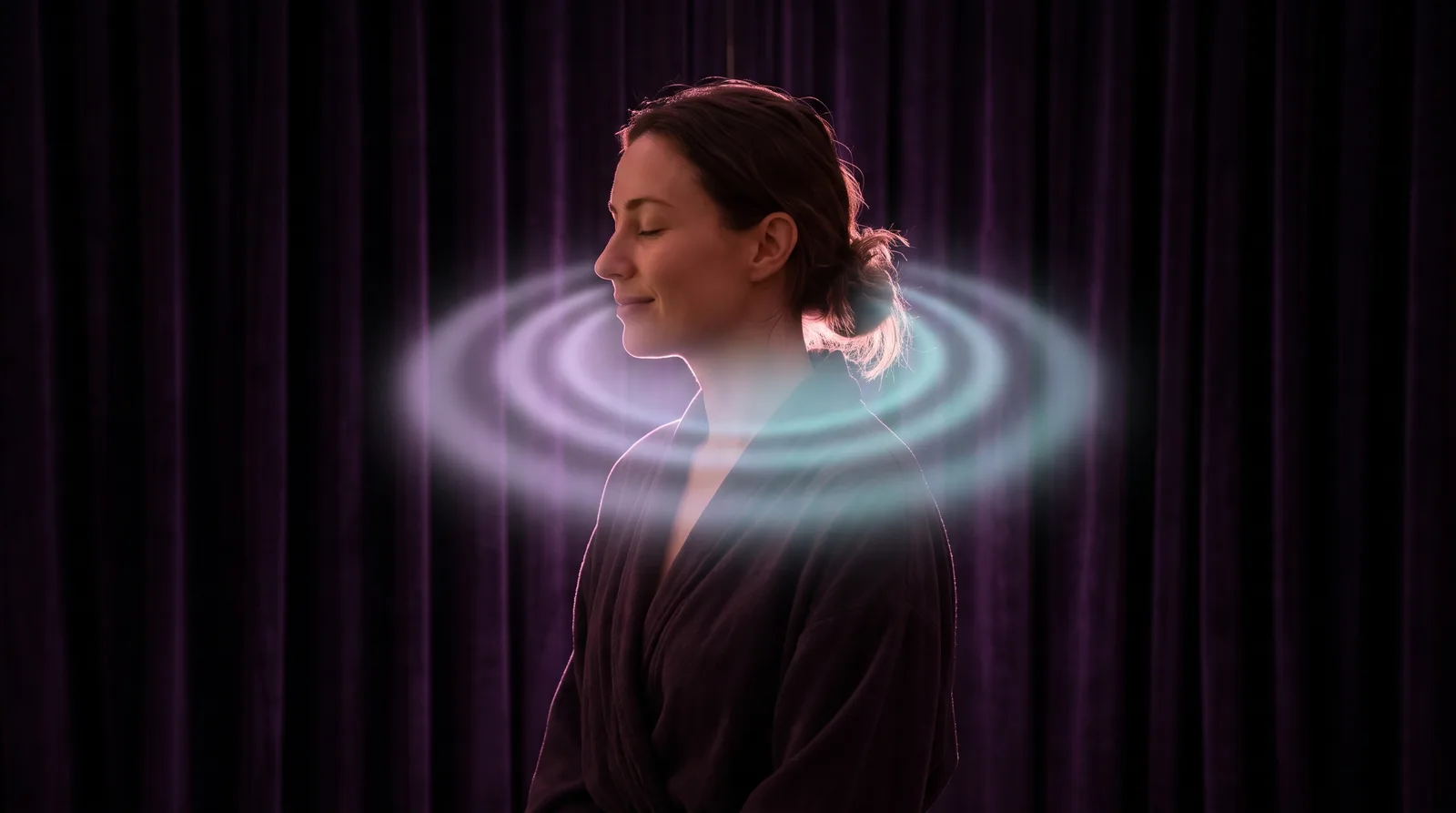
Long before apps, before cushions and candles and playlists, human beings carried one instrument for calming themselves that never needed charging: the voice. Not the speaking voice, with its arguments and lists, but the humming voice, the low private drone we make with lips closed and nothing to say. In the yogic tradition this became a formal practice called bhramari pranayama, the humming bee breath, named after the black Indian bee whose drowsy drone it imitates. It is one of the simplest breathing practices ever devised, and one of the most immediately rewarding.
There is something almost embarrassing about how little it asks of you. You breathe in through the nose. You breathe out with a hum. That is the entire practice. And yet within half a dozen breaths, something in the body audibly changes register, like a household settling down for the evening.
What bhramari actually is
In its classical form, bhramari is practised seated, with the eyes closed. You inhale slowly through the nose, and on the exhale you produce a steady, gentle humming sound, pitched low, sustained for as long as the breath comfortably lasts. Traditional teachers often add a lovely detail called shanmukhi mudra: the thumbs rest lightly over the ears, closing them, so the hum stops being a sound in the room and becomes a vibration in the skull. The outside world dims; the inside world purrs.
You need not adopt the full ceremony. A quiet hum on the out-breath, done at a desk or in a parked car, is still bhramari in every way that matters. The bee does not check its posture.
Why humming calms: the long exhale
The first reason bhramari works has nothing to do with sound at all. Humming is simply a disguised long exhale. You cannot hum on an in-breath, and a sustained hum stretches the out-breath to two or three times the length of the inhale. That ratio matters: a long, slow exhale is one of the most reliable levers we have on the parasympathetic nervous system, the branch responsible for rest, digestion and repair. Practices from 4-7-8 breathing to singing in a choir all exploit the same mechanism. Bhramari gets you there without counting, because the hum itself paces the breath.
The second reason is the vibration. A hum resonates through the throat, face and chest, a gentle internal massage precisely where the body carries its most stubborn tension. Researchers have begun to look closely at this. A Holter-based study of heart rate variability found that periods of humming were associated with more favourable markers of autonomic balance than physical activity, emotional stress or even sleep, suggesting the practice nudges the body towards a calmer, more parasympathetic state (Trivedi et al., 2023, Cureus). It is a small study, and humming is not a cure for anything, but it agrees with what practitioners have reported for centuries: the buzz settles the bees inside.
You cannot hum and hurry at the same time. The sound itself refuses.
How to practise: six breaths of bee
Here is a simple form to begin with. It takes about three minutes, and nobody watching will know you are doing anything at all if you keep the hum soft.
- Sit comfortably and let your shoulders drop. Close your eyes if it is safe and comfortable to do so.
- Breathe in slowly through the nose for a count of about four, without straining.
- With lips gently closed and jaw loose, breathe out on a low, steady hum until the breath is nearly finished. Do not squeeze out the last drop.
- Let the next inhale arrive on its own, then hum the exhale again. Continue for six breaths, or as long as it feels pleasant.
- If you like, cover your ears lightly with your thumbs for the final two breaths and notice how the vibration moves inward.
The pitch should feel like a contented sigh, not a performance. Low and lazy is correct. If your lips tickle slightly, you have found the right register.
When the bee breath earns its keep
Bhramari suits the moments when the mind is loud and circumstances are not: the hour before sleep, the aftermath of a difficult phone call, the queue that will not move. Because the hum masks a little of the outside world, it is particularly kind to people who find silence itself stressful. The sound gives your attention a handrail.
It also pairs beautifully with the eyes. In the evening I will sometimes hum through six slow breaths while watching something unhurried move, the way one might watch rain. A slow visual texture in Feelsy works well for this: let the folding motion set the pace of the breath, and let the hum carry the exhale. Ears closed, eyes soft, the day ends several sizes smaller than it began. If you prefer a counted practice afterwards, Feelsy's guided 4-7-8 exercise makes a natural next step.
A practice with no apparatus
What I love most about bhramari is its poverty. It requires no equipment, no subscription, no belief. It is the rare wellness practice that predates the wellness industry by roughly two thousand years and has emerged entirely unbothered. Your grandmother hummed at the sink for the same reason the yogis hummed on the riverbank: because a body that is humming has, for that breath at least, stopped bracing.
Six breaths. Lips closed. Nothing to say. Begin there, and let the bee do the rest.
Feelsy is a wellness product, not medical advice. If stress, anxiety or sleep problems persist, please speak with a qualified professional.
References
- Trivedi, G., et al. (2023). Humming (Simple Bhramari Pranayama) as a stress buster: A Holter-based study to analyze heart rate variability parameters during Bhramari, physical activity, emotional stress, and sleep. Cureus, 15(4).
Frequently Asked Questions
What is bhramari pranayama?
Bhramari pranayama is the yogic humming bee breath, named after the black Indian bee whose drone it imitates. You inhale slowly through the nose and exhale on a low, steady hum, traditionally seated with eyes closed. In the classical form the thumbs rest lightly over the ears so the hum is felt as a vibration in the skull rather than heard as a sound in the room.
Why does humming calm you down?
Humming is a disguised long exhale: you can only hum on the out-breath, and a sustained hum stretches the exhale to two or three times the length of the inhale, which is a reliable way to engage the parasympathetic nervous system. The vibration also resonates through the throat, face and chest, and a Holter-based study of heart rate variability found humming was associated with more favourable markers of autonomic balance than physical activity, emotional stress or even sleep.
How do you do the humming bee breath?
Sit comfortably, drop your shoulders and close your eyes if comfortable. Breathe in through the nose for a count of about four, then breathe out on a low, steady hum with lips gently closed and jaw loose, stopping before the breath is fully squeezed out. Continue for about six breaths, keeping the hum soft and lazy, and optionally cover your ears lightly with your thumbs for the final breaths.
When is the best time to practise bhramari?
Bhramari suits moments when the mind is loud: the hour before sleep, after a difficult conversation, or in a queue that will not move. Because the hum masks a little of the outside world, it is especially helpful for people who find silence stressful. It also pairs well with watching something slow, letting the motion pace the breath while the hum carries the exhale.

About the author
Contributing writer
Eleonor writes about contemplative traditions, attention and the cultural history of calm. She has spent two decades collecting the rituals humans use to slow down, from zazen halls to hammams, and translating them for modern, screen-lit lives.
Feel it for yourself.
Feelsy turns reading about calm into practising it. Two minutes of a slow texture is often the whole difference.


Related reading
 Breath & Body
The 4-7-8 Breathing Technique, Step by Step
A focused walkthrough of the 4-7-8 breath: what it is, how to do it, why the long exhale calms you, and when to use it during the day and before sleep.
 Breath & Body
How to Stimulate Your Vagus Nerve (What's Real, What's Not)
The vagus nerve is the internet's favorite calm switch. Here's what it really does, what actually tones it, and which viral hacks are a waste of your time.
 Breath & Body
Pranayama for Beginners: Ancient Breathing, Modern Calm
A gentle introduction to pranayama: what yogic breath control means, three beginner-friendly techniques to try tonight, and what slow-breathing research shows.
 Breath & BodyNew
Do Cold Showers Actually Work? A Skeptic Reads the Evidence
Cold showers are pitched as a cure for everything from low energy to weak character. Here's what the actual research says, and how to try one without the cult.
 Breath & BodyNew
Dopamine Detox: What It Gets Right and What It Gets Wrong
Dopamine detox promises a factory reset for your distracted brain. Here's what the neuroscience actually says, what helps, and what's just rebranded boredom.
 Breath & Body
How to Stop Overthinking: Quieting a Mind That Will Not Move On
Why overthinking loops and how to interrupt it: what rumination research shows, why you cannot argue with a spiral, and gentler ways to change the channel.