The 4-7-8 Breathing Technique, Step by Step
A focused walkthrough of the 4-7-8 breath: what it is, how to do it, why the long exhale calms you, and when to use it during the day and before sleep.
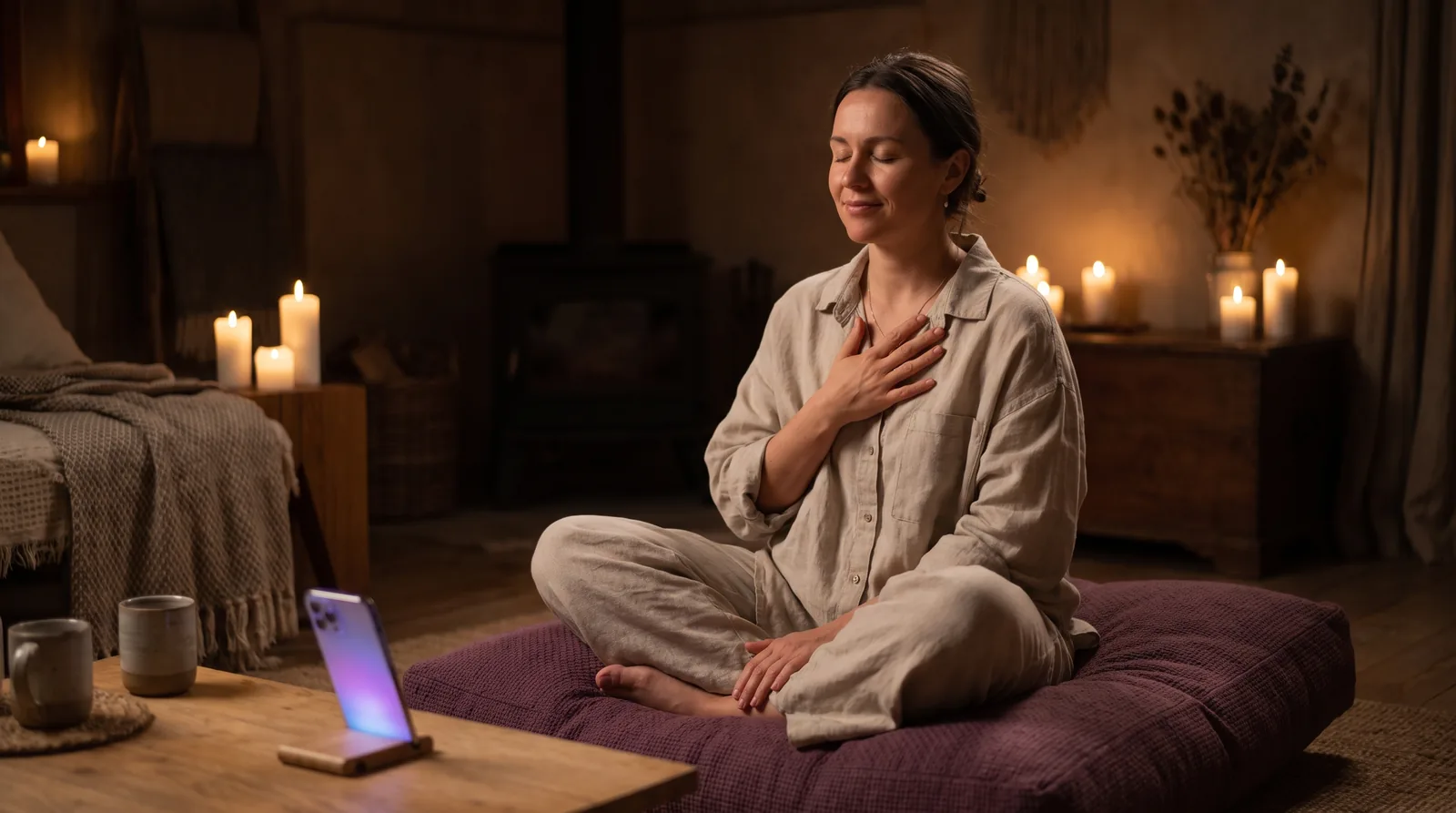
Of all the breathing techniques in circulation, the 4-7-8 is probably the most widely recommended for anxiety and sleep. It is simple, it is short, it can be done anywhere, and its logic is directly grounded in how the nervous system responds to a long exhale. This article is a focused walkthrough. If you want the wider map of breath practices, start with breathing exercises for anxiety and come back here for the specifics.
What the 4-7-8 breath is
The pattern is exactly what the name suggests.
- Breathe in through the nose for a count of 4.
- Hold your breath for a count of 7.
- Breathe out slowly through the mouth for a count of 8.
- That is one breath. Repeat for four breaths. That is one cycle.
Two cycles a day, once in the morning and once before bed, is a strong starting practice. You can do a single cycle any time you feel your chest tighten.
Why the long exhale matters
The physiology behind slow breathing is well studied. A systematic review of psycho-physiological research concluded that slow paced breathing, typically around six breaths per minute or slower, is associated with measurable increases in heart rate variability and greater parasympathetic activity (Zaccaro et al., 2018, Frontiers in Human Neuroscience). The 4-7-8 sits comfortably inside that slow range. Nineteen counts of breath means you are running at about three breaths per minute, which is deep in downshift territory.
The long exhale is the active ingredient. When you breathe out slowly, you gently stimulate the vagus nerve, which signals your body that it is safe to stand down. The inhale, by contrast, tends to raise heart rate slightly. Making your exhale nearly twice as long as your inhale tilts the balance towards rest.
The long exhale is the lever. Everything else is scaffolding.
Where the technique comes from
The 4-7-8 was popularised in the West by Dr Andrew Weil, who described it as a natural tranquiliser for the nervous system. Its roots run deeper. It is a modern, count-based version of the yogic pranayama principle that lengthening the exhale sedates the mind, a principle described in classical yoga for centuries. See breathing exercises for anxiety for that lineage.
Step-by-step, more slowly
The first few times, the counts feel awkward. That is normal. A few tips that make the practice easier:
- Place the tip of your tongue against the ridge behind your upper front teeth and keep it there for the whole cycle. It gives you something small to focus on.
- Exhale through slightly parted lips, making a soft whooshing sound. You will feel the air leaving your body, which reinforces the sensation of release.
- If seven counts of hold feels too long, do not force it. Use a shorter, comfortable ratio like 3-5-6 and keep the exhale the longest of the three.
- The counts do not need to be seconds. Choose a pace where you can complete the cycle without gasping. Slower is stronger, but only if it is comfortable.
When to use it in the day
The 4-7-8 is most useful in three moments.
- First thing in the morning, before opening any screen. One cycle sets a lower baseline for the whole day.
- In any moment of acute stress: before a difficult conversation, after a triggering email, in a queue that is making your jaw clench. One cycle, quietly, and you can respond instead of react.
- In the fifteen minutes before sleep, ideally as part of a wider wind-down routine.
The sleep application is the most famous one, and it works. If you often lie awake with a racing mind, the guide on how to fall asleep faster puts 4-7-8 in the context of a full ritual.
Pairing 4-7-8 with a visual anchor
Counting is helpful at first and quickly becomes another job for a tired mind. A soft visual anchor solves this. Watch a slow loop of fluid or slime expand on the inhale, hold as it pauses, and release on the exhale. Your body stops counting. Perception does the pacing. This is where breath practice and visual meditation combine into something better than either alone. Start with what is visual meditation for the wider practice.
Safety and honest caveats
The 4-7-8 is safe for most healthy adults. A few notes.
- If you feel light-headed, dizzy, or tingly in the hands, stop and breathe normally. That usually means you held the breath too long or made the counts too big, too fast.
- If you have a respiratory or cardiac condition, or you are pregnant, check with your doctor before adding breath holds.
- Do not practise while driving or in water.
- If breathwork consistently increases anxiety for you, that is real. Try a gentler technique like extended-exhale breathing without holds, or pair breath with a soft visual and let your body drift instead of counting.
A short practice worth keeping for life
You can spend a lot of money and time on relaxation techniques. Almost none of them are as portable, as free, and as reliably effective as one cycle of 4-7-8. It costs about a minute. It fits anywhere. It works. Keep it in your pocket.
Feelsy is a wellness product, not medical advice. If stress, anxiety or sleep problems persist, please speak with a qualified professional.
References
- Zaccaro, A., Piarulli, A., Laurino, M., et al. (2018). How breath-control can change your life: A systematic review on psycho-physiological correlates of slow breathing. Frontiers in Human Neuroscience, 12, 353.
Frequently Asked Questions
How do you do the 4-7-8 breathing technique?
Breathe in through the nose for a count of four, hold your breath for a count of seven, then breathe out slowly through the mouth for a count of eight, which counts as one breath, and repeat for four breaths to complete one cycle. Two cycles a day, once in the morning and once before bed, is described as a strong starting practice.
Why does the long exhale in 4-7-8 breathing help calm you?
The long exhale is described as the active ingredient, since breathing out slowly gently stimulates the vagus nerve and signals your body it is safe to stand down, while the inhale tends to raise heart rate slightly. A systematic review by Zaccaro and colleagues in 2018 found slow paced breathing around six breaths per minute or slower increases heart rate variability and parasympathetic activity, and the 4-7-8 pattern runs at about three breaths per minute, well within that range.
Where does the 4-7-8 breathing technique come from?
It was popularised in the West by Dr Andrew Weil, who called it a natural tranquiliser for the nervous system, but its roots run deeper into the yogic pranayama principle that lengthening the exhale sedates the mind, a principle described in classical yoga for centuries.
What if seven counts of holding my breath feels too long?
Do not force it, use a shorter, comfortable ratio like 3-5-6 and keep the exhale the longest of the three counts. The counts do not need to be in exact seconds, choose a pace where you can complete the cycle without gasping, since slower is stronger only if it stays comfortable.
Is the 4-7-8 technique safe for everyone?
It is safe for most healthy adults, but if you feel light-headed, dizzy, or tingly in the hands, you should stop and breathe normally, as that usually means the hold was too long or the counts too big. If you have a respiratory or cardiac condition or are pregnant, check with your doctor before adding breath holds, and never practise while driving or in water.

About the author
Contributing writer
Eleonor writes about contemplative traditions, attention and the cultural history of calm. She has spent two decades collecting the rituals humans use to slow down, from zazen halls to hammams, and translating them for modern, screen-lit lives.
Feel it for yourself.
Feelsy turns reading about calm into practising it. Two minutes of a slow texture is often the whole difference.


Related reading
 Breath & Body
Breathing Exercises for Anxiety: From Pranayama to 4-7-8
Breath is the remote control of your nervous system. Here is what slow breathing does, three techniques with steps, and when not to force it.
 Sleep
SleepHow to Fall Asleep Faster: Sound, Light and Ritual
Falling asleep is a skill, not a stroke of luck. Here is how sound, light and a 15-minute ritual can quiet a racing mind and shorten the trip to sleep.
 Visual Meditation
What Is Visual Meditation? The Complete Guide
Visual meditation rests your attention on slow, pleasing motion so calm happens almost on its own. Here is how it works, what the research says, and how to practise it in three minutes.
 Breath & BodyNew
Do Cold Showers Actually Work? A Skeptic Reads the Evidence
Cold showers are pitched as a cure for everything from low energy to weak character. Here's what the actual research says, and how to try one without the cult.
 Breath & BodyNew
Dopamine Detox: What It Gets Right and What It Gets Wrong
Dopamine detox promises a factory reset for your distracted brain. Here's what the neuroscience actually says, what helps, and what's just rebranded boredom.
 Breath & Body
How to Stop Overthinking: Quieting a Mind That Will Not Move On
Why overthinking loops and how to interrupt it: what rumination research shows, why you cannot argue with a spiral, and gentler ways to change the channel.