Binaural ASMR: Why Headphones Change Everything
Why ASMR feels flat from speakers and electric in headphones: how binaural recording works, what it does to your nervous system, and how to set it up right.
By Kurt Woleret
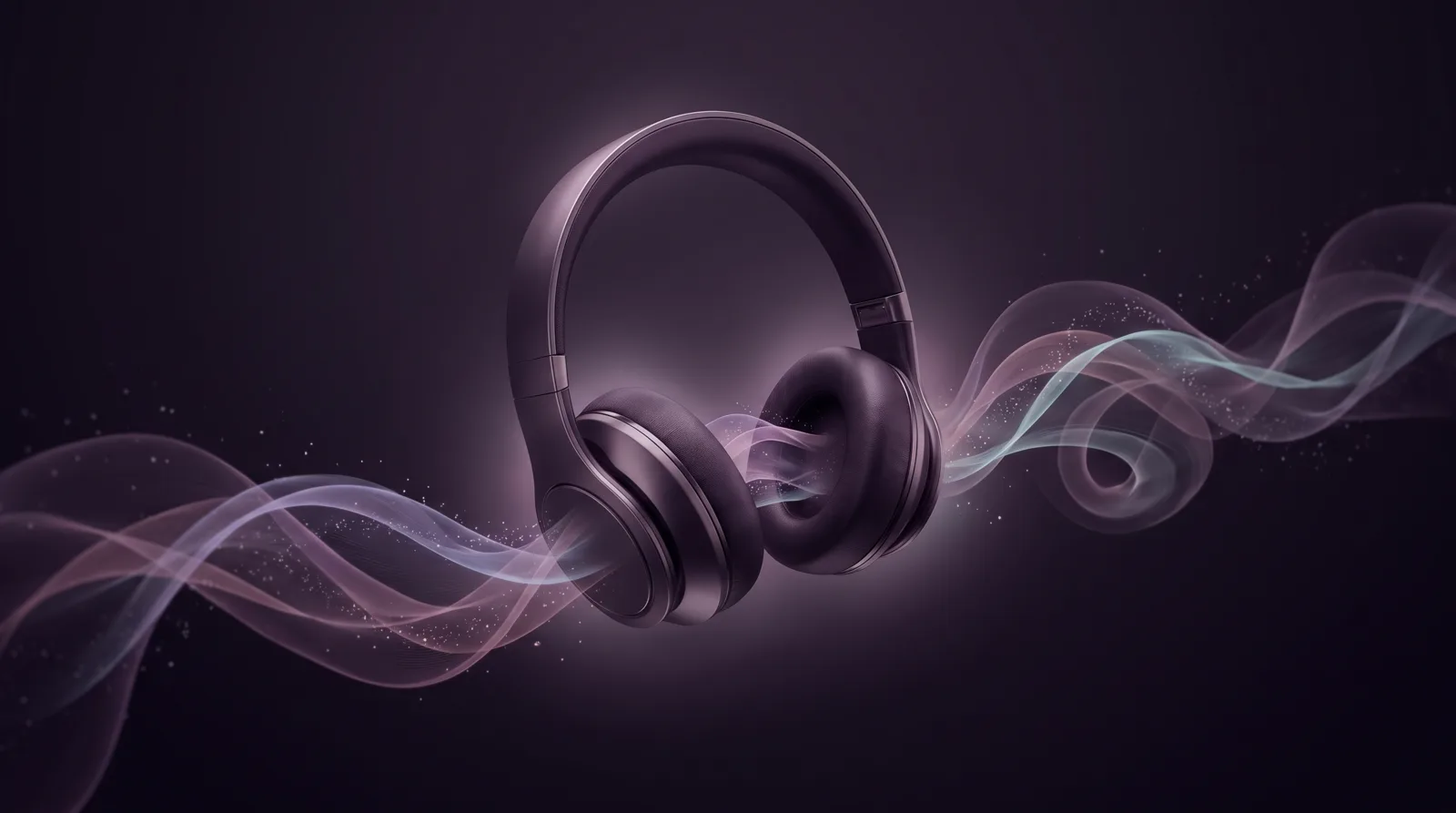
For about a year I was convinced ASMR was mildly overrated. I'd play the videos off my laptop speakers while doing dishes, get a pleasant podcast-adjacent murmur, and wonder what the fuss was about. Then one night on a delayed F train I put in actual headphones, hit play on a whisper video, and a voice moved from my left ear, behind my head, to my right ear. My scalp did the thing. The guy next to me witnessed a grown man shiver at his phone. The difference wasn't the video. It was the recording technique, and the hardware between it and my brain. That technique is called binaural audio, and if ASMR has ever left you cold, there's a decent chance you've only heard the flattened version.
What binaural actually means (not beats, put the pitchforks down)
First, housekeeping, because two very different things share this word. Binaural beats are the alleged brainwave-entrainment tones I've fact-checked elsewhere on this blog; the evidence there is wobbly. Binaural recording is something else entirely, and much less controversial: it's a way of capturing sound with two microphones placed where human ears would be, often inside a dummy head with anatomically shaped ears. The famous 3Dio microphone you've seen in ASMR videos, the disembodied pair of silicone ears, is exactly this.
Record that way, play it back through headphones, and each of your ears receives what its microphone-ear heard, timing quirks and all. The result isn't stereo, which just pans sound left and right across a flat line. It's spatial. Sounds have position: above, behind, close enough to touch. Your brain reconstructs a three-dimensional room from two audio channels, because reconstructing rooms from two ears is what it has done your whole life.
Why your brain falls for it
You locate sound using tiny discrepancies between your ears. A noise on your left hits the left ear microseconds earlier and slightly louder than the right, and the folds of your outer ear color the sound differently depending on where it comes from. Your auditory system reads these cues automatically and constantly; it's how you know, eyes closed, that the fridge hum is behind you. Binaural recording preserves those cues. Ordinary recording bulldozes them.
For ASMR, this matters because so many triggers are really proximity effects. Whispering was the most commonly reported trigger in the first major ASMR survey, by Barratt and Davis in PeerJ in 2015, cited by roughly three-quarters of respondents, and a whisper is, acoustically, a promise that someone is very close and being deliberately gentle. Binaural audio makes that promise physically believable. The whisper isn't coming from a screen in front of you; it's at your ear, where only trusted people get to be. Personal attention, another trigger near the top of that survey's list, works the same way. Your nervous system responds to the simulated closeness the way it responds to real closeness: someone is near, and calm, and paying careful attention, so you can stand down.
A whisper is, acoustically, a promise that someone is very close and being deliberately gentle. Binaural audio makes that promise physically believable.
The part you can measure
This isn't just vibes. In 2018, Poerio and colleagues published a study in PLOS One in which people who experience ASMR watched trigger videos under lab conditions. Watching ASMR videos significantly reduced their heart rates compared with control videos, alongside self-reported increases in calm; non-experiencers showed no such drop. A slowing heart is the signature of a nervous system easing off the gas, which is precisely what you want from a wind-down ritual and precisely what my laptop-speaker era never delivered. The takeaway for skeptics: for people who respond to ASMR, there's a real, measurable relaxation response underneath, and the delivery method decides how much of the trigger actually survives the trip to your ears.
Why speakers flatten the magic
Play a binaural track through speakers and both of your ears hear both channels, smeared together and bounced off your walls before arrival. The interaural timing cues that created the 3D effect cancel into mush; engineers call the culprit crosstalk. What's left is a normal, pleasant, flat recording. The whisper that should be at your left ear is now just quiet talking somewhere in the kitchen. Same video, most of the trigger gone. This is the single most common way people conclude ASMR doesn't work on them without ever having properly heard it.
Setting it up right
The good news is that the fix costs almost nothing:
- Use any real headphones or earbuds. Binaural audio needs channel separation, not audiophile gear; the $20 earbuds in your junk drawer preserve the spatial cues that a $400 speaker destroys.
- Keep the volume low. Triggers live in quiet detail, and your ears are on an all-night shift; a whisper should stay whisper-loud. If you fall asleep listening, low volume matters double.
- Skip aggressive noise-modes if they color the sound. Some processing thins out the fine textures. Plain passive isolation often works better for ASMR than heavy digital tricks.
- Side sleepers: try one earbud, or a flat headband-style speaker. The spatial effect softens, but proximity and texture survive better than comfort-free over-ears jammed into a pillow.
Then pick material that was made for the format: close-miked whispering, tapping that travels around the head, slow hands working near the microphone. If you'd rather not spelunk through an infinite feed at midnight, the sound side of Feelsy is built on this principle, layered close-recorded textures designed for headphones, and its autoplay mode keeps the stream going so you're not tapping a bright screen between tracks. Ears on, lights off, volume low. If your scalp does the thing, welcome. If it doesn't, the slowing heart rate still counts.
Feelsy is a wellness product, not medical advice. If stress, anxiety or sleep problems persist, please speak with a qualified professional.
References
- Barratt, E. L., & Davis, N. J. (2015). Autonomous Sensory Meridian Response (ASMR): a flow-like mental state. PeerJ, 3, e851.
- Poerio, G. L., Blakey, E., Hostler, T. J., & Veltri, T. (2018). More than a feeling: Autonomous sensory meridian response (ASMR) is characterized by reliable changes in affect and physiology. PLOS ONE, 13(6), e0196645.
Frequently Asked Questions
What is binaural ASMR?
Binaural ASMR is ASMR recorded with two microphones placed where human ears would be, often inside a dummy head with silicone ears, so that each of your ears hears exactly what the matching microphone captured. Played back through headphones, it preserves the tiny timing and loudness differences your brain uses to locate sound, which makes whispers and taps feel three-dimensional and close rather than flat.
Why does ASMR work better with headphones?
Headphones deliver each recorded channel to the correct ear, keeping the spatial cues that make a sound feel like it is right beside you. Speakers let both ears hear both channels, smeared by room reflections, which cancels the 3D effect and flattens the sense of closeness that many ASMR triggers depend on. Many people who think ASMR does nothing for them have only ever heard it through speakers.
Is binaural ASMR the same as binaural beats?
No. Binaural beats are tones played at slightly different frequencies in each ear, marketed as brainwave entrainment, and the evidence for them is shaky. Binaural recording is simply a capture technique that preserves natural spatial hearing cues; there is nothing exotic about it, and it is the standard way high-quality ASMR is made.
Does ASMR actually relax your body?
For people who experience ASMR, yes, in a measurable way. A 2018 lab study found that ASMR experiencers showed significantly reduced heart rates while watching trigger videos, along with increased feelings of calm, while non-experiencers showed no such change. A slowing heart rate is a physical sign of the nervous system easing toward rest.
What volume should I listen to ASMR at?
Low. ASMR triggers live in quiet detail, so a whisper should stay whisper-loud in your ears, and low volume protects your hearing during long or overnight listening. If you fall asleep with earbuds in, keeping the level well down matters even more.

About the author
Contributing writer
Kurt is a New York based writer covering the practical science of stress, sleep and focus. He is the resident sceptic of the Journal: if a technique cannot survive a crowded subway commute and a deadline week, he is not interested in it.
Feel it for yourself.
Feelsy turns reading about calm into practising it. Two minutes of a slow texture is often the whole difference.


Related reading
 ASMR
ASMRBinaural Beats: Do They Actually Work?
Binaural beats promise focus, calm, and better sleep through plain headphones. A skeptical look at what the research and meta-analyses actually found.
 ASMR
ASMRWhisper ASMR: Why a Lowered Voice Quiets the Mind
Why whispering is so relaxing: the science behind whisper ASMR, care signals and close attention, and how to use soft-spoken audio for sleep and calm.
 ASMR
ASMRASMR for Sleep: What the Research Actually Says
Millions fall asleep to whisper videos every night. Here's what research says about ASMR for sleep, who it helps, and how to use it without staying up later.
 ASMRNew
Why Is Bob Ross So Relaxing? The Science of Happy Little Brushstrokes
Bob Ross has been putting people to sleep for four decades, and he'd take that as a compliment. Here's the science of why his painting videos work like ASMR.
 ASMRNew
What Is 8D Audio? The Science Behind the Spinning Sound
8D audio pans music around your head using binaural tricks. Here's how the illusion works, why it feels immersive, and whether it helps you relax or focus.
 ASMR
ASMRWhy Paint Mixing Videos Are So Satisfying
Why paint mixing videos feel so satisfying: the slow science of swirls and folds, what ASMR research suggests, and how to watch them as a mini meditation.