Body Scan Meditation: A Guided Tour of Your Own Weight
Learn how to do a body scan meditation step by step: what it is, why moving attention through the body calms the mind, and how to practise it tonight.
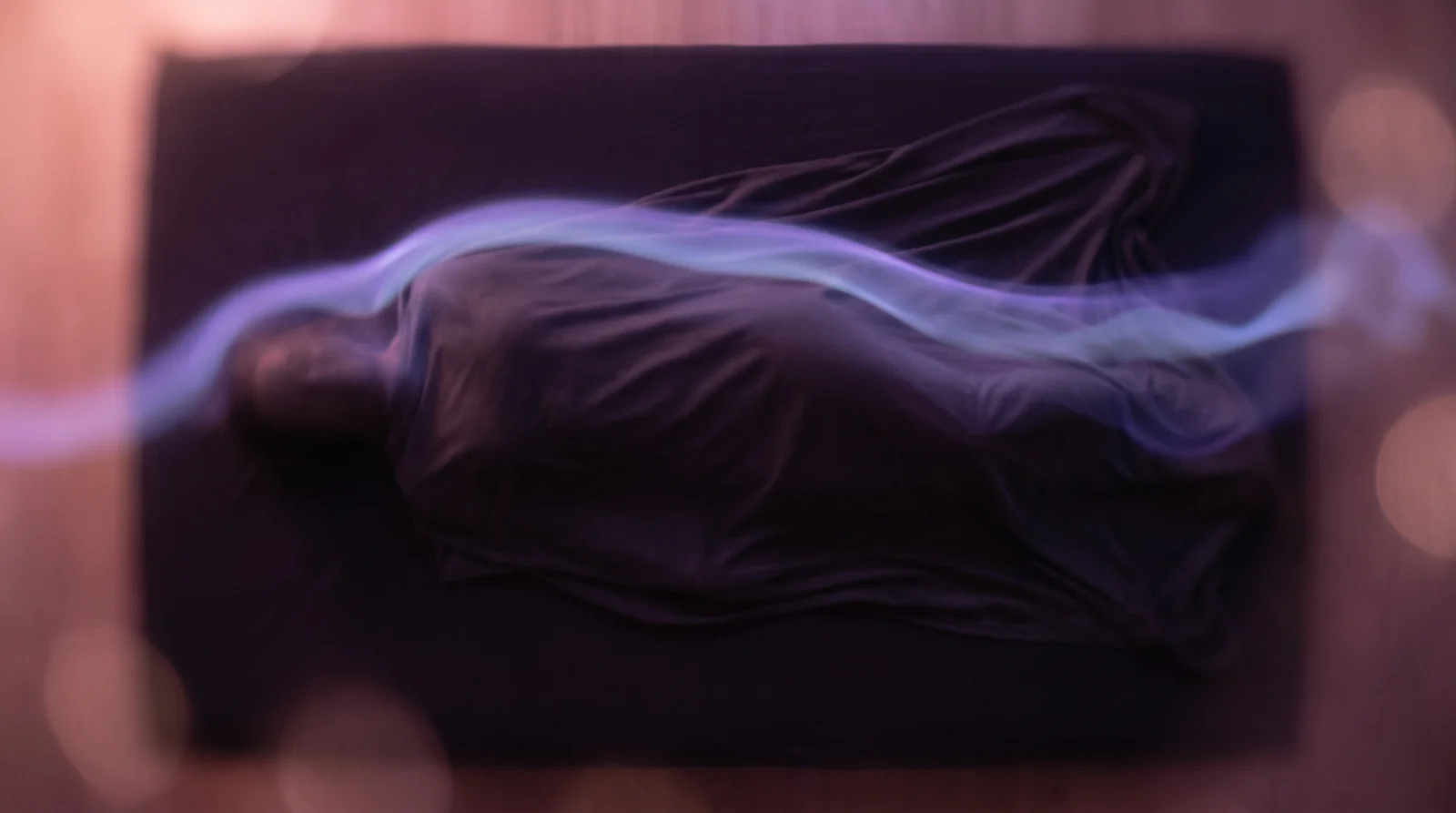
Of all the meditation practices that have travelled from monastery to mobile phone, the body scan may be the most forgiving. It asks nothing of the legs, nothing of the schedule and very little of the will. You lie down, you close your eyes, and you walk your attention slowly through your own body, from the crown of the head to the soles of the feet, noticing whatever is there. That is the entire practice. And yet this unhurried tour, done regularly, is one of the most reliable ways I know to teach a busy mind that it lives in a body, and that the body, most of the time, is doing perfectly well.
The body scan owes its modern fame to mindfulness-based stress reduction, the eight-week programme developed at a hospital in Massachusetts in the late 1970s, where it was the very first formal practice taught. But the idea is far older. Yoga nidra rotates consciousness through the limbs in almost the same order; Burmese and Thai meditation traditions sweep attention through the body as a core technique. Wherever it appears, the logic is the same: attention that is given a slow, physical route to follow has far less appetite for its usual circular worrying.
What a body scan actually is
A body scan is attention in motion. Instead of resting on a single anchor, the way breath meditation rests on the nostrils or a candle flame holds the gaze, the anchor itself travels. You bring awareness to the scalp and simply feel what is there: warmth, tingling, the pressure of the pillow, or nothing at all. After a few breaths you move on, to the forehead, the jaw, the neck, each shoulder, down one arm and then the other, through the chest and belly and hips, along each leg, and finally out through the feet. Nothing needs to change. Noticing is the whole job.
This is worth underlining, because newcomers often assume the aim is relaxation and then feel cheated when a shoulder refuses to loosen. Relaxation is a frequent side effect, and a welcome one, but the practice itself is simpler and humbler: to feel what is actually present, region by region, without editing. Tension noticed without argument very often unwinds on its own. Tension wrestled with tends to dig in.
Why it calms the mind as well as the muscles
The quiet power of the body scan lies in where it sends the mind. Rumination, the looping, self-referential worrying that keeps so many of us awake, lives largely in words and images about the past and future. Bodily sensation lives only in the present. Every time you locate the faint warmth in a palm or the weight of a heel against the mattress, you have stepped out of the argument in your head and into something that is simply, wordlessly happening now. Do this sixty times in a session and you have given the mind sixty small rehearsals in coming home.
The research, while still young, points the same way. A systematic review and meta-analysis of body scan studies found that practising the technique on its own, outside any larger meditation course, was associated with reductions in stress and negative feeling and improvements in mindfulness and wellbeing (Gan et al., 2022, Applied Psychology: Health and Well-Being). The effects were modest rather than miraculous, which feels honest. The body scan is not a cure for anything. It is a practice, and like all practices it pays in proportion to its repetition.
Tension noticed without argument very often unwinds on its own. Tension wrestled with tends to dig in.
How to practise: a simple sequence
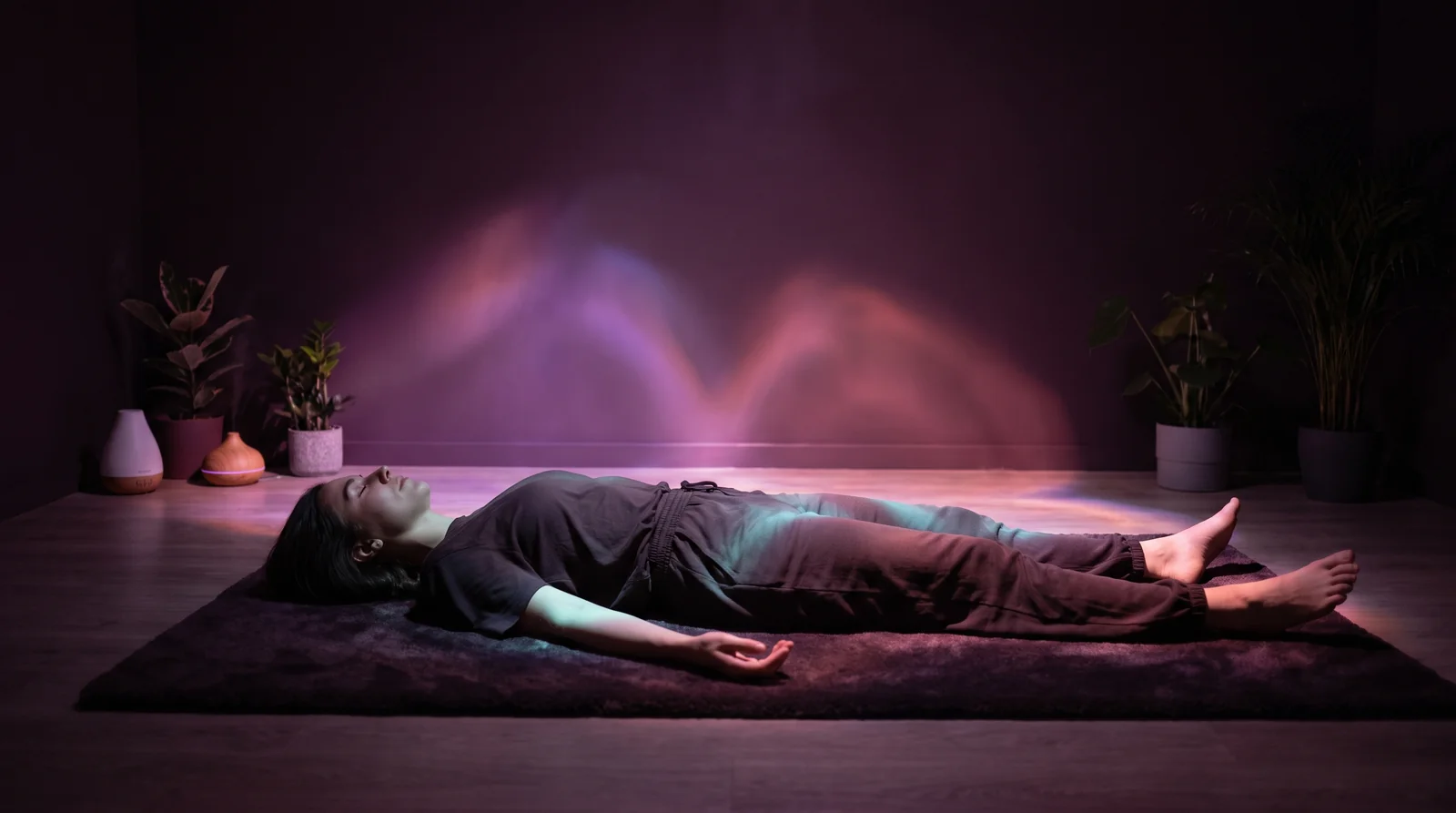
- Lie down somewhere comfortable, arms by your sides, and let your eyes close. Take three slower breaths to arrive.
- Bring attention to the crown of your head. Spend a few breaths simply feeling whatever is there, even if the answer is nothing.
- Move slowly downwards: forehead, eyes, jaw, neck, shoulders, one arm at a time to the fingertips, then chest, belly, back and hips.
- Continue along each leg in turn, through the knees and ankles, and rest finally in the soles of the feet.
- Finish by feeling the body as one whole, breathing, resting on the floor. Lie there a moment before you move.
A full scan can take thirty minutes or three. Length matters less than pace: the practice works when attention travels slowly enough to actually touch each region, rather than reciting a checklist. If you fall asleep partway through, and in the evening you very likely will, count it a success of the wrong kind and try an earlier hour, or a chair, if wakefulness is the goal.
When the mind wanders, and it will
The mind will leave the body many times in a single scan. This is not failure; it is the exercise. Each time you notice you have drifted into planning tomorrow's meeting, you are being offered the single most valuable repetition in all of meditation: the moment of realising, and returning. Come back without commentary, find the last body part you remember, and carry on from there. A scan with forty derailments and forty returns has done more for you than a flawless one, if a flawless one existed.
Some people find the returning easier with gentle sensory company. A quiet soundscape can hold the room steady while attention does its slow travelling, and some practitioners like to begin with a minute of watching something soft and repetitive to settle the eyes before closing them. In Feelsy we often suggest letting a slow texture play for a minute or two first, cream folding, foam settling, and then closing the eyes and beginning at the crown while the sound continues. The ears keep a little anchor; the attention is freed for the tour.
Making it a ritual rather than a remedy
The body scan repays regularity more than intensity. Ten minutes most evenings will teach you more than an hour once a fortnight, because what you are really training is a reflex: the ability to drop out of the head and into the body on request. People who practise for a few weeks often report that the reflex begins to fire on its own, in queues, in meetings, in the minutes before sleep. The body becomes a place one can go, rather than a vehicle one merely drives.
It also pairs beautifully with other evening practices. A scan followed by a round of 4-7-8 breathing, which Feelsy will pace for you if counting feels like work, makes a gentle two-part landing for the day. Or simply let the scan be the whole ceremony: lights low, phone face down, one slow journey from crown to sole. It is a small thing to give yourself. Most nights, it is enough.
Feelsy is a wellness product, not medical advice. If stress, anxiety or sleep problems persist, please speak with a qualified professional.
References
- Gan, R., Zhang, L., & Wang, S. (2022). The effects of body scan meditation: A systematic review and meta-analysis. Applied Psychology: Health and Well-Being.
Frequently Asked Questions
What is body scan meditation and how do you do it?
A body scan is a meditation where you lie down, close your eyes, and slowly move your attention through the body from the crown of the head to the soles of the feet, noticing whatever sensations are there. There's nothing to change or fix, just noticing region by region without editing. A full scan can take anywhere from three to thirty minutes.
Why does a body scan calm the mind, not just the body?
Rumination, the looping worry that keeps people awake, lives largely in words and images about the past and future, while bodily sensation only exists in the present. Every time you notice a faint warmth in a palm or the weight of a heel on the mattress, you step out of the mental argument and into something happening right now. A systematic review and meta-analysis found body scan practice on its own was associated with reduced stress and negative feeling and improved mindfulness and wellbeing.
What should I do when my mind wanders during a body scan?
Wandering is expected and is part of the exercise, not a failure. Each time you notice you've drifted into planning or worrying, simply return to the last body part you remember without commentary and carry on. The article suggests a scan with many derailments and returns is just as valuable as one without any.
Is it normal to fall asleep during a body scan?
Yes, especially in the evening, and the article says to count it a success of the wrong kind if wakefulness was your goal. If you want to stay awake, try practicing earlier in the day or sitting in a chair rather than lying down.

About the author
Contributing writer
Eleonor writes about contemplative traditions, attention and the cultural history of calm. She has spent two decades collecting the rituals humans use to slow down, from zazen halls to hammams, and translating them for modern, screen-lit lives.
Feel it for yourself.
Feelsy turns reading about calm into practising it. Two minutes of a slow texture is often the whole difference.


Related reading
 Ancient Wisdom
Yoga Nidra: A Guide to Conscious Rest
Yoga Nidra is one of the oldest and most forgiving relaxation practices. Here is what it is, why it works, and how to try your first 20-minute session.
 Breath & Body
Progressive Muscle Relaxation: A Complete Guide
Progressive muscle relaxation releases tension you did not know you were holding. A complete beginner's guide to the tense-and-release technique.
 Sleep
SleepHow to Stop Racing Thoughts at Night
Racing thoughts at night are a habit the brain can unlearn. Here is why minds speed up at bedtime and the techniques that quiet them, step by step.
 Breath & BodyNew
Do Cold Showers Actually Work? A Skeptic Reads the Evidence
Cold showers are pitched as a cure for everything from low energy to weak character. Here's what the actual research says, and how to try one without the cult.
 Breath & BodyNew
Dopamine Detox: What It Gets Right and What It Gets Wrong
Dopamine detox promises a factory reset for your distracted brain. Here's what the neuroscience actually says, what helps, and what's just rebranded boredom.
 Breath & Body
How to Stop Overthinking: Quieting a Mind That Will Not Move On
Why overthinking loops and how to interrupt it: what rumination research shows, why you cannot argue with a spiral, and gentler ways to change the channel.