Progressive Muscle Relaxation: A Complete Guide
Progressive muscle relaxation releases tension you did not know you were holding. A complete beginner's guide to the tense-and-release technique.
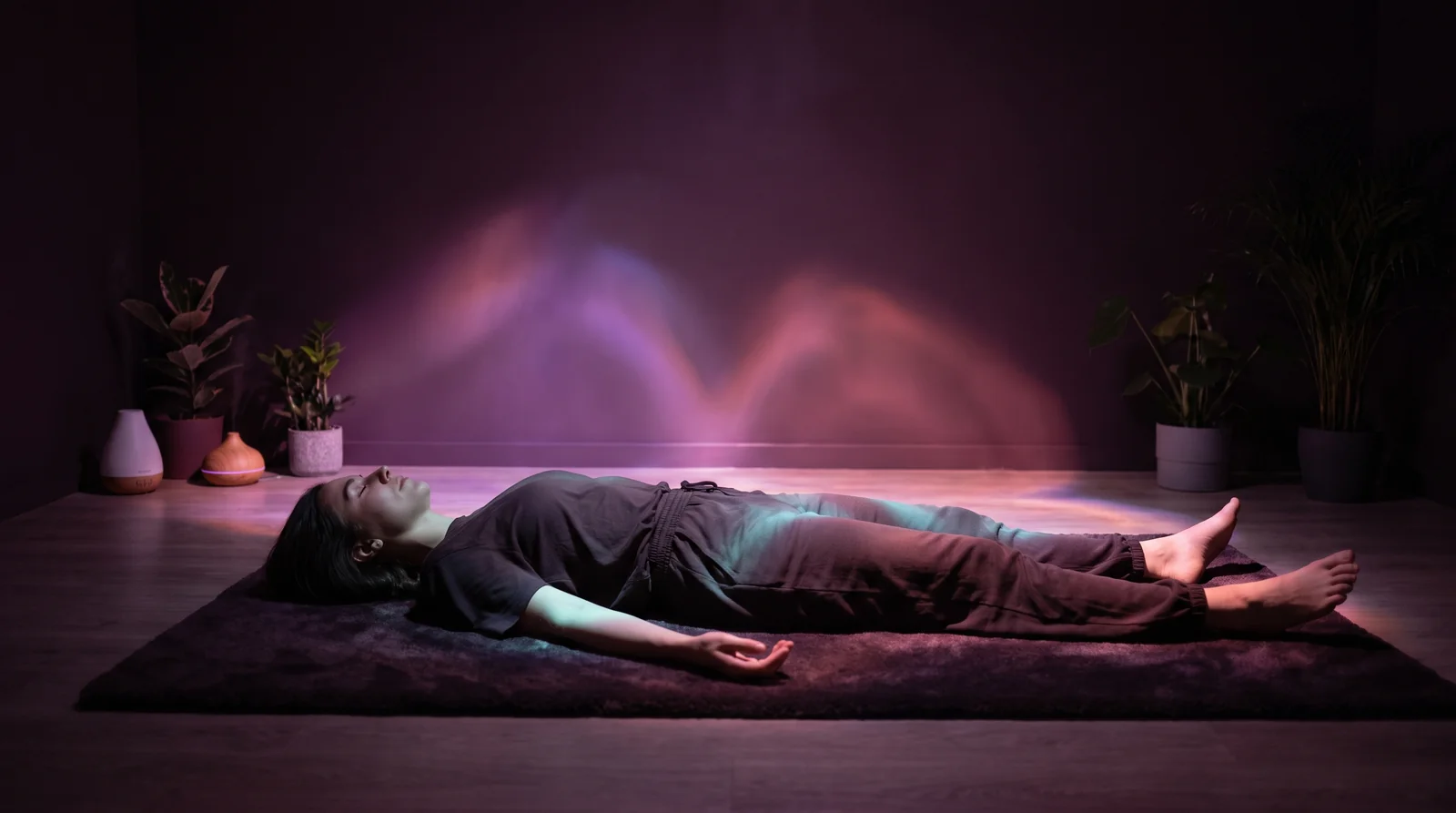
In the 1920s, a Chicago physician named Edmund Jacobson began measuring something nobody had thought to measure: the residual electrical activity in muscles that their owners swore were relaxed. They were not relaxed. Jaws, brows, shoulders and forearms hummed with low-grade contraction their owners could not feel at all. Jacobson spent decades turning that observation into a method, published in 1938 as Progressive Relaxation, built on a single wager: that an anxious mind cannot easily persist in a deeply relaxed body.
Nearly a century later, progressive muscle relaxation, usually shortened to PMR, remains one of the most widely taught relaxation techniques in the world, recommended by sleep clinics, physiotherapists and psychologists alike. It is simple enough to learn from a page, which is what this guide is for.
Why tensing helps you relax
The method sounds backwards at first: to relax a muscle, you begin by tensing it. The logic is perceptual. Chronic tension is invisible precisely because it is constant; a shoulder that has been raised a few millimetres since Tuesday no longer reports itself. Deliberately tightening that muscle gives your nervous system a fresh reference point, and when you let go, the release travels past the old baseline into genuine softness. You cannot release what you cannot feel, and tensing is how you find it.
The sequence also solves the beginner's usual problem with relaxation practices: a mind with nothing to do. PMR keeps attention on a rotating physical task, muscle by muscle, which is why people who find silent meditation impossible often take to it immediately.
What the research says
The evidence base is one of the older and steadier ones in behavioural medicine. A ten-year systematic review and meta-analysis of relaxation training, including Jacobson's progressive relaxation, found consistent medium-to-large reductions in anxiety across dozens of studies (Manzoni et al., 2008, BMC Psychiatry). PMR is also routinely used as a component of insomnia treatment and for tension-type discomfort, usually as one tool among several rather than a cure-all. That is the honest framing: not magic, but a reliable lever that gets stronger with practice.
How to practise: the full sequence
Set aside ten to fifteen minutes somewhere you can lie down or sit fully supported. The rhythm is the same throughout: tense one muscle group firmly but never painfully for about five seconds, then release all at once, not gradually, and spend twenty to thirty seconds simply noticing the difference. The noticing is not decoration; it is the training.
- Hands and forearms. Make fists, squeeze, hold; then let the fingers fall open.
- Upper arms. Bend the elbows and tense the biceps; release and let the arms lie heavy.
- Face. Raise the eyebrows high, then screw the eyes shut and clench the jaw lightly; release until the face feels wide and smooth.
- Neck and shoulders. Draw the shoulders up towards the ears; drop them and feel the distance open.
- Chest and upper back. Take a breath in, hold it, and gently pull the shoulder blades together; exhale and let everything settle.
- Stomach. Tighten the abdominal muscles as if bracing; soften completely.
- Hips and thighs. Press the thighs together or press the heels down; release.
- Calves and feet. Point the toes, then curl them; release, and let the legs go entirely.
Finish with one slow pass of attention from feet to scalp, releasing anything that has crept back. Many people are surprised to find the second pass has as much to give as the first.
Relaxation is not something you force. It is what is left when you stop holding on.
Common mistakes
Four errors account for most disappointing first attempts. Tensing too hard: the contraction should be firm, around half your maximum, and anywhere with injury or cramp should be skipped or merely imagined. Rushing the release: the twenty quiet seconds after letting go are where the entire benefit lives, and cutting them short empties the exercise. Saving it for emergencies: PMR is a trainable skill, and a body that has practised finding release in calm conditions finds it far faster under stress. And expecting fireworks: the early sessions often feel like nothing much, until one evening you notice your shoulders are somewhere lower than they have been in months.
Falling asleep halfway through, by the way, is not a mistake at bedtime; it is the technique working. If you are practising during the day to build the skill, sit upright rather than lying down.
Weaving it into an evening
PMR combines beautifully with slower breathing and with the visual practices this journal returns to often. A sequence many readers settle into: the full muscle sweep lying in bed, then a few rounds of 4-7-8 breathing, for which Feelsy's guided exercise keeps the count, and finally a quiet texture in autoplay mode, something that folds and settles at roughly the pace of your breath, giving your eyes a soft place to rest while the body finishes unwinding. Within a couple of weeks the body begins to associate the first fist-squeeze with everything that follows, and the whole evening starts to tilt towards rest at the first step.
Consistency matters more than intensity. Five unhurried minutes most nights will teach you more than a perfect half hour once a fortnight. The skill you are building is small, ancient and quietly portable: the ability to notice what you are holding, and to put it down.
Feelsy is a wellness product, not medical advice. If stress, anxiety or sleep problems persist, please speak with a qualified professional.
References
- Jacobson, E. (1938). Progressive Relaxation. Chicago: University of Chicago Press.
- Manzoni, G. M., Pagnini, F., Castelnuovo, G., & Molinari, E. (2008). Relaxation training for anxiety: a ten-years systematic review with meta-analysis. BMC Psychiatry, 8, 41.
Frequently Asked Questions
What is progressive muscle relaxation?
Progressive muscle relaxation, or PMR, is a technique developed by physician Edmund Jacobson in the 1920s and published in 1938, built on the idea that an anxious mind cannot easily persist in a deeply relaxed body. It involves systematically tensing and then releasing muscle groups throughout the body.
Why do you tense a muscle before relaxing it in PMR?
Chronic tension is invisible because it is constant, so a shoulder raised slightly for days no longer reports itself. Deliberately tightening the muscle gives the nervous system a fresh reference point, so that releasing it travels past the old baseline into genuine softness.
Is there research supporting progressive muscle relaxation?
A ten-year systematic review and meta-analysis of relaxation training, including Jacobson's progressive relaxation, found consistent medium-to-large reductions in anxiety across dozens of studies (Manzoni et al., 2008). It is also routinely used as one component of insomnia treatment rather than a standalone cure.
What are common mistakes people make with PMR?
The four common errors are tensing too hard instead of using about half your maximum effort, rushing the release so the twenty quiet seconds afterward get cut short, saving the technique only for emergencies instead of practising regularly, and expecting dramatic results too soon. Falling asleep halfway through at bedtime is not a mistake; it means the technique is working.
How long should a progressive muscle relaxation session take?
The article suggests setting aside ten to fifteen minutes, tensing each muscle group firmly but not painfully for about five seconds, then releasing all at once and spending twenty to thirty seconds noticing the difference. Consistency across most nights matters more than doing a perfect, longer session occasionally.

About the author
Contributing writer
Eleonor writes about contemplative traditions, attention and the cultural history of calm. She has spent two decades collecting the rituals humans use to slow down, from zazen halls to hammams, and translating them for modern, screen-lit lives.
Feel it for yourself.
Feelsy turns reading about calm into practising it. Two minutes of a slow texture is often the whole difference.


Related reading
 Breath & Body
Breathing Exercises for Anxiety: From Pranayama to 4-7-8
Breath is the remote control of your nervous system. Here is what slow breathing does, three techniques with steps, and when not to force it.
 Ancient Wisdom
Yoga Nidra: A Guide to Conscious Rest
Yoga Nidra is one of the oldest and most forgiving relaxation practices. Here is what it is, why it works, and how to try your first 20-minute session.
 Sleep
SleepHow to Fall Asleep Faster: Sound, Light and Ritual
Falling asleep is a skill, not a stroke of luck. Here is how sound, light and a 15-minute ritual can quiet a racing mind and shorten the trip to sleep.
 Breath & BodyNew
Do Cold Showers Actually Work? A Skeptic Reads the Evidence
Cold showers are pitched as a cure for everything from low energy to weak character. Here's what the actual research says, and how to try one without the cult.
 Breath & BodyNew
Dopamine Detox: What It Gets Right and What It Gets Wrong
Dopamine detox promises a factory reset for your distracted brain. Here's what the neuroscience actually says, what helps, and what's just rebranded boredom.
 Breath & Body
How to Stop Overthinking: Quieting a Mind That Will Not Move On
Why overthinking loops and how to interrupt it: what rumination research shows, why you cannot argue with a spiral, and gentler ways to change the channel.