Crinkle ASMR: Why Crinkling Sounds Are So Weirdly Soothing
Crinkling plastic, paper and foil rank among ASMR's most popular triggers. Here's why those crisp little sounds calm some brains and grate on others.
By Kurt Woleret
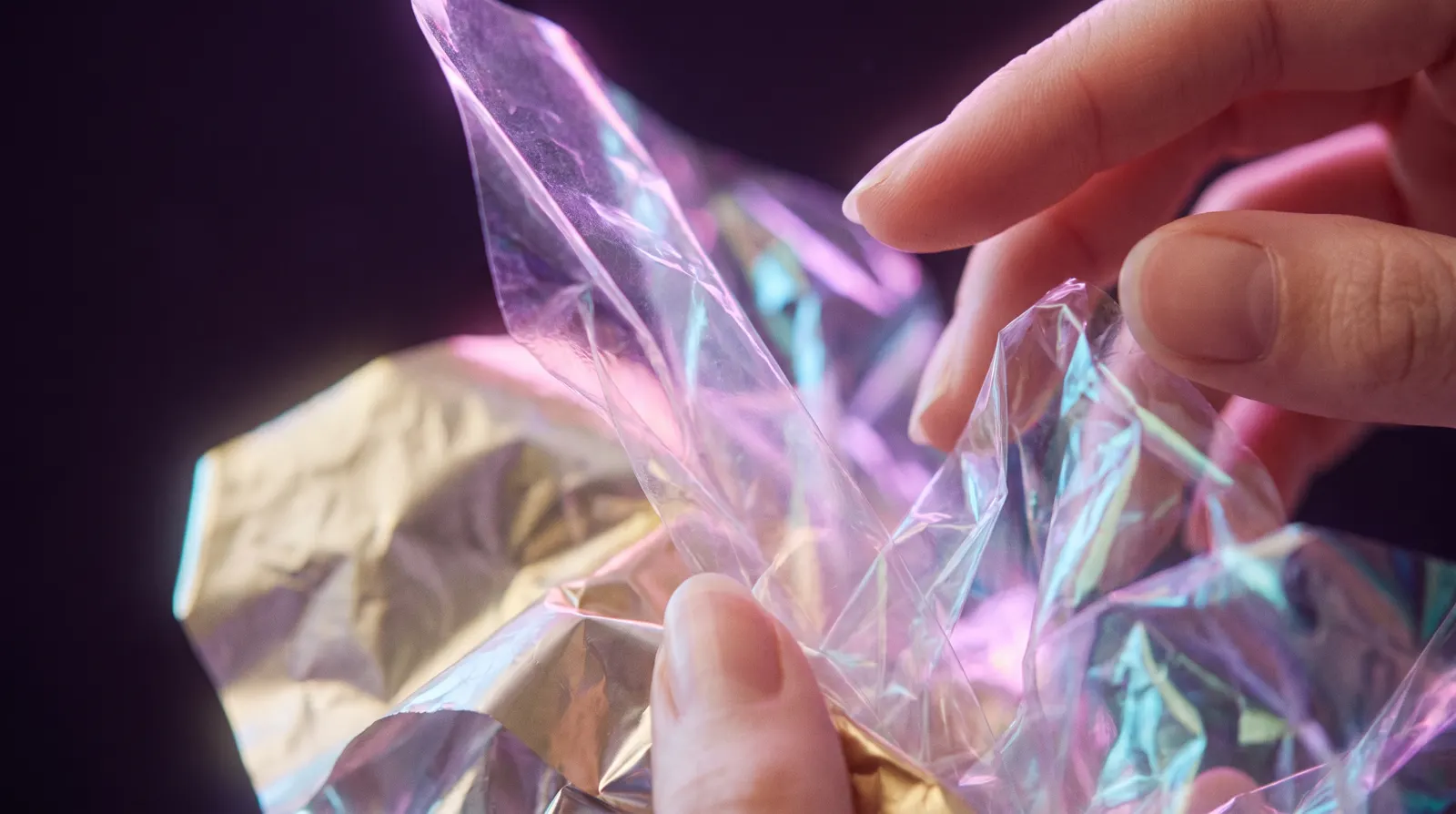
There are eight million people in this city and at any given moment several thousand of them are unwrapping something. Bodega sandwiches, pharmacy bags, the cellophane on a new deck of cards. I never noticed how much of New York is crinkling until I fell down the ASMR rabbit hole and discovered that entire channels exist where someone does nothing but slowly scrunch paper near a microphone for forty minutes. Millions of views. People in the comments saying they've slept to it every night for years. My first reaction was that the internet had finally run out of content. My second reaction, after I tried it at 1 a.m. on a deadline week, was eight hours of sleep. So let's talk about why a sound this mundane does anything at all.
Crinkling is a top-tier trigger, officially
This isn't just anecdote. In the first peer-reviewed study of ASMR, researchers surveyed people who experience the response and cataloged what sets it off. Whispering led the list, but crisp sounds, the category that covers crinkling paper, plastic and foil, triggered the tingles in 64 percent of respondents, putting it in the top tier alongside personal attention and slow movements (Barratt & Davis, 2015, PeerJ). The same study found people mainly use ASMR to relax, to fall asleep, and to take the edge off stress. So when a crinkling video racks up ten million views, that's not an algorithm glitch. That's a large chunk of the population quietly medicating their evenings with a candy wrapper.
What your brain hears in a crinkle
Pull a piece of cellophane out of your desk and scrunch it slowly. Actually listen. What you get isn't one sound; it's hundreds of tiny snaps and ticks, each one crisp, quiet and slightly different from the last. Acoustically, crinkling sits in a sweet spot. It's broadband and high-frequency, which makes it feel close and detailed, especially in headphones. It's granular, a stream of micro-events rather than a continuous tone, so there's always something for attention to land on. And it's predictable in texture but unpredictable in detail: you know roughly what the next second sounds like, never exactly. That's the same recipe as rain on a window or a crackling fire, two sounds humans have found soothing for considerably longer than YouTube has existed.
That's a large chunk of the population quietly medicating their evenings with a candy wrapper.
There's a proximity effect too. Crinkling is quiet, so hearing it in detail means the source is near you, and in most ASMR videos it's recorded binaurally, inches from the mic. Your brain reads that as someone close by, calmly fiddling with something. Evolutionarily, a person quietly puttering within arm's reach is about the strongest ambient evidence available that nothing is wrong. Nobody putters through a crisis. The sound carries a low-grade signal of safety, and for some brains that signal lands as tingles at the scalp and a dropped shoulder or two.
Why the same sound drives other people up the wall
Meanwhile, some of you read this far with your jaw clenched, because for you crinkling isn't cozy, it's the guy behind you at the movies taking nine minutes to open a candy bag. Fair. Sound responses are wildly individual. The same acoustic texture that reads as safe puttering to one nervous system reads as intrusive noise to another, and for people with misophonia, certain repetitive sounds trigger something closer to rage than relaxation. Neither response is wrong; they're different wirings of the same attention system. The practical rule is boring but true: the best trigger is the one your particular brain likes, and the only way to find it is to sample. If crinkles annoy you, tapping, whispering or plain rain might land instead.
Using crinkles on purpose
If you want to test whether crinkle sounds work on you, do it properly. Use headphones, because the spatial detail is most of the magic. Keep the volume low; a trigger should sit just above the edge of hearing, not dominate the room. Try it during a wind-down, not while answering email, so your brain files it under rest. And give it a few nights, because ASMR responses often warm up with familiarity. In Feelsy, I'll put a slow slime texture on screen with the sound up and let autoplay mode carry it while I stop negotiating with my to-do list; the combination of a soft visual loop and granular sound does more for me than either alone. Some nights I still reach for plain brown noise instead. The point isn't loyalty to a trigger. The point is having two or three reliable off-switches and letting the night pick.
One practical note on props, since the crinkle universe is bigger than it looks. Cellophane and gift wrap are the classics, bright and ticky. Foil is lower and softer, more of a rustle than a snap. Kraft paper and paper bags sit somewhere in between, with a dry, woody texture. Bubble wrap is the loud cousin, more pop than crinkle, and plastic shopping bags are the everyday gateway that most people discover by accident, standing in a kitchen at midnight, suddenly aware that unpacking groceries feels strangely good. Creators mix these the way DJs mix records, and once you know your preferred texture you can find channels built almost entirely around it.
A sound this small shouldn't be able to do this much. But attention is a strange machine: give it a stream of tiny, harmless, close-up events and it stops scanning for large, distant, threatening ones. The wrapper was never the product. The off-duty brain is.
Feelsy is a wellness product, not medical advice. If stress, anxiety or sleep problems persist, please speak with a qualified professional.
References
- Barratt, E. L., & Davis, N. J. (2015). Autonomous Sensory Meridian Response (ASMR): a flow-like mental state. PeerJ, 3, e851.
Frequently Asked Questions
Why do crinkling sounds trigger ASMR?
Crinkling is a stream of hundreds of tiny, crisp, quiet sound events, broadband and high-frequency, which makes it feel detailed and close, especially in headphones. It's predictable in texture but never exactly repeats, the same recipe as rain or a crackling fire. Because crinkling is quiet, hearing it clearly implies someone calm is near you, which many brains read as a signal of safety.
How common is crinkling as an ASMR trigger?
Very common. In the first peer-reviewed ASMR study, crisp sounds like crinkling paper, plastic and foil triggered the response in 64 percent of people surveyed, placing the category in the top tier of triggers alongside whispering, personal attention and slow movements.
Why do crinkling sounds annoy me instead of relaxing me?
Sound responses are highly individual. The same repetitive texture that one nervous system reads as safe, cozy puttering, another reads as intrusive noise, and for people with misophonia certain repeated sounds can trigger real anger. Neither reaction is wrong. If crinkles grate on you, try tapping, whispering, rain or steady noise instead.
What's the best way to listen to crinkle ASMR for sleep?
Use headphones, since the close-up spatial detail carries most of the effect, and keep the volume low, just above the edge of hearing. Listen during a wind-down rather than while working, and give it several nights, because ASMR responses often strengthen with familiarity. Pairing the sound with a slow visual can deepen the effect.

About the author
Contributing writer
Kurt is a New York based writer covering the practical science of stress, sleep and focus. He is the resident sceptic of the Journal: if a technique cannot survive a crowded subway commute and a deadline week, he is not interested in it.
Feel it for yourself.
Feelsy turns reading about calm into practising it. Two minutes of a slow texture is often the whole difference.


Related reading
 ASMR
ASMRTapping ASMR: Why Fingernails on a Glass Jar Can Outperform a Lullaby
Tapping is one of the most popular ASMR triggers on earth. Here's why rhythmic little sounds calm your brain, and how to find the taps that work for you.
 ASMR
ASMRASMR Triggers: A Field Guide to the Tingles
From whispers and tapping to slime and slow hands: the most common ASMR triggers, how to find yours, and why some people never feel tingles at all.
 ASMR
ASMRMisophonia: When Everyday Sounds Make You Furious
Chewing, sniffing, tapping: for some people these sounds trigger real rage, not annoyance. Here's what misophonia actually is, what the research shows, and what helps.
 ASMRNew
Why Is Bob Ross So Relaxing? The Science of Happy Little Brushstrokes
Bob Ross has been putting people to sleep for four decades, and he'd take that as a compliment. Here's the science of why his painting videos work like ASMR.
 ASMRNew
What Is 8D Audio? The Science Behind the Spinning Sound
8D audio pans music around your head using binaural tricks. Here's how the illusion works, why it feels immersive, and whether it helps you relax or focus.
 ASMR
ASMRWhy Paint Mixing Videos Are So Satisfying
Why paint mixing videos feel so satisfying: the slow science of swirls and folds, what ASMR research suggests, and how to watch them as a mini meditation.