The Dopamine Menu: A Focus Trick for Brains That Hate Boredom
What a dopamine menu is, why ADHD brains respond to a pre-planned reward list, and how to build one that actually gets you back to work afterward.
By Kurt Woleret
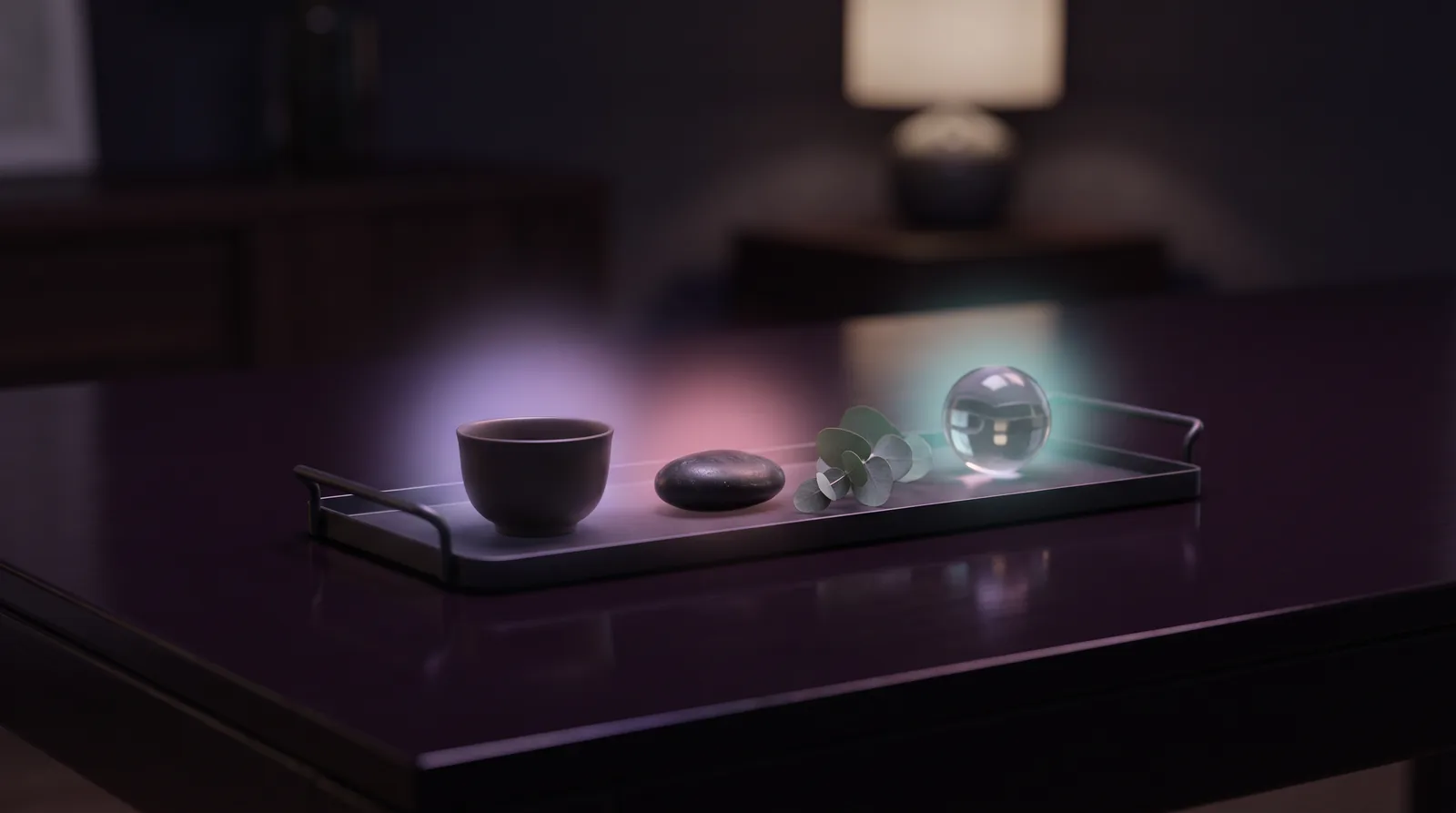
Deadline week, 2:40 p.m. I need to do the boring task. My brain, presented with the boring task, responds the way a cat responds to a closed door: pure refusal, plus the sudden conviction that literally anything else would be fascinating. Forty minutes later I've reorganized a drawer, read half an article about submarines, and opened the fridge twice, and the boring task remains pristine. If this is your brain too, ADHD-flavored or just modern, you've probably seen the internet's favorite fix: the dopamine menu. It's got a cute name and a food metaphor, which usually makes me suspicious. But under the branding is a genuinely defensible piece of engineering, so let's take it seriously.
What a dopamine menu actually is
A dopamine menu, an idea popularized by ADHD educators over the past few years, is a pre-written list of things that reliably give you a lift, organized like a restaurant menu by size and function. Appetizers are quick hits, five minutes or less: step outside, one good song, cold water on the face. Entrees are substantial, half an hour plus: a real walk, a workout, cooking something. Sides are things you pair with boring work to make it digestible: music, a fidget toy, body doubling, a better beverage. Desserts are the potent stuff that's great in small portions and ruinous as a meal: social feeds, video games, one more episode. The point of writing it down in advance is the entire trick, and it's worth being precise about why.
Why the ADHD brain orders off-menu
The ADHD reward system runs different pricing. Imaging work has found reduced dopamine markers in the brain's reward pathway in adults with ADHD, which the authors link directly to the motivation deficits of the condition (Volkow et al., 2009, JAMA). In practice that means interest, novelty, and urgency get through, while importance alone often doesn't; 'this matters for my future' is a currency the machine barely accepts. So when a boring task creates a stimulation gap, the brain will fill it, and the only question is with what. Here's where the menu earns its keep: the moment of depletion is the worst possible moment to choose well. Willpower is gone, decision fatigue is maxed, and the algorithmic dessert cart is always parked closest. The menu is precommitment, the same logic as not grocery shopping hungry. You made the choice earlier, while you were still smart, and at 2:40 p.m. you're not choosing anymore, you're just ordering.
The menu isn't a treat system. It's a decision you made while you were still smart.
Building yours
Mine took twenty minutes and a genuinely humbling audit of what actually restores me versus what just eats time. Some construction notes. Be concrete: 'go outside' is a vibe, 'walk to the corner and back while the coffee brews' is an order the depleted brain can execute. Test empirically: the question for every item is whether you come back from it more able to work; if the answer is no, it's not an appetizer, it's a dessert wearing an appetizer's outfit. My own menu, for reference: appetizers include two minutes of a Feelsy slime texture with one round of the 4-7-8 exercise, ten pushups, and making tea with unnecessary ceremony. Sides are instrumental music, a fidget ring, and body doubling on video with a friend who's also avoiding something. Desserts, and I say this with the affection of a repeat offender, are anything with an infinite scroll, portioned with a timer because I have learned what happens otherwise. Entrees are a walk over the bridge or an actual gym visit for the days the whole engine's flooded.
You don't need an ADHD diagnosis to need one
A note for the readers without the diagnosis who've read this far with uncomfortable recognition: the menu generalizes, because the modern attention economy has been running an unlicensed experiment on everyone's reward circuitry for fifteen years. The average phone is a dopamine menu already, just one written by other people, optimized for their metrics, with every item priced in your focus and none of it designed to end. Writing your own menu is simply taking back the pen. The mechanics work identically on a neurotypical brain having a depleted afternoon: decision-making degrades under fatigue, defaults win, and whoever authored the default wins with them. The difference is degree, not kind; the ADHD brain lives at a steeper part of the curve, which is why the community invented the tool first. They usually do. Fidget toys, body doubling, timers external to the self: the productivity internet keeps discovering that ADHD coping strategies are just attention engineering that works on humans generally, five years after the ADHD community shipped it.
Using it without gaming it
Three failure modes to engineer against. One: menu items metastasizing, where a five-minute appetizer becomes forty; the fix is boring and works, a timer on everything, and appetizers chosen because they end on their own. A slime loop ends. A feed doesn't; that's what makes it dessert. Two: only ever ordering dessert; if that keeps happening, your appetizers are too weak or too far away, so move something physical and instant to the top. Three: treating the menu as a substitute for starting instead of a runway into it; the menu buys you a regulated nervous system, but you still have to point it at the boring task, ideally within a minute of finishing the item. And the honest disclosure you'd expect from me: nobody has run a clinical trial on dopamine menus, and nobody's rushing to. It's scaffolding, folk engineering built on top of real findings about reward circuitry. But it replaces a decision you're bad at making while depleted with one you already made while sharp, and that's a bet I'll take every deadline week.
Feelsy is a wellness product, not medical advice. If stress, anxiety or sleep problems persist, please speak with a qualified professional.
References
- Volkow, N. D., Wang, G. J., Kollins, S. H., et al. (2009). Evaluating dopamine reward pathway in ADHD: Clinical implications. JAMA, 302(10), 1084-1091.
Frequently Asked Questions
What is a dopamine menu?
A dopamine menu is a pre-written list of activities that reliably give you a lift, organized like a restaurant menu. Appetizers are quick five-minute hits like stepping outside or splashing cold water on your face, entrees are substantial half-hour-plus activities like a real walk, sides are things you pair with boring work such as music or a fidget toy, and desserts are potent things like social feeds that are fine in small portions but ruinous as a whole meal.
Why do ADHD brains struggle so much with boring tasks?
Imaging research has found reduced dopamine markers in the brain's reward pathway in adults with ADHD, linked directly to the condition's motivation deficits (Volkow et al., 2009). In practice this means interest, novelty and urgency get through to the ADHD brain while importance alone often doesn't, so when a boring task creates a stimulation gap, the brain will fill it with something, and the depleted moment is the worst time to choose well.
How do you build an effective dopamine menu?
Be concrete rather than vague, since 'go outside' is a vibe but 'walk to the corner and back while the coffee brews' is an instruction a depleted brain can actually execute. Test each item empirically by asking whether you come back from it more able to work; if not, it's really a dessert disguised as an appetizer, and a good menu keeps sides, appetizers, entrees, and desserts clearly separated.
Do you need an ADHD diagnosis to benefit from a dopamine menu?
No. The article argues the mechanics work identically on any brain having a depleted afternoon, since decision-making degrades under fatigue and defaults win regardless of diagnosis. It notes that your phone is essentially a dopamine menu already, just one written by someone else optimized for their metrics, so writing your own menu is simply taking back control of the defaults.
What are common mistakes people make when using a dopamine menu?
One failure mode is letting a five-minute appetizer stretch into forty minutes, which a timer on everything helps prevent. Another is only ever reaching for dessert items, which suggests your appetizers are too weak or inconvenient, and a third is treating the menu as a substitute for starting work rather than a runway into it, so it should be followed by pointing yourself at the boring task within a minute of finishing.

About the author
Contributing writer
Kurt is a New York based writer covering the practical science of stress, sleep and focus. He is the resident sceptic of the Journal: if a technique cannot survive a crowded subway commute and a deadline week, he is not interested in it.
Feel it for yourself.
Feelsy turns reading about calm into practising it. Two minutes of a slow texture is often the whole difference.


Related reading
 Breath & Body
Body Doubling: Why Working Next to Someone Helps You Focus
Body doubling is the focus trick where a silent partner nearby gets your work done. Here's what body doubling is, why it works, and how to do it right.
 Breath & Body
Fidgeting Isn't a Bad Habit: The Case for Stimming
Fidget toys, foot-tapping, doodling: focus problem or focus tool? What research on ADHD hyperactivity and stimming actually says about the wisdom of restless hands.
 Breath & Body
The Pomodoro Technique: Why 25 Minutes Beats Willpower
The Pomodoro Technique breaks work into 25-minute sprints with real breaks. Why the tomato timer works, where it fails, and how to fit it to your brain.
 Breath & BodyNew
Do Cold Showers Actually Work? A Skeptic Reads the Evidence
Cold showers are pitched as a cure for everything from low energy to weak character. Here's what the actual research says, and how to try one without the cult.
 Breath & BodyNew
Dopamine Detox: What It Gets Right and What It Gets Wrong
Dopamine detox promises a factory reset for your distracted brain. Here's what the neuroscience actually says, what helps, and what's just rebranded boredom.
 Breath & Body
How to Stop Overthinking: Quieting a Mind That Will Not Move On
Why overthinking loops and how to interrupt it: what rumination research shows, why you cannot argue with a spiral, and gentler ways to change the channel.