How Much REM Sleep Do You Need? The Honest Numbers
Most adults land around 90 to 120 minutes of REM a night. Here's what REM sleep actually does, why alcohol steals it, and how to protect your share.
By Kurt Woleret
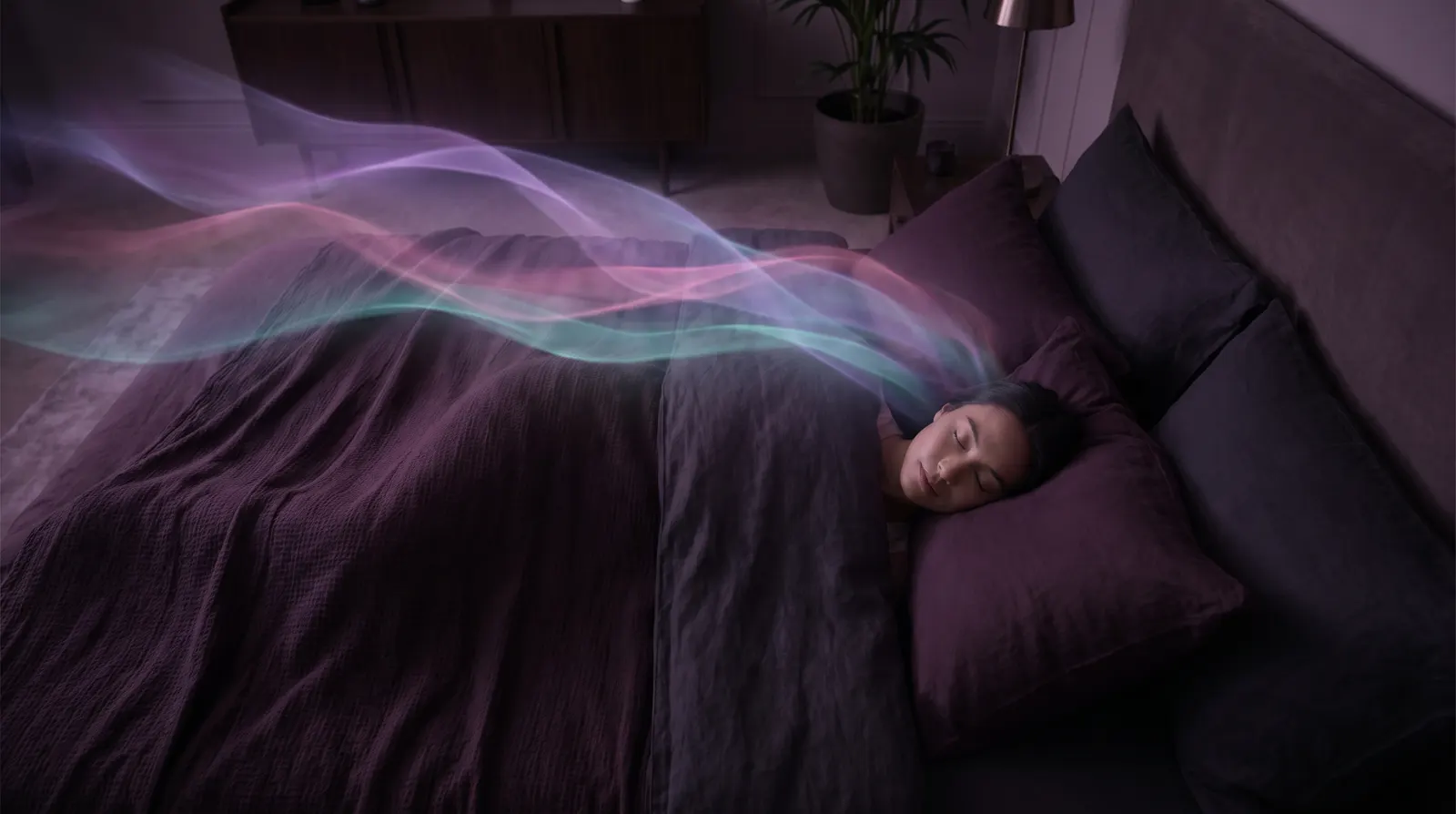
At some point in the last few years, REM sleep became a personality metric. Somebody's watch tells them they got 43 minutes of REM, an app assigns them a score like it's grading a book report, and by 9 a.m. they're on the subway googling whether their brain is quietly failing. I've been that guy. So let's do this properly: what REM actually is, how much of it a normal adult actually needs, and which levers genuinely move it. Spoiler on that last one: the levers are boring, and the number on your wrist is the least trustworthy part of the whole story.
What REM actually is
REM stands for rapid eye movement, named for the one part of you that's allowed to move. During REM your brain lights up to near-waking levels of activity, your eyes dart around under closed lids, and your body is held in a temporary paralysis so you don't act out the extremely weird movie playing in your head. This is the stage where most vivid dreaming happens. You cycle through sleep in roughly 90-minute loops all night: light sleep, deep sleep, REM, repeat. And here's the detail that matters for everything else in this article: the mix changes as the night goes on. Early cycles are heavy on deep sleep. The back half of the night, roughly the 3 a.m. to alarm stretch, is where REM gets its longest, richest blocks.
That back-loading is why REM is the stage most people accidentally sacrifice. Deep sleep is aggressive; it takes its cut first, early in the night, almost no matter what you do. REM is polite. It waits for the morning hours. Cut your night short by an hour and you didn't trim your sleep evenly; you mostly amputated a REM block.
The number you're actually asking for
For a typical adult, REM makes up somewhere around 20 to 25 percent of the night. On the standard seven to nine hours, that works out to roughly 90 to 120 minutes. Babies spend about half their sleep in REM, and the share drifts down across a lifetime, so if you're comparing your numbers to your kid's or your grandmother's, stop. But here's the part the score-chasing apps skip: you can't order REM à la carte. There is no REM button. The percentage takes care of itself in healthy sleep; your only real job is supplying enough total hours, on a consistent schedule, without chemicals that suppress it. Chasing the REM number directly is like trying to raise your commute's average speed by yelling at the bus.
What it's doing while you're gone
The research picture, honestly summarized: REM is heavily implicated in memory and emotional processing, with the details still being argued about in conference hallways. One line of evidence that's held up well: sleep preferentially consolidates emotional memories. In a study out of Matthew Walker's group, people who slept after viewing emotionally arousing images remembered them significantly better than people who stayed awake, an effect that didn't hold the same way for neutral images (Hu, Stylos-Allan and Walker, 2006, Psychological Science). The popular gloss is that REM is overnight therapy, the stage where the day's emotional residue gets filed with the sting turned down. That gloss is probably too tidy, scientists genuinely debate how much is REM versus deep sleep versus the whole night working together. But the direction is consistent: shortchange the back half of your night and the costs show up in mood, emotional regulation and the sticky kind of memory first. Anyone who's been a person on four hours of sleep already knew this experimentally.
Deep sleep takes its cut early in the night. REM waits politely for the morning hours, which is exactly why your alarm keeps robbing it.
How to actually get more REM
The honest levers, none of which can be purchased:
- Protect the last 90 minutes. The single biggest REM killer is waking up an hour early. If you're choosing between sleeping 11 to 6 or 12 to 7, they are not equivalent for REM; the later morning edge is where the long REM blocks live.
- Watch the nightcap. Alcohol is a well-documented REM suppressant, which is why a boozy night produces that flat, unrested morning even after eight horizontal hours. The drink makes you fall asleep faster and then quietly taxes the stage you needed.
- Keep the schedule boring. REM timing rides on your body clock. A sleep schedule that jumps around by hours confuses the timing, and the long morning REM blocks are what get misplaced.
- Wind down like you mean it. You can't force REM, but you can stop delaying sleep onset, because every minute of doomscrolling at midnight comes off the far end of the night where REM was waiting. I end more nights than I'd like to admit with Feelsy's slow textures drifting on autoplay instead of a feed, purely because it has no next thing to show me.
About that number on your wrist
Consumer trackers estimate sleep stages from movement and heart rate, not brain waves, and stage-level accuracy is the weakest thing they do. They're decent at total sleep time, mediocre at telling REM from light sleep. So treat your REM number as a rough weather report, not a diagnosis. If your tracker says 40 minutes but you sleep seven consistent hours, feel rested and dream now and then, believe your life over your wrist. And if checking the score has itself become a source of dread, that's a known trap with its own name, and the fix is checking less. Get the hours, keep them regular, skip the nightcap, quit stealing from the morning. The percentage will file itself.
Feelsy is a wellness product, not medical advice. If stress, anxiety or sleep problems persist, please speak with a qualified professional.
References
- Hu, P., Stylos-Allan, M., & Walker, M. P. (2006). Sleep facilitates consolidation of emotional declarative memory. Psychological Science, 17(10), 891-898.
Frequently Asked Questions
How much REM sleep do you need per night?
For a typical adult, REM makes up around 20 to 25 percent of the night, which works out to roughly 90 to 120 minutes on a standard seven to nine hours of sleep. You can't target REM directly; the share takes care of itself when you get enough total sleep on a consistent schedule without REM suppressants like alcohol.
What happens if you don't get enough REM sleep?
REM is heavily implicated in memory and emotional processing. Research from Matthew Walker's group found that sleep preferentially consolidates emotionally charged memories, and shortchanging the back half of the night tends to show up first in mood, emotional regulation and memory. Because REM concentrates in the morning hours, cutting a night short by an hour mostly removes a REM block rather than trimming sleep evenly.
How can I increase my REM sleep?
Protect the last 90 minutes of your night, since the longest REM blocks come just before a natural wake time. Keep a consistent sleep schedule so REM timing stays synced to your body clock, skip alcohol close to bedtime because it suppresses REM, and stop delaying sleep onset in the evening, since lost minutes come off the REM-rich far end of the night.
Does alcohol reduce REM sleep?
Yes. Alcohol is a well-documented REM suppressant: it can make you fall asleep faster, but it taxes REM through the night, which is why you can spend eight hours in bed after drinking and still wake up feeling flat and unrested.
Are sleep tracker REM numbers accurate?
Not very. Consumer trackers estimate stages from movement and heart rate rather than brain waves, and telling REM from light sleep is the weakest thing they do. They're reasonably good at total sleep time, so trust the hours, treat the REM figure as a rough estimate, and weigh how you actually feel over the score.

About the author
Contributing writer
Kurt is a New York based writer covering the practical science of stress, sleep and focus. He is the resident sceptic of the Journal: if a technique cannot survive a crowded subway commute and a deadline week, he is not interested in it.
Feel it for yourself.
Feelsy turns reading about calm into practising it. Two minutes of a slow texture is often the whole difference.


Related reading
 Sleep
SleepSleep Cycles, Explained: What Actually Happens Every 90 Minutes
What a sleep cycle actually is, how long one really lasts, why deep sleep front-loads your night, and how to time your alarm so mornings hurt less.
 Sleep
SleepHow Much Deep Sleep Do You Need? An Honest Number
How much deep sleep adults actually need each night, what slow-wave sleep does for memory and recovery, why trackers get it wrong, and what really increases it.
 Sleep
SleepDoes Alcohol Help You Sleep? The Nightcap, Fact-Checked
Alcohol really does make you fall asleep faster, then quietly wrecks the second half of the night. What the research shows, and what to try instead.
 SleepNew
Why Can't I Remember My Dreams? The Science of Dream Recall
You dream every night whether you remember it or not. Here's what brain research says separates dream recallers from forgetters, and how to recall more.
 SleepNew
Is Bed Rotting Bad for You? What Sleep Science Actually Says
Bed rotting feels like self-care until your bed stops meaning sleep. Here's what stimulus control research says, and how to rest without ruining your nights.
 SleepNew
Why Do You Wake Up With Anxiety? Blame Your Body's Morning Chemistry
Waking up with anxiety isn't a character flaw; it's partly chemistry. Here's how the cortisol awakening response works and what actually calms it down.