Keyboard ASMR: Why Typing Sounds Are So Weirdly Satisfying
Why do typing sounds feel so satisfying? The science of keyboard ASMR: crisp sound triggers, predictable rhythm, and how to use them for calm focus.
By Kurt Woleret
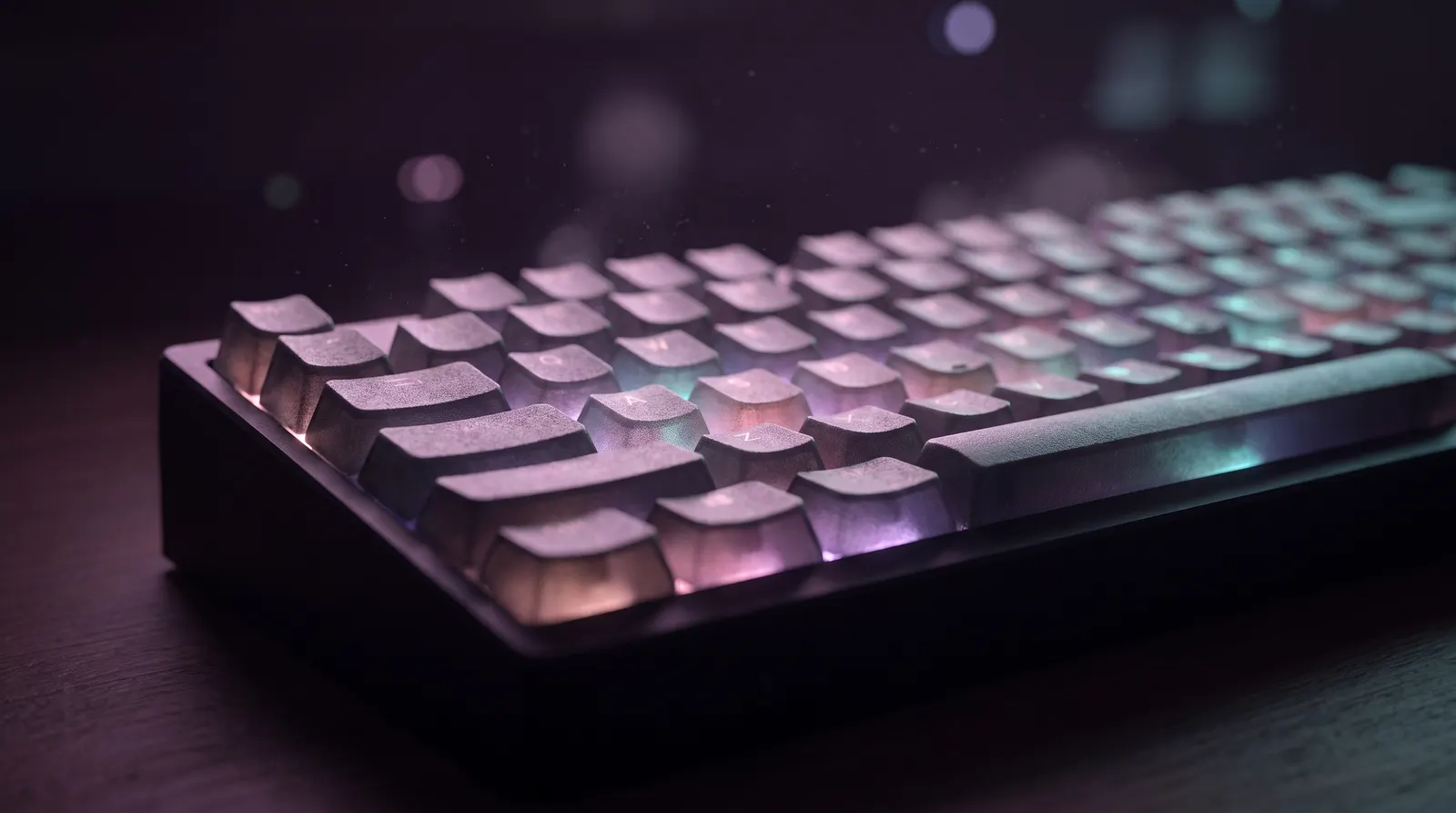
There's a woman two desks over from my old office job whose typing I can still hear, years later, the way other people remember a song. Fast, even, confident, a light rain of plastic clicks with the occasional thunderclap of the space bar. Half the office found it soothing. One guy wore earplugs and glared. Nobody was neutral. Meanwhile, on the internet, videos of people typing on mechanical keyboards rack up millions of views from viewers who put them on specifically to relax or fall asleep. A keyboard is office equipment. Why does it work on our nervous systems like a lullaby? As usual with ASMR, the answer is part acoustics, part psychology, and part something almost embarrassingly tender.
Typing is a card-carrying ASMR trigger
This isn't a niche kink of the algorithm. In the first large survey of people who experience ASMR, published by Barratt and Davis in PeerJ in 2015, crisp sounds, the category that covers tapping, clicking, and yes, keyboards, were reported as a trigger by roughly two thirds of respondents, one of the most common categories on the list, up there with whispering and personal attention. A keystroke is basically a crisp sound laboratory: a tiny impact, a snap of plastic on plastic, a faint spring resonance, repeated at speed with small variations. If tapping fingernails on a jar can trigger tingles, and it demonstrably can, a keyboard is tapping with a day job.
The rhythm your brain can predict
Part of the pleasure is prediction. Typing has a texture your brain learns within seconds: bursts of keystrokes, micro-pauses, the periodic thump of the space bar, the little drumroll of a familiar word. It's varied enough to stay interesting and regular enough to be completely unthreatening. Your auditory system loves this combination; it gets to guess what's coming next and be right most of the time, a quiet stream of tiny predictions and tiny confirmations. Alarming sounds are the opposite: loud, sudden, irregular. A steady typist is the anti-alarm. The sound says, over and over, nothing new is happening, everything is proceeding, at a tempo your heart can borrow.
Someone is working nearby, and that's oddly comforting
Here's the tender part. Typing is the sound of a person, close by, calmly absorbed in a task that has nothing to do with you. That's the same signal underneath a lot of unintentional ASMR: the librarian stamping books, the barista steaming milk. For a social animal, the sound of competent, unhurried activity nearby is an ancient all-clear. Nobody types steadily through an emergency. Some of it is probably memory, too: a parent typing in the next room while you fell asleep, a college library at exam season, the newsroom hum of a hundred deadlines being met. It's also a cousin of body doubling, the strange focusing power of simply working next to another person: keyboard videos are body doubling you can stream.
Nobody types steadily through an emergency. A calm typist is an ancient all-clear signal, delivered at eighty words per minute.
Thock, clack, and the switch rabbit hole
The mechanical keyboard community has, naturally, turned this into a science and a shopping addiction. Different switches produce different signatures: some click sharply, some thud softly, and connoisseurs debate thock versus clack with the solemnity of wine critics. People lubricate individual springs and line keyboard cases with foam to deepen the sound. I find this deeply endearing and mildly unhinged, and I say that as someone who once watched forty minutes of typing tests to decide precisely nothing. You do not need a three-hundred-dollar keyboard to enjoy typing sounds. The videos exist, the office exists, and honestly the woman two desks over was outperforming most of the premium switches for free.
Why some people absolutely hate it
Fairness requires me to speak for the earplug guy. The same repetitive, human-made sounds that soothe one nervous system can enrage another; at the extreme end that's misophonia, which I've covered elsewhere on this blog, and keyboard clatter is a classic offender, especially when it's forced on you. Context is most of it. A sound you chose, at a volume you control, lands completely differently from a sound you can't escape. Which is exactly the argument for putting typing sounds in headphones, on purpose, instead of inflicting your thocks on an open-plan office.
Using typing sounds on purpose
If keyboard sounds do something for you, a few ways to put them to work:
- For focus, run steady typing or tapping sound under your work at low volume; the even rhythm gives a restless brain a baseline without words to latch onto.
- For sleep, choose slower, softer, close-miked tapping rather than speed-typing showcases; you want the rain, not the hailstorm.
- Use headphones and keep the volume low; crisp sounds live in the fine detail, and detail survives at whisper level.
- If it grates instead of soothes, believe your nervous system and pick a different texture; no trigger is mandatory.
The sound side of Feelsy leans into exactly this territory: layered, close-recorded taps and clicks over slow-moving textures, with an autoplay mode that keeps the stream going so you're not fishing through a bright feed at midnight for one more typing video. Put it on, let someone else's calm hands do the working, and notice what your shoulders do. The woman two desks over would understand.
Feelsy is a wellness product, not medical advice. If stress, anxiety or sleep problems persist, please speak with a qualified professional.
References
- Barratt, E. L., & Davis, N. J. (2015). Autonomous Sensory Meridian Response (ASMR): a flow-like mental state. PeerJ, 3, e851.
Frequently Asked Questions
What is keyboard ASMR?
Keyboard ASMR is the use of typing sounds, usually close-recorded mechanical keyboard videos or audio, to trigger the relaxing tingles and calm associated with ASMR. Keystrokes are crisp sounds: tiny plastic impacts repeated in a fast, predictable rhythm, which is one of the most commonly reported ASMR trigger categories.
Why are typing sounds so satisfying?
Three reasons stack up. Keystrokes are crisp sounds, a trigger category reported by roughly two thirds of ASMR experiencers in a large 2015 survey. Typing has a rhythm your brain can predict, varied enough to stay interesting but regular enough to feel safe. And it is the sound of a person calmly absorbed in work nearby, an ancient all-clear signal for a social animal.
Can typing sounds help you focus?
Many people find steady typing or tapping sounds at low volume give a restless brain a baseline rhythm without words to latch onto, similar to the way working next to a calmly busy person helps. Use headphones, keep the volume low, and choose even, unhurried typing rather than dramatic speed tests.
Why do keyboard sounds annoy some people?
The same repetitive human-made sounds that soothe one nervous system can grate on another, and at the extreme end this is misophonia, a strong negative reaction to specific everyday sounds. Control and context matter enormously: a sound you chose at a volume you set feels completely different from clatter you cannot escape.

About the author
Contributing writer
Kurt is a New York based writer covering the practical science of stress, sleep and focus. He is the resident sceptic of the Journal: if a technique cannot survive a crowded subway commute and a deadline week, he is not interested in it.
Feel it for yourself.
Feelsy turns reading about calm into practising it. Two minutes of a slow texture is often the whole difference.


Related reading
 ASMR
ASMRTapping ASMR: Why Fingernails on a Glass Jar Can Outperform a Lullaby
Tapping is one of the most popular ASMR triggers on earth. Here's why rhythmic little sounds calm your brain, and how to find the taps that work for you.
 ASMR
ASMRUnintentional ASMR: Why a Stranger Folding Towels Puts You to Sleep
The calmest videos online were never trying to relax you. Here's what unintentional ASMR is, why old how-to footage works so well, and how to find your triggers.
 ASMR
ASMRMisophonia: When Everyday Sounds Make You Furious
Chewing, sniffing, tapping: for some people these sounds trigger real rage, not annoyance. Here's what misophonia actually is, what the research shows, and what helps.
 ASMRNew
Why Is Bob Ross So Relaxing? The Science of Happy Little Brushstrokes
Bob Ross has been putting people to sleep for four decades, and he'd take that as a compliment. Here's the science of why his painting videos work like ASMR.
 ASMRNew
What Is 8D Audio? The Science Behind the Spinning Sound
8D audio pans music around your head using binaural tricks. Here's how the illusion works, why it feels immersive, and whether it helps you relax or focus.
 ASMR
ASMRWhy Paint Mixing Videos Are So Satisfying
Why paint mixing videos feel so satisfying: the slow science of swirls and folds, what ASMR research suggests, and how to watch them as a mini meditation.