The Sunday Scaries: Why Sunday Night Dread Is Real (and What Helps)
That creeping Sunday evening dread isn't in your head: your body starts Monday early. Here's the science of the Sunday scaries and what actually helps.
By Kurt Woleret
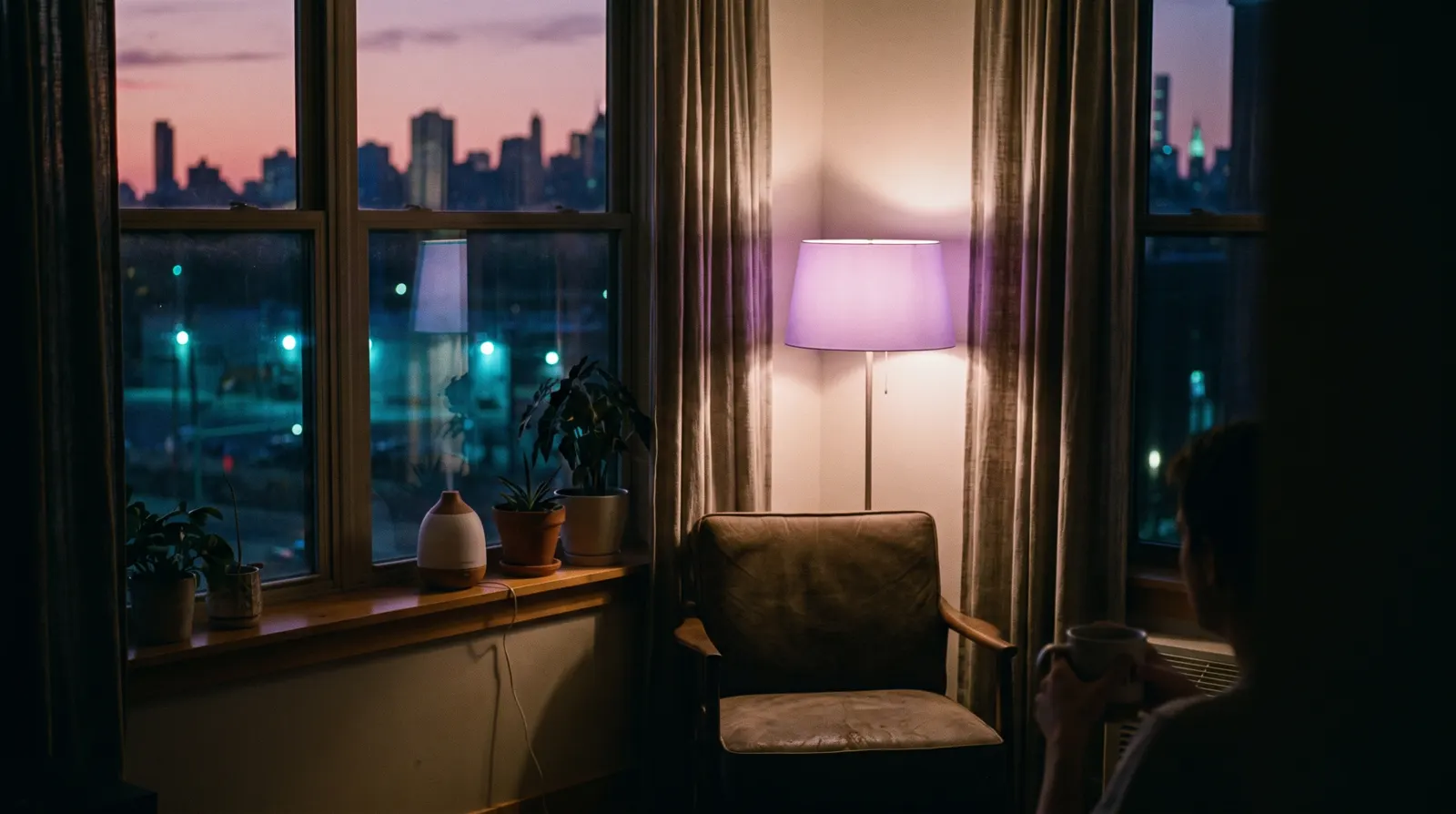
There's a specific quality to Sunday light around 5 p.m. that I'd recognize blindfolded. The weekend is technically still happening. Nothing bad is occurring. And yet somewhere between the second coffee and the golden hour, a low hum of dread moves into my chest like it's got a lease. The brunch was nice. The laundry got done. Doesn't matter. Monday has started broadcasting early. If you know this feeling, you already know its name, because the internet christened it years ago: the Sunday scaries. What you might not know is that it's not a personality flaw or a sign you hate your life. It's anticipatory anxiety with a very reliable schedule, and your body is in on it.
Dread with a calendar
The Sunday scaries are anticipatory anxiety: stress about a demand that hasn't arrived yet. Your brain is a prediction machine, and it doesn't wait for Monday to react to Monday. Sunday evening sits right on the boundary between unstructured rest and structured obligation, and boundaries are exactly where prediction machines get busy. The week ahead is still abstract, which makes it worse, not better. An actual Monday morning is just a list of specific tasks. Sunday night is every possible version of the week at once, unfiled and unbounded. Your brain treats that open loop like an unsolved problem and keeps picking it up, turning it over, and putting it down unsolved.
Your body starts Monday before you do
Here's the part that made me feel weirdly vindicated. The anticipation isn't just mental; it shows up in your stress hormones. Researchers studying British civil servants in the Whitehall II cohort measured cortisol, the body's main stress-mobilizing hormone, right after waking. The result: the cortisol surge on waking was significantly larger on workdays than on weekends. Same people, same beds, same biology; the only difference was what the day ahead demanded. Your body reads the calendar and pre-loads stress chemistry for days it expects to be demanding. The Sunday scaries are the evening edition of the same phenomenon: the system spinning up for a load it can already see coming.
Your stress system reads the calendar. It starts mobilizing for Monday while you're still holding Sunday's coffee.
Why Sunday night is a perfect storm
A few forces pile up at once. If you slept in this weekend, your body clock has drifted later, so Sunday bedtime arrives before you're sleepy: you lie there, unoccupied, in the dark, which is prime real estate for dread. Then there's the time-scarcity effect: the weekend's remaining hours become precious, so many of us start revenge-procrastinating bedtime to squeeze out more freedom, which torches Monday and deepens next Sunday's dread. Add the classic Sunday behaviors, like a first peek at the work inbox 'just to prepare,' and you've built a nearly perfect anxiety machine: a drifted clock, an empty evening, an open loop, and a preview of everything you're dreading.
What actually helps
You can't delete Monday, but you can starve the machine. What follows is the short list that survives contact with real life:
- Close the loops on paper. Take ten minutes, write down what Monday actually requires, and pick the first small task you'll do. Specific beats abstract; a listed week is smaller than an imagined one.
- Quarantine the inbox. Checking work email Sunday night doesn't prepare you, it just starts your workweek early for free. If you must prep, do it Sunday afternoon, not at 10 p.m.
- Keep your wake time honest. The closer your weekend sleep schedule stays to your weekday one, the sleepier you'll actually feel at Sunday bedtime, and a body that can sleep doesn't lie awake catastrophizing.
- Plan one thing to look forward to on Monday. Lunch you actually like, a walk, an episode saved for Monday night. It gives the prediction machine something that isn't a threat.
- Give the evening a descent. Dread loves an unoccupied mind in a bright room. Dim the lights, slow your inputs, and give your attention something calm to hold.
That last one is where I've built an actual ritual, because vague advice like 'relax on Sunday' never survived contact with my apartment. Around 9:30 the lights go down and the phone gets boring. A few rounds of the 4-7-8 breathing exercise in Feelsy to slow the body's idle, then autoplay mode on the nightstand: slow textures drifting while my brain finally files the weekend and stops rehearsing the week. It works for the same reason the inbox peek fails. One feeds the prediction machine threats; the other feeds it nothing at all, which on a Sunday night is precisely what it needs.
One more structural fix that took me embarrassingly long to figure out: give Sunday evening its own identity instead of treating it as the weekend's sad remainder. The dread thrives in that formless zone after dinner where you're not quite relaxing and not quite preparing, just waiting for Monday to happen to you. So claim it. A standing Sunday movie, a long walk at dusk, a proper meal you cook slowly, a call with someone who makes you laugh. When Sunday night contains something you'd actually miss, it stops being Monday's waiting room and becomes the last real piece of your weekend. The scaries hate a scheduled good time.
When it's more than the scaries
A note worth taking seriously: the Sunday scaries are a near-universal experience, but there's a difference between dreading Monday's meetings and dreading your entire working life. If the anxiety bleeds well past Sunday, if you spend weekdays in the same dread you feel at 5 p.m. Sunday, that's not a scaries problem, that's a signal about the job, or an anxiety pattern worth discussing with a professional. Rituals help you meet the week calmer. They're not meant to anesthetize you to something that genuinely needs changing.
Feelsy is a wellness product, not medical advice. If stress, anxiety or sleep problems persist, please speak with a qualified professional.
References
- Kunz-Ebrecht, S. R., Kirschbaum, C., Marmot, M., & Steptoe, A. (2004). Differences in cortisol awakening response on work days and weekends in women and men from the Whitehall II cohort. Psychoneuroendocrinology, 29(4), 516-528.
Frequently Asked Questions
Why do I get anxious on Sunday nights?
The Sunday scaries are anticipatory anxiety: your brain reacting to the workweek before it arrives. Sunday evening sits on the boundary between rest and obligation, and the still-abstract week feels bigger than any real Monday actually is. Research also shows the body pre-loads stress chemistry for demanding days, so the dread has a physiological side too.
Are the Sunday scaries real or just in my head?
They have a measurable biological component. In a study of the Whitehall II cohort, people's cortisol surge on waking was significantly larger on workdays than weekends, showing that the stress system anticipates demands rather than just reacting to them. Sunday evening dread is that same anticipation starting early, which is why it can arrive even when the weekend was lovely.
How do I get rid of the Sunday scaries?
Make the week concrete: spend ten minutes listing what Monday actually requires and choose your first small task. Don't check work email on Sunday night, keep your weekend wake time close to your weekday one, and plan something to look forward to on Monday. Then give Sunday evening a real wind-down with dim lights and slow, calm input instead of an unoccupied mind in a bright room.
Should I check my work email on Sunday to feel prepared?
Generally no. A Sunday night inbox peek rarely resolves anything; it just starts your workweek early and hands your brain fresh material to chew on at bedtime. If preparation genuinely calms you, do it earlier on Sunday afternoon with a defined end point, then close the laptop and let the evening belong to the weekend.

About the author
Contributing writer
Kurt is a New York based writer covering the practical science of stress, sleep and focus. He is the resident sceptic of the Journal: if a technique cannot survive a crowded subway commute and a deadline week, he is not interested in it.
Feel it for yourself.
Feelsy turns reading about calm into practising it. Two minutes of a slow texture is often the whole difference.


Related reading
 Sleep
SleepWhy Anxiety Feels Worse at Night (and What Actually Helps)
Why is anxiety worse at night? How hormones, darkness and an undistracted mind amplify worry after dark, and the gentle evening practices that help.
 Sleep
SleepRevenge Bedtime Procrastination: Why You Won't Go to Sleep
Revenge bedtime procrastination is staying up late to steal back your day. Here's why exhausted people do it, and how to stop without giving up your evening.
 Breath & Body
Box Breathing: A Four-Count Reset for High-Alert Days
Box breathing is the four-count reset used by Navy SEALs and ER nurses. How to do it, why it works, and when a longer exhale is the better tool for the job.
 Breath & BodyNew
Do Cold Showers Actually Work? A Skeptic Reads the Evidence
Cold showers are pitched as a cure for everything from low energy to weak character. Here's what the actual research says, and how to try one without the cult.
 Breath & BodyNew
Dopamine Detox: What It Gets Right and What It Gets Wrong
Dopamine detox promises a factory reset for your distracted brain. Here's what the neuroscience actually says, what helps, and what's just rebranded boredom.
 Breath & Body
How to Stop Overthinking: Quieting a Mind That Will Not Move On
Why overthinking loops and how to interrupt it: what rumination research shows, why you cannot argue with a spiral, and gentler ways to change the channel.