Why Does It Feel So Good When Someone Plays With Your Hair?
Why hair play feels so relaxing: the science of slow touch, C-tactile nerves and scalp sensitivity, plus how to get that salon calm on your own.
By Kurt Woleret
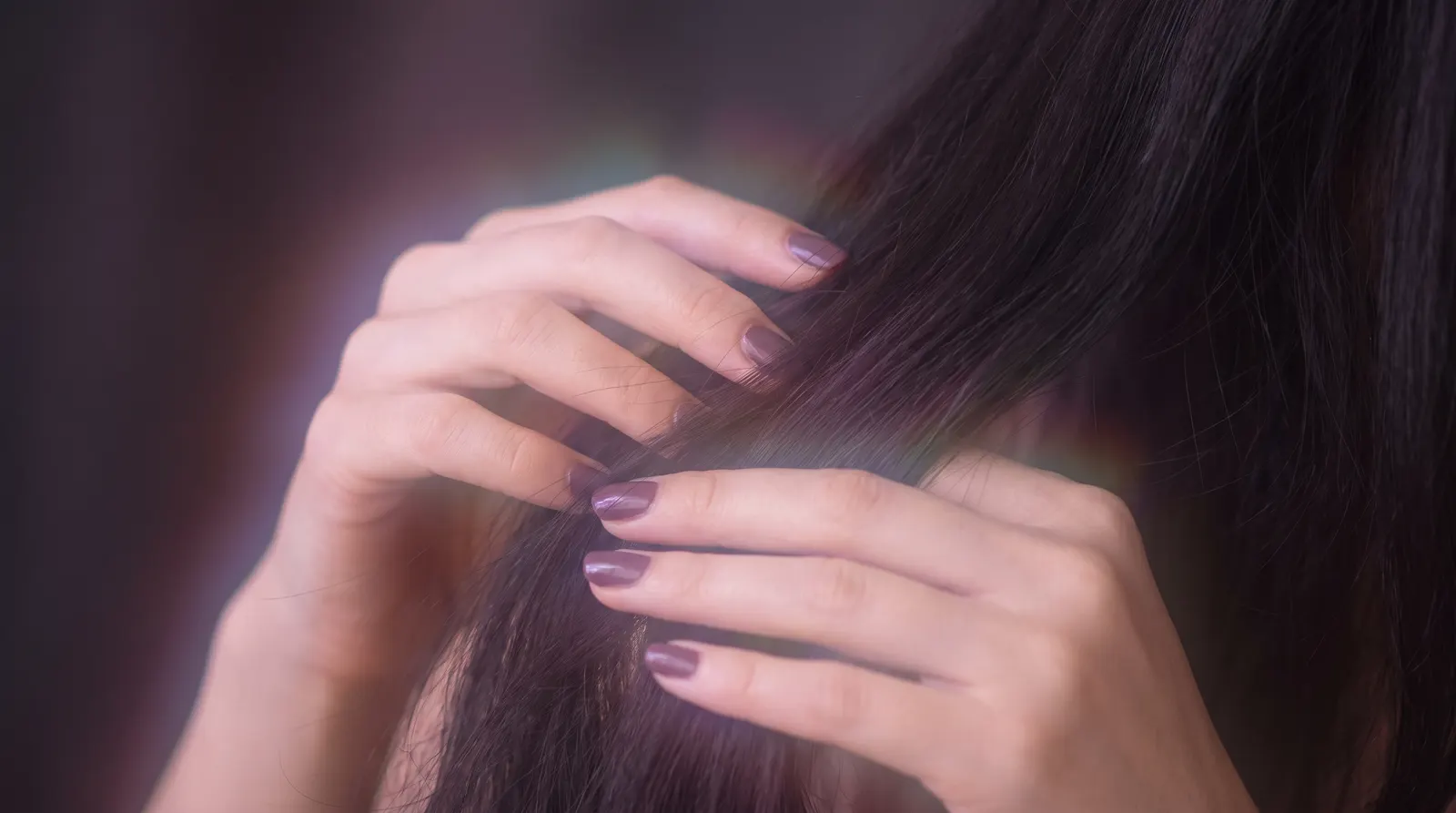
There's a specific kind of unconsciousness that only happens in a barber's chair. I've watched grown New Yorkers, people who flinch when a stranger brushes their sleeve on the 6 train, go completely slack the moment someone starts working on their scalp. Eyes half closed, shoulders down, deadline forgotten. Same phenomenon at the salon shampoo sink, which multiple people have described to me, unprompted, as the best part of their month. And if you had a parent or a sibling who played with your hair as a kid, you know the effect predates any haircut. So what is it about fingers in hair that turns the human nervous system into warm soup? For once, science has a satisfying answer.
Your skin has a dedicated channel for exactly this
Your body runs two touch systems in parallel. The first is the fast, precise one that tells you what and where: keys in your pocket, a tap on the shoulder. The second is slower, fuzzier, and only interested in one question: is this touch nice? It runs on a special class of nerve fibers called C-tactile afferents, wired not to your problem-solving cortex but toward the brain regions that process emotion.
Here's the detail I love. These fibers are tuned like an instrument. In a study in Nature Neuroscience, researchers recorded from single nerve fibers in human skin while stroking it at different speeds, and the C-tactile fibers responded most vigorously to slow, gentle strokes, in the range of a few centimeters per second, at skin temperature. Faster or slower, and the response dropped off. And the firing rate tracked how pleasant people rated the touch (Löken et al., 2009). Read that again: there is a nerve in your skin whose output roughly predicts how good a caress feels. Your body ships with hardware purpose-built for affectionate touch, and slow fingers through hair sit right in its preferred speed limit.
There is a nerve in your skin whose firing rate roughly predicts how good a caress feels. Hair play drives it at exactly the right speed.
Why the scalp specifically
The scalp is dense with nerve endings, every hair follicle is wrapped in its own sensory net, and each hair acts as a tiny lever: move the hair, and the movement is amplified down at the root. Light contact that would barely register on your forearm becomes a broadcast on your head. Stack that on the C-tactile system's love of slow gentle movement, and hair play is basically a greatest-hits performance for the calm-touch channel. There's an evolutionary echo here too. Our primate relatives spend serious hours grooming each other, and the behavior functions as social glue, visibly settling the animal being groomed. When someone plays with your hair, you're on the receiving end of one of the oldest trust signals there is: another creature tending to you while you let your guard down.
The ASMR connection
This is also prime ASMR territory, and the overlap isn't a coincidence. When researchers first surveyed ASMR responders in a study in PeerJ, the trigger categories that came out on top were whispering, slow deliberate movements, crisp sounds, and personal attention (Barratt & Davis, 2015). Hair play is personal attention in its most literal form, which is why haircut roleplays, scalp-massage videos, and brushing sounds are pillars of the genre. A good haircut video stacks the triggers: close-up personal focus, slow hand movements, the soft percussion of scissors and brush. For people who get tingles, that's the whole recipe. And here's the useful part: plenty of people who feel nothing from whispering still go pleasantly limp at the salon sink, because the underlying calm-touch wiring is standard equipment. The tingles are optional. The relaxation isn't.
Getting the effect when nobody's around
The obvious limitation: this is a touch most of us receive rarely, on someone else's schedule. You can't book a shampoo sink at 11 p.m. on a Tuesday. Some workarounds that respect the mechanism, slow and gentle being the operative words:
- Slow scalp massage with your own fingertips, small circles from temples to crown. Self-touch is a dimmer version of the real thing, but the follicle-lever effect still works.
- A soft-bristle brush used slowly, front to back. The point is the drag across the scalp, not detangling, so go at about the speed of a lazy exhale.
- Barbershop and hair-play ASMR videos with headphones, which layer the personal-attention framing and the crisp sounds over your memory of the real thing.
- Pair any of these with something slow to watch. A few minutes of Feelsy's drifting textures with the sound low turns a two-minute scalp rub into an actual wind-down, and the 4-7-8 breathing exercise slots neatly underneath it.
None of these fully replaces another person's hands, and honestly that's the point. The system you're stimulating evolved for social touch, and it knows the difference. But as a nightly downshift, slow strokes at the right speed still speak the nervous system's native language, even with an accent.
The short version
It feels good when someone plays with your hair because your skin carries a dedicated slow-touch channel wired for emotional calm, your scalp is one of the best-instrumented surfaces on your body, and the whole arrangement plugs into ancient grooming instincts that read gentle attention as safety. It's not indulgence. It's maintenance. Tip your barber.
Feelsy is a wellness product, not medical advice. If stress, anxiety or sleep problems persist, please speak with a qualified professional.
References
- Löken, L. S., Wessberg, J., Morrison, I., McGlone, F., & Olausson, H. (2009). Coding of pleasant touch by unmyelinated afferents in humans. Nature Neuroscience, 12(5), 547–548.
- Barratt, E. L., & Davis, N. J. (2015). Autonomous Sensory Meridian Response (ASMR): a flow-like mental state. PeerJ, 3, e851.
Frequently Asked Questions
Why does it feel good when someone plays with my hair?
Your skin has a dedicated slow-touch channel: C-tactile nerve fibers that respond most strongly to slow, gentle strokes and connect to emotional centers in the brain. The scalp is dense with nerve endings and every follicle amplifies movement, so slow fingers through hair drive this calm-touch system at exactly the speed it prefers.
Why is the scalp so sensitive to touch?
The scalp is packed with nerve endings, and each hair follicle is wrapped in its own sensory net. Every hair also works as a tiny lever, so even light contact gets amplified at the root. Touch that would barely register on your forearm becomes a broadcast on your head.
Is hair play a form of ASMR?
It's closely related. Early ASMR research found that top triggers include personal attention, slow deliberate movements, and crisp sounds, and hair play combines all three, which is why haircut and scalp-massage videos are pillars of the genre. Even people who never get ASMR tingles usually still find gentle hair touch deeply relaxing.
How can I relax my scalp without someone else's help?
Slow is the key word. Try fingertip scalp massage in small circles from temples to crown, a soft-bristle brush drawn slowly front to back, or barbershop ASMR videos with headphones. Self-touch is a dimmer version of another person's hands, but the same calm-touch wiring still responds.

About the author
Contributing writer
Kurt is a New York based writer covering the practical science of stress, sleep and focus. He is the resident sceptic of the Journal: if a technique cannot survive a crowded subway commute and a deadline week, he is not interested in it.
Feel it for yourself.
Feelsy turns reading about calm into practising it. Two minutes of a slow texture is often the whole difference.


Related reading
 ASMR
ASMRPersonal Attention ASMR: Why a Fake Haircut Relaxes Your Real Brain
Why fake haircuts and roleplay ASMR relax your brain: the science of personal attention triggers, simulated care, and how to use them for calm.
 ASMR
ASMRASMR Triggers: A Field Guide to the Tingles
From whispers and tapping to slime and slow hands: the most common ASMR triggers, how to find yours, and why some people never feel tingles at all.
 ASMR
ASMRWhy You Don't Get ASMR Tingles (and Whether It Matters)
Watched hours of whispering and felt nothing? You may not be wired for tingles, and that may not matter. What research says about ASMR immunity.
 ASMRNew
Why Is Bob Ross So Relaxing? The Science of Happy Little Brushstrokes
Bob Ross has been putting people to sleep for four decades, and he'd take that as a compliment. Here's the science of why his painting videos work like ASMR.
 ASMRNew
What Is 8D Audio? The Science Behind the Spinning Sound
8D audio pans music around your head using binaural tricks. Here's how the illusion works, why it feels immersive, and whether it helps you relax or focus.
 ASMR
ASMRWhy Paint Mixing Videos Are So Satisfying
Why paint mixing videos feel so satisfying: the slow science of swirls and folds, what ASMR research suggests, and how to watch them as a mini meditation.