Frisson: Why Music Gives You Chills
Those shivers during a key change have a name: frisson. What happens in the brain when music gives you chills, and why some people feel them more than others.
By Kurt Woleret
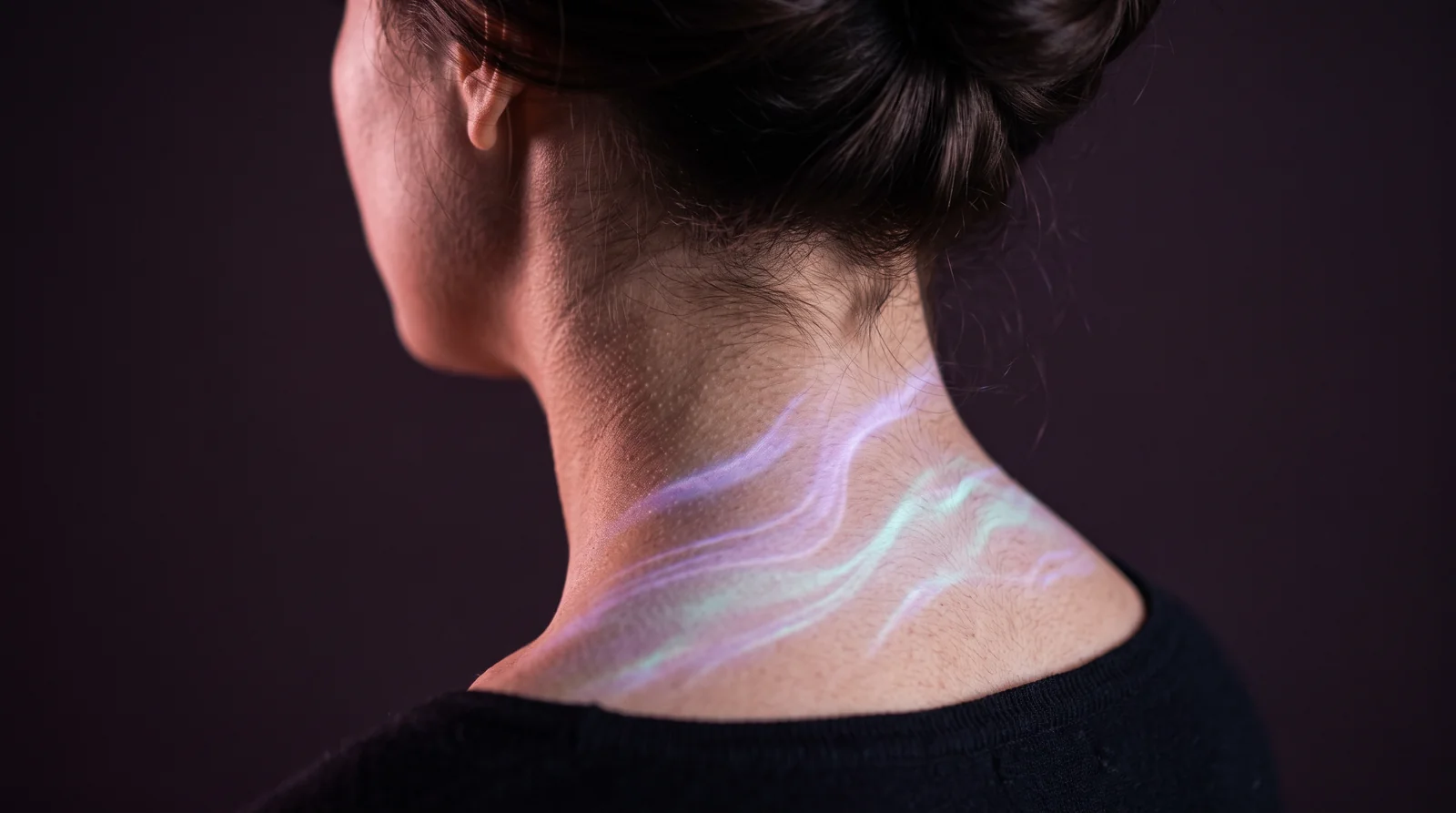
It got me on a subway platform, of all places. Headphones in, a song I'd heard fifty times, and at the key change my scalp prickled, my arms goosebumped, and a shiver ran down my back like someone had dropped ice down my collar, except it felt fantastic. There's a word for that: frisson, French for shiver. And unlike most experiences that get poetic French names, this one has actually been to the lab. Scientists have wired people up, played them their most chill-inducing songs, and watched what happens. What happens turns out to be a very good story about how your brain treats music like a slot machine.
What frisson is
Frisson is a brief wave of pleasurable chills, often with visible goosebumps, triggered by music, film moments, speeches, sometimes even a perfect sentence. Episodes last seconds. Most people report feeling it at least occasionally; a sizable minority rarely or never do, and neither wiring is a defect. The physical part is real and measurable: piloerection, the tiny muscles at each hair follicle firing, along with changes in heart rate and skin conductance. Your body is running its cold-and-fear reflex, the same one that fluffs up a spooked cat, in response to a chord progression. The question is why that misfire feels so good.
Your brain on a key change
The landmark study came out of McGill: researchers had people bring in their own reliably chill-inducing music and scanned their brains as the chills hit (Blood and Zatorre, 2001, PNAS). As chill intensity climbed, blood flow rose in core reward circuitry, including the ventral striatum and midbrain, regions that respond to food and other primary rewards, while activity dropped in the amygdala, a hub of threat processing. Read that pairing again: reward up, alarm down. Music that gives you chills is lighting up the want-this machinery while actively quieting the worry machinery, which is a decent neurological description of what 'moved to shivers' feels like from the inside.
Why would sound do that? The leading account centers on expectation. Your auditory brain is a prediction engine, constantly betting on the next note. Composers are professional bet manipulators: they build a pattern, let you settle into it, then swerve. The key change, the sudden quiet, the voice that cracks, the drop. When a violation resolves in a satisfying way, the prediction machinery pays out. Frisson seems to be what a big enough payout feels like when it spills over from the brain into the skin.
Reward up, alarm down. A chill is your brain's want-this machinery firing while the worry machinery goes quiet.
Why some people get chills more than others
Personality research keeps finding one trait linked with frisson frequency: openness to experience, the disposition toward imagination, aesthetic sensitivity, and getting absorbed in things. The absorption part looks like the active ingredient. Chills favor listeners who dive in, attend closely, and let the music set the terms. Distracted listening, music as wallpaper behind four other tasks, rarely produces them. Familiarity helps too, in a specific way: you need to know a song well enough to have expectations, because expectations are the thing the composer is about to violate on your behalf.
People ask how frisson relates to ASMR, and the answer is relatives, not twins. Both are pleasant, skin-level responses to sound. But ASMR is a slow, diffuse tingling that spreads from the scalp during soft, intimate triggers, while frisson is a fast, sharp wave that rides musical peaks. Plenty of people get one and not the other, which suggests different wiring under the hood. If tingles skip you but a key change can still raise the hair on your arms, you're not broken. You're just tuned to a different station.
How to invite it
You can't force frisson, but you can set the table. Headphones rather than speakers, so detail and dynamics survive. Volume with some headroom for the peaks. Actual attention, eyes closed or eyes soft, not music-while-emailing. And material with real dynamic architecture: builds, drops, entrances, the moment the choir comes in. I keep a short playlist of reliable offenders and try not to overplay them, because the machine habituates; a chill chased nightly stops showing up. On nights when I want the settled version of that absorbed state without the goosebump fireworks, I'll run one of Feelsy's soundscapes with a slow texture on screen and let autoplay handle the sequence: the same deep attention, aimed at calm instead of crescendo. A different payout from the same prediction machine.
The bottom line
Frisson is your prediction engine celebrating in public: reward circuits firing hard enough to trip a body reflex borrowed from cold and fear, repurposed for beauty. It costs nothing, harms nothing, and rewards exactly the kind of deep, single-task listening that the rest of modern life trains out of us. Whether you're a five-times-a-day chill machine or someone who's felt it twice ever, the practice it points to is the same: pick something worth hearing and actually hear it. The goosebumps, if they come, are just the receipt.
Feelsy is a wellness product, not medical advice. If stress, anxiety or sleep problems persist, please speak with a qualified professional.
References
- Blood, A. J., & Zatorre, R. J. (2001). Intensely pleasurable responses to music correlate with activity in brain regions implicated in reward and emotion. Proceedings of the National Academy of Sciences, 98(20), 11818-11823.
Frequently Asked Questions
What causes the chills you get from music, known as frisson?
Frisson is a brief wave of pleasurable chills, often with visible goosebumps, triggered by music, film moments, speeches or even a striking sentence. It involves piloerection, the tiny muscles at hair follicles firing along with changes in heart rate and skin conductance, essentially your body's cold-and-fear reflex misfiring in response to something like a chord progression.
What happens in the brain when you get chills from music?
In a landmark study, researchers scanned people's brains as they listened to their own reliably chill-inducing music and found that as chill intensity rose, blood flow increased in reward regions like the ventral striatum and midbrain, while activity dropped in the amygdala, a hub of threat processing (Blood and Zatorre, 2001). In short, reward circuitry ramps up while the brain's alarm system quiets down.
Why does music give some people chills and not others?
Personality research consistently links frisson frequency to openness to experience, the trait involving imagination, aesthetic sensitivity and getting absorbed in things, with absorption appearing to be the key ingredient. Familiarity also helps, since you need to know a song well enough to form expectations, because a satisfying violation of those expectations is thought to be what triggers the chill.
Is frisson the same thing as ASMR tingles?
They are related but different. ASMR is a slow, diffuse tingling that spreads from the scalp during soft, intimate triggers, while frisson is a fast, sharp wave that rides musical peaks like a key change or a big entrance. Plenty of people experience one but not the other, which suggests they involve different underlying wiring.
How can I increase my chances of getting chills from music?
Use headphones so detail and dynamics survive, keep some volume headroom for the loudest peaks, and give the music your full, undistracted attention rather than playing it as background. Choose music with real dynamic architecture, like builds and drops and dramatic entrances, but avoid overplaying your go-to chill songs, since the response habituates if chased too often.

About the author
Contributing writer
Kurt is a New York based writer covering the practical science of stress, sleep and focus. He is the resident sceptic of the Journal: if a technique cannot survive a crowded subway commute and a deadline week, he is not interested in it.
Feel it for yourself.
Feelsy turns reading about calm into practising it. Two minutes of a slow texture is often the whole difference.


Related reading
 ASMR
ASMRASMR, Explained: What Science Says About the Tingles
ASMR is more than a trend. Here is what the tingles are, who feels them, and what studies have measured about their effects on heart rate, mood and calm.
 ASMR
ASMRWhy You Don't Get ASMR Tingles (and Whether It Matters)
Watched hours of whispering and felt nothing? You may not be wired for tingles, and that may not matter. What research says about ASMR immunity.
 ASMR
ASMRWhisper ASMR: Why a Lowered Voice Quiets the Mind
Why whispering is so relaxing: the science behind whisper ASMR, care signals and close attention, and how to use soft-spoken audio for sleep and calm.
 ASMRNew
Why Is Bob Ross So Relaxing? The Science of Happy Little Brushstrokes
Bob Ross has been putting people to sleep for four decades, and he'd take that as a compliment. Here's the science of why his painting videos work like ASMR.
 ASMRNew
What Is 8D Audio? The Science Behind the Spinning Sound
8D audio pans music around your head using binaural tricks. Here's how the illusion works, why it feels immersive, and whether it helps you relax or focus.
 ASMR
ASMRWhy Paint Mixing Videos Are So Satisfying
Why paint mixing videos feel so satisfying: the slow science of swirls and folds, what ASMR research suggests, and how to watch them as a mini meditation.