Breathing Exercises for Anxiety: From Pranayama to 4-7-8
Breath is the remote control of your nervous system. Here is what slow breathing does, three techniques with steps, and when not to force it.
Almost every calming technique you can name eventually returns to the same instrument: breath. It is the one part of the autonomic nervous system you can consciously reach in about two seconds. You do not need equipment, you do not need training, and the effect on your body is immediate. That is a rare combination in wellbeing, and it is why breath sits underneath every serious tradition of contemplative practice.
Why breath is the remote control of the nervous system
Your heart, your gut, your pupils, your sweat glands: none of them respond when you politely ask. Your breath does. And because breathing shares wiring with the vagus nerve, changing how you breathe changes your heart rate variability, your parasympathetic tone, and the level of alertness your body is running on.
A comprehensive review of slow breathing research summarised the physiological picture clearly: paced, slow breathing, typically at around six breaths per minute, is associated with increases in heart rate variability, greater parasympathetic activity, and improved subjective wellbeing (Zaccaro et al., 2018, Frontiers in Human Neuroscience). That is a technical way of saying your body downshifts, on measurable channels, when you slow your breath.
Slow breathing is one of the few tools that changes your physiology on purpose, in seconds.
The pranayama roots
Long before laboratories measured any of this, yogic traditions in India had built an entire discipline around it. Pranayama, from prana (life force) and yama (control or extension), is the fourth of the eight limbs described in Patanjali's Yoga Sutras. Practices like nadi shodhana (alternate nostril breathing), ujjayi (ocean breath), and kapalabhati (skull-shining breath) were developed as preparation for meditation, not as anxiety hacks. But their effect on the mind was well understood: slow the breath, steady the mind.
Modern methods like 4-7-8 breathing, popularised by Dr Andrew Weil, are direct descendants of these techniques. The counts change. The principle does not. Lengthening the exhale is the lever.
Three techniques with steps
1. The 4-7-8 technique
The classic exhale-longer-than-inhale pattern. Best when you are wound up and want to come down quickly. It has a dedicated walkthrough in our 4-7-8 breathing technique guide, but the short version is:
- Breathe in through your nose for four counts.
- Hold your breath for seven counts.
- Breathe out through your mouth, slowly and audibly, for eight counts.
- Repeat four times. That is one cycle. Two cycles a day is a strong starting practice.
2. Box breathing
Used by athletes, first responders, and people who need to steady themselves under pressure. Equal counts on all four sides:
- Inhale for four counts.
- Hold for four counts.
- Exhale for four counts.
- Hold empty for four counts.
- Repeat for two to five minutes.
Box breathing is a good choice when you need to concentrate without going sleepy. It is calming without being sedating.
3. Extended exhale
The simplest and often the most powerful. No holds, no gymnastics: just make your exhale twice as long as your inhale.
- Inhale gently through your nose for a comfortable count, for example four.
- Exhale through the nose or slightly parted lips for double that count, for example eight.
- Continue for two minutes. If your exhale gets shorter, shorten your inhale to keep the ratio.
This is the one to use in a meeting, in a queue, in bed, anywhere you cannot count sevens on your fingers.
When not to force it
Breathwork is unusually safe, but there are a few situations where you should ease off.
- If you feel dizzy or light-headed, stop and breathe normally. That usually means you are overbreathing or holding too long.
- If you have a respiratory or cardiac condition, or you are pregnant, check with your doctor before adding intense practices like kapalabhati or long breath holds.
- If a technique makes your anxiety spike, that is real and it can happen. Try a gentler one, or a shorter version, or pair the breath with a visual anchor so the mind has somewhere to land.
- Do not practise breathwork while driving or in water.
The counts in these techniques are guides, not commandments. A slightly shorter, comfortable breath cycle you actually do beats a perfect cycle you dread.
Pairing breath with visual anchors
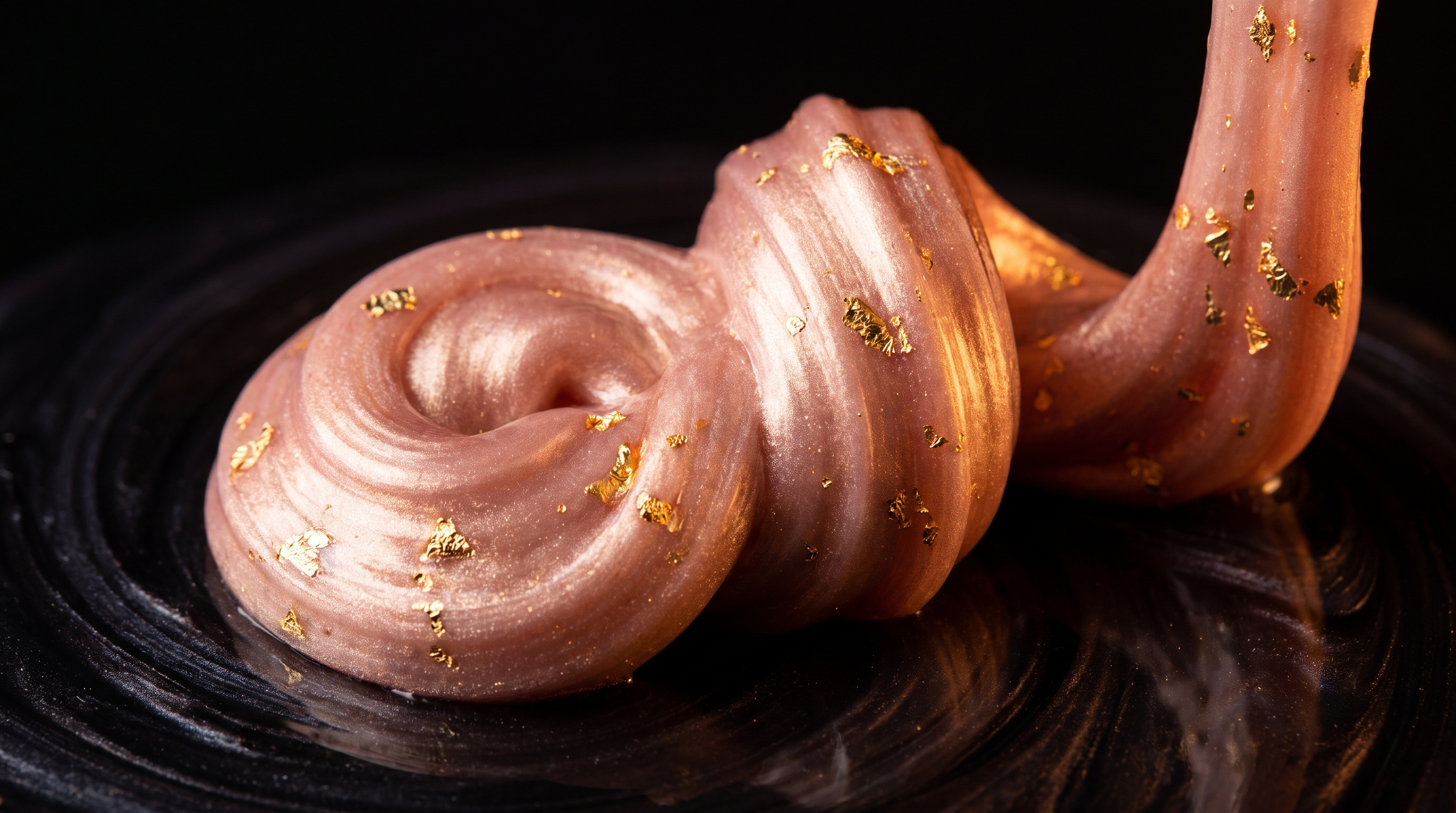
This is where breath and visual meditation combine into something greater than either alone. A well-designed animation gives your inhale and exhale a shape to follow. When a slime folds outward, you inhale. When it settles, you exhale. Your body stops having to count. Perception is now doing the pacing, and you get to just breathe.
If you have never tried it, start with a single loop of soft motion and let your breath find its rhythm. That is where practices like Yoga Nidra also begin: with body and breath, not with willpower. If breath is the theme you want to explore next, our full Yoga Nidra guide continues from here.
Feelsy is a wellness product, not medical advice. If stress, anxiety or sleep problems persist, please speak with a qualified professional.
References
- Zaccaro, A., Piarulli, A., Laurino, M., et al. (2018). How breath-control can change your life: A systematic review on psycho-physiological correlates of slow breathing. Frontiers in Human Neuroscience, 12, 353.
Frequently Asked Questions
Why does breathing affect anxiety so quickly?
Breath is the one part of the autonomic nervous system you can consciously reach in about two seconds, and because breathing shares wiring with the vagus nerve, changing how you breathe changes your heart rate variability, parasympathetic tone, and alertness. A review by Zaccaro and colleagues in 2018 found that slow, paced breathing at around six breaths per minute is associated with increased heart rate variability, greater parasympathetic activity, and improved subjective wellbeing.
What is the connection between breathing exercises and yoga's pranayama?
Pranayama, from the yogic tradition described in Patanjali's Yoga Sutras, is an entire family of breath practices including alternate nostril breathing, ujjayi, and kapalabhati, developed originally as preparation for meditation rather than as anxiety hacks. Modern methods like 4-7-8 breathing, popularised by Dr Andrew Weil, are direct descendants of these techniques, with lengthening the exhale as the shared underlying lever.
What are some breathing techniques I can try for anxiety?
Three are covered with steps: the 4-7-8 technique, which involves inhaling for four counts, holding for seven, and exhaling for eight; box breathing, which uses equal four-counts on inhale, hold, exhale, and hold empty, popular with athletes and first responders; and the extended exhale, the simplest option, where you just make your exhale roughly twice as long as your inhale for a couple of minutes.
When should I not force a breathing exercise?
Stop and breathe normally if you feel dizzy or light-headed, since that usually means you are overbreathing or holding too long. If you have a respiratory or cardiac condition or are pregnant, check with your doctor before intense practices like kapalabhati or long holds, and never practise while driving or in water. If a technique spikes your anxiety, try a gentler one or pair the breath with a visual anchor instead of counting.
Can I combine breathing exercises with a visual anchor?
Yes, a well-designed animation can give your inhale and exhale a shape to follow, for example inhaling as a slime folds outward and exhaling as it settles, so your body stops counting and perception does the pacing instead. This combination of breath and visual meditation is described as greater than either practice alone, and it is also where practices like Yoga Nidra begin.
About the author
Contributing writer
Eleonor writes about contemplative traditions, attention and the cultural history of calm. She has spent two decades collecting the rituals humans use to slow down, from zazen halls to hammams, and translating them for modern, screen-lit lives.
Feel it for yourself.
Feelsy turns reading about calm into practising it. Two minutes of a slow texture is often the whole difference.


Related reading
 Breath & Body
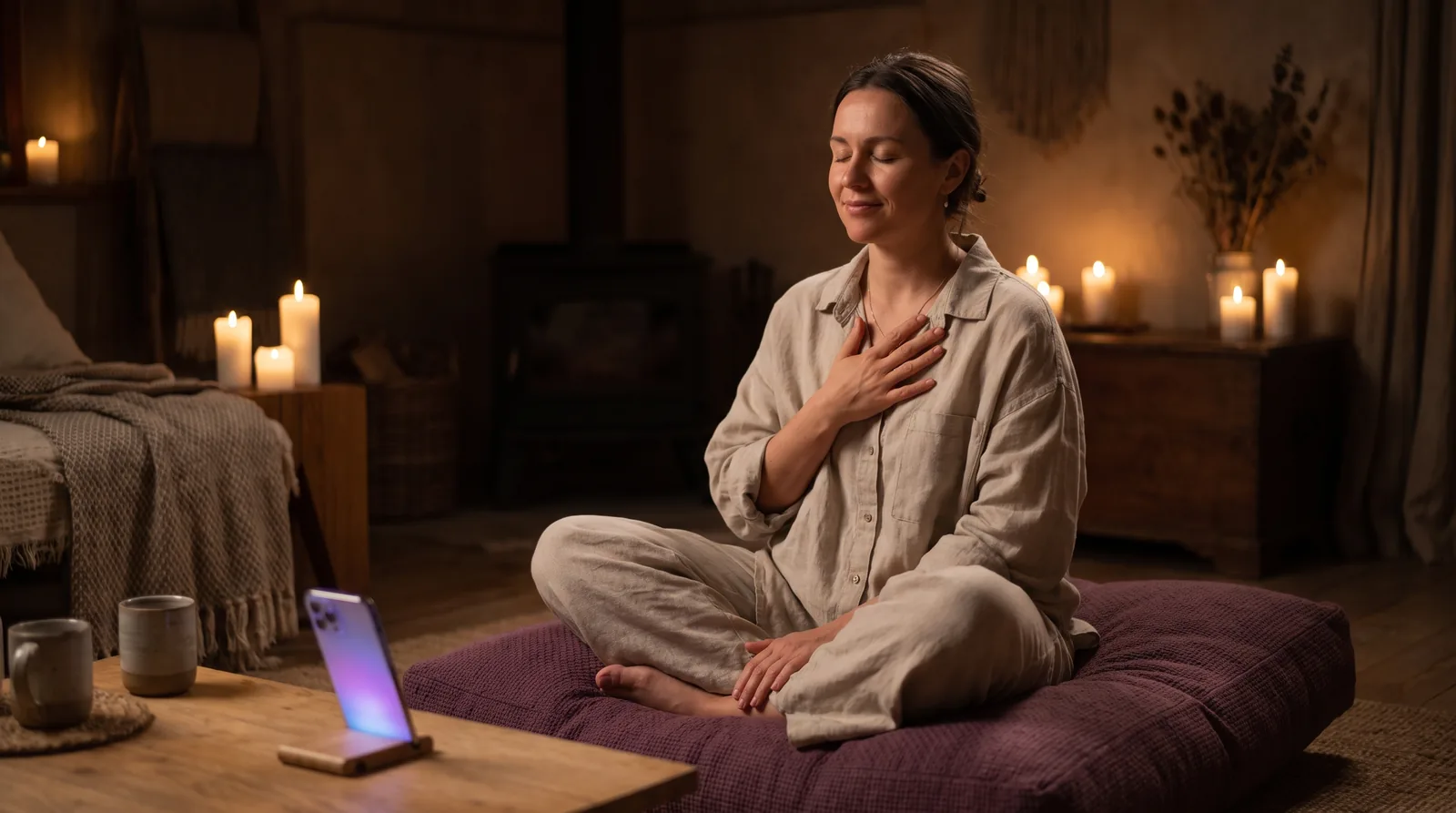
The 4-7-8 Breathing Technique, Step by Step
A focused walkthrough of the 4-7-8 breath: what it is, how to do it, why the long exhale calms you, and when to use it during the day and before sleep.
 Ancient Wisdom
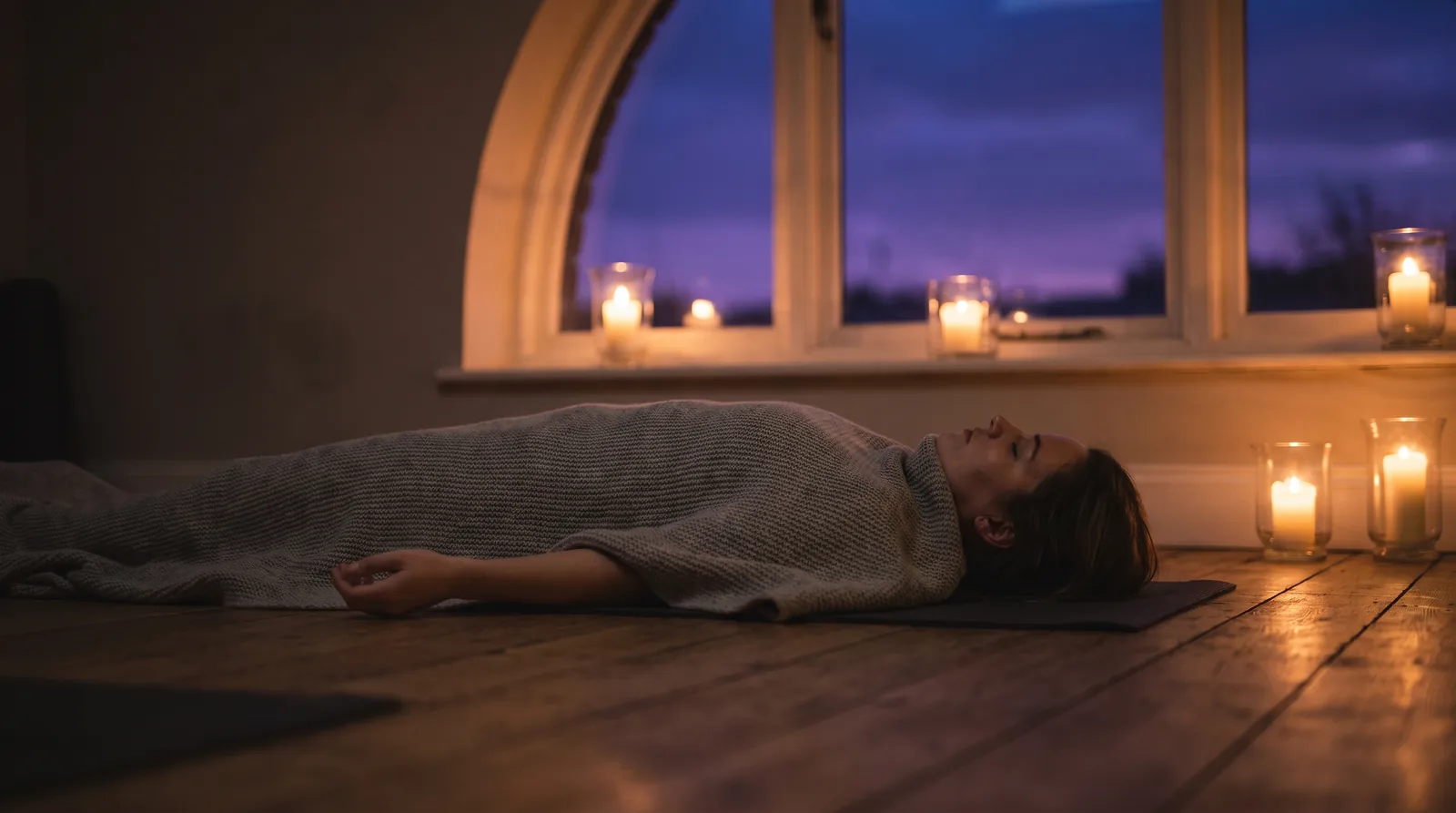
Yoga Nidra: A Guide to Conscious Rest
Yoga Nidra is one of the oldest and most forgiving relaxation practices. Here is what it is, why it works, and how to try your first 20-minute session.
 Visual Meditation
What Is Visual Meditation? The Complete Guide
Visual meditation rests your attention on slow, pleasing motion so calm happens almost on its own. Here is how it works, what the research says, and how to practise it in three minutes.
 Breath & BodyNew
Do Cold Showers Actually Work? A Skeptic Reads the Evidence
Cold showers are pitched as a cure for everything from low energy to weak character. Here's what the actual research says, and how to try one without the cult.
 Breath & BodyNew
Dopamine Detox: What It Gets Right and What It Gets Wrong
Dopamine detox promises a factory reset for your distracted brain. Here's what the neuroscience actually says, what helps, and what's just rebranded boredom.
 Breath & Body
How to Stop Overthinking: Quieting a Mind That Will Not Move On
Why overthinking loops and how to interrupt it: what rumination research shows, why you cannot argue with a spiral, and gentler ways to change the channel.