Boketto: The Japanese Art of Gazing at Nothing
Boketto is the Japanese word for gazing vacantly into the distance, thinking of nothing. Here is why this idle, gentle habit deserves a place in your day.
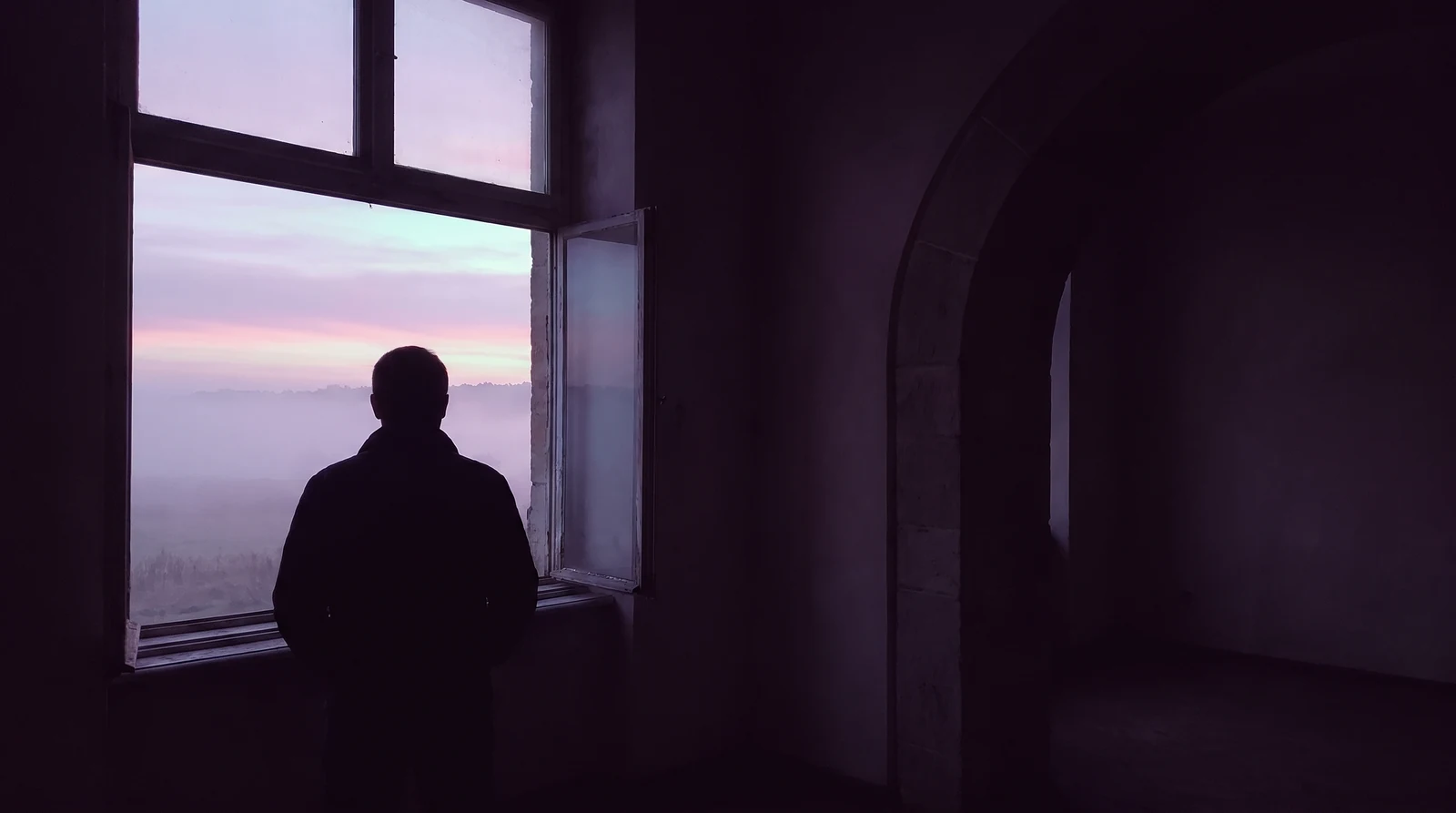
There is a word in Japanese for something you have done a thousand times without knowing it had a name. Boketto: the act of gazing vacantly into the distance, without purpose, without thought, without any intention of doing anything at all. Not daydreaming, exactly, because daydreams have plots. Not meditating, because meditation has method. Just looking. The teenager on the train watching fields slide past. The grandmother at her window with a cooling cup of tea. You, last Tuesday, staring at a wall for a full minute before you remembered you were meant to be somewhere.
Most languages treat this state as an absence, a lapse, a failure of attention. Japanese gives it a noun, and in doing so grants it a small, quiet dignity. That choice of vocabulary matters more than it seems.
What boketto actually means
Boketto is usually translated as gazing vacantly into the distance, free of thought. The word carries a gentle, affectionate tone; calling someone boketto-ing is closer to a fond observation than a criticism. It describes a state in which the eyes are open, the mind is unfocused, and nothing is being asked of either.
It sits in a family of ideas that Japanese aesthetics has long been generous towards: ma, the eloquence of empty space; komorebi, sunlight filtering through leaves; mono no aware, the tender awareness of passing things. All of them honour experiences that produce nothing and mean a great deal. Boketto is perhaps the humblest member of the family, because it does not even require beauty. A car park will do. A kettle. The middle distance.
Why we have forgotten how to stare
The empty moments in which boketto used to live have been systematically filled. Queues, bus stops, lifts, the two minutes while pasta boils: each of these was once a small window of enforced idleness, and each is now a slot for a screen. The modern phone is many wonderful things, but it is above all a machine for abolishing the vacant gaze. We have not lost the capacity to stare at nothing. We have lost the gaps in which we used to do it.
This matters because an unfocused mind is not an idle one. When you stop directing your attention at a task, the brain does not switch off; it changes register, drifting through memory, imagination and half-formed plans. Much of what we call having an idea in the shower is simply what the mind does when nobody is giving it instructions. Starve it of vacant time and you starve that register too.
We have not lost the capacity to stare at nothing. We have lost the gaps in which we used to do it.
What the research says, honestly
It would be tidy to report that science has declared staring into space an unqualified good. The truth is more interesting. In a famous study using smartphone check-ins with thousands of participants, psychologists Matthew Killingsworth and Daniel Gilbert found that people's minds wandered from the task at hand almost half the time, and that on average they reported being less happy when their minds were wandering than when they were present (Killingsworth & Gilbert, 2010, Science). A wandering mind, the paper's title concluded, is an unhappy mind.
But look closely and the finding is about involuntary drift: the mind sliding into worry while you are trying to work, rehearsing an argument while you are trying to listen. That is rumination wearing the costume of rest. Boketto is different in kind, because it is chosen. You are not failing to pay attention to something important; you have deliberately set attention down, the way you would set down a heavy bag. The unhappiness in the data clusters around minds that wander to stressful places while their owners are mid-task. A gaze that has been given permission to rest on a horizon, with nothing waiting, is another animal entirely.
So the honest claim is modest: boketto is not a cure for anything. It is the restoration of a default state that the species had uninterrupted access to until roughly 2007.
How to practise doing nothing
It feels absurd to give instructions for vacancy, and yet most of us need them, because the reflex to reach for the phone is now faster than thought. Treat these less as steps than as permissions.
- Find a middle distance. A window, a garden, a rooftop view, the far wall of a cafe. The eyes relax when they focus beyond arm's length.
- Leave the phone out of reach, face down, in another room if you can bear it. Boketto does not survive a single notification.
- Let the gaze be soft. You are not looking at anything; you are looking towards. If your eyes want to drift out of focus, let them.
- Do not supervise your thoughts. If they come, they come. If they trail off mid-sentence, that is the point.
- Stop when you stop. Thirty seconds counts. So does ten minutes. There is no correct dose of nothing.
The first few attempts may feel itchy, the way silence does after a loud room. That itch is not boredom; it is withdrawal. It passes.
A screen that lets you stare
There is an apparent contradiction in using a phone to practise the art the phone destroyed, but it depends entirely on what the screen is doing. A feed is engineered to capture the gaze and hold it hostage; a slow visual is content to simply be looked at. This is the register Feelsy was built for: textures that drift and fold with no plot, no progress and nothing to miss, the digital equivalent of a view from a train window. Set it playing in autoplay mode, rest your eyes on it, and let the gaze go soft. The screen glows; nobody is keeping score. It is not a substitute for a real horizon, but on a grey Tuesday in a windowless office, it is a very serviceable stand-in.
The dignity of the vacant gaze
There is a reason the word boketto tends to charm people the first time they meet it. It names something we all do and have been quietly taught to feel guilty about. A culture that measures every minute finds the vacant gaze scandalous; a wiser tradition simply gave it a name and let it be. You do not need to optimise your staring, track it, or improve at it. You need only to stop apologising for it. The next time you find yourself gazing at nothing, resist the urge to snap back. Stay a moment longer. That is the whole practice.
Feelsy is a wellness product, not medical advice. If stress, anxiety or sleep problems persist, please speak with a qualified professional.
References
- Killingsworth, M. A., & Gilbert, D. T. (2010). A wandering mind is an unhappy mind. Science, 330(6006), 932.
Frequently Asked Questions
What does boketto mean in Japanese?
Boketto is a Japanese word for gazing vacantly into the distance without purpose or thought. It is not quite daydreaming, because daydreams have plots, and not meditation, because meditation has method. The word carries a gentle, affectionate tone and belongs to a family of Japanese ideas, such as ma and komorebi, that honour quiet, unproductive experiences.
Is staring into space good or bad for you?
It depends on whether the drift is chosen. A well-known study by Killingsworth and Gilbert found that people were on average less happy when their minds wandered involuntarily away from a task, which is rumination wearing the costume of rest. Boketto is different because attention is deliberately set down, with nothing waiting, so there is no task being neglected and no guilt attached.
How do you practise boketto?
Find a middle distance such as a window or the far wall of a cafe, leave your phone out of reach, and let your gaze go soft, looking towards rather than at anything. Do not supervise your thoughts; if they trail off mid-sentence, that is the point. Thirty seconds counts and so does ten minutes, because there is no correct dose of nothing.
Why is it so hard to do nothing now?
The small windows of enforced idleness where vacant gazing used to live, such as queues, bus stops and the minutes while pasta boils, have been filled by screens. The capacity to stare at nothing has not been lost, only the gaps in which it used to happen. The first attempts can feel itchy, like silence after a loud room, but that feeling is withdrawal rather than boredom, and it passes.

About the author
Contributing writer
Eleonor writes about contemplative traditions, attention and the cultural history of calm. She has spent two decades collecting the rituals humans use to slow down, from zazen halls to hammams, and translating them for modern, screen-lit lives.
Feel it for yourself.
Feelsy turns reading about calm into practising it. Two minutes of a slow texture is often the whole difference.


Related reading
 Ancient Wisdom
Niksen: The Dutch Art of Doing Nothing (and Why Your Brain Needs It)
Niksen is the Dutch art of doing nothing: no phone, no goal, no guilt. What idle moments actually do for a busy brain, and how to practise niksen daily.
 Visual Meditation
In Defense of Staring Out the Window
Staring out the window isn't wasted time. The science of soft fascination and attention restoration, and why your brain needs unfocused minutes.
 Visual Meditation
Komorebi: The Japanese Word for Sunlight Through Leaves, and Why It Calms the Mind
Komorebi is the Japanese word for sunlight filtering through leaves. Here is what the word holds, why dappled light soothes the brain, and how to practise it.
 Visual MeditationNew
Apricity: The Forgotten Pleasure of Winter Sun
Apricity is a forgotten English word for the warmth of the sun in winter. Here is why a few minutes of low winter sunlight can soften the darkest months.
 Visual MeditationNew
Momijigari: The Japanese Art of Autumn Leaf Viewing
Momijigari is the old Japanese tradition of travelling to see autumn leaves. Here is why fiery foliage calms the mind, and how to practise it anywhere.
 Visual MeditationNew
Why Libraries Feel So Calming
Step into a library and your shoulders drop. Here is the psychology of hush, tall shelves and shared silence, and how to borrow that feeling for your rooms.