Momijigari: The Japanese Art of Autumn Leaf Viewing
Momijigari is the old Japanese tradition of travelling to see autumn leaves. Here is why fiery foliage calms the mind, and how to practise it anywhere.
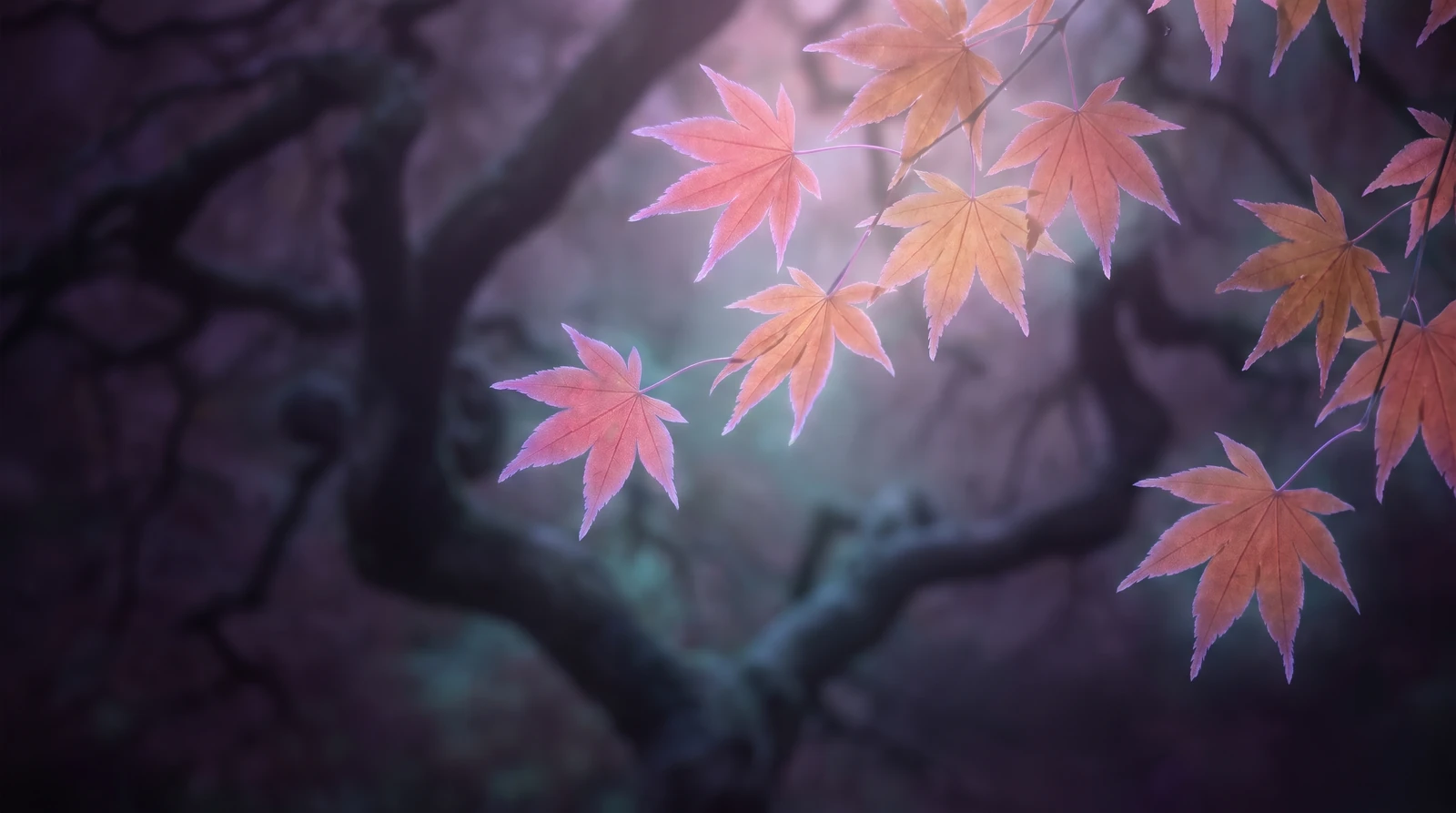
Every autumn, Japan quietly mobilises. Television bulletins track the koyo zensen, the autumn colour front, as it sweeps down the archipelago from Hokkaido to Kyoto, the mirror image of spring's cherry blossom front travelling north. Hotels fill. Trains are booked. Millions of people travel considerable distances for the sole purpose of standing under trees and looking up. The practice has a name, momijigari: momiji, the maple, and kari, hunting. Leaf hunting. Nothing is captured, nothing is kept. The quarry is the colour itself.
The custom is old. Courtiers in the Heian period, a thousand years ago, were already making excursions to famous maple valleys, composing poems about the brocade of the hillsides. The eighth-century anthologies are full of autumn leaves. What began as an aristocratic pastime became, over the centuries, a national habit, and it rests on an insight the rest of us are only beginning to take seriously: that looking at certain things, slowly and on purpose, does something for the mind that little else does.
Why autumn colour holds the eye
Autumn foliage is almost perfectly engineered for what psychologists call soft fascination. In his work on attention restoration, the psychologist Stephen Kaplan argued that directed attention, the effortful focus we spend at desks and in traffic, is a depletable resource, and that it recovers in environments that hold the eye effortlessly without demanding anything of it (Kaplan, 1995, Journal of Environmental Psychology). Clouds, water, foliage: patterns rich enough to occupy perception, gentle enough to leave the mind free. A hillside of turning maples is this recipe at full strength. Ten thousand points of colour, every one of them moving slightly, none of them requiring a single decision.
The evidence that such looking matters is older than the theory. In a famous study of hospital patients recovering from gallbladder surgery, those whose windows faced trees needed less pain relief and went home sooner than those whose windows faced a brick wall (Ulrich, 1984, Science). The view was doing clinical work. Nobody prescribed the trees; they simply stood there, being looked at, and the body took note.
Nothing is captured, nothing is kept. The quarry is the colour itself.
The gentler lesson: beauty on a deadline
There is a second ingredient in momijigari, and it is the one the Heian poets understood best. Autumn colour is beauty on a deadline. The maples burn for two weeks, perhaps three, and then the rain takes them. The Japanese aesthetic tradition holds that this is not a flaw in the experience but the heart of it: mono no aware, the tender awareness of transience, the way things touch us more deeply because they are leaving. A plastic maple in permanent October would be worthless. The real one matters because you must come now, and look properly, and let it go.
This is quietly therapeutic in a way that has nothing to do with foliage. Most anxiety is a quarrel with impermanence: wanting good things guaranteed and bad things ruled out. An afternoon spent admiring something that is dying beautifully, and is no less beautiful for it, is a rehearsal for a kinder relationship with time. The leaves do not cling, and for an hour or so, under them, neither do you.
How to go leaf hunting, wherever you are
You do not need Kyoto. Momijigari scales down honourably to a city park, a single street tree, even a windowsill. What makes it a practice rather than a stroll is the quality of attention.
- Go for the leaves and nothing else. Not a walk with errands attached; a walk whose only purpose is colour.
- Slow to half your usual pace. The Heian courtiers travelled by ox cart; you can at least amble.
- Pick one tree and give it a full minute. Watch how the colour varies from branch to branch, how the light comes through the thin places.
- Look down as well as up. The fallen carpet is half the spectacle, and it changes daily.
- Take one photograph if you must, then put the phone away. The hunt is with the eyes, not the lens.
Repeat weekly while the season lasts. Part of the practice is watching the same trees change, the slow fire moving through them, until one grey morning it is finished and you were there for all of it.
Autumn for the housebound
There are days, and whole weeks, when the weather or the diary refuses, and the season proceeds without you. The spirit of the practice can still be kept. A few unhurried minutes watching slow colour move, with no plot and no purpose, exercises the same soft fascination the hillside does. This is precisely the register Feelsy works in: drifting ambers, roses and deep warm darks that turn and fall past the eye like leaves in no wind, with autoplay carrying the scene gently on so there is nothing to manage. It is not a maple valley, and does not pretend to be. It is a windowsill version of the same medicine: colour, motion, transience, and nothing asked of you at all.
Being there for it
The deepest thing about momijigari is that it treats paying attention to beauty as an activity worthy of planning, travel and time, rather than something snatched in passing. A thousand years of practitioners cannot all have been idle. They knew the hillside would burn whether or not anyone came, and that the only thing added by the journey was the witness. That is the whole art: to be, deliberately and unhurriedly, the person who was looking when the trees turned.
Feelsy is a wellness product, not medical advice. If stress, anxiety or sleep problems persist, please speak with a qualified professional.
References
- Kaplan, S. (1995). The restorative benefits of nature: Toward an integrative framework. Journal of Environmental Psychology, 15(3), 169–182.
- Ulrich, R. S. (1984). View through a window may influence recovery from surgery. Science, 224(4647), 420–421.
Frequently Asked Questions
What does momijigari mean?
Momijigari is the Japanese tradition of travelling to view autumn leaves. The word combines momiji, the maple, with kari, hunting: leaf hunting. Nothing is captured or kept; the quarry is the colour itself. The custom dates back at least to the Heian period a thousand years ago, when courtiers made excursions to famous maple valleys.
Why is looking at autumn leaves so calming?
Autumn foliage is a near-perfect example of what psychologists call soft fascination: patterns rich enough to hold the eye effortlessly while leaving the mind free, which Stephen Kaplan argued allows depleted, effortful attention to recover. A hillside of turning maples offers thousands of gently moving points of colour that require no decisions at all.
Is there scientific evidence that looking at trees helps the body?
A well-known 1984 study by Roger Ulrich found that hospital patients recovering from gallbladder surgery whose windows faced trees needed less pain relief and went home sooner than patients whose windows faced a brick wall. The view itself appeared to be doing clinical work.
How do I practise momijigari without travelling to Japan?
A city park, a single street tree or even a windowsill will do. Go out for the leaves and nothing else, slow to half your usual pace, give one tree a full minute of attention, look down at the fallen carpet as well as up, and keep the phone away. Repeat weekly while the season lasts so you watch the same trees change.

About the author
Contributing writer
Eleonor writes about contemplative traditions, attention and the cultural history of calm. She has spent two decades collecting the rituals humans use to slow down, from zazen halls to hammams, and translating them for modern, screen-lit lives.
Feel it for yourself.
Feelsy turns reading about calm into practising it. Two minutes of a slow texture is often the whole difference.


Related reading
 Visual Meditation
Komorebi: The Japanese Word for Sunlight Through Leaves, and Why It Calms the Mind
Komorebi is the Japanese word for sunlight filtering through leaves. Here is what the word holds, why dappled light soothes the brain, and how to practise it.
 Ancient Wisdom
Shinrin-Yoku: Why Forests Calm the Human Mind
Japan turned a walk in the woods into preventive medicine. The research behind forest bathing, what it does to stress physiology, and how to practise it without a forest.
 Ancient Wisdom
Mono no Aware: Japan's Word for the Beautiful Sadness of Passing Things
Mono no aware is Japan's term for the gentle sadness of passing things. Here is what the phrase means, where it comes from, and why it deepens everyday calm.
 Visual MeditationNew
Apricity: The Forgotten Pleasure of Winter Sun
Apricity is a forgotten English word for the warmth of the sun in winter. Here is why a few minutes of low winter sunlight can soften the darkest months.
 Visual MeditationNew
Why Libraries Feel So Calming
Step into a library and your shoulders drop. Here is the psychology of hush, tall shelves and shared silence, and how to borrow that feeling for your rooms.
 Visual Meditation
Boketto: The Japanese Art of Gazing at Nothing
Boketto is the Japanese word for gazing vacantly into the distance, thinking of nothing. Here is why this idle, gentle habit deserves a place in your day.