Komorebi: The Japanese Word for Sunlight Through Leaves, and Why It Calms the Mind
Komorebi is the Japanese word for sunlight filtering through leaves. Here is what the word holds, why dappled light soothes the brain, and how to practise it.
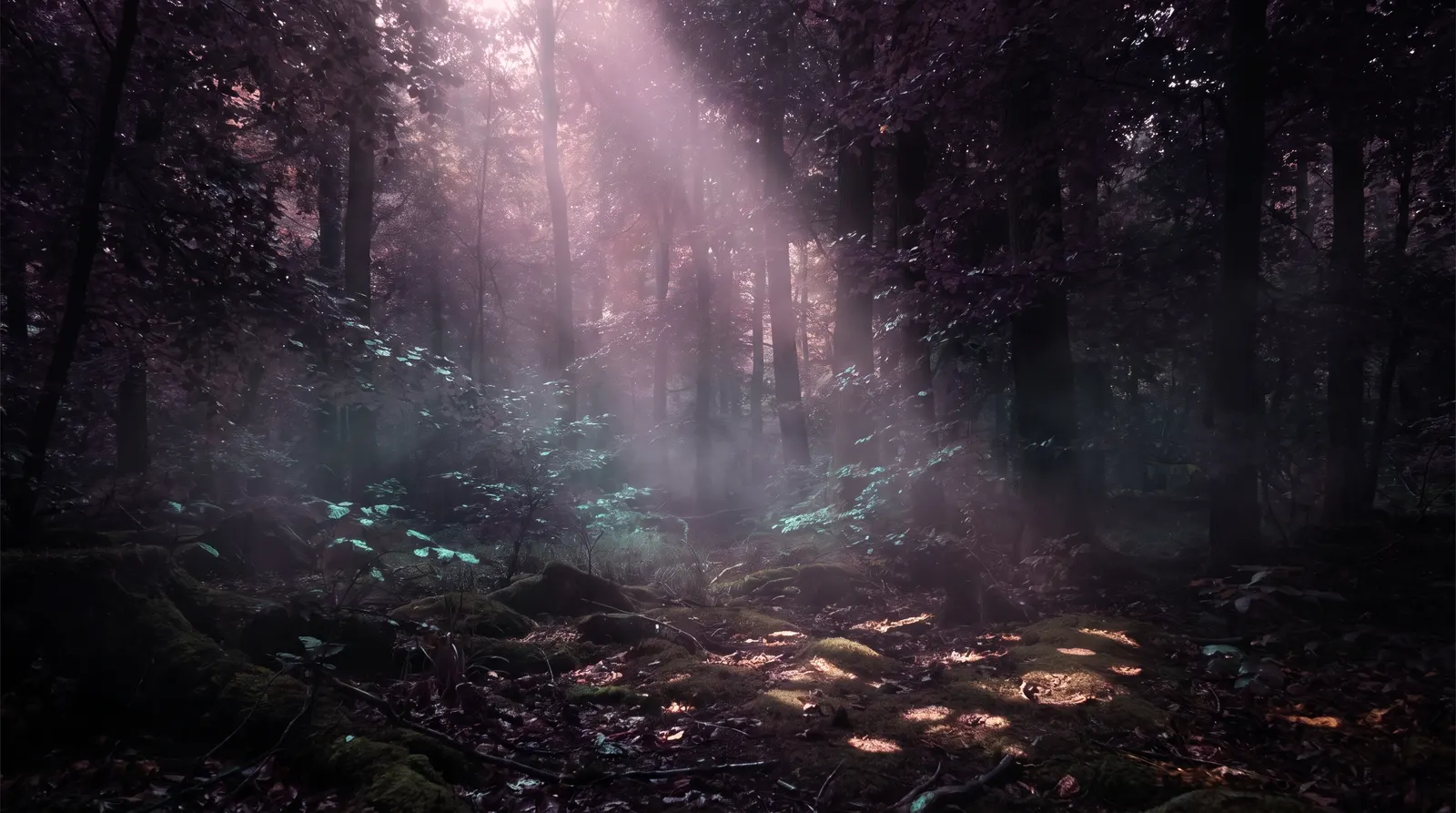
There are words other languages keep that make English look careless with its treasures. Komorebi is one of them: a Japanese noun, written with the characters for tree, leak and sun, that names the sunlight which filters through leaves. Not sunlight in general, and not shade; the word points precisely at the shifting, dappled, in-between light that a canopy makes of a clear day, the coins of brightness that tremble on a woodland path, the green-gold flicker on the ceiling of a room beside a tree. English speakers have all stood in komorebi. We simply never agreed on what to call it, which may be why we so rarely stop for it.
What the word holds
A language tends to name what its speakers have decided is worth noticing, and komorebi carries a small aesthetic philosophy inside it. The light it names is borrowed and temporary: it exists only while sun, wind and leaves cooperate, and it is never the same for two minutes together. In that sense the word belongs to the same family of Japanese ideas as wabi-sabi, the beauty of the imperfect and impermanent; komorebi is beauty that cannot be kept, only attended to. It also names a collaboration rather than an object. The tree does not make it, the sun does not make it, the wind does not make it; the three of them make it together, and you, standing in the right place with your face up, are the fourth ingredient. There is something quietly instructive in a word that treats a passing pattern of light as a thing worth a noun of its own.
Why dappled light soothes the brain
The calm that komorebi produces is not merely poetic. Light through foliage has a particular visual signature: it is fractal, built of similar patterns repeating at different scales, branch within branch, leaf shadow within leaf shadow. Natural scenes of this kind occupy the eye in a way that is rich but never effortful, and the brain appears to respond to them distinctively. In one line of research, scientists showed people images with the fractal geometry of natural forms while recording the brain's electrical activity, and found that patterns in the range typical of trees and landscapes were associated with alpha-wave activity, the signature of wakeful relaxation, the state of a mind alert but at ease (Hagerhall et al., 2008, Perception). The dappled floor of a wood, on this evidence, is not just pretty; it is a pattern the visual system finds restful to process, a kind of visual comfort food evolved eyes have been eating for millions of years.
Add the movement, and the effect deepens. Komorebi flickers, but slowly and irregularly, at the tempo of wind rather than the tempo of screens. The eye is given constant gentle novelty with no edges, no messages and no stakes, the same effortless occupation that watching water or firelight provides. This is why the light under a tree can hold a person's gaze for whole minutes at a time while the identical person finds sitting still with closed eyes unbearable. The attention is not being disciplined; it is being entertained, very quietly.
Komorebi is beauty that cannot be kept, only attended to. The tree, the sun and the wind make it together, and you are the fourth ingredient.
An accidental meditation most of us already do
Nearly everyone has practised komorebi without meaning to. The commuter who watches leaf shadows swim across the bus ceiling, the child who lies under a tree turning her hand in and out of the light, the patient in a waiting room following the flicker on the floor: all of them have found the same door. What Japanese gives us, in giving us the word, is permission to take the experience seriously, to treat those minutes not as absent-mindedness but as a small restorative practice with a name and a lineage. Naming a thing makes it easier to seek out. Once you know the word, you begin to notice how much komorebi a day actually contains, and how consistently it improves the minute in which it is noticed.
How to practise komorebi
The practice could hardly be simpler, which is rather the point. Find a tree with the sun behind it: a park, a garden, a generous street tree will all serve. Stand or sit so that the light comes through the canopy towards you, and watch the ground, a wall, or the inside of the canopy itself rather than the sun. Let the eye drift with the movement of the bright patches instead of fixing on any one of them, the way you would watch rain on a window. When thoughts arrive, let them pass through like wind through the same leaves; the light will still be moving when they have gone. Five or ten minutes is a complete session, and unlike most meditation it can be done with open eyes, on a bench, holding a coffee, looking to all the world like someone merely enjoying the weather. Which, of course, you are.
On the days without sun or trees, the deep of winter, the windowless office, the same quality of light can be borrowed. A candle behind a plant on a sill will throw a small komorebi on the wall. And I confess that on grey afternoons I sometimes let Feelsy's slow light-play textures drift on autoplay, dapples without a tree, while I work; the palette is lamplight rather than leaf-light, but the eye accepts the substitution gratefully. The original, though, is free, and it is waiting outside on the first bright day, leaking through every canopy in town.
Feelsy is a wellness product, not medical advice. If stress, anxiety or sleep problems persist, please speak with a qualified professional.
References
- Hagerhall, C. M., Laike, T., Taylor, R. P., Küller, M., Küller, R., & Martin, T. P. (2008). Investigations of human EEG response to viewing fractal patterns. Perception.
Frequently Asked Questions
What does komorebi mean?
Komorebi is a Japanese noun, written with the characters for tree, leak and sun, that names sunlight filtering through leaves: the shifting, dappled light a canopy makes of a clear day. English has no single word for it, though English speakers stand in it constantly.
Why does sunlight through leaves feel so calming?
Light through foliage has a fractal visual structure, similar patterns repeating at different scales, and research recording the brain's electrical activity found that fractal patterns typical of natural forms were associated with alpha-wave activity, the signature of wakeful relaxation. The slow, irregular flicker also occupies the eye with gentle novelty that asks nothing of you.
How do you practise komorebi meditation?
Find a tree with the sun behind it and watch the dappled light on the ground, a wall or the canopy itself, letting your eye drift with the moving bright patches rather than fixing on one. When thoughts arrive, let them pass and return to the light. Five to ten minutes with open eyes is a complete session.
Is komorebi related to wabi-sabi?
They belong to the same family of Japanese aesthetic ideas. Wabi-sabi honours beauty that is imperfect and impermanent, and komorebi names a light that is exactly that: it exists only while sun, wind and leaves cooperate, is never the same for two minutes together, and cannot be kept, only attended to.

About the author
Contributing writer
Eleonor writes about contemplative traditions, attention and the cultural history of calm. She has spent two decades collecting the rituals humans use to slow down, from zazen halls to hammams, and translating them for modern, screen-lit lives.
Feel it for yourself.
Feelsy turns reading about calm into practising it. Two minutes of a slow texture is often the whole difference.


Related reading
 Ancient Wisdom
Shinrin-Yoku: Why Forests Calm the Human Mind
Japan turned a walk in the woods into preventive medicine. The research behind forest bathing, what it does to stress physiology, and how to practise it without a forest.
 Visual Meditation
Why Fractals Calm the Mind: The Quiet Mathematics of Ferns and Coastlines
Ferns, clouds and coastlines share a repeating geometry called fractals. Here is why nature's self-similar patterns soothe the eye, and how to use them.
 Ancient Wisdom
Wabi-Sabi: The Japanese Art of Finding Calm in Imperfection
What wabi-sabi really means: the Japanese aesthetic of imperfect, impermanent beauty, and how its quiet philosophy softens perfectionism and stress.
 Visual MeditationNew
Highway Hypnosis: Why You Can't Remember the Last Ten Miles
You arrive at your exit with no memory of driving there. Highway hypnosis is real and common: here's the science of the road trance and how to use it safely.
 Visual Meditation
Why the Northern Lights Mesmerise Us: Aurora Watching as Visual Meditation
What causes the northern lights, why the aurora feels so calming to watch, and how to turn sky watching into a simple visual meditation practice.
 Visual Meditation
Blue Mind: Why Being Near Water Calms the Brain
What blue mind theory says about why oceans, lakes and rivers soothe us: the research on blue space, water's pull on the eye, and how to use it daily.