Do Solfeggio Frequencies Actually Work? 528 Hz, Fact-Checked
528 Hz gets called the love frequency and a DNA repair tone. Here's what the one real study found, and what matters far more than the hertz.
By Kurt Woleret
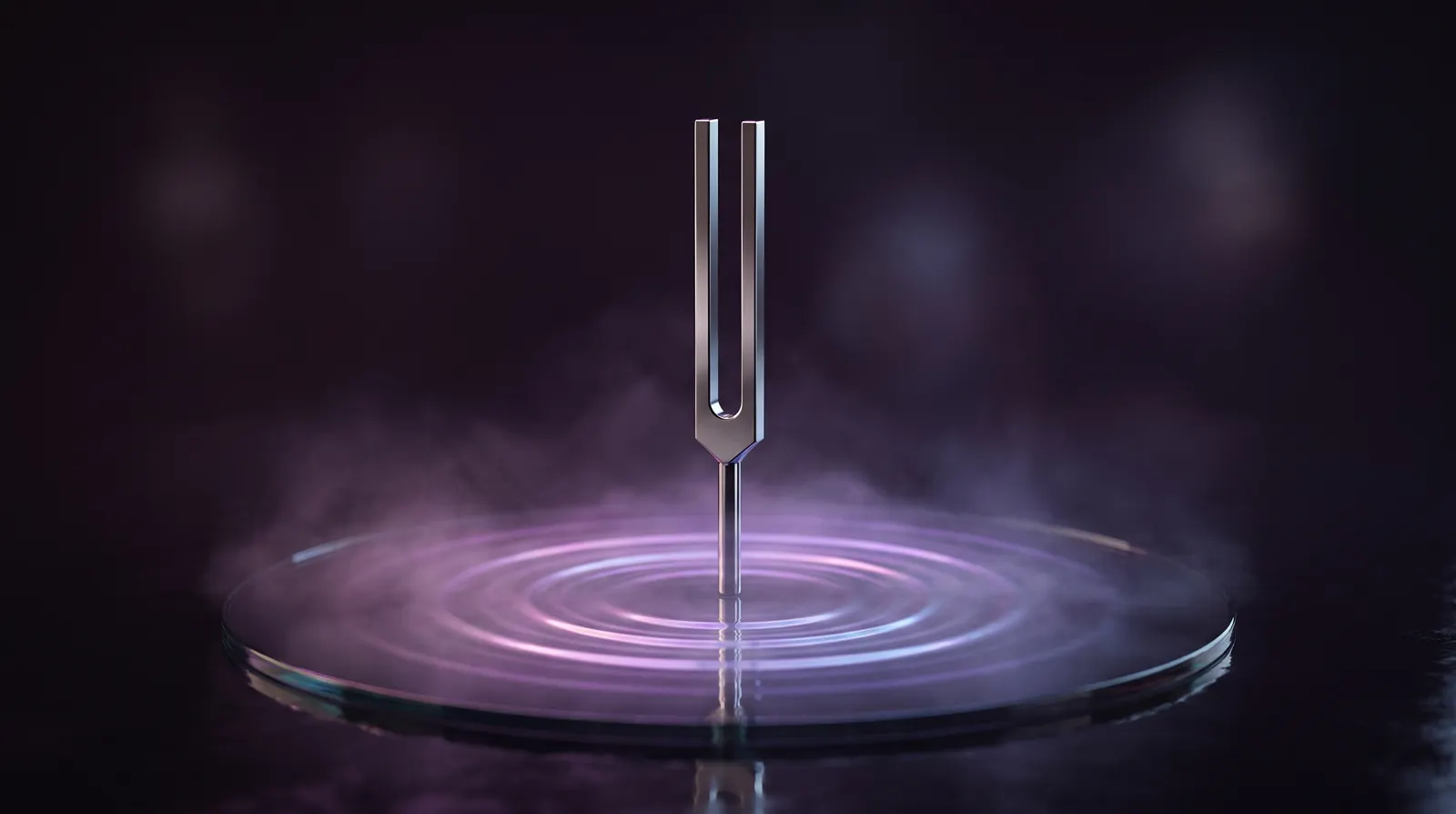
Somewhere around 1 a.m. on a deadline week, my streaming app recommended a ten-hour video called 528 Hz | DNA Repair | Miracle Tone. Ten hours. DNA repair. From a speaker. I live in a fourth-floor walkup where the radiator clangs like a bell choir, so I'm sympathetic to anyone chasing better sound at night. But when a playlist promises to edit my genome, the skeptic in me puts down the coffee. So I spent a week reading what science actually says about solfeggio frequencies. Short version: the story is mostly modern myth, there's one small study worth knowing about, and the stuff that actually helps you relax has nothing to do with the number 528.
What solfeggio frequencies are supposed to be
The pitch goes like this: there's an ancient scale of six sacred tones, allegedly used in Gregorian chants, and each frequency has a job. 396 Hz releases fear. 417 Hz clears negativity. 528 Hz, the star of the lineup, is the love frequency, said to repair DNA and align you with the vibration of the universe. It sounds old. It isn't. The modern solfeggio story traces back to the 1990s, when a naturopath named Joseph Puleo said he derived the numbers from a numerological reading of the Book of Numbers. Not acoustics. Not medieval music theory. Numerology, three decades ago. Medieval chant wasn't even tuned to a fixed pitch standard; the idea that monks were locked to 528 Hz is like saying they preferred a specific brand of guitar string.
None of that means the music is useless. It means the origin story is marketing. Those are different claims, and it's worth keeping them separate.
The one real study, honestly summarized
Here's the surprise: there is a peer-reviewed study on 528 Hz, and it found something. In 2018, researchers in Japan had volunteers listen to the same piece of music tuned two ways, once at the standard 440 Hz pitch and once shifted to center on 528 Hz. After the 528 Hz version, participants showed a measurable drop in cortisol, the stress hormone, an uptick in oxytocin, and reduced anxiety scores compared with the 440 Hz session (Akimoto et al., 2018, Health). Sounds like a win for the miracle tone, until you read the methods section. The study had nine participants. Nine. That's not a clinical trial; that's a dinner party. Small samples produce flashy results that routinely evaporate when someone tries them again with a real sample size, and nobody has convincingly replicated this one at scale.
When a playlist promises to edit my genome, the skeptic in me puts down the coffee.
So the honest reading is: one tiny study found a modest relaxation effect from retuned music. It found nothing about DNA, nothing about miracles, and nothing that distinguishes 528 Hz from the possibility that slow, pleasant music at any pitch does the same thing. Which brings us to the actually useful part.
Why the music relaxes you anyway
Play any solfeggio track and notice what it actually is: slow, soft, repetitive, harmonically simple music with no lyrics and no surprises. That description is doing all the work. Decades of research on music and relaxation point to features like tempo around or below your resting heart rate, low volume, gradual changes, and predictability. Your nervous system reads that combination as nothing is happening here, and it downshifts. Retune the same track from 528 Hz to 440 Hz and your cortisol does not know the difference; the frequency label is a lottery ticket stapled to a perfectly good lullaby.
There's also expectation. If you press play believing this tone heals, you relax more, the same way a sugar pill eases a headache you expected it to ease. Placebo relaxation is still relaxation; I won't take it from you. But you can get the same effect without the pseudoscience subscription.
What to actually look for in calming audio
- Slow and steady beats a magic number. Anything unhurried, quiet and repetitive qualifies, whether it's ambient music, rain, or a fan.
- No surprises. Sudden changes in volume or texture spike attention, which is the opposite of the job.
- Pair it with something. Audio works best as one layer of a wind-down, alongside dim lights, a slow visual, or a breathing pattern.
- Consistency over novelty. The same sounds at the same hour become a cue, and the cue eventually does half the work.
This is roughly how I use Feelsy at night: a slow-moving texture on the screen, a soundscape underneath it, and the built-in 4-7-8 breathing exercise to give my lungs something to count. Is the audio tuned to a sacred frequency? No idea. Doesn't matter. It's slow, it's predictable, and it's the same every night, which is the whole trick.
The verdict
Solfeggio frequencies are a modern numerology story wearing an ancient costume. The one study behind 528 Hz is real but tiny, and the relaxing effect it found is best explained by the music being relaxing, not the hertz being holy. If solfeggio playlists calm you down, keep them; they're harmless and pleasant. Just don't pay extra for the number, and don't expect your DNA to notice. Your nervous system responds to slow, quiet, and predictable. It has never once asked for a frequency chart.
Feelsy is a wellness product, not medical advice. If stress, anxiety or sleep problems persist, please speak with a qualified professional.
References
- Akimoto, K., Hu, A., Yamaguchi, T., & Kobayashi, H. (2018). Effect of 528 Hz music on the endocrine system and autonomic nervous system. Health, 10(9), 1159-1170.
Frequently Asked Questions
Is there any science behind 528 Hz?
One small peer-reviewed study from 2018 found that music tuned to 528 Hz lowered cortisol and anxiety more than the same music at standard 440 Hz tuning. But it had only nine participants, which is far too few to draw firm conclusions, and it hasn't been convincingly replicated at scale. It found nothing about DNA repair or healing.
Are solfeggio frequencies really ancient?
No. The modern solfeggio story dates to the 1990s, when the six frequencies were derived from a numerological reading of a Bible passage, not from acoustics or medieval music theory. Gregorian chant wasn't tuned to any fixed pitch standard, so the claim that monks used exactly 528 Hz doesn't hold up.
Do solfeggio playlists still help you relax?
Often yes, but not because of the frequency. Solfeggio tracks tend to be slow, soft, repetitive and predictable, which is exactly the combination research links to relaxation in any music. Expectation adds a placebo boost on top. The same track retuned to a different pitch would likely work just as well.
What should I listen to for sleep instead?
Anything slow, quiet and free of surprises: ambient music, rain sounds, a fan, or a steady soundscape. Play it at the same hour each night so it becomes a cue, and pair it with dim lights or a slow breathing pattern like 4-7-8. Consistency matters far more than any specific number of hertz.

About the author
Contributing writer
Kurt is a New York based writer covering the practical science of stress, sleep and focus. He is the resident sceptic of the Journal: if a technique cannot survive a crowded subway commute and a deadline week, he is not interested in it.
Feel it for yourself.
Feelsy turns reading about calm into practising it. Two minutes of a slow texture is often the whole difference.


Related reading
 ASMR
ASMRBinaural Beats: Do They Actually Work?
Binaural beats promise focus, calm, and better sleep through plain headphones. A skeptical look at what the research and meta-analyses actually found.
 ASMR
ASMRWhat Is a Sound Bath? Bathing the Nervous System in Tone
What is a sound bath and what does it actually do? The history of singing bowls and gongs, what research suggests, and how to try one at home tonight.
 ASMR
ASMRFrisson: Why Music Gives You Chills
Those shivers during a key change have a name: frisson. What happens in the brain when music gives you chills, and why some people feel them more than others.
 ASMRNew
Why Is Bob Ross So Relaxing? The Science of Happy Little Brushstrokes
Bob Ross has been putting people to sleep for four decades, and he'd take that as a compliment. Here's the science of why his painting videos work like ASMR.
 ASMRNew
What Is 8D Audio? The Science Behind the Spinning Sound
8D audio pans music around your head using binaural tricks. Here's how the illusion works, why it feels immersive, and whether it helps you relax or focus.
 ASMR
ASMRWhy Paint Mixing Videos Are So Satisfying
Why paint mixing videos feel so satisfying: the slow science of swirls and folds, what ASMR research suggests, and how to watch them as a mini meditation.