The Evening Foot Soak: A Warm Ritual for Better Sleep
A warm foot soak before bed is one of the oldest wind-down rituals. Here is why warmth at the feet helps you sleep, and how to build the habit in 20 minutes.
By Mei Lin
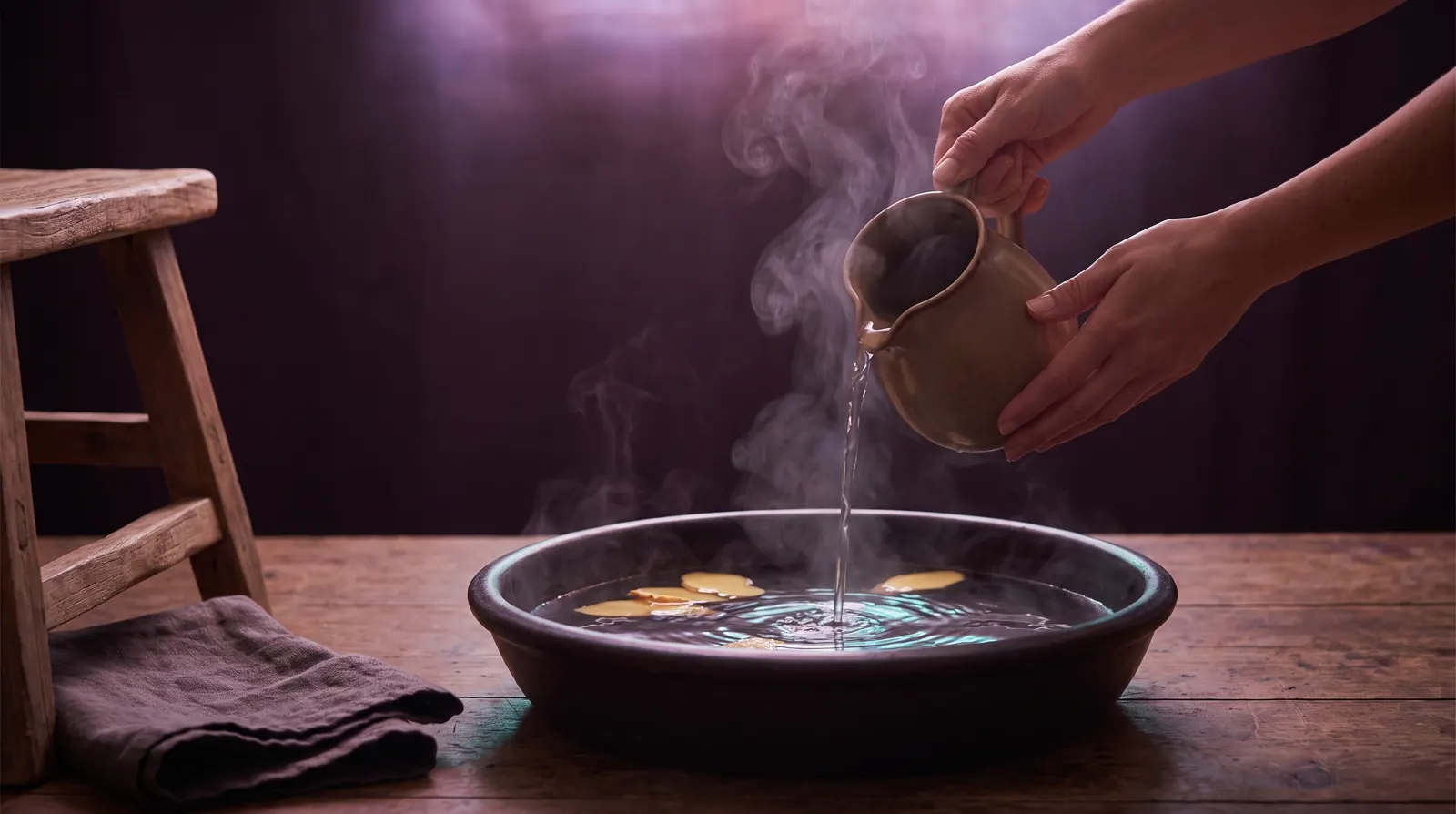
In the Shanghai apartment where I grew up, the last sound of the day was water. My grandmother would fill a shallow basin, test it with the back of her hand, and sit down on a low wooden stool with a sigh that meant the day was officially over. Twenty minutes with her feet in hot water, sometimes with a few slices of ginger floating on the surface, and then straight to bed. She called it washing off the day. She was not the only one; step into almost any Chinese household on a cool evening and you will find the same basin, the same stool, the same sigh.
A ritual older than bedtime routines
The evening foot soak, zuyu, has been part of Chinese domestic life for centuries. Long before anyone wrote about sleep hygiene, families understood something simple: warm the feet, and the whole body lets go. The practice needs no equipment beyond a basin, costs almost nothing, and takes the one thing modern evenings rarely offer, which is a reason to sit still with nowhere to go.
What interests me is that the ritual survived every technology that should have replaced it. Hot showers exist. Heated blankets exist. And still the basin comes out, because the foot soak is not only about warmth. It is a boundary. The moment your feet enter the water, you cannot answer the door, tidy the kitchen, or start one more task. The water holds you in place, gently, until the day loosens its grip.
The stool matters more than it looks, by the way. Sitting low, knees bent, back allowed to round a little, is a posture with no ambitions. You cannot loom over a laptop from a footbath stool. Every part of the arrangement conspires toward the same message: nothing else is happening now. In a culture that treats stillness as wasted time, a basin of warm water is a socially acceptable excuse to do nothing at all.
Why warmth at the feet helps you sleep
There is a satisfying piece of physiology behind grandmother wisdom here. To fall asleep, your core body temperature needs to drop slightly, and the body sheds that heat through the skin, especially through the hands and feet, where blood vessels sit close to the surface. Warm water widens those vessels, which helps the body radiate heat away and begin its natural descent into sleep. Warm feet, cooler core, drowsy mind. The basin is a thermostat you operate from a stool.
Researchers have tested this directly. In an experimental crossover trial, older adults took a warm footbath before bedtime while their body temperature and sleep were measured, and the footbath altered the evening temperature rhythm in ways consistent with easier sleep onset, with the clearest benefits among those who slept poorly (Liao et al., 2013, International Journal of Nursing Studies). It is a modest, careful finding, which is exactly what you would expect from a modest, careful ritual.
The water holds you in place, gently, until the day loosens its grip.
How to do it well
- Fill a basin deep enough to cover your ankles. Comfortably hot is the aim, warm enough to feel it working, never scalding. Test it the way my grandmother did, with the back of your hand.
- Sit somewhere you can lean back a little. A low stool, the edge of the sofa, the side of the bath.
- Stay in for ten to twenty minutes, topping up with hot water once if it cools. Stop sooner if you feel lightheaded or your skin objects.
- Dry your feet slowly and completely, put on socks if the floor is cold, and go to bed soon after, while the warmth is still doing its quiet work.
If you like, add what generations have added: a few slices of fresh ginger, a spoon of coarse salt, a handful of dried mugwort. None of these is required. The water is the ritual; everything else is decoration.
Making it a ritual, not a chore
The difference between a chore and a ritual is attention. Feet in the water, you have perhaps fifteen minutes of enforced stillness, and what you do with your attention decides what those minutes become. Scrolling through a feed turns the basin into a footrest for anxiety. Instead, give your senses something as slow as the water. Watch the steam curl. Listen to the small sounds the basin makes when you flex your toes. Some evenings I match my breathing to a long count, and the 4-7-8 exercise in Feelsy is a good companion here, four counts in, seven held, eight out, while the warmth climbs from my ankles. Other evenings I let one of the slow textures play with the sound on low, something for the eyes that asks nothing back. The point is not the app or the ginger. The point is that for a quarter of an hour, body and attention are in the same warm place.
Small pleasures carry the evening
We tend to look for sleep in large solutions: new mattresses, strict routines, another supplement. Meanwhile the foot soak sits at the other end of the scale, small, warm, and nearly free, asking only that you sit down and stay. My grandmother never once used the phrase wind-down routine. She simply refused to end a day at full speed, and she had a basin's worth of wisdom for making the slowing down feel like a reward instead of a rule.
Try it for a week of cool evenings. Warm water to the ankles, a comfortable seat, something slow for the eyes or nothing at all. Notice whether bed feels closer when you rise from the stool. I suspect it will, and I suspect you will start to understand the sigh.
Feelsy is a wellness product, not medical advice. If stress, anxiety or sleep problems persist, please speak with a qualified professional.
References
- Liao, W.-C., Wang, L., Kuo, C.-P., Lo, C., Chiu, M.-J., & Ting, H. (2013). Effect of a warm footbath before bedtime on body temperature and sleep in older adults with good and poor sleep: An experimental crossover trial. International Journal of Nursing Studies, 50(12), 1607–1616.
Frequently Asked Questions
Does a foot soak before bed really help you sleep?
There is reasonable evidence that it can. To fall asleep, your core temperature needs to drop slightly, and the body sheds heat through the skin of the hands and feet. Warm water widens the blood vessels there, helping the body radiate heat and begin its descent into sleep. In one experimental crossover trial with older adults, a warm footbath before bedtime shifted the evening temperature rhythm in ways consistent with easier sleep onset, with the clearest effect in poor sleepers.
How long should I soak my feet before bed?
Ten to twenty minutes is plenty. Use water that is comfortably hot but never scalding, deep enough to cover your ankles, and top it up once with hot water if it cools. Stop sooner if you feel lightheaded. Afterwards, dry your feet slowly, put on socks if the floor is cold, and head to bed while the warmth is still working.
What can I add to a foot soak?
Traditional additions include a few slices of fresh ginger, a spoon of coarse salt, or a handful of dried mugwort, and they make the ritual more pleasant for many people. None of them is required, though. The warm water is what does the work; everything else is decoration.
What should I do while soaking my feet?
Treat the fifteen minutes as enforced stillness rather than screen time. Watch the steam, listen to the water, or pair the soak with slow breathing such as a 4-7-8 pattern: four counts in, seven held, eight out. Something slow for the eyes, like steam or a gently moving visual, keeps attention in the same warm place as your body, which is what turns a chore into a ritual.

About the author
Contributing writer
Mei grew up in Shanghai around tea that could not be hurried and grandmothers who considered stillness a skill. She writes about slow hands and sensory ritual: tea, calligraphy, qigong, and the quiet crafts that taught the world how to pay attention.
Feel it for yourself.
Feelsy turns reading about calm into practising it. Two minutes of a slow texture is often the whole difference.


Related reading
 Ancient Wisdom
The Warm Bath Before Bed: An Old Ritual Science Happens to Agree With
From Roman baths to the Japanese ofuro, cultures have always bathed before rest. Here is why a warm bath before bed helps you sleep, and how to time it.
 Ancient Wisdom
Why Chinese Grandmothers Prescribe Hot Water for Everything
In China, plain hot water is comfort, care and daily ritual in a single cup. The story of he re shui, thermos culture, and what a warm slow sip can teach.
 Sleep
SleepHow to Fall Asleep Faster: Sound, Light and Ritual
Falling asleep is a skill, not a stroke of luck. Here is how sound, light and a 15-minute ritual can quiet a racing mind and shorten the trip to sleep.
 Breath & BodyNew
Do Cold Showers Actually Work? A Skeptic Reads the Evidence
Cold showers are pitched as a cure for everything from low energy to weak character. Here's what the actual research says, and how to try one without the cult.
 Breath & BodyNew
Dopamine Detox: What It Gets Right and What It Gets Wrong
Dopamine detox promises a factory reset for your distracted brain. Here's what the neuroscience actually says, what helps, and what's just rebranded boredom.
 Breath & Body
How to Stop Overthinking: Quieting a Mind That Will Not Move On
Why overthinking loops and how to interrupt it: what rumination research shows, why you cannot argue with a spiral, and gentler ways to change the channel.