Why Chinese Grandmothers Prescribe Hot Water for Everything
In China, plain hot water is comfort, care and daily ritual in a single cup. The story of he re shui, thermos culture, and what a warm slow sip can teach.
By Mei Lin
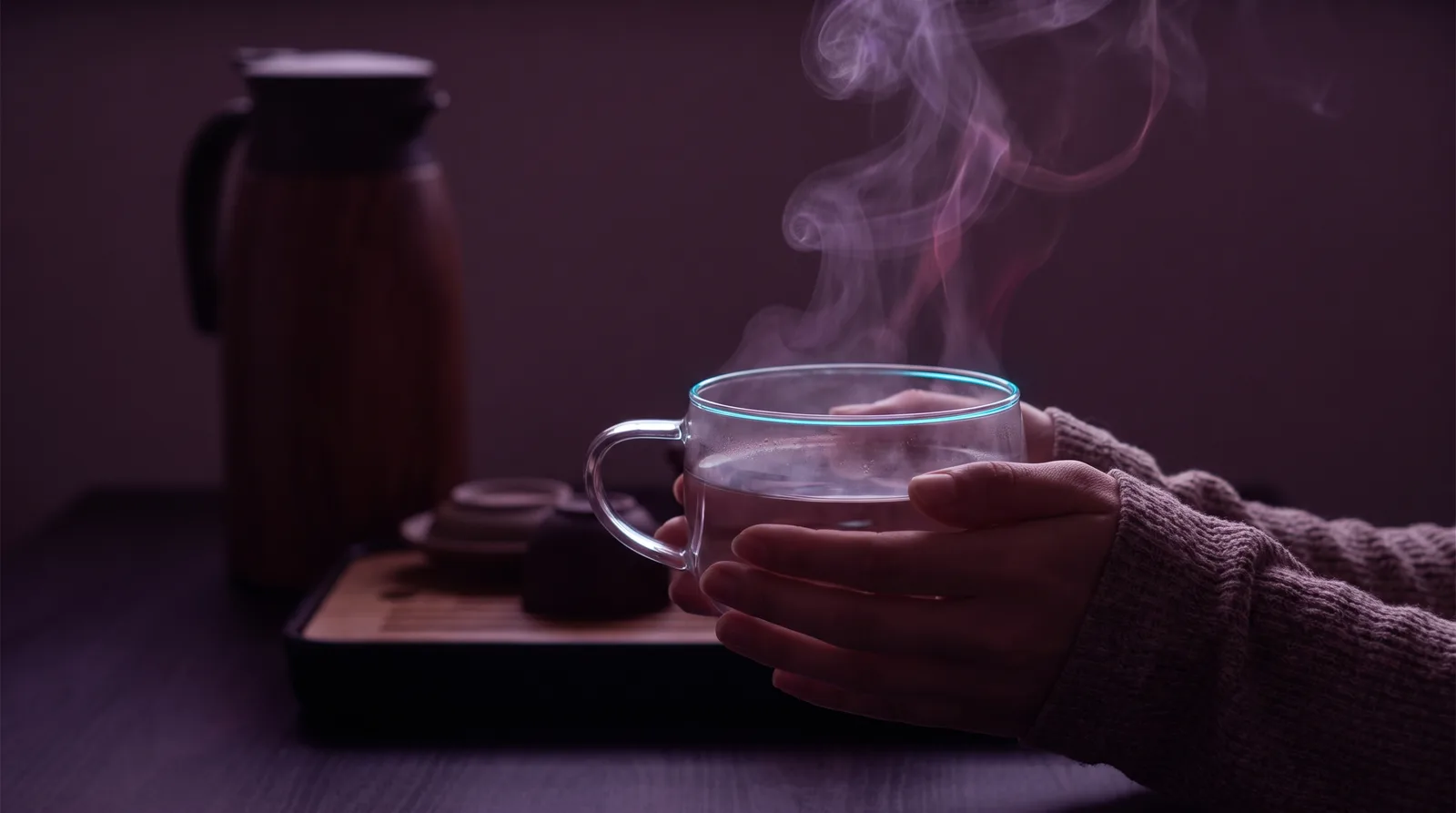
Somewhere in China at this moment, a grandmother is answering a problem with the words he re shui: drink hot water. A headache, an argument, a poor exam result, a broken heart, weather. The prescription does not change. When I was small in Shanghai this annoyed me the way only family wisdom can. I wanted sympathy, strategy, ice cream. I was handed a glass of hot water, too hot to gulp, and told to sit down while it cooled. It took me thirty years to notice that the sitting down was the medicine.
A country that runs on thermoses
Hot water in China is not a health fad; it is infrastructure. Railway carriages have boilers at the end of the car, and the first thing seasoned travelers do is queue with their jars of tea leaves and instant noodles. Offices keep hot water dispensers the way other countries keep coffee machines. Students carry thermoses to class; hospitals hand hot water to visitors; hotels place an electric kettle in rooms that have nothing else. The thermos flask itself, painted with peonies, was for decades one of the classic wedding gifts, a wish for a warm household made literal.
The habit has old roots. Chinese tradition has long favored the warm over the cold in food and drink, and boiling was for centuries the sensible way to make water trustworthy. But customs survive on meaning, not origins, and the meaning of hot water in China today is closer to a language than a beverage. It is how care travels.
The language of warmth
Drink hot water is what you say when you cannot fix the thing itself. It is offered to the heartbroken and the feverish alike, and it is easy to mock, there are whole jokes online about boyfriends who reply to every complaint with it. But watch what actually happens when the glass arrives. Someone boiled water for you. You hold something warm with both hands. You cannot drink it quickly, so you wait, and while you wait you breathe steam, and someone sits with you. The water is ordinary. The ceremony around it is not.
My grandmother's version had rules she never stated. The glass was filled only to a certain height. It was set down within reach but not pressed on you. Refills happened without comment. She was not treating dehydration; she was keeping a small fire of attention lit next to another person, cup by cup, for as long as the trouble lasted.
The water is ordinary. The ceremony around it is not.
What a hot glass does to a hurried moment
Strip away everything cultural and a plain observation remains: you cannot rush hot water. It sets its own pace, somewhere around ten slow minutes, and it recruits the body into that pace. The warmth of the glass gives restless hands a job. The steam gives the eyes something soft to watch, curling and vanishing like the drifting textures I keep on my phone for the same purpose. The first careful sip forces a pause; the sip is small because it must be. By the bottom of the glass your breathing has usually lengthened without being asked to.
In a day of iced everything and drinks with lids designed for walking, a beverage that refuses to be portable is quietly radical. Hot water is a drink you must be present for. That, I suspect, is most of what the grandmothers knew.
There is also the small matter of hands. Chinese has the same proverb English does, cold hands, warm heart, but the grandmothers never believed it; in winter they were forever catching your fingers to check them, and the glass of hot water doubled as a portable hearth. Office workers in Shanghai still cradle their tea jars through the afternoon the way other people cradle their phones. A warmed pair of hands changes a person's whole posture: shoulders drop, the grip on the day loosens. It is hard to stay clenched around a problem while both palms are wrapped around something warm.
Borrowing the ritual
You do not need Chinese grandparents to adopt this. You need a kettle and a rule: when the day tilts, boil water and do nothing else until the glass is empty. Pour it into something you can wrap both hands around. Sit where you can see out of a window, or set something slow moving where your eyes can rest; I often let a Feelsy texture drift beside the steam, two soft motions keeping each other company. Sip when the water lets you. If someone you love is having a hard evening, make two glasses and say very little. You are allowed to say drink hot water. It translates.
And if plain hot water feels too austere, a few tea leaves or a slice of ginger will not break the spell; my grandmother would only insist the water be properly hot and the sitting be properly unhurried. The cup is the excuse. The pause is the point.
Feelsy is a wellness product, not medical advice. If stress, anxiety or sleep problems persist, please speak with a qualified professional.
Frequently Asked Questions
Why do Chinese people drink hot water?
Hot water in China is daily infrastructure and a language of care rather than a health fad. Trains, offices, schools and hospitals all provide boiled water, and the habit draws on a long tradition of favoring warm food and drink, plus centuries when boiling made water trustworthy. Today offering hot water is how comfort travels: someone boiled water for you, and someone is sitting with you while it cools.
What does 'drink hot water' actually mean as advice?
It is what you say when you cannot fix the trouble itself. The glass arrives, you hold something warm with both hands, you cannot drink it quickly, so you wait, breathe steam and are kept company. The advice sounds unhelpful and is often joked about, but the ceremony around the glass, the warmth, the pause and the attention, is the real content of it.
Why does holding a hot drink feel calming?
A hot glass cannot be rushed, so it sets a pace of its own and recruits the body into it. The warmth gives restless hands a job, the steam gives the eyes something soft to watch, and the small careful sips force pauses. By the bottom of the glass, breathing has usually slowed without any instruction to slow it.
How can I turn hot water into a daily ritual?
Keep one rule: when the day tilts, boil water and do nothing else until the glass is empty. Use a cup you can wrap both hands around, sit where your eyes can rest on something slow, and sip only when the water allows. Tea leaves or a slice of ginger are fine additions; what matters is that the water is properly hot and the sitting is properly unhurried.
About the author
Contributing writer
Mei grew up in Shanghai around tea that could not be hurried and grandmothers who considered stillness a skill. She writes about slow hands and sensory ritual: tea, calligraphy, qigong, and the quiet crafts that taught the world how to pay attention.
Feel it for yourself.
Feelsy turns reading about calm into practising it. Two minutes of a slow texture is often the whole difference.


Related reading
 Ancient Wisdom
Tea Meditation: The Slow Ritual of Gongfu Cha
How to turn tea into meditation: the Chinese gongfu tea ritual, why warm slow ritual calms the nervous system, and a ten-minute practice for any mug.
 Breath & Body
Mindful Eating: How to Slow Down at the Table (a Beginner's Guide)
Mindful eating, explained simply: how slowing down at the table changes the way you eat, what research shows, and a first-bite practice to start tonight.
 Ancient Wisdom
Why Incense Calms the Mind: The Slow Ritual of Scent and Smoke
Why incense calms the mind: the Chinese ritual of scent and rising smoke, what research suggests, and a simple incense meditation for focus or evening rest.
 Ancient Wisdom
Döstädning: The Gentle Swedish Art of Death Cleaning
What Swedish death cleaning really means: the calm philosophy of döstädning, how it differs from ordinary decluttering, and how to begin at any age.
 Ancient Wisdom
How to Start a Gratitude Journal You Will Actually Keep
How to start a gratitude journal that actually helps: what the research found, why most lists go stale, and the very old art of counting blessings.
 Ancient Wisdom
Haiku as Meditation: Seventeen Syllables of Attention
How writing haiku trains attention: why the tiny form works like meditation, what noticing small moments does for wellbeing, and how to write your first.