The Warm Bath Before Bed: An Old Ritual Science Happens to Agree With
From Roman baths to the Japanese ofuro, cultures have always bathed before rest. Here is why a warm bath before bed helps you sleep, and how to time it.
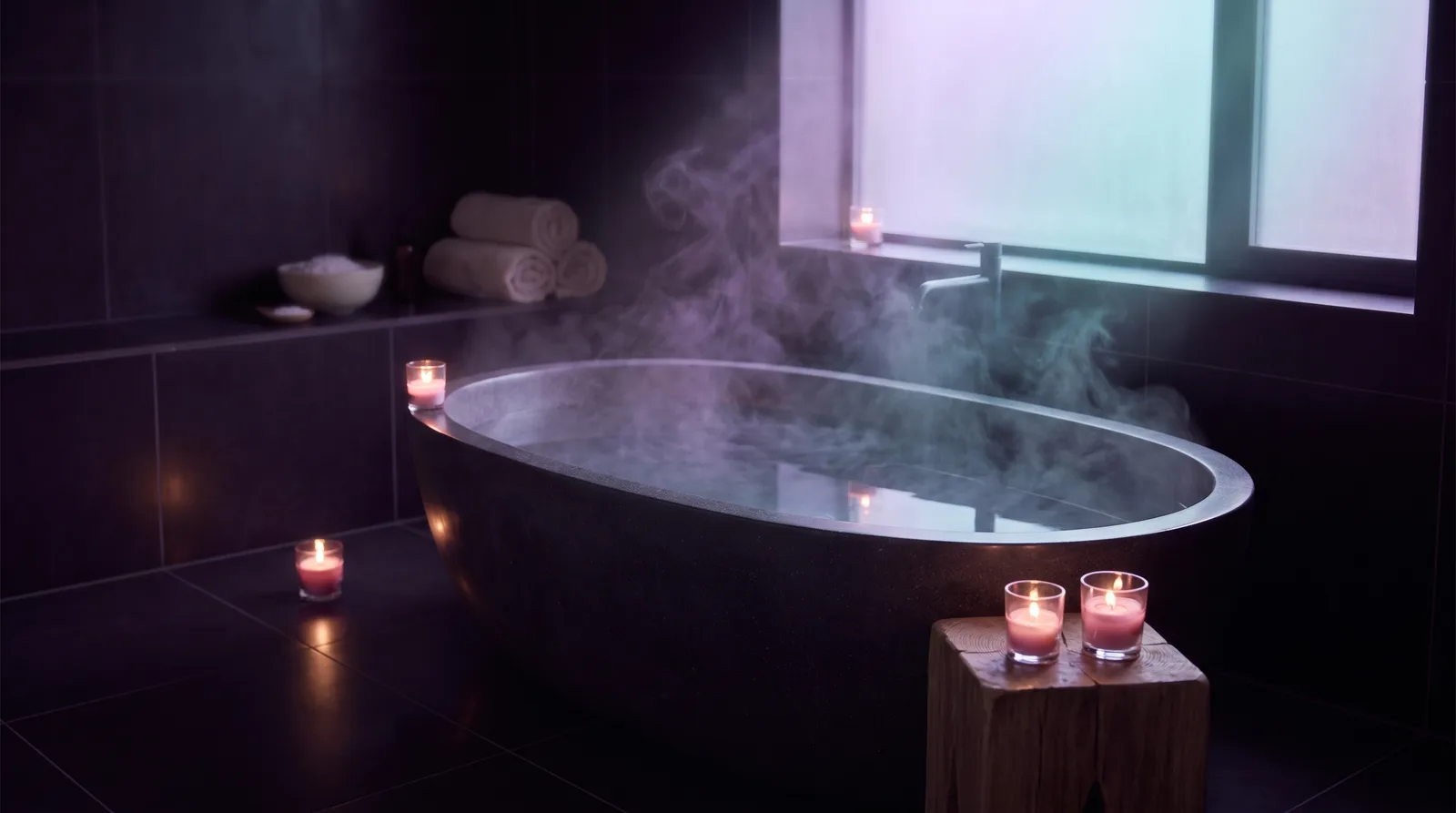
Every so often, modern sleep science arrives breathless at a conclusion your great-grandmother would have considered too obvious to mention. The warm bath before bed is one of those conclusions. For most of recorded history, in most places where water could be heated, human beings have marked the border between day and night by immersing themselves in warmth. The Romans built an empire of it. The Japanese made it a family liturgy. And when researchers finally put the habit under review, they found the old ritual works more or less exactly as advertised.
A very short history of the evening soak
The Roman thermae were not primarily hygienic facilities; they were social and contemplative ones, a place where the day's business was steamed out of the body before evening. The hammams of the Islamic world refined the sequence of heat, rest and cooling into something close to architecture for the nervous system. And in Japan, the ofuro remains what it has been for centuries: a deep, hot soak taken not to get clean, for washing happens before you enter the tub, but to get calm. The bath is where the day is formally ended.
What these traditions share is the insight that warmth is a threshold. You enter the water as the person the day made you, and you leave it as someone who might plausibly sleep.
The paradox: heating yourself to cool down
The physiology behind the ritual is delightfully counterintuitive. To fall asleep, your core body temperature needs to drop; that decline is one of the signals the brain reads as permission for sleep. A warm bath seems like it should interfere with this. In fact it assists. The heat draws blood to the skin, flushing the hands and feet, and when you step out of the water all that surface warmth radiates away. The bath opens the windows, so to speak, and the house cools faster.
This is why timing matters more than temperature. The bath is not meant to boil you; it is meant to schedule your cooling.
What the research found
A systematic review and meta-analysis of passive body heating pulled together the available studies and found that a warm bath or shower before bed was associated with falling asleep faster and with improvements in reported sleep quality, with the best results when bathing happened one to two hours before bedtime, and even ten minutes in the water appearing to be enough (Haghayegh et al., 2019, Sleep Medicine Reviews). The authors' explanation is the same one the physiology suggests: warm water helps the body's natural evening temperature decline along, rather than fighting it.
It is worth saying plainly that a bath is not a treatment for insomnia, and the studies are about ordinary sleepers made a little more comfortable. But as evidence for a nightly ritual goes, this is about as good as it gets for something that costs nothing but hot water.
You enter the water as the person the day made you, and leave as someone who might plausibly sleep.
Building your own closing ceremony
The mechanics are simple: a warm bath or shower, comfortably hot rather than punishing, taken roughly one to two hours before you intend to sleep, for ten to twenty minutes. But the mechanics are the smaller half of the ritual. The larger half is what the bath replaces. For those minutes you are unreachable, unproductive and pleasantly useless. No feed refreshes underwater.
Treat the bath as the beginning of a descent rather than an errand. Dim the bathroom light if you can; brightness at night is a lie the body believes. Afterwards, resist the temptation to reward yourself with a screen full of news. If you want something to look at while the body cools, choose something that asks nothing back: a few pages of a novel, or a slow, dim visual texture in Feelsy with the sound low, the kind of drifting motion that continues the bath's work rather than undoing it. Feelsy's autoplay mode will carry on quietly without your thumb, which at that hour is precisely the point.
Those who prefer philosophical company in the evening may enjoy pairing the soak with the old Stoic habit of closing the day deliberately; we have written about that ritual separately.
A word for those without a tub, or without the patience for one: the research included showers, and a warm shower taken in the same window appears to do much of the same work. The Japanese, ever practical about these things, would remind us that the sento, the public bath, thrived precisely because private tubs were rare; the ritual has never depended on porcelain. What it depends on is repetition. Do it nightly for a week and the body begins to treat the warmth itself as a cue, the way a dog hears the lead being lifted from its hook. Warm water, then dimness, then bed: a sentence the body learns to finish on its own.
The wisdom part
It is tempting to feel smug that science has ratified the bath, as though the Romans were waiting two thousand years for a meta-analysis. But the old bathers understood something the temperature data does not capture: a day needs an ending. Sleep arrives more willingly when it is invited by ceremony than when it is demanded by exhaustion. The warm bath is simply the oldest and most pleasant invitation we know. Draw one tonight, an hour or two before bed, and let the cooling do the convincing.
Feelsy is a wellness product, not medical advice. If stress, anxiety or sleep problems persist, please speak with a qualified professional.
References
- Haghayegh, S., Khoshnevis, S., Smolensky, M. H., Diller, K. R., & Castriotta, R. J. (2019). Before-bedtime passive body heating by warm shower or bath to improve sleep: A systematic review and meta-analysis. Sleep Medicine Reviews, 46, 124–135.
Frequently Asked Questions
Does a warm bath before bed really help you sleep?
The evidence suggests it does. A systematic review and meta-analysis of passive body heating found that a warm bath or shower before bed was associated with falling asleep faster and with better reported sleep quality. The likely mechanism is temperature: the warm water draws blood to the skin, and when you step out that heat radiates away, helping your core temperature fall, which is one of the body's signals for sleep.
How long before bed should you take a bath?
The review found the best results when bathing happened one to two hours before bedtime, which gives your body time to cool down afterwards. Even ten minutes in the water appeared to be enough. The bath should be comfortably warm rather than punishingly hot, since the point is to schedule your cooling, not to overheat you.
Why does heating up help you cool down for sleep?
It sounds paradoxical, but a warm bath draws blood to the surface of the body, flushing the hands and feet. When you leave the water, all that surface warmth radiates away, so your core temperature drops faster than it otherwise would. Since a declining core temperature is one of the signals the brain reads as permission for sleep, the bath assists the process rather than fighting it.
What should you do after an evening bath to protect sleep?
Keep the descent going. Dim the lights, avoid bright screens and news feeds, and choose something undemanding: a few pages of a book, or a slow, dim visual with low sound. The bath works partly because it ends the day deliberately, so the hour after it should feel like a continuation of that ending rather than a return to stimulation.

About the author
Contributing writer
Eleonor writes about contemplative traditions, attention and the cultural history of calm. She has spent two decades collecting the rituals humans use to slow down, from zazen halls to hammams, and translating them for modern, screen-lit lives.
Feel it for yourself.
Feelsy turns reading about calm into practising it. Two minutes of a slow texture is often the whole difference.


Related reading
 Sleep
SleepHow to Fall Asleep Faster: Sound, Light and Ritual
Falling asleep is a skill, not a stroke of luck. Here is how sound, light and a 15-minute ritual can quiet a racing mind and shorten the trip to sleep.
 Sleep
SleepThe Best Temperature for Sleep (and Why Your Bedroom Runs Hot)
What's the best temperature for sleep? Why cooler rooms help you fall asleep faster, what the research says about heat, and how to fix a hot bedroom.
 Ancient Wisdom
The Stoic Evening Ritual: How to Close a Day
Seneca reviewed his day every night; Marcus Aurelius wrote himself calm. The Stoic evening practice, why closure beats rumination, and how to run it in ten minutes.
 Ancient Wisdom
Döstädning: The Gentle Swedish Art of Death Cleaning
What Swedish death cleaning really means: the calm philosophy of döstädning, how it differs from ordinary decluttering, and how to begin at any age.
 Ancient Wisdom
How to Start a Gratitude Journal You Will Actually Keep
How to start a gratitude journal that actually helps: what the research found, why most lists go stale, and the very old art of counting blessings.
 Ancient Wisdom
Haiku as Meditation: Seventeen Syllables of Attention
How writing haiku trains attention: why the tiny form works like meditation, what noticing small moments does for wellbeing, and how to write your first.