Löyly: What Finnish Sauna Culture Knows About Rest
Why the Finnish sauna is a ritual of rest rather than a biohack: löyly, silence and the cooling-off, what long-term research found, and how to borrow it.
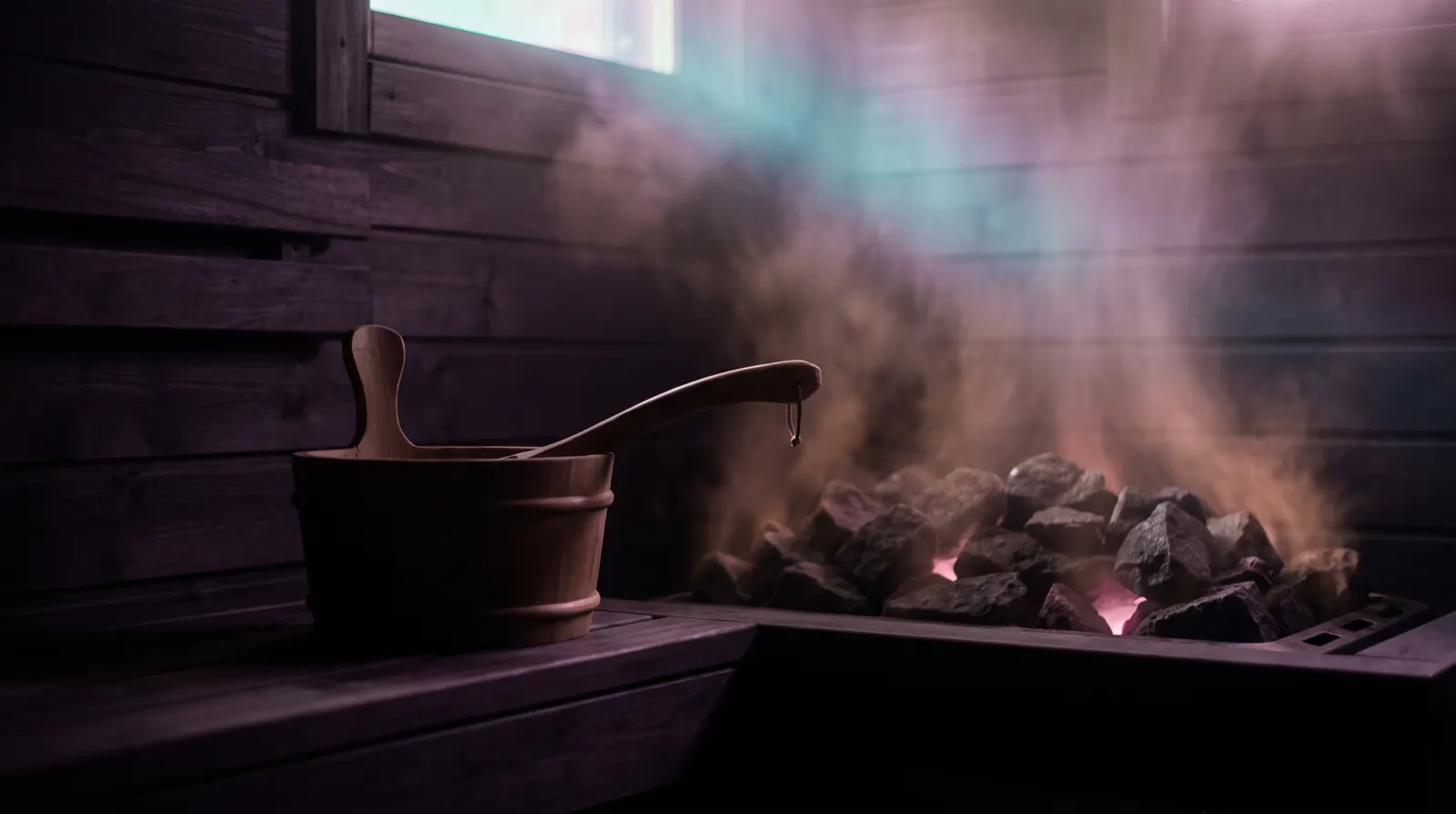
Finland has around five and a half million people and, by most counts, several million saunas: roughly one for every household, tucked into flats, summer cottages, office buildings and the odd parliament. No other country has woven a hot room so thoroughly into ordinary life. In 2020, UNESCO added Finnish sauna culture to its list of intangible cultural heritage, which is a rather formal way of saying what Finns have always known: the sauna is not a spa treatment. It is closer to a chapel that happens to be eighty degrees.
Lately the sauna has been rediscovered by the optimisation crowd, rebranded as heat therapy and slotted into protocols between the cold plunge and the supplements. Some of the underlying research is interesting, and we shall come to it. But to read the sauna only as a cardiovascular intervention is to miss what Finnish culture actually built: one of the world's most reliable rituals for stopping. It is the shape of the ritual, as much as the heat, that the rest of us would do well to borrow.
Löyly, the soul of the heat
The centre of the practice is a word that resists translation. Löyly is the steam that rises when water is ladled onto the hot stones, but the word carries more than physics; in older Finnish it is related to breath and spirit, and sauna-goers speak of a stove's löyly the way wine people speak of terroir. Throwing water on the stones is the sauna's liturgy: a hiss, a wave of soft heat rolling over the shoulders, and a room of people going quiet at the same moment.
That quiet is not incidental. Finnish sauna etiquette holds that the sauna is a place where argument, status and hurry are left at the door with the clothes; there is an old saying that one should behave in the sauna as one would in church. Phones do not survive the humidity, which solves what willpower cannot. What remains is heat, breath, and other people being silent with you, a combination modern life almost never schedules.
What the long research found
The sauna's modern scientific reputation rests substantially on a long Finnish cohort study which followed more than two thousand middle-aged men for around two decades. Men who used the sauna more frequently, four to seven times a week, had markedly lower rates of fatal cardiovascular events and death from all causes than those who went once a week (Laukkanen et al., 2015, JAMA Internal Medicine). The study was observational: it shows association, not proof, and frequent sauna-goers may differ in other ways. But the pattern was strong enough to make cardiologists take a folk practice seriously.
It is worth noticing what the study's participants were not doing. They were not tracking heart-rate variability in the heat or timing their sessions to a protocol. They were doing what their grandparents did: warming up, cooling down, and talking or not talking, several evenings a week, for decades. Whatever the physiology turns out to be, the delivery mechanism was ritual, repeated at a frequency no wellness app has ever achieved.
The sauna's secret is not the temperature. It is a room where nothing can be optimised, checked or answered, entered several times a week for life.
The cadence: heat, cold, rest
A Finnish sauna evening is not one long roast. It is a rhythm with three beats. Heat, until the body asks to leave; then cooling, on the porch, under a shower, or, in the classical form, in a lake that removes all philosophical pretension in about one second; then rest, wrapped in a towel with a drink, doing nothing, until the body votes to go back in. The cycle repeats two or three times and ends not when a timer says so but when a particular boneless calm arrives, a state Finns recognise instantly and outsiders remember for years.
Notice that two of the three beats involve no heat at all. The cooling and the sitting are not intermissions; they are the practice. The sauna forces the oscillation that a tense body has forgotten: effort and release, alternated deliberately, several times, with company. You can dispute the physiology and still see the design wisdom. Most of us do not alternate at all; we run warm and anxious all day and call the collapse at midnight rest.
Borrowing the sauna without the shed
Few of us have a lake, and not everyone has a sauna. The shape, however, travels:
- Use the heat you have: a hot bath or a long hot shower, taken as an event in itself rather than as maintenance, with the phone in another room.
- Add a genuine cool-down afterwards: a few minutes at an open window, a cooler rinse, bare feet on a cold floor. The contrast, not the heat alone, is what produces that rinsed feeling.
- Then actually rest. Sit wrapped in a towel with a glass of water and do nothing for ten minutes. On restless evenings I let one of Feelsy's ember-warm textures drift on autoplay while I sit; the eye stays gently occupied and the pause holds.
- Keep a schedule, not a mood. The Finnish habit is weekly at minimum, often near-daily; the benefit lives in the repetition, not the occasion.
The chapel of eighty degrees
There is a reason the sauna survived every modernisation Finland went through: it answers a need that does not date. Somewhere in the week there must be a room where you cannot work, cannot scroll, cannot hurry, and cannot be anyone in particular; where the agenda is heat, water, breath and silence, in that order. The Finns built that room out of spruce and stones. The rest of us can build a fair imitation out of a bathtub, an open window and an unbroken half hour. The materials matter less than the appointment.
Feelsy is a wellness product, not medical advice. If stress, anxiety or sleep problems persist, please speak with a qualified professional.
References
- Laukkanen, T., Khan, H., Zaccardi, F., & Laukkanen, J. A. (2015). Association between sauna bathing and fatal cardiovascular and all-cause mortality events. JAMA Internal Medicine, 175(4), 542–548.
Frequently Asked Questions
What does löyly mean?
Löyly is the Finnish word for the wave of steam that rises when water is ladled onto a sauna's hot stones, and it is the heart of the whole ritual. The word is older than the bathing culture itself and is related in early Finnish to breath and spirit. Sauna-goers judge a stove by the character of its löyly, and the moment of throwing water on the stones is when the room traditionally falls quiet.
What are the benefits of regular sauna bathing?
A long Finnish study that followed over two thousand men for around twenty years found that frequent sauna use, four to seven sessions a week, was associated with markedly lower rates of fatal cardiovascular events and death from any cause compared with once-weekly use. The research was observational, so it shows an association rather than proof. Beyond the physiology, the sauna reliably delivers something scarcer: a scheduled, repeated ritual of heat, cooling and genuine rest.
How do Finns actually take a sauna?
In a rhythm of three beats: heat until the body asks to leave, then cooling on the porch, under a shower or in a lake, then wrapped-up rest with a drink, doing nothing until the body wants to go back in. The cycle repeats two or three times. Etiquette matters as much as temperature: the sauna is treated as a quiet, equal place where hurry, status and argument are left at the door.
How can I get a sauna-like ritual without a sauna?
Borrow the shape rather than the shed. Take a hot bath or long hot shower as a deliberate event, follow it with a real cool-down such as a few minutes at an open window or a cooler rinse, and then rest properly for ten minutes with nothing scheduled. Repeat it on a fixed evening each week. The alternation of heat, cold and rest, done regularly, is what produces the sauna's particular calm.

About the author
Contributing writer
Eleonor writes about contemplative traditions, attention and the cultural history of calm. She has spent two decades collecting the rituals humans use to slow down, from zazen halls to hammams, and translating them for modern, screen-lit lives.
Feel it for yourself.
Feelsy turns reading about calm into practising it. Two minutes of a slow texture is often the whole difference.


Related reading
 Ancient Wisdom
The Warm Bath Before Bed: An Old Ritual Science Happens to Agree With
From Roman baths to the Japanese ofuro, cultures have always bathed before rest. Here is why a warm bath before bed helps you sleep, and how to time it.
 Breath & Body
The Evening Foot Soak: A Warm Ritual for Better Sleep
A warm foot soak before bed is one of the oldest wind-down rituals. Here is why warmth at the feet helps you sleep, and how to build the habit in 20 minutes.
 Ancient Wisdom
What Is Hygge? The Danish Art of Cosy Contentment
Hygge is the Danish art of cosy contentment: candlelight, warmth and unhurried company. Here is what it means, where it comes from, and how to practise it.
 Breath & BodyNew
Do Cold Showers Actually Work? A Skeptic Reads the Evidence
Cold showers are pitched as a cure for everything from low energy to weak character. Here's what the actual research says, and how to try one without the cult.
 Breath & BodyNew
Dopamine Detox: What It Gets Right and What It Gets Wrong
Dopamine detox promises a factory reset for your distracted brain. Here's what the neuroscience actually says, what helps, and what's just rebranded boredom.
 Breath & Body
How to Stop Overthinking: Quieting a Mind That Will Not Move On
Why overthinking loops and how to interrupt it: what rumination research shows, why you cannot argue with a spiral, and gentler ways to change the channel.