What Is Hygge? The Danish Art of Cosy Contentment
Hygge is the Danish art of cosy contentment: candlelight, warmth and unhurried company. Here is what it means, where it comes from, and how to practise it.
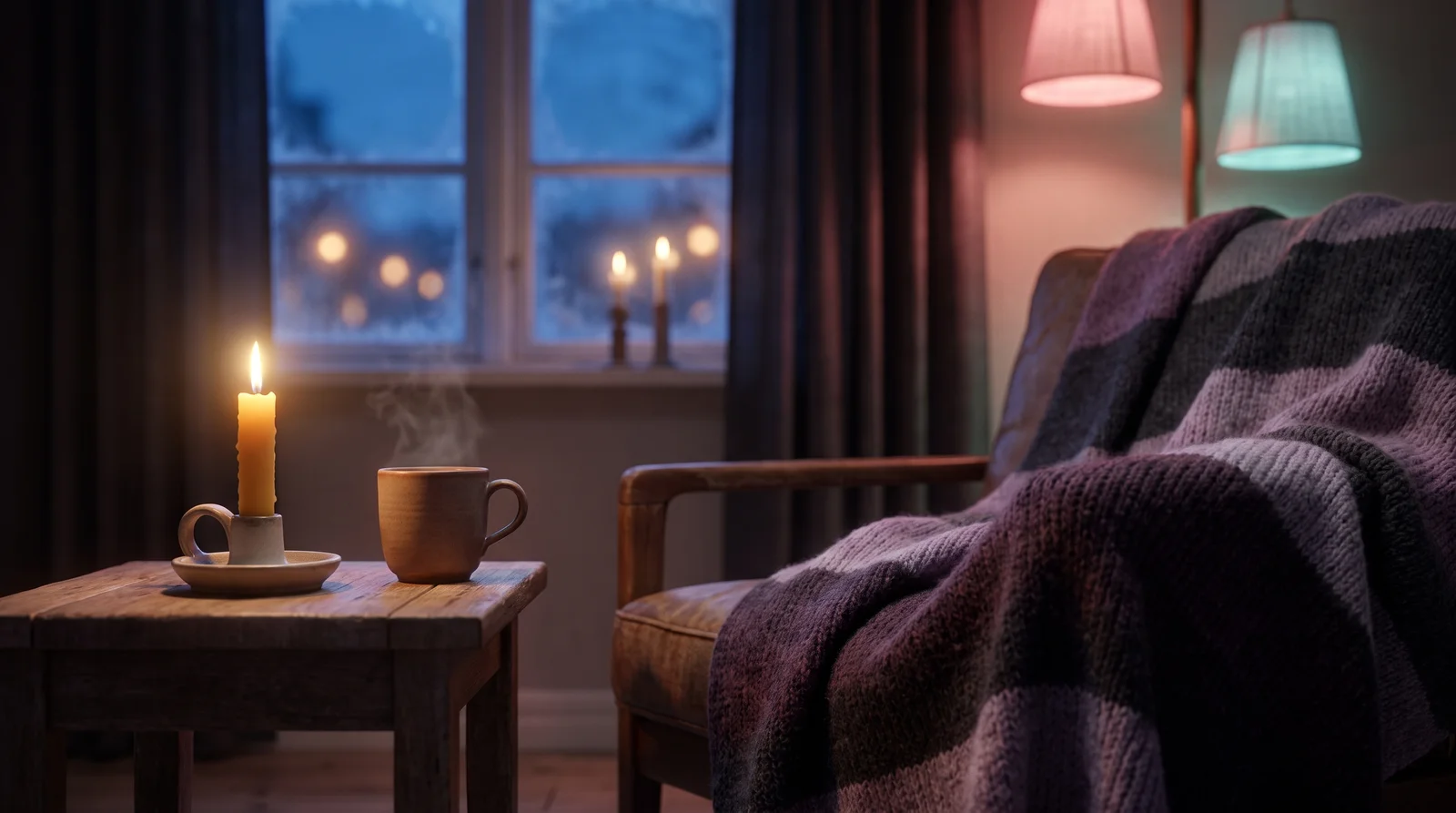
The first Danish winter I spent was an education in darkness. By mid-afternoon the light had gone the colour of weak tea, and by four o'clock it had gone altogether. I had expected to find this bleak. Instead I found candles: on cafe tables, in office windows, lit without ceremony at the family dinners I was lucky enough to be invited to. My hosts had a word for the mood those small flames created, a word they used constantly and could not quite translate. Hygge, they said, and then shrugged, as though asked to describe the taste of water.
A word that resists translation
Hygge, pronounced roughly hoo-gah, is usually rendered in English as cosiness, though every Dane will tell you the translation loses most of the meaning. Cosiness describes a room. Hygge describes a feeling that a room, and the people in it, can produce together: warmth, ease, safety, the pleasant absence of anything you have to do or prove. It is the sensation of being sheltered, in good company or contented solitude, with the demands of the day held at the door.
The word is thought to derive from a Norwegian term for wellbeing, and to share an older root with the English word hug and with the idea of taking heart. That lineage is telling. Hygge is not about acquiring anything. It is about being held, and about holding others, in a small circle of warmth against a large and indifferent dark.
Where it comes from
It is no accident that the culture most devoted to hygge sits so far north. Denmark spends a great part of the year in cold and shortened light, and hygge is, at least in part, a practical response to that climate: a set of habits for making the indoors so inviting that the long winter becomes something to sink into rather than merely survive. When you cannot change the weather, you perfect the shelter.
The researcher Jeppe Trolle Linnet has argued that hygge is also deeply social and, in a quiet way, egalitarian. In his study of Danish middle-class life he describes hygge as a levelling ritual: at a hyggelig gathering, showing off, talking business, or dominating the conversation are gently discouraged. The point is not to impress but to belong. This is why hygge can feel almost like a form of manners, an agreement that for these few hours no one will make anyone else feel small.
Hygge is not about acquiring anything. It is about being held, and holding others, in a small circle of warmth against a large and indifferent dark.
The ingredients, such as they are
When the happiness researcher Meik Wiking catalogued hygge for a wide audience in his 2016 book, he kept returning to a handful of sensory ingredients. None of them is expensive, which is part of the point.
- Light, and the softer the better. Candles above all; Danes burn more of them per head than any other nation. Warm lamplight, never the overhead glare of a supermarket.
- Warmth you can feel: a wool blanket, thick socks, a hot drink held in both hands, the specific comfort of being warm while you can see that it is cold outside.
- Slowness. Hygge cannot be rushed. It asks for the unhurried pace of a long meal, a second pot of tea, a conversation with nowhere it needs to arrive.
- Togetherness without performance. A few people you can be quiet around, or a contented solitude that feels chosen rather than lonely.
What unites these ingredients is a lowering of stimulation rather than a raising of it. Hygge is the opposite of the bright, loud, novelty-seeking pleasure our devices are built to sell. It is pleasure turned down to a warm simmer, and left there.
Why it works on the nervous system
You do not need to believe in a Danish secret to feel why hygge soothes. Almost every ingredient is a cue of safety, and a nervous system that reads safety begins, without being asked, to stand down. Soft light tells the body that the day is ending and there is nothing left to hunt or flee. Warmth signals shelter. Familiar company signals that you are not alone with the dark. Slowness removes the low hum of urgency that keeps so many of us braced from morning to night.
There is a lesson here that reaches beyond Denmark. Much of modern life is arranged to keep our attention sharp and slightly anxious, pulled forward toward the next thing. Hygge is a deliberate cultivation of the opposite state: attention that rests, settles, and stays. It is, in that sense, a close cousin of the contemplative practices this Journal returns to again and again, dressed in a blanket instead of a robe.
How to practise hygge, wherever you live
Hygge is not a purchase, and the surest way to miss it is to try to buy it. It is a set of small decisions, most of which cost nothing.
- Change the light before you change anything else. Turn off the overhead glare and light a candle or a low lamp. Notice how quickly the room, and your shoulders, soften.
- Make one warm thing with your hands, and drink it slowly. The ritual matters more than the recipe.
- Protect the hour from interruption. Put the phone in another room. Hygge and a buzzing screen cannot occupy the same space.
- Invite ease, not effort. If people are with you, choose the kind of company that does not need to be entertained. If you are alone, let it be a solitude you have chosen.
On the evenings when even that feels like too much, I reach for a smaller version of the same idea. I dim the room and let something slow play on a screen: a candle flame, or one of Feelsy's slow textures drifting on autoplay, warm colour moving without demand. Paired with a few rounds of the 4-7-8 breathing exercise, it becomes a kind of hygge for one, the shelter built in three minutes rather than an evening. It is not the Danish original, but it borrows the same instinct: lower the light, slow the pace, and let the body remember that it is safe.
The deeper point
It would be easy to treat hygge as a lifestyle trend, a matter of candles and cushions to be bought in a set. But the Danes were practising it long before it had a marketing department, and its real content is not a look. It is a priority. Hygge insists that comfort, warmth and unhurried company are not indulgences to be earned once the important work is done. They are part of the important work: the ordinary, repeated shelter that makes a long dark winter, and a long demanding life, not only bearable but genuinely good.
Feelsy is a wellness product, not medical advice. If stress, anxiety or sleep problems persist, please speak with a qualified professional.
References
- Wiking, M. (2016). The Little Book of Hygge: The Danish Way to Live Well. Penguin Life.
- Linnet, J. T. (2011). Money Can't Buy Me Hygge: Danish Middle-Class Consumption, Egalitarianism, and the Sanctity of Inner Space.
Frequently Asked Questions
What does hygge mean?
Hygge, pronounced roughly hoo-gah, is a Danish word usually translated as cosiness, though it means more than that. It describes the warm, safe, unhurried feeling that a room and the people in it can create together: comfort, ease, and the pleasant absence of anything you have to do or prove. It is less about how a space looks than about how being in it makes you feel.
How do you practise hygge at home?
Start with the light: turn off the overhead glare and use a candle or a low lamp, which softens the room almost instantly. Add warmth you can feel, such as a blanket or a hot drink held in both hands, and slow everything down. Protect the time from interruption by putting your phone in another room, and choose company, or a solitude, that asks nothing of you.
Why is hygge associated with Denmark?
Denmark spends much of the year in cold and shortened daylight, and hygge is in part a practical answer to that climate: a set of habits for making the indoors so inviting that winter becomes something to sink into rather than merely endure. It is also a social ritual that gently discourages showing off, so gatherings feel levelling and warm rather than competitive.
Is hygge just about buying candles and blankets?
No, and trying to buy your way into it is the surest way to miss it. Candles and blankets help because they are cues of warmth and safety, but the real content of hygge is a priority rather than a product: treating comfort, warmth and unhurried company as things that matter, not indulgences to be earned once the important work is done.
How do you pronounce hygge?
It is pronounced roughly hoo-gah, with a soft opening sound. The spelling looks more difficult than the word sounds, and Danes tend to be forgiving of visitors who approximate it. The pronunciation matters far less than the mood the word points to.

About the author
Contributing writer
Eleonor writes about contemplative traditions, attention and the cultural history of calm. She has spent two decades collecting the rituals humans use to slow down, from zazen halls to hammams, and translating them for modern, screen-lit lives.
Feel it for yourself.
Feelsy turns reading about calm into practising it. Two minutes of a slow texture is often the whole difference.


Related reading
 Ancient Wisdom
Niksen: The Dutch Art of Doing Nothing (and Why Your Brain Needs It)
Niksen is the Dutch art of doing nothing: no phone, no goal, no guilt. What idle moments actually do for a busy brain, and how to practise niksen daily.
 Ancient Wisdom
Wabi-Sabi: The Japanese Art of Finding Calm in Imperfection
What wabi-sabi really means: the Japanese aesthetic of imperfect, impermanent beauty, and how its quiet philosophy softens perfectionism and stress.
 Visual Meditation
Why Watching Fire Is So Calming
Why is watching fire so relaxing? The science of flames, flicker and fireside calm, and how to borrow the campfire effect from a screen on an ordinary night.
 Ancient Wisdom
Döstädning: The Gentle Swedish Art of Death Cleaning
What Swedish death cleaning really means: the calm philosophy of döstädning, how it differs from ordinary decluttering, and how to begin at any age.
 Ancient Wisdom
How to Start a Gratitude Journal You Will Actually Keep
How to start a gratitude journal that actually helps: what the research found, why most lists go stale, and the very old art of counting blessings.
 Ancient Wisdom
Haiku as Meditation: Seventeen Syllables of Attention
How writing haiku trains attention: why the tiny form works like meditation, what noticing small moments does for wellbeing, and how to write your first.