Friluftsliv: The Norwegian Art of Open-Air Living
Friluftsliv, Norway's beloved idea of open-air life, treats time outdoors as a need rather than a hobby. What it means, and how to practise it anywhere.
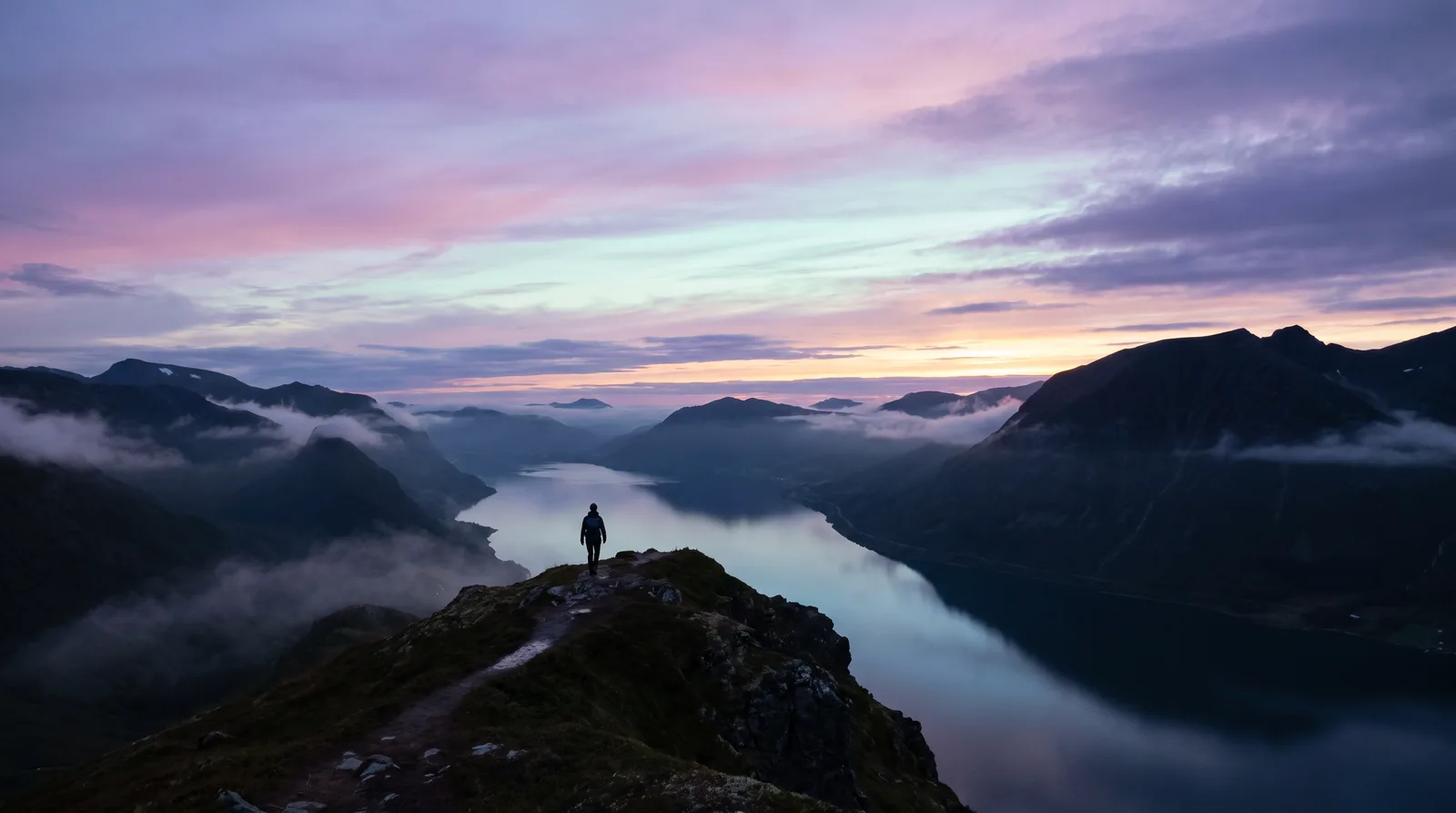
The Scandinavians have been quietly exporting their untranslatable words for a decade now. Denmark sent us hygge, candlelit and biscuit-scented; Sweden offered lagom, the art of just enough; the Netherlands, honorary Nordics for the purpose, contributed niksen, the discipline of doing nothing. Norway's entry is the least cosy and, I have come to think, the most useful. Friluftsliv, pronounced roughly free-loofts-leev, translates literally as free-air life, and it names something larger than a walk: the conviction that time outdoors, in all weather, is not a hobby or a workout but a standing requirement of a human life, as unremarkable and non-negotiable as sleep.
A word with a long walk behind it
The term is usually traced to the playwright Henrik Ibsen, who used friluftsliv in an 1859 poem to describe the restoration a person finds in remote places. But Ibsen was naming a habit far older than the word. In a country of long winters, scattered farms and enormous landscape, being outside was never optional, and Norwegian culture made a virtue of the necessity. What distinguishes friluftsliv from the English idea of the great outdoors is its temperament. It is not conquest and it is not cardio. Nothing needs to be summited, tracked or posted. The classic expressions are almost comically modest: a walk after Sunday lunch, coffee brewed on a fire, an hour on a rock looking at water. The Norwegians even have a beloved saying for the objection every other nation raises first: there is no bad weather, only bad clothing.
The cultural machinery behind it runs deep. Norwegian law protects allemannsretten, the ancient right to roam across uncultivated land regardless of who owns it, which makes the countryside a commons rather than a view. Children in barnehage spend hours outside daily, all winter. Offices empty on fine Fridays without apology. Friluftsliv is less a leisure activity than a national agreement about what a day is for.
It helps to notice what the tradition is not. It is not wilderness heroics; Norway produces polar explorers, but friluftsliv belongs to everyone else. It is not scenery tourism, since the point is relationship with a nearby outdoors rather than consumption of a spectacular one. And it is not seasonal: the same families who swim in July walk the same shoreline in January, differently dressed and equally content. The constancy is the practice. A landscape visited in all weathers becomes something closer to a companion than a backdrop, and companions, unlike backdrops, are missed.
What the dose-response says
For a folk tradition, friluftsliv has aged remarkably well under scientific lighting. The broad finding of environmental psychology, that contact with natural settings is associated with better mood, lower stress and restored attention, has been replicated across decades. More useful is the question of dose, and here a large British study is helpfully specific. Analysing survey data from nearly twenty thousand people, researchers found that those who spent at least 120 minutes a week in natural environments were significantly more likely to report good health and high wellbeing than those who spent none; below that threshold the association was negligible, and it made little difference whether the time came in one long outing or many short ones (White et al., 2019, Scientific Reports). Two hours a week, taken however you can get it. It is hard to imagine a prescription more Norwegian in spirit: no intensity requirement, no equipment, no summit. Merely a floor beneath which the free-air life should not fall.
Friluftsliv is less a leisure activity than a national agreement about what a day is for.
Practising friluftsliv without a fjord
The good news for those of us short on fjords is that friluftsliv was never really about scenery. It is a posture towards ordinary outside time, and it transplants well. A few of its habits, translated for cities and small calendars:
- Give weather a wardrobe, not a veto. Waterproof shoes and a proper coat convert perhaps two hundred marginal days a year into usable ones, and the walk taken in drizzle is invariably the one that improves the mood most.
- Move a routine outdoors rather than adding an outing. Coffee on the step instead of at the counter, the phone call taken walking, lunch on the bench that was always there.
- Adopt somewhere small. Friluftsliv thrives on relationship rather than novelty: one park, one stretch of canal, one tree, visited often enough that you notice what a fortnight changes.
- Let some outdoor time be idle. The tradition's genius is that sitting on a rock counts. If every minute outside must earn its keep as exercise, the free-air life has been quietly re-enclosed.
The weather is not the obstacle
What friluftsliv corrects, gently, is the modern assumption that outside is where you go when conditions are perfect and inside is where life actually happens. Reverse the assumption for a season and the arithmetic of a week changes: the two hours accumulate almost without effort, in margins and errands, and the days acquire a hem of sky. For the evenings when the weather truly has won, or the daylight ran out before you did, I am not above keeping the contemplative channel open indoors; ten unhurried minutes watching Feelsy's aurora-slow textures drift is no substitute for a hillside, but it keeps the habit of open-ended looking alive until the next clear morning. The Norwegians would likely say the same thing about their long polar nights: the free-air life is not abandoned in winter, merely banked. The point was never the fjord. The point is the standing agreement, renewed weekly, that a life needs air, slowness and a horizon, and that these are requirements, not rewards.
Feelsy is a wellness product, not medical advice. If stress, anxiety or sleep problems persist, please speak with a qualified professional.
References
- White, M. P., Alcock, I., Grellier, J., et al. (2019). Spending at least 120 minutes a week in nature is associated with good health and wellbeing. Scientific Reports.
Frequently Asked Questions
What does friluftsliv mean?
Friluftsliv is a Norwegian word that translates literally as free-air life. It names the conviction that time outdoors, in all weather, is a standing requirement of a human life rather than a hobby or a workout. The term is usually traced to the playwright Henrik Ibsen, who used it in an 1859 poem, though the habit it names is far older.
How is friluftsliv different from ordinary outdoor recreation?
Friluftsliv has no performance requirement: nothing needs to be summited, tracked or posted. Its classic expressions are modest, such as a walk after Sunday lunch, coffee brewed on a fire, or an hour sitting on a rock looking at water. It is a posture towards ordinary outside time, supported in Norway by the legal right to roam across uncultivated land.
How much time in nature do you need to feel a benefit?
A large British study of nearly twenty thousand people found that those who spent at least 120 minutes a week in natural environments were significantly more likely to report good health and high wellbeing, and it made little difference whether the time came as one long outing or many short ones. Two hours a week appears to act as a floor.
How can you practise friluftsliv in a city?
Dress so that weather loses its veto, move existing routines outdoors rather than adding outings, and adopt one small nearby place, such as a park or stretch of canal, visiting it often enough to notice change. Crucially, let some outdoor time be idle: in the friluftsliv tradition, sitting still outside counts.
What does 'there is no bad weather, only bad clothing' mean?
It is a beloved Scandinavian saying that captures the friluftsliv attitude: the obstacle to going outside is rarely the rain or cold itself but being dressed wrongly for it. Waterproof shoes and a proper coat convert most marginal days into usable ones, and the walk taken in drizzle often improves the mood most.

About the author
Contributing writer
Eleonor writes about contemplative traditions, attention and the cultural history of calm. She has spent two decades collecting the rituals humans use to slow down, from zazen halls to hammams, and translating them for modern, screen-lit lives.
Feel it for yourself.
Feelsy turns reading about calm into practising it. Two minutes of a slow texture is often the whole difference.


Related reading
 Ancient Wisdom
Shinrin-Yoku: Why Forests Calm the Human Mind
Japan turned a walk in the woods into preventive medicine. The research behind forest bathing, what it does to stress physiology, and how to practise it without a forest.
 Ancient Wisdom
What Is Lagom? The Swedish Art of Just Enough
Lagom is the Swedish idea of not too much, not too little, just right. Here is what lagom means, where it comes from, and how to practise it daily.
 Visual Meditation
Awe Walks: The Simple Practice of Walking Until the World Grows Large
An awe walk is an ordinary stroll taken with attention tuned to vastness and wonder. Here is the research behind awe walks and how to take one this week.
 Ancient Wisdom
Döstädning: The Gentle Swedish Art of Death Cleaning
What Swedish death cleaning really means: the calm philosophy of döstädning, how it differs from ordinary decluttering, and how to begin at any age.
 Ancient Wisdom
How to Start a Gratitude Journal You Will Actually Keep
How to start a gratitude journal that actually helps: what the research found, why most lists go stale, and the very old art of counting blessings.
 Ancient Wisdom
Haiku as Meditation: Seventeen Syllables of Attention
How writing haiku trains attention: why the tiny form works like meditation, what noticing small moments does for wellbeing, and how to write your first.