Shinrin-Yoku: Why Forests Calm the Human Mind
Japan turned a walk in the woods into preventive medicine. The research behind forest bathing, what it does to stress physiology, and how to practise it without a forest.
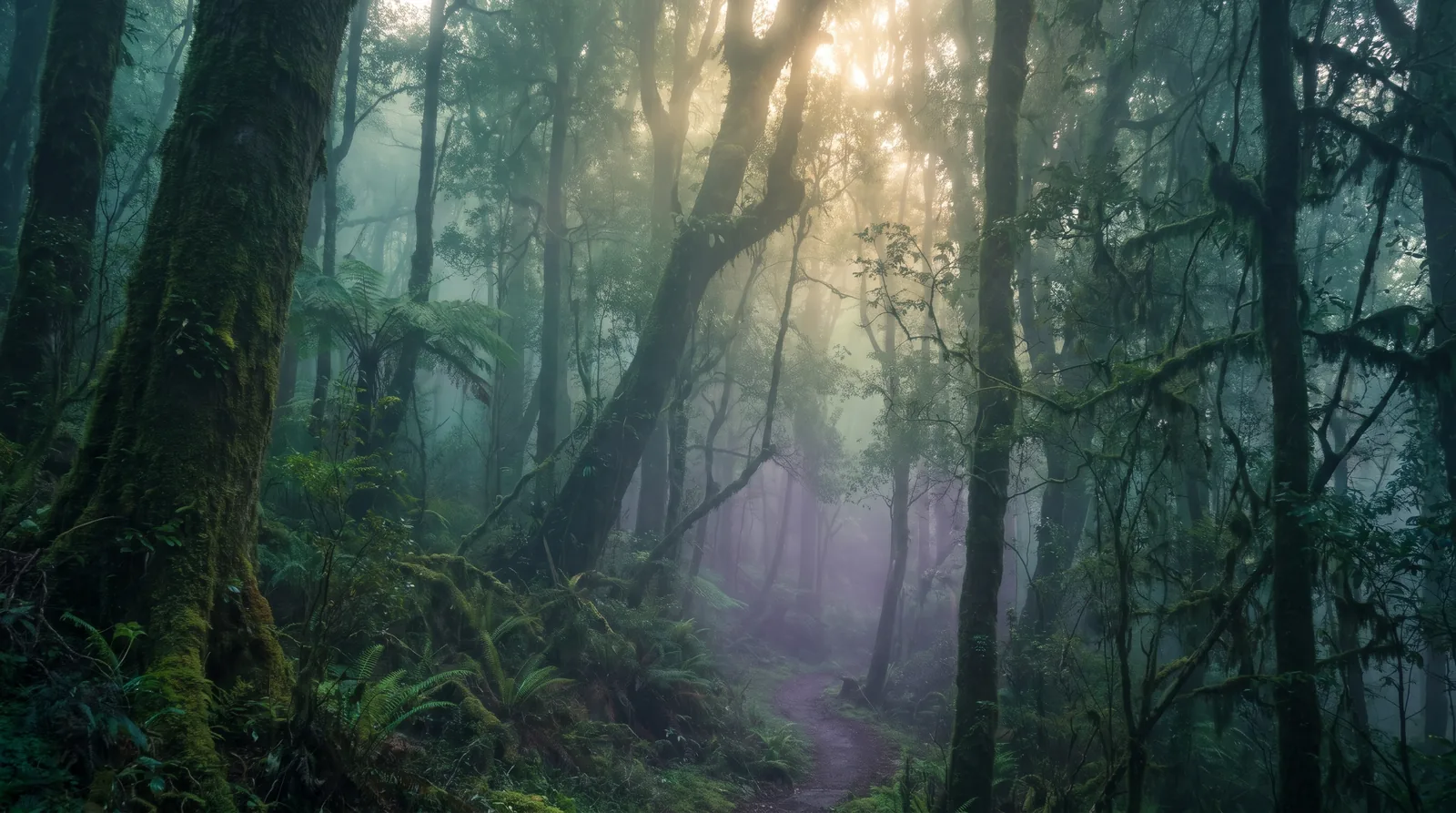
In 1982, Japan's Forestry Agency coined a term for something people had been doing forever: shinrin-yoku, literally forest bath. The name was a public-health intervention as much as a phrase. Japan was urbanising at speed, chronic stress was climbing, and the agency proposed, with a straight face, that walking slowly in the woods should be treated as medicine. Four decades later, the research programme that grew out of that decision is one of the most extensive bodies of evidence anywhere on nature and human physiology.
What a forest bath is, and is not
Shinrin-yoku is not hiking. There is no summit, no pace, no step count. The practice is to move slowly, or not at all, in a forested environment, engaging every sense deliberately: the layered green of the canopy, the smell of soil and resin, birdsong and leaf noise, the texture of bark, the temperature of the air. Guides often describe it as drinking the forest through the senses. A session might cover a few hundred metres in two hours. Slowness is not a stylistic choice; it is the mechanism.
What the research shows
The best-known findings come from field experiments led by researchers at Chiba University, who took hundreds of young adults into forests and city environments and measured their physiology in both. Across two dozen sites, time in the forest lowered salivary cortisol, pulse rate and blood pressure relative to matched time in the city, and shifted the nervous system toward the parasympathetic, rest-and-digest state (Park et al., 2010). A broad review of the field some years later reached a similar overall picture across dozens of studies: reliable short-term reductions in stress physiology and improvements in mood, alongside honest caveats about study sizes and methods (Hansen et al., 2017).
Psychology adds the attention half of the story. Attention Restoration Theory proposes that natural environments restore depleted focus because they are rich in soft fascination: stimuli that hold the eye gently without demanding anything (Kaplan, 1995). A canopy moving in wind is interesting enough to occupy attention and undemanding enough to let the focused-attention system rest. That combination is rare, and forests are saturated with it.
Slowness is not a stylistic choice. It is the mechanism.
Practising without a forest
- Find your nearest fragment of nature: a park, a courtyard tree, a canal bank. The research used forests; the principle scales down.
- Walk at half your normal speed, or stop entirely. The goal is exposure, not exercise.
- Run through the senses one at a time: three things you can see moving, two you can hear, one you can smell or feel.
- Leave the phone in your pocket, or use it only as a timer. Twenty minutes is a meaningful dose.
- Repeat regularly. The studies measured effects from single sessions; the tradition assumes practice.
The pocket forest
None of this means a screen can replace a forest; it cannot, and this journal will never tell you otherwise. But the ingredients the forest provides, slow organic motion, soft fascination, sensory coherence, are ingredients, and they can be carried. A slow ocean loop or drifting grass texture at midnight, when the nearest forest is closed and dark, borrows the forest's grammar: something alive, moving gently, asking nothing. Think of it as a postcard from the woods, and let it remind you to visit the original.
Feelsy is a wellness product, not medical advice. If stress, anxiety or sleep problems persist, please speak with a qualified professional.
References
- Park, B. J., Tsunetsugu, Y., Kasetani, T., Kagawa, T., & Miyazaki, Y. (2010). The physiological effects of Shinrin-yoku: evidence from field experiments in 24 forests across Japan. Environmental Health and Preventive Medicine, 15(1), 18–26.
- Hansen, M. M., Jones, R., & Tocchini, K. (2017). Shinrin-Yoku (Forest Bathing) and Nature Therapy: A State-of-the-Art Review. International Journal of Environmental Research and Public Health, 14(8), 851.
- Kaplan, S. (1995). The restorative benefits of nature: Toward an integrative framework. Journal of Environmental Psychology, 15(3), 169–182.
Frequently Asked Questions
What is shinrin-yoku or forest bathing?
Shinrin-yoku, literally forest bath, is a Japanese practice coined by the Forestry Agency in 1982 that involves moving slowly, or not at all, through a forest while engaging every sense deliberately. It is not hiking; there is no summit or pace, just the smell of soil, the sound of leaves and the texture of bark taken in slowly.
Does forest bathing actually lower stress?
Field experiments across 24 forests in Japan found that time in the forest lowered salivary cortisol, pulse rate and blood pressure compared with matched time in the city, and shifted the nervous system toward its rest-and-digest state (Park et al., 2010). A later broad review of dozens of studies found a similar pattern of short-term stress and mood improvements, with honest caveats about study size and methods (Hansen et al., 2017).
Why does looking at a forest canopy feel restful?
Attention Restoration Theory suggests natural scenes are rich in soft fascination, stimuli interesting enough to hold the eye without demanding effort. A canopy moving in the wind occupies attention gently, letting the mind's focused-attention system rest.
How can you practise forest bathing without an actual forest nearby?
The article suggests finding the nearest fragment of nature, a park, a courtyard tree or a canal bank, and walking at half your normal speed or stopping entirely. Run through your senses one at a time, leave the phone in your pocket, and repeat the practice regularly, since the tradition assumes ongoing practice rather than a single session.
Can a screen replace an actual forest?
No, the article is clear that nothing replaces an actual forest. But slow organic motion, soft fascination and sensory coherence, the same ingredients a forest offers, can be borrowed in a small way, such as a slow ocean loop at midnight, as a reminder to visit the real thing.

About the author
Contributing writer
Eleonor writes about contemplative traditions, attention and the cultural history of calm. She has spent two decades collecting the rituals humans use to slow down, from zazen halls to hammams, and translating them for modern, screen-lit lives.
Feel it for yourself.
Feelsy turns reading about calm into practising it. Two minutes of a slow texture is often the whole difference.


Related reading
 Ancient Wisdom
Ancient Practices for Modern Calm: A World Tour
Humans have engineered calm for thousands of years. A tour through Zen, pranayama, hammam culture, forest bathing and the ancestors of visual meditation.
 Visual Meditation
What Is Visual Meditation? The Complete Guide
Visual meditation rests your attention on slow, pleasing motion so calm happens almost on its own. Here is how it works, what the research says, and how to practise it in three minutes.
 Sleep
SleepHow to Fall Asleep Faster: Sound, Light and Ritual
Falling asleep is a skill, not a stroke of luck. Here is how sound, light and a 15-minute ritual can quiet a racing mind and shorten the trip to sleep.
 Ancient Wisdom
Döstädning: The Gentle Swedish Art of Death Cleaning
What Swedish death cleaning really means: the calm philosophy of döstädning, how it differs from ordinary decluttering, and how to begin at any age.
 Ancient Wisdom
How to Start a Gratitude Journal You Will Actually Keep
How to start a gratitude journal that actually helps: what the research found, why most lists go stale, and the very old art of counting blessings.
 Ancient Wisdom
Haiku as Meditation: Seventeen Syllables of Attention
How writing haiku trains attention: why the tiny form works like meditation, what noticing small moments does for wellbeing, and how to write your first.