The Five-Minute Hand Massage: A Small Ritual for Overworked Hands
A simple five-minute hand massage eases tension after a day of typing and gripping. How to do it step by step, when to do it, and why slow hands calm the mind.
By Mei Lin
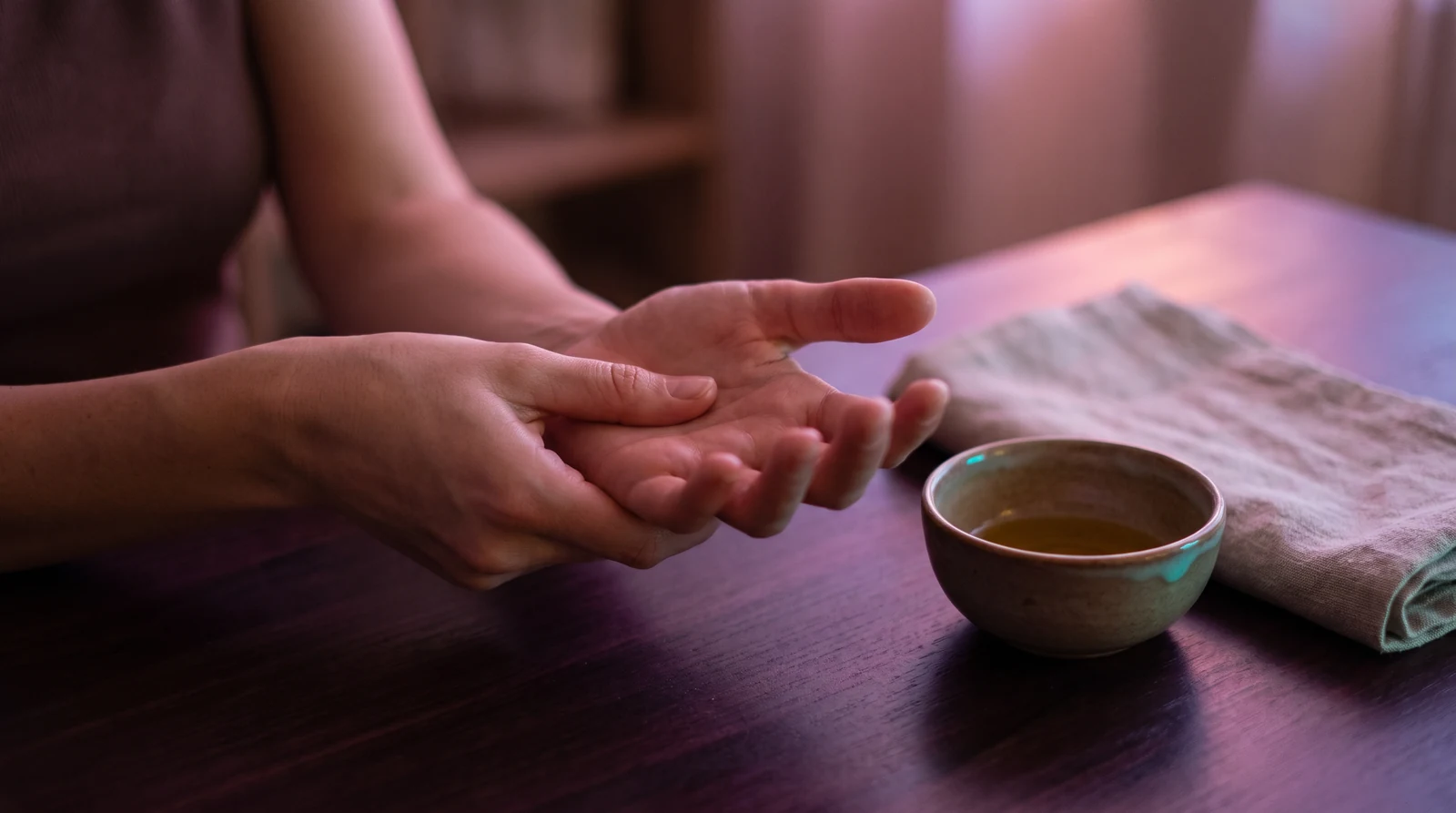
Think about what your hands have done today. They have typed, scrolled, gripped a steering wheel or a subway rail, carried bags, wrung themselves quietly under a desk during a tense call. Hands work from the moment we wake, and they are the last part of the body most of us would think to care for. We stretch our backs and roll our necks, but the hands, with their dozens of small muscles and joints, simply go on. A five-minute hand massage at the end of the day is one of the easiest kindnesses you can offer a body, and one of the most immediately felt. It needs no equipment, no training, and no one else. It is grooming in the oldest sense: slow, deliberate attention paid to a hardworking creature, who happens to be you.
Why hands are such good territory for calm
Hands are extravagantly supplied with nerve endings; the brain devotes an outsized share of its sensory map to them. This is why hands are how we check the world, the fever on a child's forehead, the ripeness of a peach, and it is also why touch applied to the hands registers so vividly. Warm, unhurried pressure on the palms is information the nervous system reads as safety, the way it reads a heavy blanket or a hot bath. Hospitals have taken note: hand massage has been trialed as a simple comfort measure for anxious patients before surgery, precisely because it is gentle, quick, and asks nothing of the person receiving it. You can lend the same measure to yourself. The hands also hold more tension than we notice. A day of typing and phone-gripping leaves the flexors of the forearm shortened and the small muscles of the thumb overworked. Attending to them is not indulgence; it is maintenance.
Slow pressure on the palms is information the nervous system reads as safety.
The five-minute sequence
Use a little oil or hand cream, warmed between the palms first; cold lotion defeats the purpose. Then work through the sequence slowly, one hand at a time, breathing out with the longer strokes:
- Warm up: press your palms together and rub slowly for twenty seconds, like warming hands at a stove.
- Palm strokes: with the thumb of the working hand, glide firm, slow lines from the wrist to the base of each finger, covering the whole palm.
- The thumb pad: knead the fleshy mound at the base of the thumb in small circles. For most people this is the day's sorest spot.
- Each finger: starting at the base, squeeze and glide to the tip in one slow motion, with a gentle pull at the end. Take your time; there is no prize for finishing.
- The webbing: press the soft web between thumb and forefinger between your thumb and knuckle, and hold for a few slow breaths.
- The back and wrist: circle the knuckles, then the wrist bones, then finish with long strokes from fingertips to forearm, as if smoothing a glove.
Then change hands. The second hand always gets a lazier massage, so begin with your dominant one on alternate days. Keep the pressure at the level of a firm handshake: enough to feel worked on, never enough to wince. Sharp pain, numbness, or tingling is a signal to stop, and anyone with an injury, arthritis flare, or circulation condition should be guided by their clinician rather than an article.
Making it a ritual rather than a chore
A technique becomes a ritual when it has a time and a setting. The natural slot is the final ten minutes before sleep, after the phone is down for the night: hand massage pairs beautifully with the body's own winding-down, and unlike a bath it can be done sitting up in bed. I keep a small tin of balm on the nightstand as the cue. Some nights I let Feelsy's autoplay drift on the nightstand while I work through the sequence, a slow pour of color at the edge of vision, with the sound low; the eyes and the hands then slow down together. In my family the gesture is older than any app. My grandmother worked dough every morning of her life, and in the evening she would sit by the radio rubbing camellia oil into her knuckles, finger by finger, with total attention. I thought she was treating her skin. I understand now she was closing the day.
Small hinges
There is a proverb about small hinges swinging large doors. The hand massage is a small hinge. Five minutes, a smear of cream, twelve slow strokes, and the day's grip finally lets go, often taking a surprising amount of the mind's grip with it. We spend so much effort searching for large answers to tension, retreats, regimens, resolutions, that we step past the modest ones sitting in plain sight at the ends of our own arms. Tonight, when the screen goes dark, take one hand in the other and begin. The door swings.
Feelsy is a wellness product, not medical advice. If stress, anxiety or sleep problems persist, please speak with a qualified professional.
Frequently Asked Questions
How do you give yourself a hand massage?
Warm a little oil or cream between your palms, then work slowly: glide your thumb from wrist to fingers across the palm, knead the mound at the base of the thumb, squeeze and glide along each finger, press the webbing between thumb and forefinger, and finish with circles over the knuckles and wrist. About five minutes per hand, at firm-handshake pressure.
What are the benefits of a hand massage?
Hands are dense with nerve endings, so warm, unhurried pressure on them registers strongly and reads to the nervous system as safety, similar to a weighted blanket or hot bath. It also eases the physical tension that typing and phone-gripping leave in the thumb and palm muscles. Hand massage has even been trialed in hospitals as a simple comfort measure for anxious patients.
When is the best time for a hand massage?
The last ten minutes before sleep works well, after the phone is set down: it pairs with the body's natural winding-down and can be done sitting up in bed. Keeping a tin of balm on the nightstand turns it from a technique you forget into a ritual you keep. After long typing days, a short midday version helps too.
How hard should you press during a hand massage?
Aim for the pressure of a firm handshake: enough to feel the muscle being worked, never enough to make you wince. Sharp pain, numbness, or tingling means stop. If you have a hand injury, an arthritis flare, or a circulation condition, ask your clinician before self-massage.

About the author
Contributing writer
Mei grew up in Shanghai around tea that could not be hurried and grandmothers who considered stillness a skill. She writes about slow hands and sensory ritual: tea, calligraphy, qigong, and the quiet crafts that taught the world how to pay attention.
Feel it for yourself.
Feelsy turns reading about calm into practising it. Two minutes of a slow texture is often the whole difference.


Related reading
 Breath & Body
Pressure Points for Anxiety: The Quiet Craft of Acupressure
Pressure points for anxiety, explained: where acupressure comes from, which points people press, what research shows so far, and how to try it gently.
 Breath & Body
The Evening Foot Soak: A Warm Ritual for Better Sleep
A warm foot soak before bed is one of the oldest wind-down rituals. Here is why warmth at the feet helps you sleep, and how to build the habit in 20 minutes.
 Ancient Wisdom
Baoding Balls: The Chinese Meditation You Hold in Your Hand
Baoding balls, the chiming iron spheres of Chinese tradition, turn a restless hand into an anchor for attention. Their history, technique and quiet appeal.
 Breath & Body
Time Blocking: The Calendar Trick That Makes Your To-Do List Tell the Truth
Time blocking puts your to-do list on the clock, where it has to be honest about your day. Why the method works, the research behind it, and how to start.
 Breath & Body
The Two-Minute Rule: The Only Productivity Trick I Haven't Quit
The two-minute rule says if a task takes under two minutes, do it now. Why this tiny rule beats fancy systems for procrastination and mental clutter.
 Breath & Body
Why You Work Better Under Pressure (and Why That's Half a Lie)
Deadline pressure really does sharpen focus, and it quietly costs you. The science of arousal, procrastination and borrowing urgency without panic.