Baoding Balls: The Chinese Meditation You Hold in Your Hand
Baoding balls, the chiming iron spheres of Chinese tradition, turn a restless hand into an anchor for attention. Their history, technique and quiet appeal.
By Mei Lin
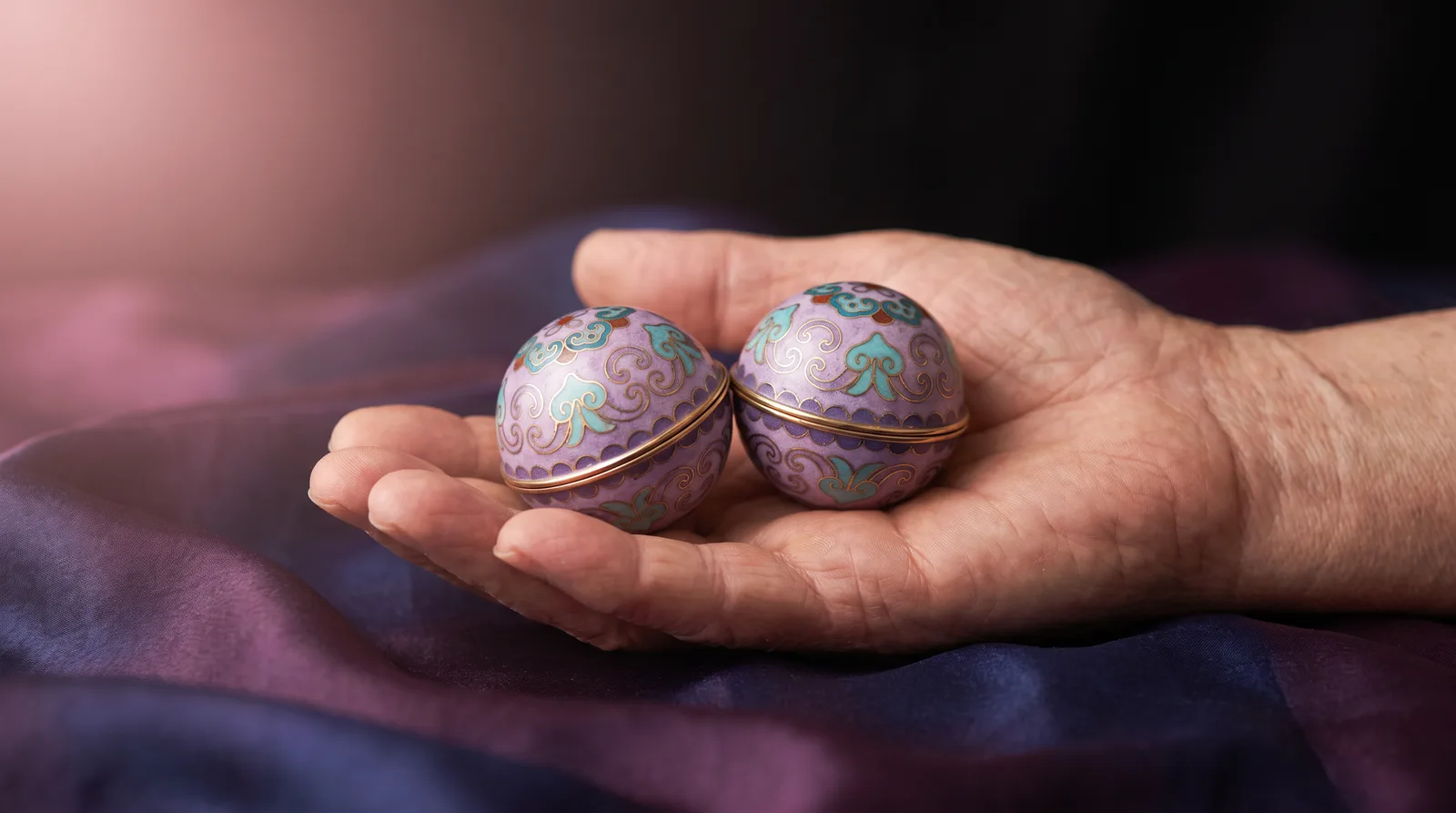
In the parks of Shanghai, early in the morning, you can hear them before you see them: a faint, silvery chiming, out of rhythm with the birds. It comes from the hands of elderly men walking the plane tree avenues, each palm holding two metal spheres that circle each other in slow orbit, ringing softly with every pass. They walk, they talk, they argue about chess, and all the while the balls keep turning, the way a river keeps moving under a conversation held on a bridge. As a child I assumed the balls were doing something to the men. It took me years to understand it was the reverse. The men were doing something with the balls: keeping a small, steady practice alive in the one part of the body that modern life most likes to make frantic.
Iron pearls from a walled city
The spheres are called baoding balls, after Baoding, the old garrison city in Hebei province where they have been made for centuries; tradition dates them to the Ming dynasty, and the older name, tie qiu, means simply iron balls. The earliest versions were solid, a training tool for grip and forearm. Somewhere along the way they acquired their souls: most modern pairs are hollow, with a small chime suspended inside, so that one ball rings high and its twin rings low as they turn. Cloisonné versions in enamel came later for the tourist trade, but purists still favor plain steel, heavy and cool, warming slowly to the hand. They are sold in pairs in a silk box, and the box matters less than the pairing: two is the number that makes them an exercise rather than an object. In China they belong to the same morning world as taijiquan and the caged songbirds carried to the park: modest daily instruments of upkeep, owned mostly by people old enough to know that upkeep is what a body and a temper actually run on.
The technique of the quiet orbit
The practice looks like fidgeting and is closer to calligraphy. You hold both balls in one palm and rotate them around each other, clockwise or counter, driving them with small movements of the fingers: the little finger and ring finger push, the thumb receives, the palm tilts like a slow bowl. At first the balls clack together gracelessly and threaten to escape; every beginner chases one across the floor. With practice they begin to orbit smoothly, then, the classic refinement, without touching at all, a silent revolution that demands complete attention from every finger. Then you learn the reverse direction, which humbles the hand all over again, and eventually the other hand, which is like meeting your clumsy younger self. Traditional practice values balance: both directions, both hands, nothing forced, sessions of a few unhurried minutes rather than heroic ones.
The practice looks like fidgeting and is closer to calligraphy: a slow orbit that asks something of every finger.
Why busy hands quiet the mind
Chinese tradition explains the benefit in its own vocabulary: the palm is dense with acupoints, and the turning balls stimulate meridians and harmonize the body's energies. You do not need to adopt that framework to notice what a modern one observes as well: rhythmic, skilled, repetitive handwork has a settling effect that shows up wherever people practice it. A large international survey of knitters, another craft of small circular movements, found that more frequent knitting was associated with greater reported calm and wellbeing (Riley, Corkhill and Morris, 2013, British Journal of Occupational Therapy). The pattern is familiar across cultures, from rosaries to worry beads to the smooth stone turned in a coat pocket. A hand given gentle, orderly work becomes an anchor. Attention drapes itself over the moving fingers, and the mind's louder weather passes overhead with less to grab onto. The chime helps too: a soft, regular tone that marks each revolution like a very local temple bell.
What sets baoding balls apart from a modern fidget toy is the ceiling. A clicking cube asks nothing and teaches nothing; the balls offer an actual skill, with stages, setbacks and the long project of silence. That slow ladder is, I suspect, the real medicine. My grandmother would have said the same of dough, and of embroidery, and of tea poured properly: the hands learn patience first, and the mind follows at its own pace, the slower student in the family.
A pocket-sized practice
Starting is simple. Choose balls that fit your hand, roughly the diameter that lets both sit in your palm with a finger's width between them; smaller is easier, heavier is calmer. Practice over a bed or sofa for the first week, for the obvious reason. Then attach the habit to an existing pause: the kettle boiling, the long phone call, the ten minutes before sleep when a screen would otherwise win. A few minutes of slow orbits, both directions, is a complete session. Do not chase progress; the silent revolution arrives on its own schedule, usually in a week when you were not watching for it, which is a lesson worth the price of the balls by itself. On evenings when my hands are tired but my eyes are not, I trade the steel for the screen and let Feelsy's textures do the turning, watching something orbit and fold instead of driving it. The instruments differ; the agreement is the same. Give the restless part of you one small, round, unhurried thing to do, and the rest of you will gradually sit down beside it.
Feelsy is a wellness product, not medical advice. If stress, anxiety or sleep problems persist, please speak with a qualified professional.
References
- Riley, J., Corkhill, B., & Morris, C. (2013). The benefits of knitting for personal and social wellbeing in adulthood: findings from an international survey. British Journal of Occupational Therapy.
Frequently Asked Questions
What are baoding balls?
Baoding balls are pairs of metal spheres, named after the city of Baoding in Hebei province, China, where they have been made for centuries; tradition dates them to the Ming dynasty. Most modern pairs are hollow with a chime inside, one ball ringing high and one low, and they are rotated around each other in one palm as a hand exercise and calming practice.
How do you use baoding balls?
Hold both balls in one palm and rotate them around each other using small movements of the fingers, with the palm tilting like a slow bowl. Beginners let the balls touch; with practice they orbit smoothly and eventually without touching at all. Traditional practice values balance: both directions, both hands, and short unhurried sessions of a few minutes.
What are the benefits of baoding balls?
Chinese tradition holds that the turning balls stimulate acupoints in the palm. In modern terms, they give the hand rhythmic, skilled, repetitive work, the same family of movement as knitting, which a large international survey linked to greater reported calm and wellbeing. The moving fingers anchor attention, and the soft chime marks each revolution.
Are baoding balls better than a fidget toy?
They serve the same restless impulse but offer more of a ladder. A clicking fidget cube asks nothing and teaches nothing, while baoding balls carry an actual skill with stages and setbacks: smooth orbits, then silent ones, then the reverse direction, then the weaker hand. That slow progression rewards attention rather than merely absorbing it.
What size baoding balls should a beginner choose?
Choose a pair that fits your hand: both balls should sit in your palm with roughly a finger's width between them. Smaller balls are easier to rotate and heavier ones feel calmer. Practice over a bed or sofa for the first week, since escaping balls are part of every beginner's story.

About the author
Contributing writer
Mei grew up in Shanghai around tea that could not be hurried and grandmothers who considered stillness a skill. She writes about slow hands and sensory ritual: tea, calligraphy, qigong, and the quiet crafts that taught the world how to pay attention.
Feel it for yourself.
Feelsy turns reading about calm into practising it. Two minutes of a slow texture is often the whole difference.


Related reading
 Breath & Body
Knitting as Meditation: Why Repeating Stitches Calms the Mind
Why knitting soothes anxiety: rhythm, repetition and the quiet focus of busy hands, what knitters report about calm, and how to begin the practice.
 Ancient Wisdom
Tai Chi for Beginners: Learning to Move at the Speed of Calm
Tai chi for beginners: what the slow Chinese practice really is, why moving meditation calms an anxious mind, and how to begin at home in ten minutes.
 Ancient Wisdom
How to Use Mala Beads: A Beginner's Guide to Meditating With 108 Beads
Mala beads give restless hands a job and wandering minds an anchor. Learn what the 108 beads mean and how to use a mala for breath or mantra meditation.
 Ancient Wisdom
Döstädning: The Gentle Swedish Art of Death Cleaning
What Swedish death cleaning really means: the calm philosophy of döstädning, how it differs from ordinary decluttering, and how to begin at any age.
 Ancient Wisdom
How to Start a Gratitude Journal You Will Actually Keep
How to start a gratitude journal that actually helps: what the research found, why most lists go stale, and the very old art of counting blessings.
 Ancient Wisdom
Haiku as Meditation: Seventeen Syllables of Attention
How writing haiku trains attention: why the tiny form works like meditation, what noticing small moments does for wellbeing, and how to write your first.