Kneading Dough: Why Baking Bread Quiets the Mind
Baking as therapy is real: kneading dough gives restless hands rhythm, warmth and patience. Why bread calms the mind, plus a simple kneading meditation.
By Mei Lin
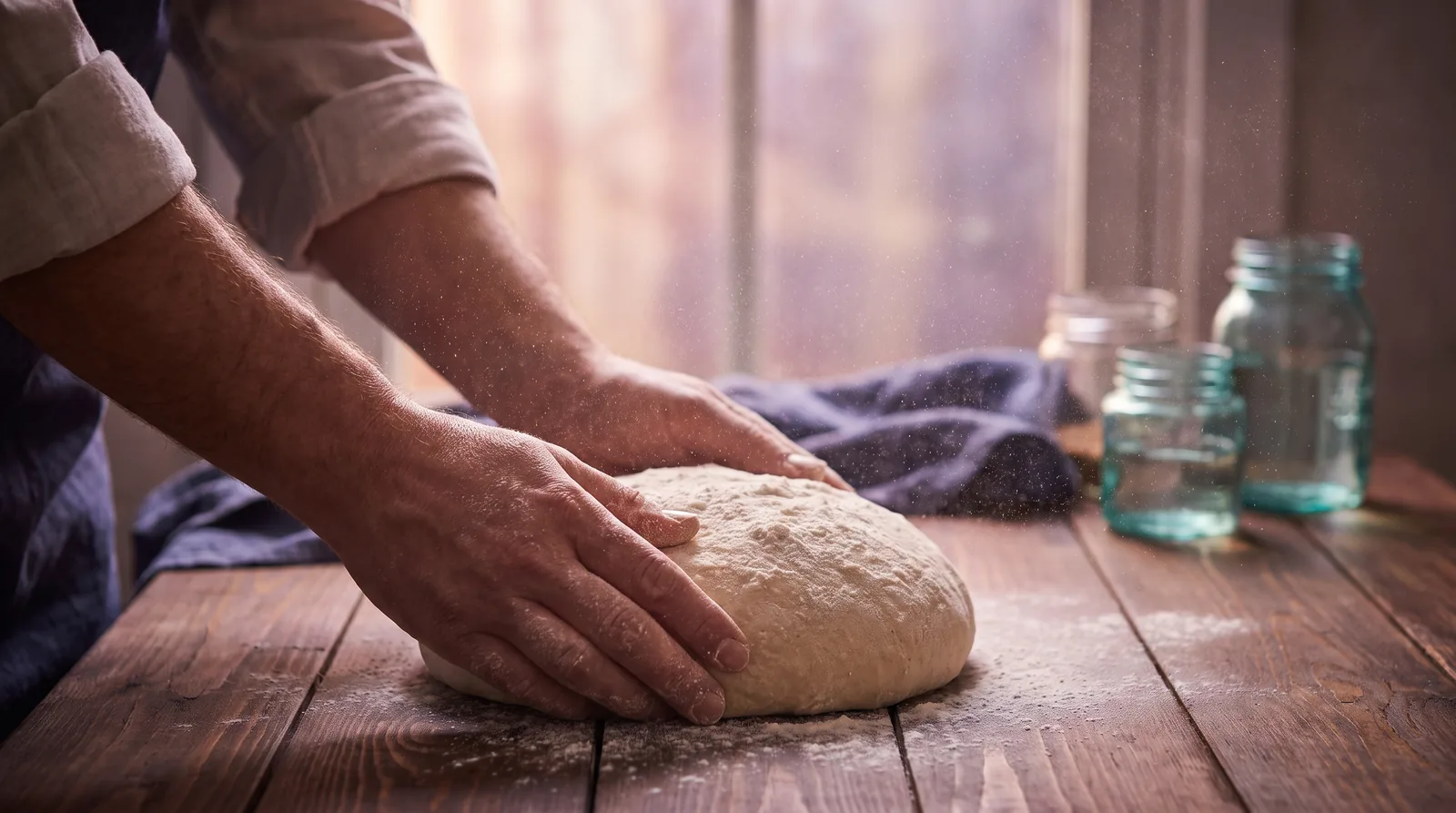
My grandmother made dough the way other people pray: daily, without hurry, and slightly offended by interruptions. In her Shanghai kitchen the ritual never changed. Flour in a wide clay bowl, warm water poured in a thin spiral, then her hands, which had done this ten thousand times, folding and pressing until something shapeless became something smooth. As a child I was allowed to watch but not to rush. Dough, she said, can tell when you are angry. I thought this was superstition. Thirty years later, standing in my own kitchen with my palms in a batch of bread dough after a difficult week, I understand it was observation. The dough was not reading her mood. It was changing it.
The rhythm your hands already know
Kneading is one of the oldest repetitive motions in the human catalogue: press, fold, turn. Press, fold, turn. It sits in the same family as rowing, sweeping, and walking, movements with a built-in beat that the body settles into without instruction. Repetition of this kind is quietly powerful. When the hands take up a steady rhythm, breathing tends to slow and match it, shoulders drop, and the mind, offered something warm and predictable to attend to, gradually stops rehearsing its arguments. Nothing about this requires belief. It only requires flour, water, and about ten honest minutes.
What the dough asks of you
Every contemplative craft has a teacher hidden inside the material, and dough is a patient but immovable one. It gives immediate feedback: hurry, and it tears; press with stiff, distracted hands, and it resists; work with it steadily, and you feel it change under your palms, from shaggy and sticky to elastic and alive. This transformation cannot be negotiated with. Gluten develops at its own pace, the way tea steeps at its own pace and qigong unfolds at its own pace. The dough sets the clock, and you are invited to stop setting yours. For people whose anxiety lives in their hands, and many of us carry it there, this is the gift: the hands are given honest work, and the mind is allowed to come along as a guest rather than a manager.
The dough sets the clock, and you are invited to stop setting yours.
What research says about making things
Modern research has begun to measure what kitchens have always known. A study following young adults' daily lives found that days with small acts of everyday creativity, cooking and baking among them, were followed by higher flourishing: more enthusiasm and a stronger sense that life was going well the next day (Conner et al., 2018, The Journal of Positive Psychology). The effect ran forward in time, from making to wellbeing, not merely the reverse. This matches the texture of the experience. Baking offers what psychologists would call behavioral activation and what my grandmother called having something to show for your afternoon: a sequence of small competent acts, a transformation you caused with your own hands, and at the end, unlike so much modern work, a loaf that exists.
A kneading meditation
- Before you begin, wash your hands slowly and warm them under the water. Let this be the threshold: the week outside, the dough ahead.
- Mix flour, water, salt and yeast until shaggy, then rest your hands on the mass for one breath before the first fold. Feel its temperature.
- Knead in rhythm: press with the heel of the hand, fold, quarter turn. Let your exhale ride the press. When the mind wanders, the next fold is always there to return to.
- Notice the change without hurrying it: the surface slowly turning smooth, the stickiness giving way, the dough beginning to push back like something waking up.
- When it is soft and elastic, stop. Cover the bowl. The work now belongs to time, not to you.
A practice for all the senses
Part of bread's quiet power is how completely it occupies the senses, one after another, like rooms in a house. The hands receive texture: cool flour, warm water, the changing give of the dough. The eyes receive transformation: shaggy to smooth, flat to risen, pale to amber. The ears receive small sounds that belong to no notification: the soft slap of a fold, the whisper of flour on wood, later the faint crackle of a cooling crust, a sound bakers call the bread singing. And the nose receives what may be the oldest comfort we have, the smell of baking, which reaches parts of memory that language does not. A grandmother's kitchen can return to you whole, decades later, on the strength of that scent alone. Screens claim one sense and crowd it; dough distributes you evenly through your body. This is why an hour of baking can rest a tired mind in a way an hour of entertainment often cannot: nothing is left over to worry with.
While the dough rests
The rise is the second half of the practice, and the harder one: an enforced hour of nothing to fix. My grandmother used it to drink tea by the window. I keep her habit, though my window is different, and sometimes I let a slow visual drift beside the teacup, one of Feelsy's textures folding over itself like dough in glass, while I practice a few unhurried rounds of the 4-7-8 breath. Then the shaping, the oven, and the moment no one outgrows: bread scent filling the rooms, the crust crackling as it cools. You began with dust and ended with warmth. Whatever else the day did, your hands spent an hour on the side of patience, and patience, like yeast, works quietly and then all at once.
Feelsy is a wellness product, not medical advice. If stress, anxiety or sleep problems persist, please speak with a qualified professional.
References
- Conner, T. S., DeYoung, C. G., & Silvia, P. J. (2018). Everyday creative activity as a path to flourishing. The Journal of Positive Psychology, 13(2), 181-189.
Frequently Asked Questions
Why is baking bread so relaxing?
Kneading gives the hands one of the oldest repetitive rhythms we know: press, fold, turn. When the hands settle into a steady beat, breathing tends to slow and match it, shoulders drop, and the mind gradually stops rehearsing its worries because it has something warm and predictable to attend to. The dough also sets its own pace, which invites you to stop setting yours.
Is baking as therapy backed by research?
Research on everyday creativity points that way. A study following young adults found that days with small creative acts, including cooking and baking, were followed by higher flourishing the next day, with more enthusiasm and a stronger sense that life was going well (Conner et al., 2018). Baking also provides a sequence of small competent acts and a finished loaf you made with your own hands.
How do I turn kneading dough into a meditation?
Wash and warm your hands slowly as a threshold into the practice, then knead in rhythm: press with the heel of the hand, fold, quarter turn, letting your exhale ride each press. When your mind wanders, return to the next fold, and notice the dough changing from shaggy to smooth without trying to hurry it. When it turns elastic, cover it and let time take over.
What does kneading dough teach about patience?
Dough gives immediate, honest feedback: hurry and it tears, press with distracted hands and it resists, work steadily and it transforms under your palms. Gluten develops at its own pace and cannot be negotiated with, so kneading is a small daily practice of cooperating with time instead of fighting it, followed by a rise that enforces an hour with nothing to fix.

About the author
Contributing writer
Mei grew up in Shanghai around tea that could not be hurried and grandmothers who considered stillness a skill. She writes about slow hands and sensory ritual: tea, calligraphy, qigong, and the quiet crafts that taught the world how to pay attention.
Feel it for yourself.
Feelsy turns reading about calm into practising it. Two minutes of a slow texture is often the whole difference.


Related reading
 Ancient Wisdom
Tea Meditation: The Slow Ritual of Gongfu Cha
How to turn tea into meditation: the Chinese gongfu tea ritual, why warm slow ritual calms the nervous system, and a ten-minute practice for any mug.
 Visual Meditation
Calligraphy as Meditation: Why Slow Writing Calms a Fast Mind
Why calligraphy calms a racing mind: the science of slow writing and attention, and how to practice mindful handwriting with any pen and ten quiet minutes.
 Breath & Body
Qigong for Beginners: Slow Hands, Quiet Mind
A gentle qigong guide for beginners: what qigong is, what research says about stress and anxiety, and three simple movements you can practice in ten minutes.
 Breath & BodyNew
Do Cold Showers Actually Work? A Skeptic Reads the Evidence
Cold showers are pitched as a cure for everything from low energy to weak character. Here's what the actual research says, and how to try one without the cult.
 Breath & BodyNew
Dopamine Detox: What It Gets Right and What It Gets Wrong
Dopamine detox promises a factory reset for your distracted brain. Here's what the neuroscience actually says, what helps, and what's just rebranded boredom.
 Breath & Body
How to Stop Overthinking: Quieting a Mind That Will Not Move On
Why overthinking loops and how to interrupt it: what rumination research shows, why you cannot argue with a spiral, and gentler ways to change the channel.