Calligraphy as Meditation: Why Slow Writing Calms a Fast Mind
Why calligraphy calms a racing mind: the science of slow writing and attention, and how to practice mindful handwriting with any pen and ten quiet minutes.
By Mei Lin
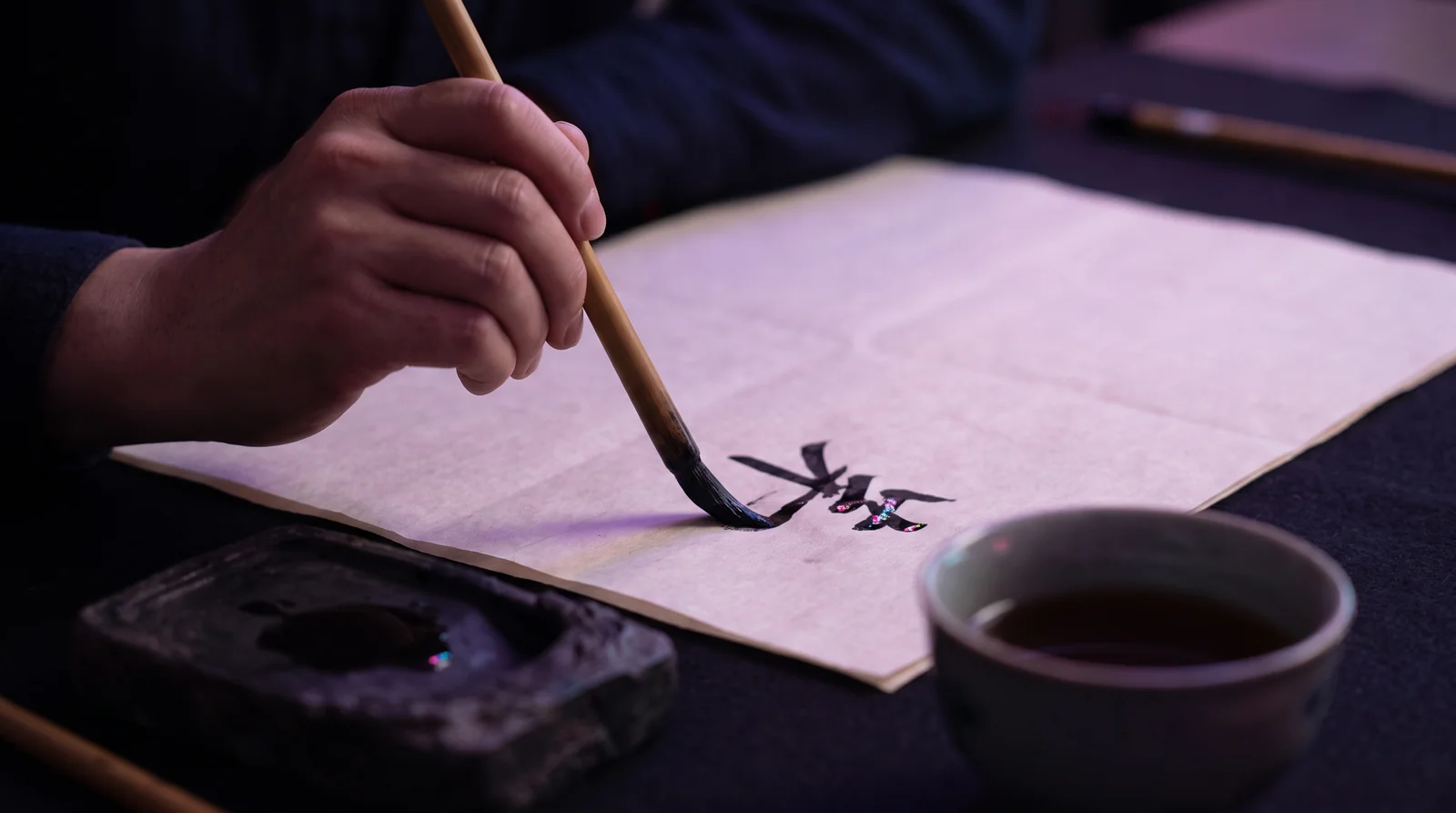
The first thing my calligraphy teacher taught me had nothing to do with writing. She made me grind the ink. You hold the ink stick upright, add a little water to the stone, and move in slow circles, hundreds of them, while the water darkens by degrees like tea steeping. I thought it was a chore we would eventually skip. It was the lesson. By the time the ink was ready, so was I: breath lower, shoulders down, the morning's noise settled to the bottom like sediment. The brush only continued what the grinding began.
Calligraphy is usually filed under art, but in China it has always been filed under cultivation. For centuries, scholars practiced it daily not to produce beautiful pages but to produce a certain state of person: composed, attentive, unhurried under pressure. That state is available to anyone with a pen, and you do not need to write Chinese characters, or beautifully, to reach it.
Why slow writing works on the mind
Consider what a single deliberate brushstroke requires. The hand must move slowly and continuously; the pressure must be felt and adjusted the whole way; the eyes must stay on the tip; the breath, you quickly discover, coordinates itself with the stroke, tending to release on the long pull downward. There is no room left. A racing mind needs spare attention to race with, and calligraphy, like threading a needle, simply does not leave any.
It is visual meditation with a motor thread attached. Where candle gazing rests the eyes on a flame, calligraphy rests them on a moving line that your own hand is producing, closing a loop between eye, hand and breath. The feedback is immediate and honest: hurry, and the line shows it; grip, and the line shows that too. The page becomes a small mirror of the nervous system, and calming the line becomes a way of calming yourself.
The page becomes a small mirror of the nervous system, and calming the line becomes a way of calming yourself.
What the research shows
The psychology of Chinese calligraphy has been studied for decades, most extensively by Henry S. R. Kao and colleagues, whose work documented a consistent pattern during brush practice: heart rate slows, breathing steadies, and practitioners report a settled, absorbed state. In one experimental comparison, calligraphy practice produced relaxation effects comparable to meditation, with the researchers noting reduced physiological arousal across sessions (Kao et al., 2014, Psychology Research and Behavior Management). The evidence base is modest in size, as honest summaries acknowledge, but it agrees with several centuries of scholarly habit and with anyone's first attentive hour at the desk.
None of this should surprise. Slow continuous hand movement, lowered breath, single-pointed visual focus: these are the active ingredients of half the world's contemplative practices. Calligraphy simply packages them around a tool most of us already own.
A ten-minute practice, no skill required
You can do this tonight with a pen and any paper. A brush pen and smooth paper are lovely, and grinding real ink is its own meditation, but nothing about the effect requires them.
- Prepare like it matters. Clear a small space, sit with both feet on the floor, and take three slow breaths before touching the pen. Preparation is the ink-grinding; do not skip your version of it.
- Draw slow lines first. Fill a few rows with single strokes, horizontal lines, drawn at half your natural speed, exhaling gently through each one. Watch the tip, not the result.
- Write one word at a stroke-a-breath pace. Any word you like, or a single character, or your own name made unfamiliar by slowness. Repeat it down the page, letting each repetition be its own event.
- End by looking. Spend a quiet moment with the page, not judging, just seeing where the line was calm and where it hurried. Then put it away; the page was never the point.
Ten minutes of this most evenings will change how the pen feels in your hand within a week, and, more usefully, will hand you a portable calm ritual that requires no screen, no app and no explanation to anyone.
The permission to be a beginner
People refuse this practice for one reason: my handwriting is terrible. But calligraphy as meditation inverts the usual accounting. A wobbly line drawn with full attention is a success; a perfect line drawn while planning dinner is not. The tradition itself honors this: students of the old masters spent their first years on single horizontal strokes, and no one considered those years wasted. The stroke was never practice for the character. Attention was the point all along, and the stroke was its excuse.
There is a family of practices here worth knowing as one thing: the tea made slowly, the sand raked into lines, the dough kneaded past the point of necessity, the brush loaded and drawn down the page. Cultures everywhere discovered that hands moving slowly quiet the mind, and each built its own excuse for the movement. On nights when even a pen feels like too much apparatus, the watching half of the practice still works alone: I sometimes end a day letting one of Feelsy's ink-dark textures fold itself across the screen, autoplay carrying it on like a scroll unrolling, the same slow line, drawn by other hands. Then the light goes out, and the page, as ever, was not the point.
Feelsy is a wellness product, not medical advice. If stress, anxiety or sleep problems persist, please speak with a qualified professional.
References
- Kao, H. S. R., Zhu, L., Chao, A. A., Chen, H. Y., Liu, I. C. Y., & Zhang, M. (2014). Calligraphy and meditation for stress reduction: An experimental comparison. Psychology Research and Behavior Management, 7, 47–52.
Frequently Asked Questions
Why does calligraphy calm a racing mind?
A single deliberate brushstroke requires slow continuous hand movement, felt and adjusted pressure, eyes staying on the tip, and breath coordinating with the stroke, leaving no spare attention for the mind to race with. It is described as visual meditation with a motor thread attached.
Is there research behind calligraphy as a relaxation practice?
Yes, Henry S. R. Kao and colleagues studied Chinese calligraphy for decades and found that heart rate slows and breathing steadies during brush practice. One experimental comparison found calligraphy practice produced relaxation effects comparable to meditation, with reduced physiological arousal across sessions (Kao et al., 2014).
Do I need to know Chinese calligraphy or have good handwriting to try this?
No, you do not need to write Chinese characters or write beautifully to reach the calming state. A wobbly line drawn with full attention counts as a success, while a perfect line drawn while thinking about something else does not.
How do you practice calligraphy as meditation with just a pen and paper?
Prepare by clearing a small space and taking three slow breaths, then draw slow single lines at half your natural speed while exhaling gently through each one. After that, write one word or character repeatedly at a stroke-a-breath pace, then end by quietly looking at the page without judging it.
What other slow-hands practices are similar to calligraphy meditation?
The article groups calligraphy with tea made slowly, sand raked into lines, and dough kneaded past the point of necessity, all examples of cultures discovering that hands moving slowly quiet the mind, each with its own excuse for the movement.

About the author
Contributing writer
Mei grew up in Shanghai around tea that could not be hurried and grandmothers who considered stillness a skill. She writes about slow hands and sensory ritual: tea, calligraphy, qigong, and the quiet crafts that taught the world how to pay attention.
Feel it for yourself.
Feelsy turns reading about calm into practising it. Two minutes of a slow texture is often the whole difference.


Related reading
 Ancient Wisdom
Chado: Meditation Disguised as Hospitality
The Japanese tea ceremony choreographs an hour of complete presence around a single bowl of tea. What chado teaches about ritual, slowness and ichigo ichie.
 Ancient Wisdom
Trataka: The Original Visual Meditation
Centuries before screens, yogis rested their gaze on a single candle flame. How trataka works, how to practise it safely, and what it teaches modern visual meditation.
 Ancient Wisdom
Sand Mandalas and the Art of Letting Go
Tibetan monks spend days building an intricate sand mandala, then sweep it away. What the ritual teaches about impermanence, process and why watching can be meditation.
 Visual MeditationNew
Highway Hypnosis: Why You Can't Remember the Last Ten Miles
You arrive at your exit with no memory of driving there. Highway hypnosis is real and common: here's the science of the road trance and how to use it safely.
 Visual Meditation
Why the Northern Lights Mesmerise Us: Aurora Watching as Visual Meditation
What causes the northern lights, why the aurora feels so calming to watch, and how to turn sky watching into a simple visual meditation practice.
 Visual Meditation
Blue Mind: Why Being Near Water Calms the Brain
What blue mind theory says about why oceans, lakes and rivers soothe us: the research on blue space, water's pull on the eye, and how to use it daily.