Qigong for Beginners: Slow Hands, Quiet Mind
A gentle qigong guide for beginners: what qigong is, what research says about stress and anxiety, and three simple movements you can practice in ten minutes.
By Mei Lin
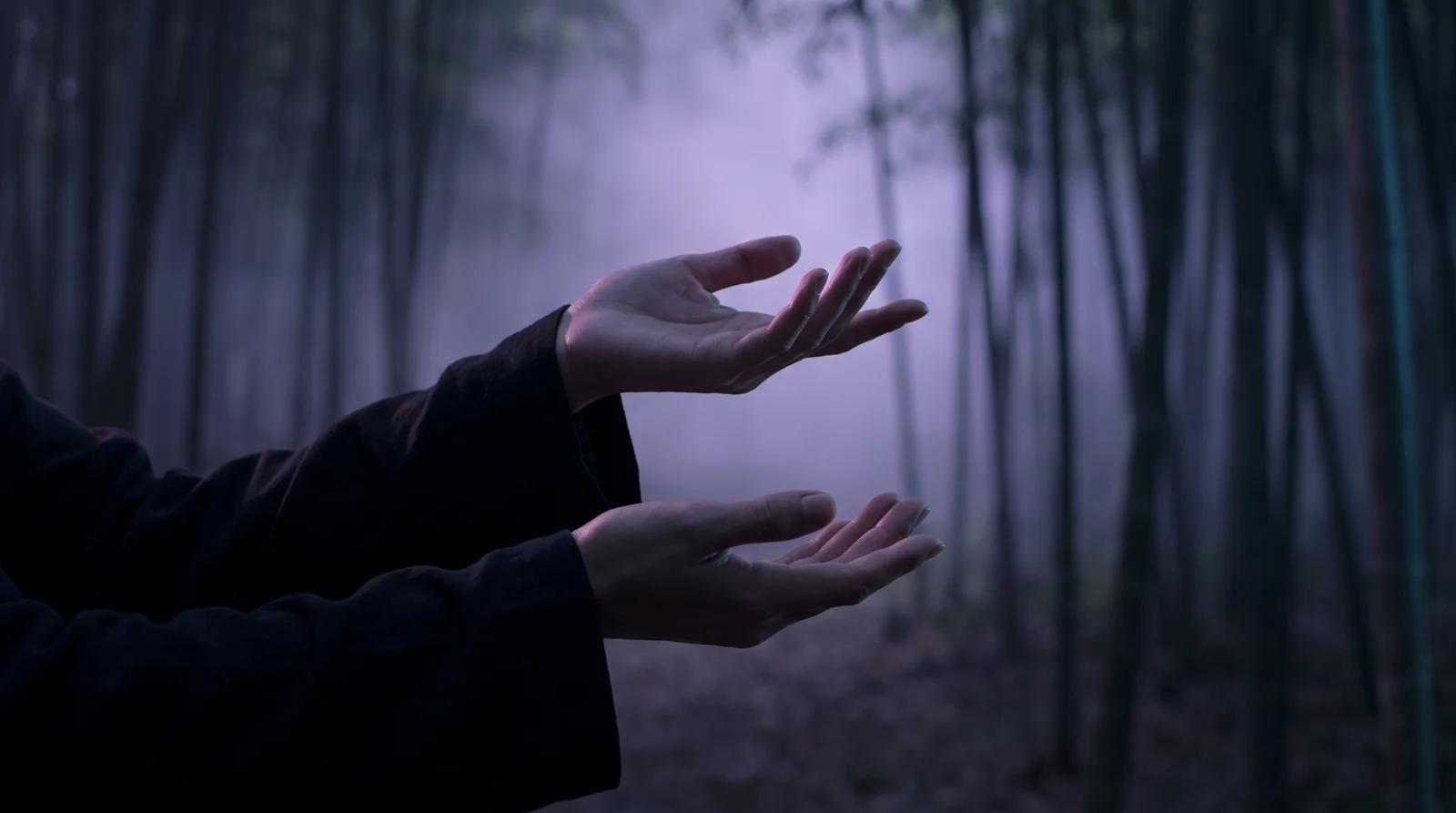
In the parks of Shanghai, the day begins with slowness. Before the traffic finds its voice, people gather under the plane trees and begin to move as if underwater: arms rising as the breath rises, sinking as it sinks, knees soft, faces unhurried. Some are in their eighties. Some hold teacups. My grandmother did this every morning of her life that I knew her, and when I once asked what she was doing, she said she was listening to her body with her hands.
That is as good a definition of qigong as any I have found since. The word joins qi, often translated as vital energy or simply breath, with gong, meaning skill earned through practice. You do not need to settle the metaphysics to begin. Treat qi as a poetic name for the felt sense of the body, warmth, tingling, weight, aliveness, and qigong becomes something plain: the skill of moving, breathing and paying attention at the same time, slowly.
What qigong is, practically speaking
A qigong practice braids three threads. The first is posture and movement: simple, repeated shapes, standing or seated, none requiring flexibility or strength. The second is breath: slow, low and unforced, usually settling into the belly. The third is attention: the mind rests inside the movement, following the hands the way eyes follow a fish in a pond. When the three threads align, even for a minute, something in the body audibly quiets, like a room after a fan switches off.
Qigong is a cousin of taijiquan, and the family resemblance is obvious, but qigong is the simpler relative. There are no long choreographies to memorize. A complete practice can be one movement, repeated with care. This is why it suits beginners, older bodies, tired bodies, and anyone whose mind refuses to sit still on a cushion: the movement gives attention a handrail.
She said she was listening to her body with her hands.
What the research says
Modern studies have followed qigong into the laboratory, and the results, while early, point in an encouraging direction. A systematic review and meta-analysis of randomized controlled trials in healthy adults found that qigong exercise reduced stress and anxiety compared with waiting-list controls (Wang et al., 2014, BMC Complementary and Alternative Medicine). The authors are properly cautious, calling for larger and better trials, and it is fair to hold the evidence lightly. But the direction agrees with what any park in China demonstrates at scale: slow movement wedded to slow breath is one of the most durable calming technologies humans have kept.
Mechanically, nothing exotic is required to explain it. Slow diaphragmatic breathing nudges the nervous system toward its rest state. Gentle rhythmic movement releases the braced stillness of desk-bound muscles. And attention held in the body is attention not available for rumination. Qigong simply does all three at once, wrapped in forms old enough to feel like inheritance rather than homework.
Three movements to begin
Here is a ten-minute sequence drawn from the most common beginner forms. Wear anything, stand anywhere, and let the pace be about half as fast as feels natural. Slower is the technique.
- Lifting water. Stand with feet hip-width, knees soft. As you inhale, let both arms float up in front of you to shoulder height, wrists relaxed, as if resting on rising water. As you exhale, let them sink. Repeat for two to three minutes, letting the breath, not the arms, lead.
- Holding the ball. Bring your palms to face each other in front of your belly, a little apart, as if holding a warm invisible ball. Breathe slowly and simply notice the space between your hands, warmth, tingling, whatever is there. Two minutes. If nothing is there, that is fine; noticing nothing carefully is still noticing.
- Pushing the tide. As you exhale, let both palms press slowly forward at chest height, as if easing a boat from a dock. As you inhale, draw them softly back. The pace of honey. Two to three minutes, then let the arms rest and stand quietly for three breaths.
That is a complete practice. Done daily, it will teach you more than an occasional long class, the way a small pot watered every morning outgrows one flooded monthly.
The beginner's real obstacles
The first obstacle is feeling silly. Standing in a living room moving invisible water is not how most of us were taught adulthood looks. The feeling passes, usually within a week, dissolved by the simple discovery that you feel better afterward. Practice before the household wakes if privacy helps.
The second obstacle is speed. Modern bodies carry a metronome set by elevators and notifications, and the first attempts at qigong slowness can feel like holding a beach ball underwater. When you catch yourself rushing, and you will, smile at it, and let the next movement take twice as long. Some people find it helps to keep something slow in their field of vision while they practice; a few minutes of watching a Feelsy texture drift before you begin can set the tempo the way a metronome sets a pianist's, and the 4-7-8 breathing exercise there makes a fine seated close to a standing practice.
The third obstacle is expectation. Qigong is not dramatic. No sweat, no burn, no before-and-after photograph. Its gifts arrive the way a garden's do, quietly, cumulatively, and mostly noticed in retrospect: the shoulders that no longer live beside the ears, the breath that reaches the belly without being sent, the crowded afternoon survived with something to spare.
An inheritance of slowness
My grandmother never once used the word wellness. She had tea, a courtyard, and ten slow minutes under a tree, and she guarded those minutes the way one guards anything of value. Qigong is that guardianship made physical: a daily, deliberate refusal to let the day set the tempo of the body. Begin with the water-lifting, tomorrow morning, before the phone. Move as if you have time. For those ten minutes, you do.
Feelsy is a wellness product, not medical advice. If stress, anxiety or sleep problems persist, please speak with a qualified professional.
References
- Wang, C. W., Chan, C. H. Y., Ho, R. T. H., et al. (2014). Managing stress and anxiety through qigong exercise in healthy adults: A systematic review and meta-analysis of randomized controlled trials. BMC Complementary and Alternative Medicine, 14, 8.
Frequently Asked Questions
What is qigong exactly?
Qigong joins qi, the felt sense of the body such as warmth or aliveness, with gong, meaning skill earned through practice. Practically, it braids simple repeated posture and movement, slow unforced breath, and attention resting inside the movement.
Does qigong actually help with stress and anxiety?
A systematic review and meta-analysis of randomized controlled trials in healthy adults found that qigong exercise reduced stress and anxiety compared with waiting-list controls (Wang et al., 2014). The authors call for larger trials, but the direction agrees with centuries of practice.
How is qigong different from tai chi?
Qigong is a cousin of taijiquan but is the simpler relative, with no long choreographies to memorize. A complete qigong practice can be one movement repeated with care, which makes it suit beginners, older bodies and tired bodies.
What are some beginner qigong movements to try?
The article describes three: lifting water, where the arms float up and sink with the breath; holding the ball, where the palms face each other as if cradling warmth; and pushing the tide, where the palms press forward and draw back slowly. Each is done for two to three minutes as part of a ten-minute sequence.
What are the biggest obstacles beginners face with qigong?
The first is feeling silly moving invisible water, which usually passes within a week. The second is fighting the urge to rush, since modern bodies are used to a faster pace. The third is expecting drama, when qigong's benefits actually arrive quietly and cumulatively, like a garden.
About the author
Contributing writer
Mei grew up in Shanghai around tea that could not be hurried and grandmothers who considered stillness a skill. She writes about slow hands and sensory ritual: tea, calligraphy, qigong, and the quiet crafts that taught the world how to pay attention.
Feel it for yourself.
Feelsy turns reading about calm into practising it. Two minutes of a slow texture is often the whole difference.


Related reading
 Ancient Wisdom
Walking Meditation: The Art of Going Nowhere Slowly
Walking meditation turns an ordinary walk into practice. How kinhin works, what research says about mindful walking, and a simple way to begin today.
 Breath & Body
Breathing Exercises for Anxiety: From Pranayama to 4-7-8
Breath is the remote control of your nervous system. Here is what slow breathing does, three techniques with steps, and when not to force it.
 Breath & Body
Body Scan Meditation: A Guided Tour of Your Own Weight
Learn how to do a body scan meditation step by step: what it is, why moving attention through the body calms the mind, and how to practise it tonight.
 Breath & BodyNew
Do Cold Showers Actually Work? A Skeptic Reads the Evidence
Cold showers are pitched as a cure for everything from low energy to weak character. Here's what the actual research says, and how to try one without the cult.
 Breath & BodyNew
Dopamine Detox: What It Gets Right and What It Gets Wrong
Dopamine detox promises a factory reset for your distracted brain. Here's what the neuroscience actually says, what helps, and what's just rebranded boredom.
 Breath & Body
How to Stop Overthinking: Quieting a Mind That Will Not Move On
Why overthinking loops and how to interrupt it: what rumination research shows, why you cannot argue with a spiral, and gentler ways to change the channel.