Tea Meditation: The Slow Ritual of Gongfu Cha
How to turn tea into meditation: the Chinese gongfu tea ritual, why warm slow ritual calms the nervous system, and a ten-minute practice for any mug.
By Mei Lin
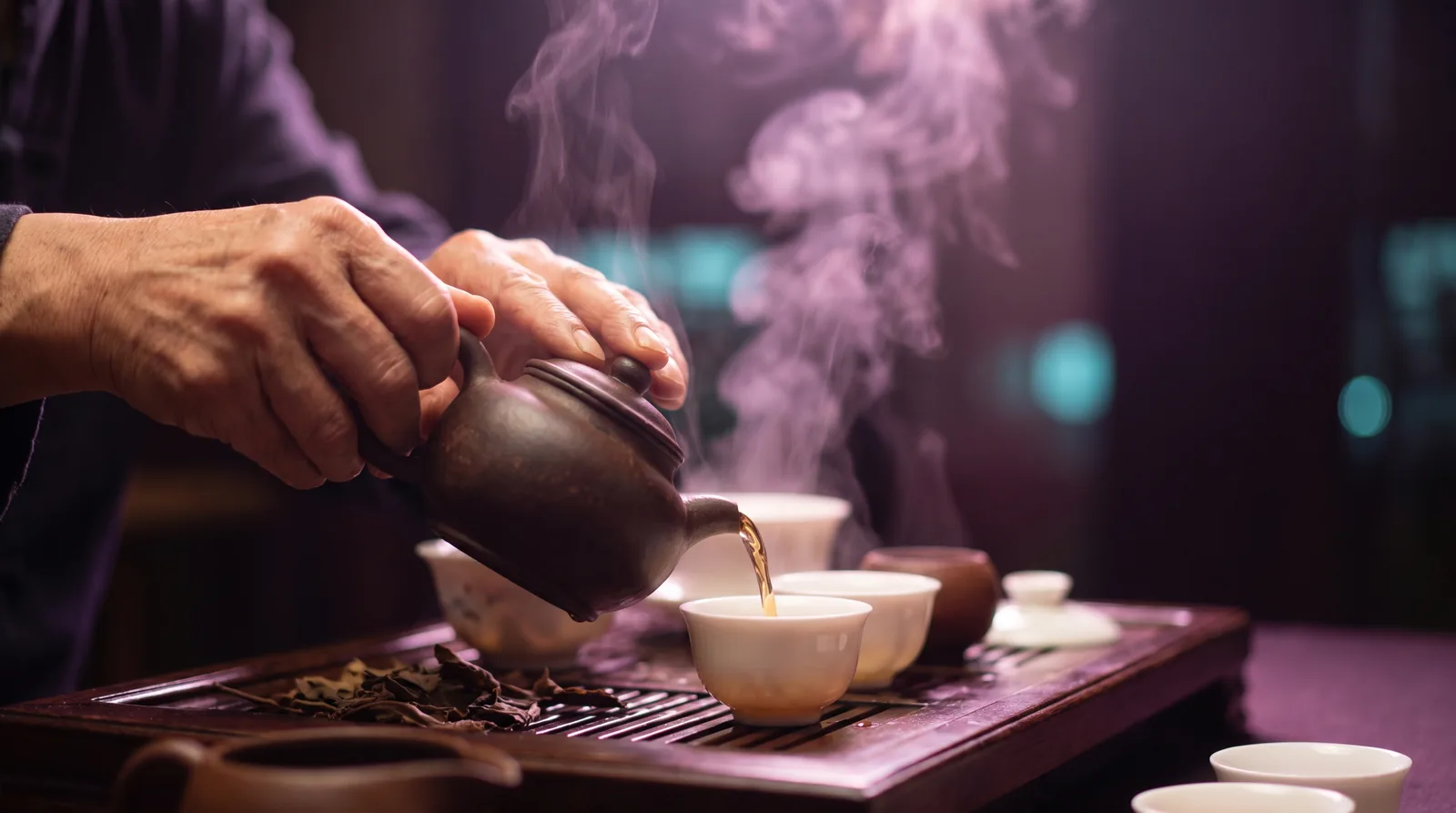
My grandfather drank tea from a tall glass jar with a screw lid, the kind that once held preserved plums. Leaves in the bottom, hot water on top, all day long. But on Sunday afternoons the jar stayed on its shelf, and the tray came out instead: a clay pot the size of a small orange, cups shallow as soup spoons, and an hour in which nothing was allowed to hurry. He called it, without ceremony, sitting with tea. I understood years later that I had been watching a meditation practice conducted under another name, the way so much Chinese contemplation travels in plain clothes.
What he was doing has a proper name: gongfu cha, the way of making tea with skill and time. The West often hears about Japanese tea ceremony, with its architecture and its choreography. Gongfu cha is the homelier Chinese cousin: a kitchen-table practice, improvised daily in millions of homes, that turns the most ordinary act, making a hot drink, into a complete exercise in attention. You do not need the equipment, the leaves, or a single word of theory to borrow what it knows.
What gongfu cha actually is
The method is simple to describe. A small pot is filled generously with leaves, then infused many times, each steeping lasting seconds rather than minutes. The first cup is bright and cautious; the third has opened like a door; the seventh is a memory of the leaf, thin and sweet. Because the pot is small and the infusions short, the maker is never idle. Water is always heating, pouring, resting. The hands are occupied the entire time in small, exact, unhurried movements.
That busyness is the design. Like calligraphy's brushstrokes or qigong's floating arms, the ritual gives attention a handrail. There is water to listen to as it approaches the boil, a pot to warm, leaves to smell as they wake, a stream to pour steadily, always one thing, never nothing, never two things. A wandering mind has nowhere productive to go, so it keeps returning to the tray. Tea people sometimes say the first infusion is for the thirst and the rest are for the mind, which matches my experience exactly.
Always one thing, never nothing, never two things.
Why a tea ritual calms
Some of tea's calm is chemistry. Tea leaves carry L-theanine, an amino acid found almost nowhere else in the diet, and studies of it have reported increased alpha-wave activity in the brain, the rhythm associated with relaxed, alert states, in the period after intake (Nobre et al., 2008, Asia Pacific Journal of Clinical Nutrition). Tea also carries caffeine, of course, which is why the traditional pairing is often described as calm alertness rather than sedation: a good state for an afternoon, a reasonable one for early evening, and worth timing thoughtfully if sleep is fragile.
But chemistry is the smaller half. The larger half is the ritual body: warm porcelain in the palms, steam on the face, the fixed sequence that asks for no decisions. Ritual removes the tax of choosing, warmth is an ancient safety signal, and slow repeated hand movements settle breath without any instruction to breathe. My grandmother, who had her own opinions about my grandfather's hour with the tray, still defended it in one sentence: a person pouring tea slowly cannot also be worrying properly. The research on ritual and attention is younger than she was, but it is catching up to her.
A ten-minute tea meditation
Here is a version that needs one mug, any tea, and no equipment. The instructions look plain; the practice is in the pace. Move at half your kitchen speed throughout.
- Listen to the water. Put it on to heat and stay with it, eyes soft, following the sound as it climbs from silence to rumble. This is the sit-down bell of the practice.
- Warm the cup. Pour a little hot water in, turn it slowly in your hands, pour it away. Feel the heat arrive in your palms and stay there a breath longer than necessary.
- Watch the leaves meet the water. Pour, then actually look: the uncurling, the color climbing down like dusk. Give it one unhurried minute; the steeping is the meditation, not the waiting.
- Drink in three sips. First sip for temperature, second for taste, third for the aftertaste that lives at the back of the tongue. Set the cup down silently between each.
- Pour again. The second cup of the same leaves never tastes like the first. Finding the difference is the day's exercise in attention.
A ritual with no equipment at all
Some evenings the kettle itself feels like too much apparatus, and for those I keep a smaller version: hands around any warm cup, eyes resting on something that moves at steam's pace. I often let one of Feelsy's slow amber textures drift on the screen while the tea cools, the way steam drifts, and let autoplay pour the next scene the way a good host pours the next cup, unasked. The 4-7-8 breathing exercise in the app makes a fine third infusion on nights when the tea has to be herbal and the day has to be put down.
The tray, the jar, the mug, the screen: the vessel was never the point. What my grandfather guarded on those Sunday afternoons was tempo, an hour moving at the speed of steeping. Tea is simply the oldest excuse we have for sitting still while holding something warm. It remains one of the best.
Feelsy is a wellness product, not medical advice. If stress, anxiety or sleep problems persist, please speak with a qualified professional.
References
- Nobre, A. C., Rao, A., & Owen, G. N. (2008). L-theanine, a natural constituent in tea, and its effect on mental state. Asia Pacific Journal of Clinical Nutrition, 17(S1), 167–168.
Frequently Asked Questions
What is gongfu cha?
Gongfu cha means the way of making tea with skill and time, a Chinese tea ritual in which a small pot of leaves is infused many times, each steeping lasting only seconds. It is a homelier, everyday cousin of Japanese tea ceremony, turning the ordinary act of making a hot drink into a complete exercise in attention.
Why does making tea slowly help you relax?
The ritual keeps the hands occupied the entire time in small, exact, unhurried movements, giving a wandering mind a handrail to return to rather than nowhere productive to go. Warm porcelain, steam, and a fixed sequence that requires no decisions also settle the breath and remove the mental tax of choosing.
Does tea itself have a calming chemical effect?
Tea leaves contain L-theanine, an amino acid rarely found elsewhere in the diet, and studies have reported it increases alpha-wave brain activity, the rhythm associated with relaxed, alert states. Tea also contains caffeine, so the traditional effect is described as calm alertness rather than sedation, which is worth timing carefully if sleep is easily disturbed.
How do you do a simple tea meditation at home?
You can use one mug and any tea: listen to the water heating, warm the cup slowly in your hands, watch the leaves unfurl as they meet the water for a full unhurried minute, then drink in three slow sips for temperature, taste and aftertaste. Pouring a second cup and noticing how it differs from the first becomes the day's exercise in attention.
Can you do a version of this ritual without any tea equipment?
Yes, the article describes a simpler version using just hands around any warm cup while resting the eyes on something moving at a steam-like pace, such as a slow drifting screen texture. A round of 4-7-8 breathing can serve as a fitting close on evenings when even the kettle feels like too much apparatus.
About the author
Contributing writer
Mei grew up in Shanghai around tea that could not be hurried and grandmothers who considered stillness a skill. She writes about slow hands and sensory ritual: tea, calligraphy, qigong, and the quiet crafts that taught the world how to pay attention.
Feel it for yourself.
Feelsy turns reading about calm into practising it. Two minutes of a slow texture is often the whole difference.


Related reading
 Ancient Wisdom
Chado: Meditation Disguised as Hospitality
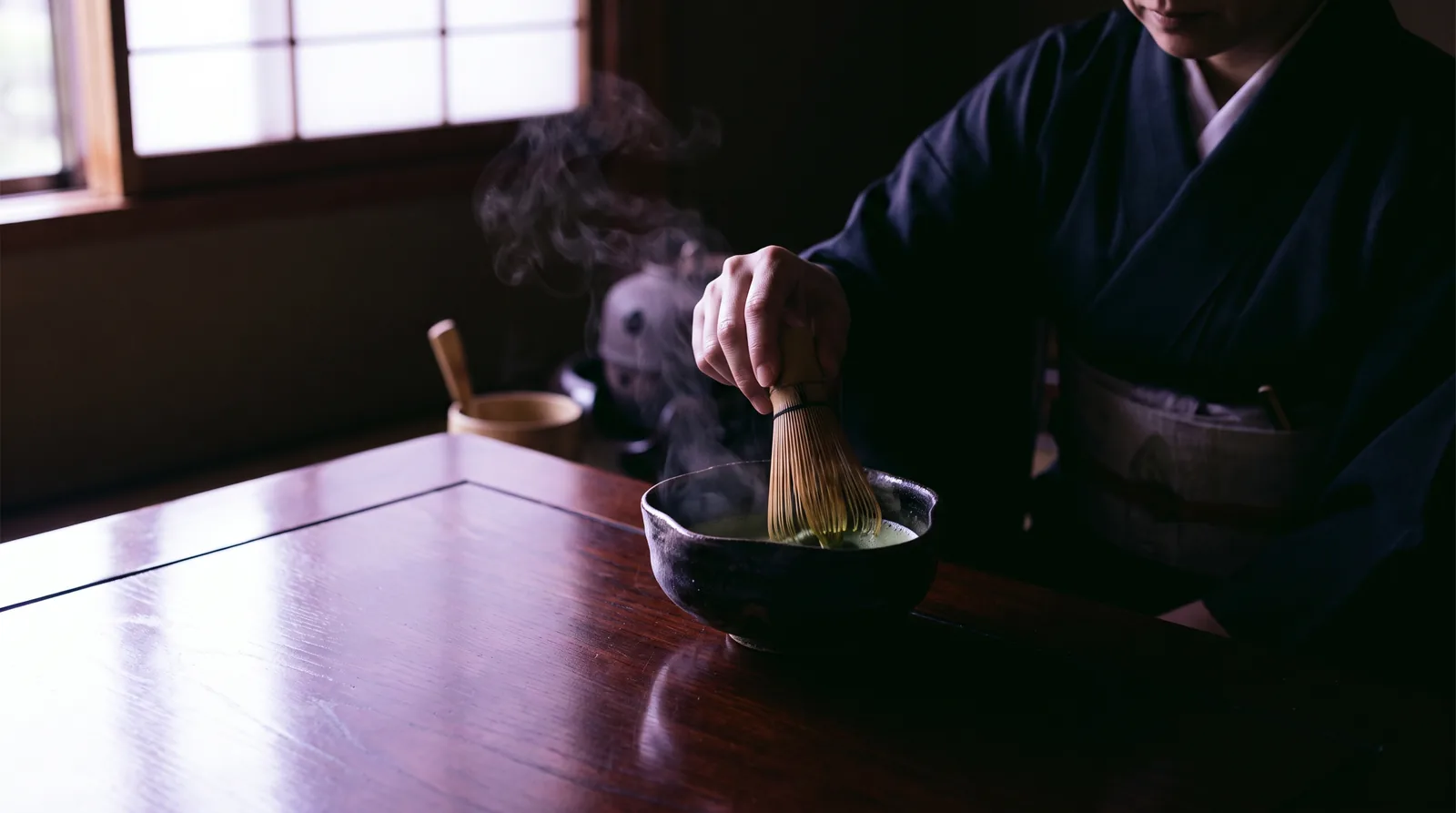
The Japanese tea ceremony choreographs an hour of complete presence around a single bowl of tea. What chado teaches about ritual, slowness and ichigo ichie.
 Breath & Body
Qigong for Beginners: Slow Hands, Quiet Mind
A gentle qigong guide for beginners: what qigong is, what research says about stress and anxiety, and three simple movements you can practice in ten minutes.
 Visual Meditation
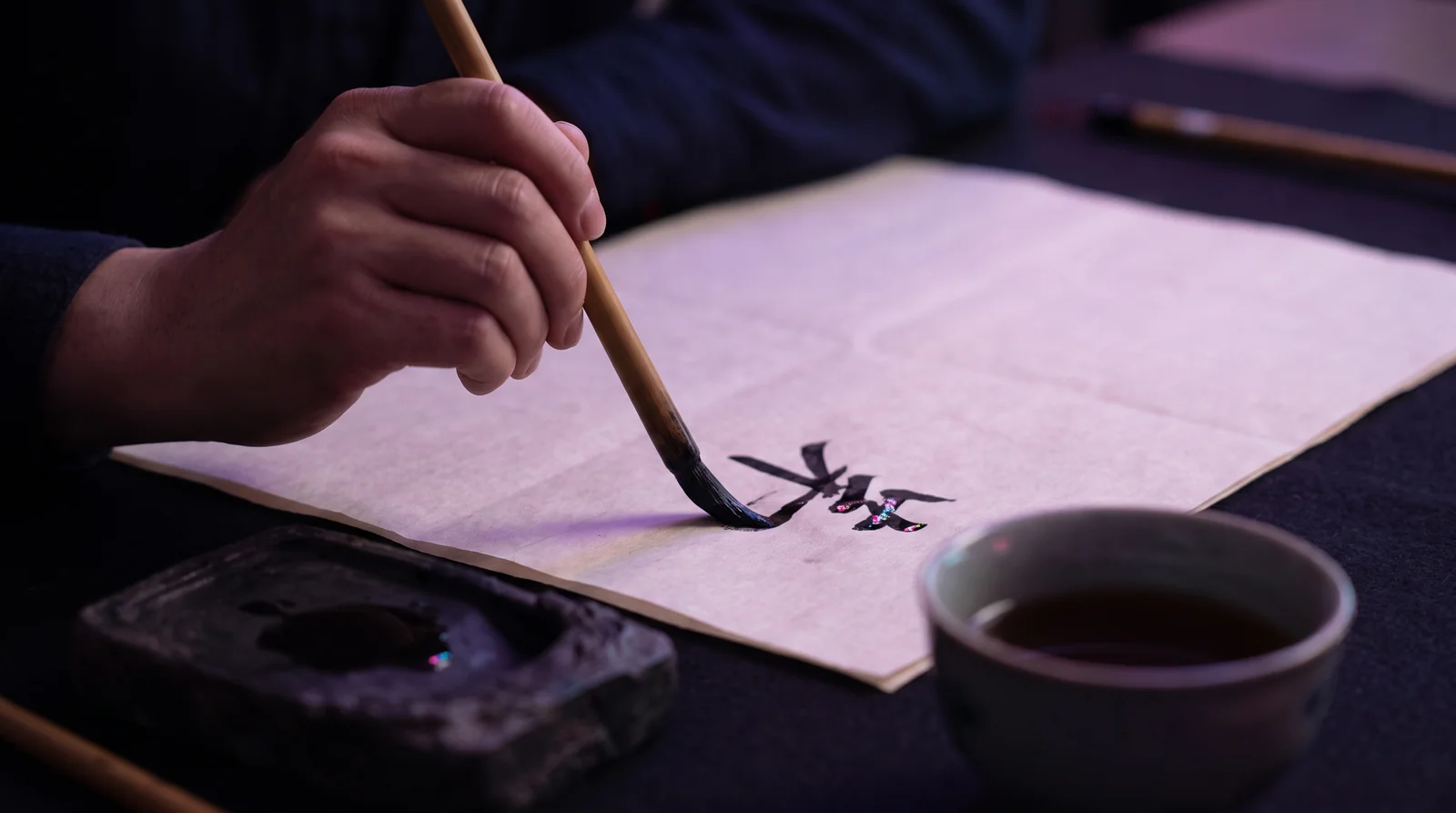
Calligraphy as Meditation: Why Slow Writing Calms a Fast Mind
Why calligraphy calms a racing mind: the science of slow writing and attention, and how to practice mindful handwriting with any pen and ten quiet minutes.
 Ancient Wisdom
Döstädning: The Gentle Swedish Art of Death Cleaning
What Swedish death cleaning really means: the calm philosophy of döstädning, how it differs from ordinary decluttering, and how to begin at any age.
 Ancient Wisdom
How to Start a Gratitude Journal You Will Actually Keep
How to start a gratitude journal that actually helps: what the research found, why most lists go stale, and the very old art of counting blessings.
 Ancient Wisdom
Haiku as Meditation: Seventeen Syllables of Attention
How writing haiku trains attention: why the tiny form works like meditation, what noticing small moments does for wellbeing, and how to write your first.