Knitting as Meditation: Why Repeating Stitches Calms the Mind
Why knitting soothes anxiety: rhythm, repetition and the quiet focus of busy hands, what knitters report about calm, and how to begin the practice.
By Mei Lin
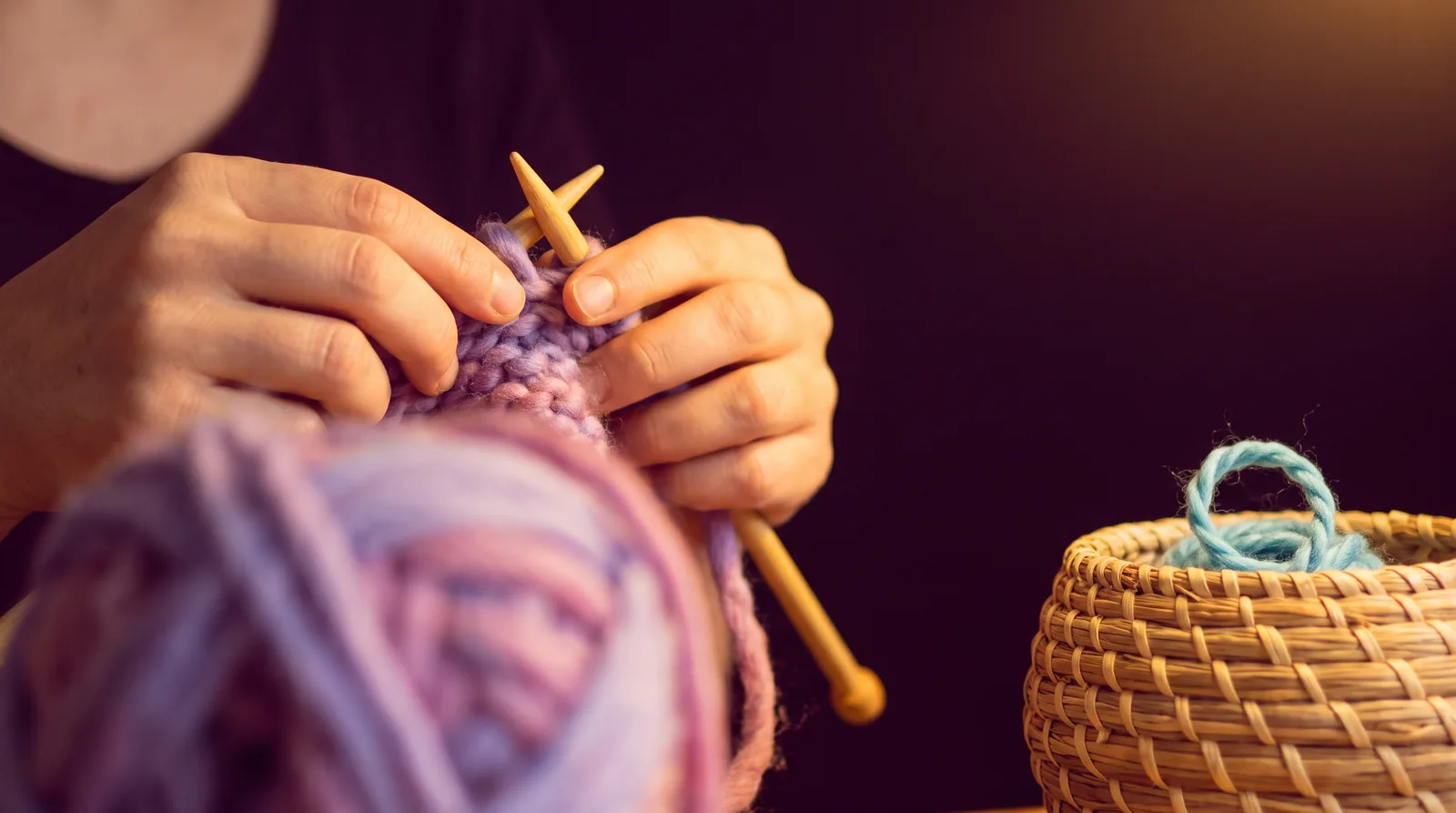
The sound I associate most with patience is the small wooden click of my grandmother's knitting needles. She knitted through every winter of my childhood, through radio broadcasts and family arguments and long Shanghai evenings, and she never once seemed to be working. The sweater grew in her lap the way frost grows on a window: continuously, without visible effort. When I asked her once what she thought about while knitting, she looked surprised by the question. Nothing, she said, and then corrected herself. The next stitch. It took me thirty years to understand that she had given me a complete description of meditation.
The rhythm that quiets
Knitting is built from one small gesture repeated thousands of times: loop, wrap, pull through, slide. The hands cycle, the yarn feeds, the row accumulates. This rhythm is the heart of the practice, and it behaves in the body the way other repeated gestures do, the way kneading dough behaves, or turning mala beads, or the slow circling of a qigong form. A predictable, repeated movement gives the nervous system a steady beat to organize around. There is nothing to decide, nothing to brace for. The next moment will be almost exactly like this one. For an anxious mind, which spends its days rehearsing unpredictable futures, that sameness is not boring. It is the relief.
The hands matter here as much as the rhythm. Anxiety is restless; it wants to move, check, fidget, do. Knitting does not fight this energy, it employs it. The hands are fully, gently occupied, which quiets the body's need for motion, and because the work sits in the hands rather than the head, the mind is left with a soft focus it can actually sustain: the yarn's tension, the needle's angle, the count to the end of the row. Attention has somewhere to live that is not the argument from this afternoon.
The next moment will be almost exactly like this one. For an anxious mind, that sameness is not boring. It is the relief.
What knitters themselves report
The calm of knitting is not just family folklore. In one of the largest studies of the craft, an international survey of more than 3,500 knitters published in the British Journal of Occupational Therapy, respondents overwhelmingly described knitting as calming and stress relieving, and those who knitted more frequently reported greater calm and happiness, along with improved concentration and a sense of accomplishment (Riley, Corkhill and Morris, 2013). A survey records what people say about themselves rather than what a laboratory measures, so it should be read modestly. But the pattern it found is the same one knitters have described for generations: the craft steadies the mood of the person practicing it, and the steadiness grows with practice.
The survey's authors also noted something my grandmother could have told them: knitting carries its calm into company. It is a rare contemplative practice that can be done in a circle of friends, on a train, in a waiting room, without withdrawing from the world at all.
Why a finished row matters
Meditation asks you to sit with nothing to show for it, which is part of its power and part of why so many people cannot stay with it. Knitting offers a gentler bargain: the same repetition, the same settled breath, and at the end of the evening, six more centimeters of scarf. The growing fabric is evidence that the quiet time happened, a record of attention you can hold. In a culture that struggles to sit still without guilt, this may be knitting's kindest feature. The stillness is disguised as productivity, and so the restless conscience permits it.
Beginning badly, on purpose
If you want knitting as a calming practice rather than a craft achievement, begin small and expect to be clumsy. The meditative quality lives in the rhythm, and rhythm only arrives after the fingers stop negotiating every stitch. A few ways to shorten the negotiation:
- Start with thick yarn and large needles, which are forgiving and quick, and a garter stitch scarf, which is one stitch repeated forever. Forever is the point.
- Practice in short, regular sittings, twenty minutes in the evening, rather than marathon sessions that cramp the hands and the enthusiasm.
- Let the mistakes stay. A dropped stitch in a first scarf is a diary entry, not a failure. Perfectionism is the one thing that can make knitting stressful.
- Notice the moment the rhythm takes over, when the hands continue without instruction. That is the threshold of the practice; from there, treat the row like a breath: begin it, follow it, finish it, begin again.
On evenings when my hands are empty, on a train or in a queue, I sometimes give my eyes what knitting gives my fingers: one of Feelsy's slow looping textures, the visual equivalent of a row of even stitches, repetition without demand. But the needles remain the fuller practice, because they add the one thing a screen cannot: at the end, something warm exists that did not exist before.
The next stitch
My grandmother's sweaters have mostly worn out now, but her answer has not. Nothing. The next stitch. Every contemplative tradition I have studied is, in the end, a technology for arriving at that answer: attention resting on the one small thing in front of it, the future reduced to something the hands can hold. Knitting gets there with wool. It is meditation for people who need their stillness to click softly and produce a scarf, and it has been quietly teaching patience, one loop at a time, for centuries.
Feelsy is a wellness product, not medical advice. If stress, anxiety or sleep problems persist, please speak with a qualified professional.
References
- Riley, J., Corkhill, B., & Morris, C. (2013). The benefits of knitting for personal and social wellbeing in adulthood: Findings from an international survey. British Journal of Occupational Therapy, 76(2), 50-57.
Frequently Asked Questions
Is knitting good for anxiety?
Many people find it genuinely calming. Knitting occupies restless hands with a predictable, repeated rhythm, which gives the nervous system a steady beat to settle around and gives attention a soft, sustainable focus. In a large international survey of knitters published in the British Journal of Occupational Therapy, respondents overwhelmingly described knitting as calming and stress relieving. It is a wellness habit rather than a treatment, and persistent anxiety deserves professional care.
Why is knitting considered meditative?
Because it is built from one small gesture repeated thousands of times, and repetition is the engine of most contemplative practice. Like kneading dough or turning mala beads, the cycling movement quiets the body's need for motion while the mind rests on the yarn, the needle and the count. Attention settles on the next stitch the way it settles on the next breath in seated meditation.
What should a beginner knit first for relaxation?
A garter stitch scarf with thick yarn and large needles. Thick yarn is forgiving and grows quickly, and garter stitch is a single stitch repeated forever, which is exactly what you want: the meditative rhythm only arrives once your fingers stop negotiating every stitch. Short, regular sittings of about twenty minutes work better than long sessions, and mistakes should be left in rather than fussed over.
How is knitting different from meditation?
The inner mechanics are similar: repetition, settled breathing and a single point of soft focus. The difference is that knitting produces something. At the end of the evening there are more centimeters of scarf, a visible record that the quiet time happened. For people who find it hard to sit still with nothing to show for it, that gentle productivity is often what lets the stillness happen at all.
Does knitting more often make you calmer?
The international survey of more than 3,500 knitters published in the British Journal of Occupational Therapy found that people who knitted more frequently reported greater calm and happiness, along with improved concentration and a sense of accomplishment. As self-reported evidence it should be read modestly, but it matches what knitters have described for generations: the steadiness grows with practice.
About the author
Contributing writer
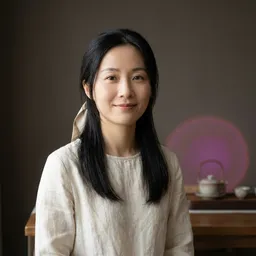
Mei grew up in Shanghai around tea that could not be hurried and grandmothers who considered stillness a skill. She writes about slow hands and sensory ritual: tea, calligraphy, qigong, and the quiet crafts that taught the world how to pay attention.
Feel it for yourself.
Feelsy turns reading about calm into practising it. Two minutes of a slow texture is often the whole difference.


Related reading
 Breath & Body
Kneading Dough: Why Baking Bread Quiets the Mind
Baking as therapy is real: kneading dough gives restless hands rhythm, warmth and patience. Why bread calms the mind, plus a simple kneading meditation.
 Visual Meditation
Colouring In: Why Adult Colouring Books Quiet an Anxious Mind
Why colouring calms adult minds: what research on mandala colouring and anxiety found, and how to turn ten minutes with pencils into a visual meditation.
 Breath & Body
Fidgeting Isn't a Bad Habit: The Case for Stimming
Fidget toys, foot-tapping, doodling: focus problem or focus tool? What research on ADHD hyperactivity and stimming actually says about the wisdom of restless hands.
 Breath & BodyNew
Do Cold Showers Actually Work? A Skeptic Reads the Evidence
Cold showers are pitched as a cure for everything from low energy to weak character. Here's what the actual research says, and how to try one without the cult.
 Breath & BodyNew
Dopamine Detox: What It Gets Right and What It Gets Wrong
Dopamine detox promises a factory reset for your distracted brain. Here's what the neuroscience actually says, what helps, and what's just rebranded boredom.
 Breath & Body
How to Stop Overthinking: Quieting a Mind That Will Not Move On
Why overthinking loops and how to interrupt it: what rumination research shows, why you cannot argue with a spiral, and gentler ways to change the channel.