Ma: The Japanese Art of Negative Space
What is ma? The Japanese concept of negative space explained: why pauses, silence and empty room calm the mind, and how to practise ma in a crowded day.
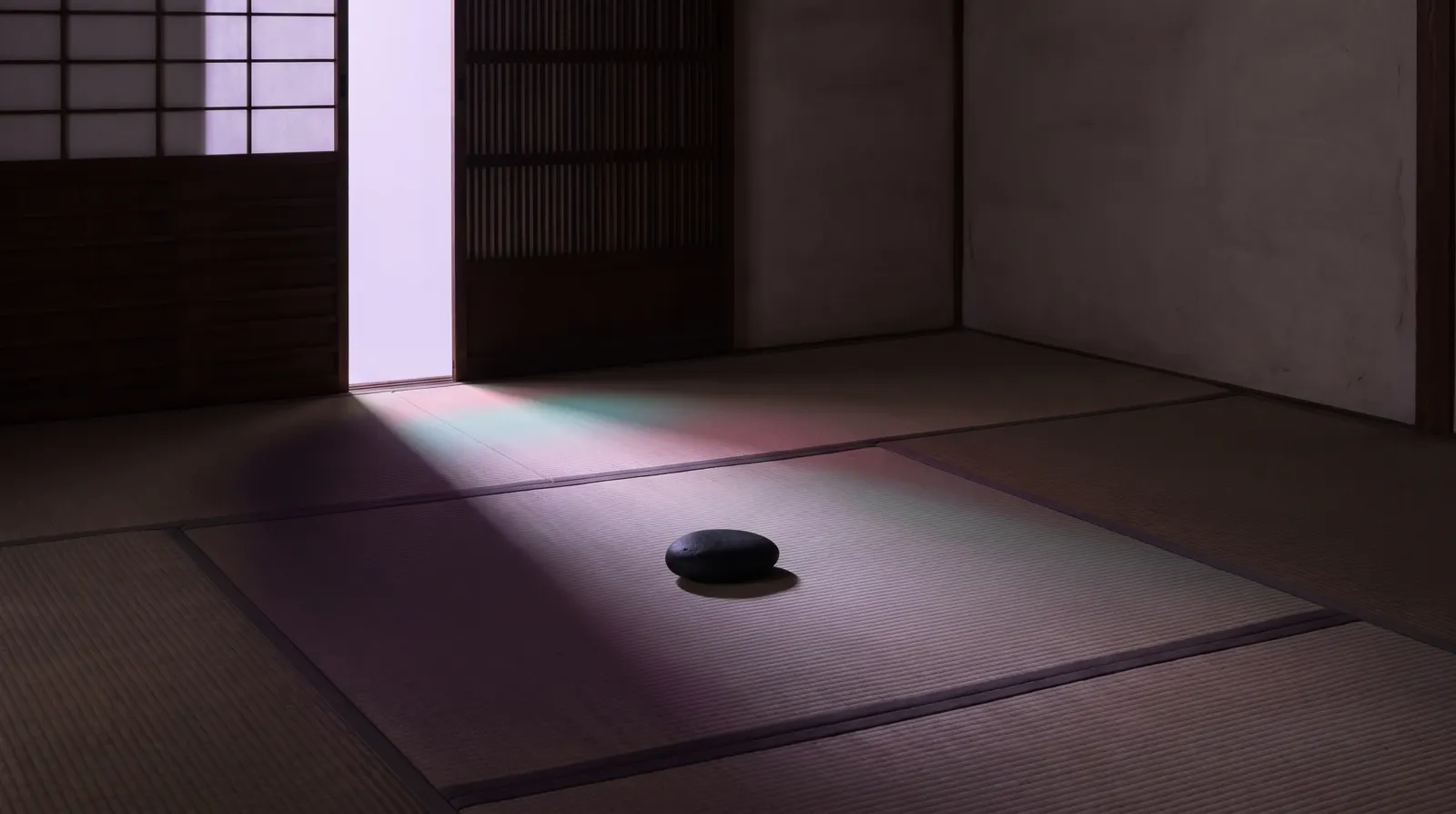
There is a moment in a good conversation that most of us have been taught to fear: the pause. Someone finishes speaking, and for two seconds nothing happens. In much of the West we treat that gap as a malfunction and rush to fill it. In Japanese aesthetics the gap has a name, a long history and a place of honour. It is called ma, usually translated as negative space, interval or pause, and it names a conviction that runs through Japanese art, architecture, music and manners alike: the empty part is not the absence of the thing. The empty part is part of the thing.
The written character for ma is its own small poem: the gate radical with the sun inside it, light showing through the gap between gate doors. Not the gate, not the light, but the opening that lets one meet the other. That is the space we are talking about, and once you have learned to see it, you find it everywhere, mostly by noticing where it has gone missing.
The space between the notes
Ma is easiest to see in the arts, where Japanese tradition has always given emptiness a job. In ink painting, the unpainted paper is not leftover; it is fog, distance, morning, the sea. A few dark strokes of mountain derive their whole force from the white they float in. In the traditional room, space is kept deliberately sparse, one scroll, one flower, floor left open, so that each thing has room to be seen; the room breathes out where a crowded room holds its breath. In music and theatre, the timing between sounds and gestures carries as much meaning as the sounds themselves. Ask a musician of any tradition and they will tell you the same: the silence between the notes is where the music lives.
Even Japanese conversation honours the interval. A thoughtful pause before replying signals that the words were heavy enough to need setting down carefully, not that the speaker has run out of things to say. The gap is respect. The gap is attention. The gap, crucially, is not empty at all; it is where the last thing lands and the next thing gathers.
What the pause does to the body
This is where an old aesthetic idea turns out to describe the nervous system rather well. A study of music and the cardiovascular system found something charming: researchers played people passages of music of varying tempo and measured breathing, heart rate and blood pressure, and while faster music raised arousal and slower music lowered it, the deepest relaxation of the whole experiment arrived during two-minute silent pauses inserted between tracks, when heart rate and blood pressure fell below where they had started (Bernardi, Porta & Sleight, 2006, Heart). Silence after sound, the researchers noted, seemed to relax listeners more than continuous soothing music itself. Ma, in other words, is measurable: the interval is not the absence of the experience but the moment the body actually receives it.
Anyone who has finished a piece of music, a chapter or a long day and sat quite still for a moment before moving knows this from the inside. The pause is where the thing you just did becomes something that happened to you. Skip the pause, and experience piles up unmetabolised, which is a fair description of how most modern days feel by ten in the evening.
The gap is not where the experience stops; the gap is where the experience arrives.
A culture allergic to gaps
It would be hard to design a way of life more hostile to ma than the one most of us are running. Every silence has an autoplaying next episode. Every queue has a phone. Every gap in the calendar is a slot, and a slot exists to be filled; we even book our leisure back to back, arriving at the massage still answering messages from the meeting. The result is days with no joints in them, one long fused bone of stimulation from alarm to pillow. And then we wonder why nothing feels like it happened, why a week of experiences leaves so little residue. Nothing had anywhere to land.
The lesson of ma is not that we need less life. It is that the events of a life need intervals between them to mean anything, the way words need the spaces or the sentence is unreadable. Restoring the gaps is not subtraction. It is punctuation.
Practising ma in a crowded day
Fortunately, negative space is the cheapest renovation there is. Some places to begin:
- Put one breath between tasks. When a call ends, sit back for a single slow exhale before touching the keyboard: a one-breath ma, a joint between the bones of the day.
- Leave the silence after music. When an album or playlist ends, let the room stay quiet for two minutes before the next sound begins; that pause, the research suggests, is the most relaxing track of all.
- Keep one surface empty. A single clear table or windowsill in a full flat is a visual rest the eye returns to all day, the unpainted paper in the room's ink painting.
- Stop filling conversational pauses. Let the two seconds stand. What the other person says after a respected silence is usually the true sentence.
The gate and the light
I have come to think of ma as the most transferable idea in Japanese aesthetics, because it asks for nothing except restraint. You do not need to buy the scroll or learn the tea ceremony; you need only stop plastering over every gap. Even rest can be crowded, which is why the screens we unwind with matter: an evening wind-down works better when the visual field is mostly quiet, one slow shape moving in a dark field, in the way Feelsy's textures leave generous darkness around their colour, rather than another feed with no spaces between the words. Guard the intervals: the pause after the music, the breath between tasks, the empty sill, the silence before your reply. The gate is only a gate because of its opening. The day, too, needs somewhere for the light to get in.
Feelsy is a wellness product, not medical advice. If stress, anxiety or sleep problems persist, please speak with a qualified professional.
References
- Bernardi, L., Porta, C., & Sleight, P. (2006). Cardiovascular, cerebrovascular, and respiratory changes induced by different types of music in musicians and non-musicians: the importance of silence. Heart, 92(4), 445–452.
Frequently Asked Questions
What does ma mean in Japanese?
Ma is usually translated as negative space, interval, gap or pause. It names the conviction, running through Japanese art, architecture, music and conversation, that the empty part is an active part of the whole rather than an absence. The written character shows light coming through the opening between gate doors: not the gate, not the light, but the gap that lets one meet the other.
How is ma used in Japanese art and design?
Japanese tradition gives emptiness a job. In ink painting, unpainted paper reads as fog, distance or sea, and gives the brushstrokes their force. Traditional rooms are kept deliberately sparse, one scroll, one flower, open floor, so each thing has room to be seen. In music and theatre, the timing between sounds and gestures carries as much meaning as the sounds themselves.
Is there scientific evidence that pauses and silence are relaxing?
There is some. In a study of music and the cardiovascular system, the deepest relaxation researchers measured arrived not during slow, soothing music but during two-minute silent pauses inserted between tracks, when heart rate and blood pressure fell below their starting baseline. Silence after sound appeared to relax listeners more than continuous music itself.
How can I practise ma in daily life?
Restore small intervals rather than adding anything new. Take one slow breath between tasks before starting the next. Let the room stay silent for two minutes when music ends. Keep one surface, a table or windowsill, completely empty as a visual rest. And let conversational pauses stand instead of rushing to fill them; the gap usually improves what follows it.

About the author
Contributing writer
Eleonor writes about contemplative traditions, attention and the cultural history of calm. She has spent two decades collecting the rituals humans use to slow down, from zazen halls to hammams, and translating them for modern, screen-lit lives.
Feel it for yourself.
Feelsy turns reading about calm into practising it. Two minutes of a slow texture is often the whole difference.


Related reading
 ASMR
ASMRThe Benefits of Silence: What Happens When the Sound Stops
Silence is not merely the absence of noise; the body treats it as an event in itself. Here is what research says quiet does for the heart and mind.
 Ancient Wisdom
Wabi-Sabi: The Japanese Art of Finding Calm in Imperfection
What wabi-sabi really means: the Japanese aesthetic of imperfect, impermanent beauty, and how its quiet philosophy softens perfectionism and stress.
 Ancient Wisdom
Niksen: The Dutch Art of Doing Nothing (and Why Your Brain Needs It)
Niksen is the Dutch art of doing nothing: no phone, no goal, no guilt. What idle moments actually do for a busy brain, and how to practise niksen daily.
 Ancient Wisdom
Döstädning: The Gentle Swedish Art of Death Cleaning
What Swedish death cleaning really means: the calm philosophy of döstädning, how it differs from ordinary decluttering, and how to begin at any age.
 Ancient Wisdom
How to Start a Gratitude Journal You Will Actually Keep
How to start a gratitude journal that actually helps: what the research found, why most lists go stale, and the very old art of counting blessings.
 Ancient Wisdom
Haiku as Meditation: Seventeen Syllables of Attention
How writing haiku trains attention: why the tiny form works like meditation, what noticing small moments does for wellbeing, and how to write your first.