Wabi-Sabi: The Japanese Art of Finding Calm in Imperfection
What wabi-sabi really means: the Japanese aesthetic of imperfect, impermanent beauty, and how its quiet philosophy softens perfectionism and stress.
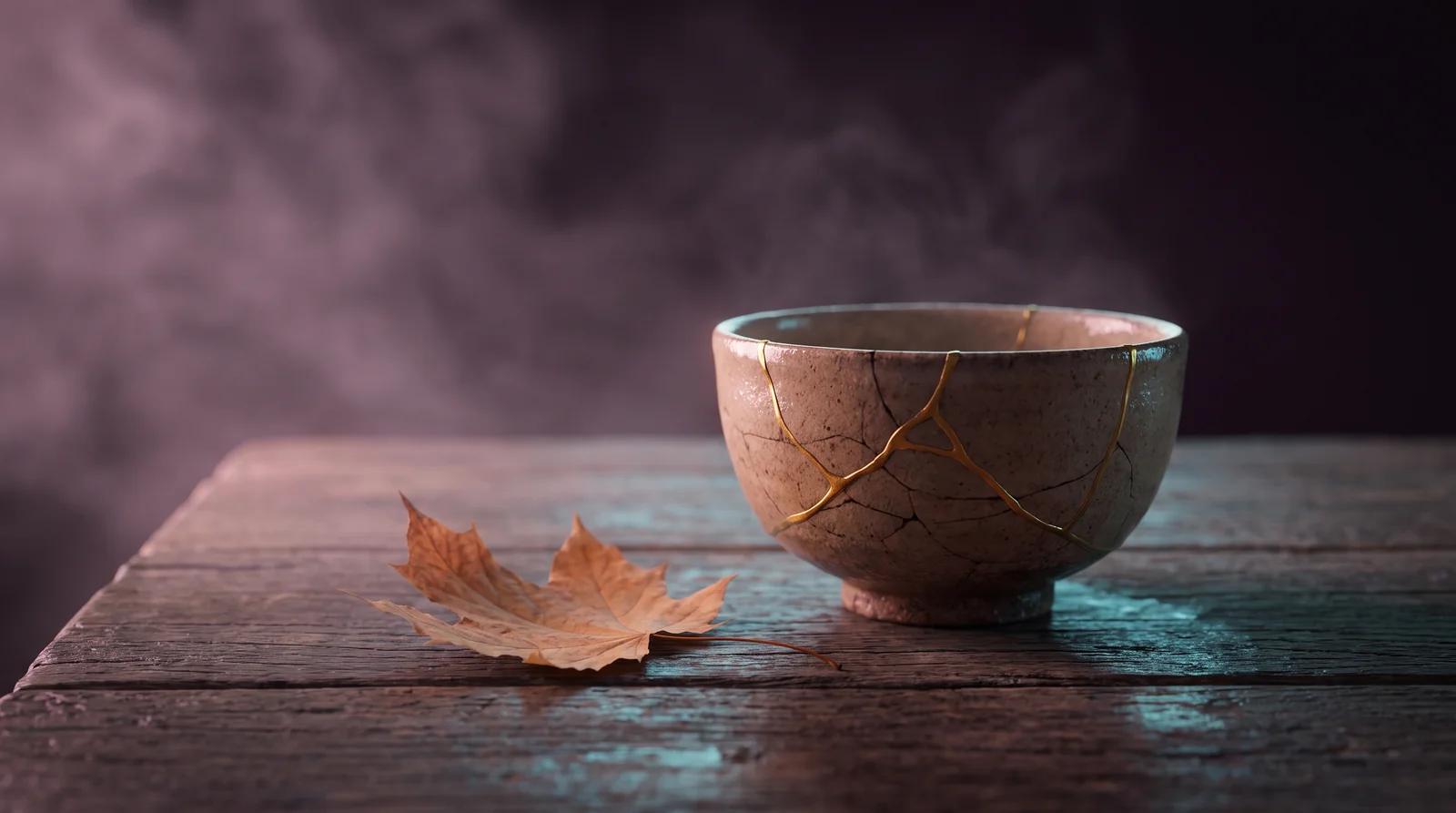
There is a bowl in the Tokyo National Museum that would fail every quality inspection in the modern world. Its glaze is uneven, its rim wanders from the horizontal, and its surface carries the small scars of the kiln like weather on a hillside. It is also, by long consensus, one of the most beautiful objects in Japan. The tradition that learnt to see it that way has a name, wabi-sabi, and it amounts to something rarer than a style: a settled peace treaty with imperfection. In a culture that photographs its breakfast from the flattering angle, that treaty is worth studying.
Wabi-sabi is routinely translated as the beauty of imperfect, impermanent and incomplete things, which is accurate and slightly misleading, in the way a map is accurate about a coastline. The two words arrive with their own weather. Wabi began as the loneliness of living apart from society, the austerity of the hermit's hut, and mellowed over centuries into something like contentment with simplicity: the pleasure of enough. Sabi is the beauty that time confers, the silver of tarnish, the softness of worn stone, the deepening of things that have been used and kept. Put together, they describe a way of seeing in which age, wear and irregularity are not failures of an object but its biography.
A philosophy made of tea
The tradition crystallised, as so much Japanese contemplation did, around tea. In the sixteenth century the tea master Sen no Rikyu turned decisively away from the imported Chinese taste for flawless porcelain and gold ornament, and furnished the tea room with local, rustic, visibly handmade things: bamboo left knotted, walls of rough clay, bowls whose glazes had been allowed to run and pool as the kiln decided. The point was not poverty for its own sake. The point was attention. A perfect surface gives the eye nothing to do; an irregular one invites it to linger, travel and return. Rikyu was, in effect, designing objects for meditation, and he understood that the mind rests more easily on things that do not claim to be finished.
The same insight produced kintsugi, the practice of repairing broken ceramics with lacquer dusted in gold, so that the cracks become bright rivers across the body of the bowl. A repaired bowl is more valued than an unbroken one, because it has a history and admits it. It is difficult to think of a more direct rebuke to our own habit of hiding damage, in our objects and in ourselves.
A perfect surface gives the eye nothing to do; an irregular one invites it to linger.
Why imperfection is restful
It is worth asking why any of this should calm a modern nervous system, and the honest answer begins with what perfectionism does to one. Holding an ideal in mind and measuring the present against it is effortful work, and the measurement never ends: the kitchen is never quite clean enough, the sentence never quite right, the face in the camera never quite the face one hoped for. Psychologists have spent decades documenting the link between perfectionistic striving and anxiety, and one hardly needs the literature; the exhaustion is available first-hand. Wabi-sabi withdraws the ideal. Without a flawless standard hovering behind every object, the gap between how things are and how they ought to be, which is where a great deal of daily stress lives, simply closes.
There is also the matter of time. Sabi asks us to see impermanence not as a threat but as a texture. The chipped mug, the fading photograph, the garden in November are all saying the same thing the meditation teachers say: everything is passing, and you are included. Western habits tend to treat that thought as morbid. The wabi-sabi tradition treats it as relieving, in the way that putting down a heavy bag is relieving. Nothing has to be preserved at its peak, because the peak was never the point.
Practising wabi-sabi without buying anything
Wabi-sabi has lately been merchandised into a rustic look, all linen and artfully cracked plaster, which would have amused Rikyu, who once scolded a student for over-cleaning a garden path and shook a maple branch over it to restore a scatter of leaves. The tradition is not a purchase but a practice of attention, and it can be practised on an ordinary Tuesday with the possessions one already owns.
- Choose one worn object, a mug, a key, a wooden spoon, and spend a quiet minute reading its history: where the shine has gone, where your hand has polished it, what the marks record. This is trataka with a biography.
- Leave one imperfect thing unfixed today, deliberately: the crooked picture, the good-enough email, the bed made loosely. Notice the specific flavour of discomfort, and notice that it passes.
- Once a day, praise something for its age rather than despite it: a building, a tree, a face, including the one in the mirror.
- When something chips or tears, pause before replacing it. Ask whether it has become more particular, more yours. Not everything has; some things have.
None of this requires a tea hut. It requires only a willingness to let the eye rest on what is actually here, rather than auditioning it against what might be. I have found the same instruction hiding in Feelsy's slow textures, as it happens: the drifts and swirls never repeat and never resolve, and nothing about them is symmetrical, which is precisely why they are restful to watch. Left in autoplay mode of an evening, they make a fair digital garden path, leaves included.
The crack is the entrance
The deeper gift of wabi-sabi is what it implies about people. A tradition that gilds the cracks in its pottery is making a quiet argument about the cracks elsewhere: that a history of breakage and repair is not a disqualification from beauty but a form of it. The bowl in the museum is not loved because someone failed to make it properly. It is loved because it is unrepeatable, and it is unrepeatable because of its flaws, not despite them. That is a thought worth carrying out of the museum and into the week: the aim of a life, like the aim of the bowl, was never flawlessness. It was to be held, used, mended and kept.
Feelsy is a wellness product, not medical advice. If stress, anxiety or sleep problems persist, please speak with a qualified professional.
Frequently Asked Questions
What does wabi-sabi actually mean?
Wabi-sabi describes the beauty of imperfect, impermanent and incomplete things. Wabi began as the austerity of a hermit's simple life and mellowed into contentment with enough, while sabi is the beauty that time confers, like tarnish or worn stone, so together they treat age, wear and irregularity as an object's biography rather than its failure.
How is wabi-sabi connected to Japanese tea ceremony?
In the sixteenth century, tea master Sen no Rikyu turned away from flawless imported porcelain and furnished tea rooms with rustic, visibly handmade objects like knotted bamboo and bowls whose glazes ran unevenly. The idea was that a perfect surface gives the eye nothing to do, while an irregular one invites it to linger, effectively designing objects for meditation.
What is kintsugi and how does it relate to wabi-sabi?
Kintsugi is the practice of repairing broken ceramics with lacquer dusted in gold so the cracks become bright rivers across the bowl. A repaired bowl is valued more than an unbroken one because it has a visible history, standing as a direct rebuke to the habit of hiding damage in objects and in ourselves.
Why is wabi-sabi calming for an anxious or perfectionist mind?
Holding a flawless ideal in mind and constantly measuring reality against it is effortful and endless, since the kitchen or the sentence never feels quite good enough. Wabi-sabi withdraws that ideal altogether, so the gap between how things are and how they ought to be, where much daily stress lives, simply closes.
How can you practise wabi-sabi in everyday life?
You can spend a quiet minute reading the history of one worn object, such as a mug or wooden spoon, noticing where the shine has gone and where your hand has polished it. Other simple practices include leaving one imperfect thing unfixed deliberately, praising something for its age rather than despite it, and pausing before replacing something chipped or torn to consider whether it has become more particularly yours.

About the author
Contributing writer
Eleonor writes about contemplative traditions, attention and the cultural history of calm. She has spent two decades collecting the rituals humans use to slow down, from zazen halls to hammams, and translating them for modern, screen-lit lives.
Feel it for yourself.
Feelsy turns reading about calm into practising it. Two minutes of a slow texture is often the whole difference.


Related reading
 Ancient Wisdom
The Zen Garden: Why Raking Gravel Stills the Mind
What a zen garden is and why it calms: the history of karesansui, the perception science of Ryoan-ji, and a way to practise dry-garden attention at home.
 Ancient Wisdom
Sand Mandalas and the Art of Letting Go
Tibetan monks spend days building an intricate sand mandala, then sweep it away. What the ritual teaches about impermanence, process and why watching can be meditation.
 Ancient Wisdom
Chado: Meditation Disguised as Hospitality
The Japanese tea ceremony choreographs an hour of complete presence around a single bowl of tea. What chado teaches about ritual, slowness and ichigo ichie.
 Ancient Wisdom
Döstädning: The Gentle Swedish Art of Death Cleaning
What Swedish death cleaning really means: the calm philosophy of döstädning, how it differs from ordinary decluttering, and how to begin at any age.
 Ancient Wisdom
How to Start a Gratitude Journal You Will Actually Keep
How to start a gratitude journal that actually helps: what the research found, why most lists go stale, and the very old art of counting blessings.
 Ancient Wisdom
Haiku as Meditation: Seventeen Syllables of Attention
How writing haiku trains attention: why the tiny form works like meditation, what noticing small moments does for wellbeing, and how to write your first.