Savasana: Why Yoga's Simplest Pose Is Its Hardest
Savasana looks like lying down and doing nothing, yet teachers call it the hardest pose in yoga. What corpse pose does to the body, and how to practise it well.
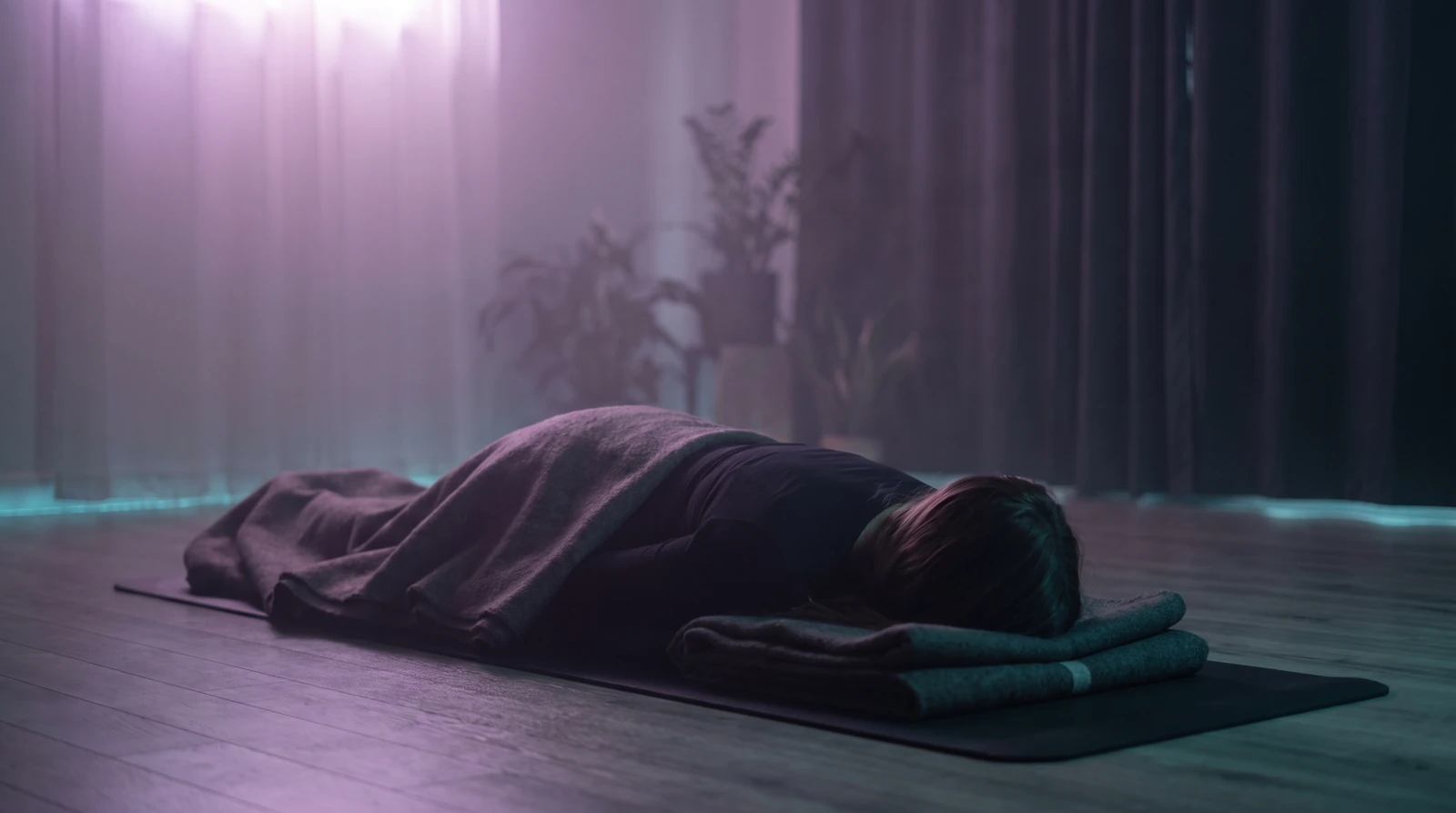
At the end of nearly every yoga class in the world, the same thing happens. The teacher lowers their voice, the lights dim if there are lights to dim, and everyone lies down flat on their backs and does, to all appearances, nothing. This is savasana, usually translated as corpse pose, and newcomers can be forgiven for assuming it is the throwaway bit: the cool-down, the nap, the reward for the real work. Ask a teacher with a few decades behind them, however, and you will often hear the opposite. Savasana, they will tell you, is the hardest pose in yoga. Not the arm balances, not the deep backbends. The lying down.
This sounds like the sort of thing yoga teachers say to be enigmatic, but spend ten minutes actually attempting the pose and the claim starts to make uncomfortable sense. The body is horizontal within seconds. The mind takes considerably longer, and some days it never arrives at all. Savasana asks for something modern life has quietly trained out of us: complete, deliberate, wakeful stillness, with nothing to achieve and nothing to watch. It is a posture of surrender in a culture of effort, and that is precisely why it rewards practice.
What savasana actually is
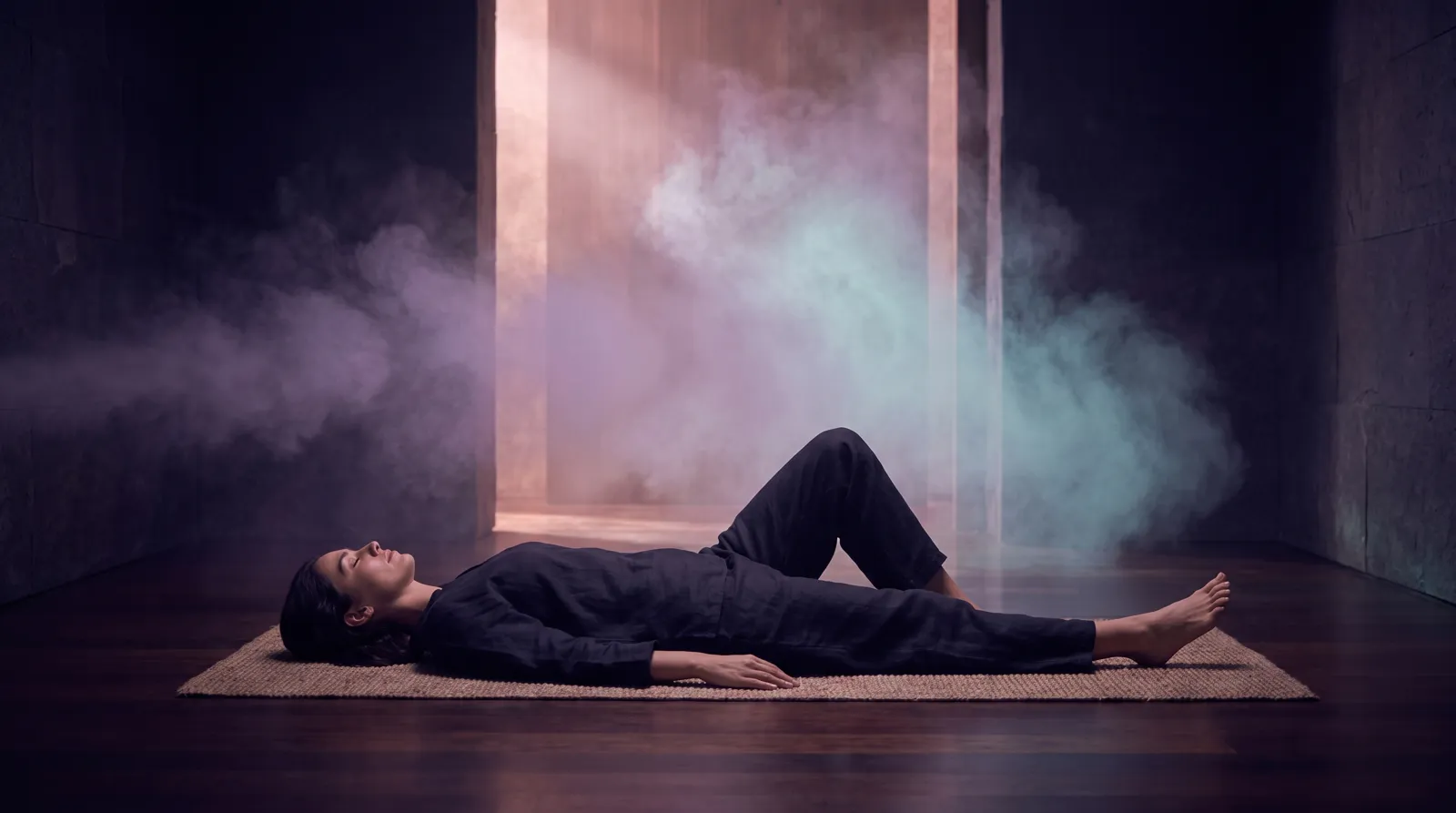
The name comes from the Sanskrit shava, meaning corpse, and asana, meaning posture or seat. The instructions are almost absurdly brief. Lie flat on your back. Let the feet fall apart. Rest the arms a little away from the body, palms turned up. Close the eyes. Release every muscle you can find, including the small ones you forgot you were holding: the jaw, the tongue, the space between the eyebrows. Then remain there, awake and aware, while the body grows completely still.
That last clause is the whole pose. Savasana is not a nap, although plenty of tired people fall asleep in it and no reasonable teacher begrudges them. The classical aim is a state in which the body rests as deeply as it does in sleep while awareness stays softly present, watching the breath rise and fall without steering it. In the old texts the pose was understood as a rehearsal of letting go, a daily practice of putting down everything the self carries. The corpse in the name is not morbid decoration; it is the instruction.
Why lying still is so difficult
The difficulty is not physical. Nearly anyone can lie on the floor. The difficulty is that the moment you remove all tasks, the mind panics at the vacancy and begins to fill it. The to-do list arrives first, then the replayed conversation, then the itch, then the sudden conviction that this is a waste of time and you could be stretching something instead. Teachers sometimes call savasana the pose where your practice is most visible, because there is nothing left to hide behind: no balance to hold, no alignment to fuss over, only you and an unoccupied mind.
There is also a subtler obstacle, which is that stillness on command can feel unsafe. The body associates full release with privacy and sleep, and here you are, releasing in a room full of strangers or in the middle of a lit afternoon. Learning savasana is partly learning to convince the nervous system, gently and repeatedly, that nothing is required and nothing is coming. That lesson does not land in one session. It lands over months, which is why the pose belongs at the end of every class rather than the end of the occasional one.
Savasana is a posture of surrender in a culture of effort: the body is horizontal in seconds, and the mind takes considerably longer.
What happens in the body
When the pose does take hold, the physiology quietly follows. Lying supine takes the postural muscles off duty, the long exhale and the closed eyes reduce incoming demand, and over several minutes the system shifts away from vigilance and towards rest and repair. Researchers who measured volunteers resting supine in savasana found that oxygen consumption, a reasonable proxy for how hard the metabolism is working, dropped measurably by the end of the session (Sarang & Telles, 2006, Applied Psychophysiology and Biofeedback). The body, given stillness, spends less energy; it idles lower. Practitioners feel this as the peculiar heaviness of a good savasana, the sense of sinking into the floor as though the floor had agreed to hold you.
None of this requires belief. It requires only the conditions: warmth, support, a closed door against interruption, and enough minutes for the slower systems of the body to notice they are being permitted to stand down. Five minutes is the usual minimum. Ten to fifteen is where the pose begins to feel like a different country.
How to practise savasana well
The pose asks for almost nothing, but a little stagecraft protects it from the things that spoil it:
- Be warm. The still body cools quickly, and a chilled savasana is a clenched one. A blanket over you, and perhaps one folded under the head, changes everything.
- Support the low back if it grumbles. A rolled blanket or cushion under the knees lets the spine lengthen without effort.
- Set a gentle timer so you are not checking the clock. Ten minutes is a fine ambition; even five is worth having.
- Give the mind a soft handrail at the start. Three or four rounds of a slow pattern such as 4-7-8 breathing, four counts in, seven held, eight out, settle the system before you release the breath to its own rhythm.
- When thoughts arrive, and they will, let them pass like traffic heard from a bedroom. You need not chase them away; you need only decline to drive off with them.
A corpse pose for people without a mat
You do not need a yoga class, or indeed any yoga, to borrow savasana. The floor of a bedroom at the end of a long day will do. Some people find the open-eyed approach easier at first: lying still and resting the gaze on something slow and undemanding until the eyes are ready to close on their own. On restless evenings I sometimes let one of the drifting colour textures in Feelsy play quietly at the edge of vision for the first few minutes, with its guided 4-7-8 exercise to set the breath, and then let the screen go dark and the stillness carry on without it. The practice is the same whether it begins with a teacher's voice, a slow visual, or nothing at all: the body flat, the breath unforced, the day set down.
It is worth saying plainly that the hardest pose is also the most forgiving one. There is no falling out of savasana, no wrong shape, no level to reach. Every time the mind wanders and is gently brought home, the pose is working. The practice is not the stillness itself but the returning to it, and that is a skill that follows you off the mat, into waiting rooms and sleepless nights and all the other places where the only thing left to do is lie back and let the floor hold you.
Feelsy is a wellness product, not medical advice. If stress, anxiety or sleep problems persist, please speak with a qualified professional.
References
- Sarang, P., & Telles, S. (2006). Oxygen consumption and respiration following two yoga relaxation techniques. Applied Psychophysiology and Biofeedback, 31(2), 143–153.
Frequently Asked Questions
What is savasana?
Savasana, or corpse pose, is the resting posture that ends most yoga classes. You lie flat on your back with the feet falling apart, arms a little away from the body with palms up, eyes closed, and release every muscle while staying awake and aware. The aim is a state in which the body rests as deeply as it does in sleep while awareness remains softly present, watching the breath without steering it.
Why is savasana called the hardest pose in yoga?
The difficulty is not physical, since nearly anyone can lie on the floor. The challenge is that the moment all tasks are removed, the mind rushes to fill the vacancy with to-do lists, replayed conversations and restlessness. Savasana asks for complete, deliberate, wakeful stillness with nothing to achieve, which is a skill modern life rarely practises, and full release on command can at first feel unsafe to the nervous system.
How long should you stay in savasana?
Five minutes is the usual minimum, and ten to fifteen minutes is where the pose begins to deepen noticeably. It helps to set a gentle timer so you are not checking the clock, to stay warm under a blanket, and to support the knees with a cushion if the lower back complains. The slower systems of the body need a few unbroken minutes to notice they are being permitted to stand down.
Is savasana the same as sleeping?
No. Plenty of tired people drift off in savasana and that is no failure, but the classical pose is wakeful. The body grows as still and heavy as in sleep while attention stays quietly present. Research measuring people resting supine in the posture found that oxygen consumption dropped measurably, meaning the metabolism idles lower, yet the practitioner remains aware throughout rather than unconscious.
Can I practise savasana without doing yoga first?
Yes. Savasana works perfectly well on its own, on a bedroom floor at the end of the day. Lie flat, get warm, settle the breath with a few rounds of a slow pattern such as 4-7-8 breathing, and let thoughts pass without chasing them. Some people begin with eyes open, resting the gaze on something slow and undemanding until the eyes are ready to close on their own.
About the author
Contributing writer
Eleonor writes about contemplative traditions, attention and the cultural history of calm. She has spent two decades collecting the rituals humans use to slow down, from zazen halls to hammams, and translating them for modern, screen-lit lives.
Feel it for yourself.
Feelsy turns reading about calm into practising it. Two minutes of a slow texture is often the whole difference.


Related reading
 Ancient Wisdom
Yoga Nidra: A Guide to Conscious Rest
Yoga Nidra is one of the oldest and most forgiving relaxation practices. Here is what it is, why it works, and how to try your first 20-minute session.
 Breath & Body
Body Scan Meditation: A Guided Tour of Your Own Weight
Learn how to do a body scan meditation step by step: what it is, why moving attention through the body calms the mind, and how to practise it tonight.
 Breath & Body
NSDR: What Non-Sleep Deep Rest Actually Is (and Isn't)
NSDR, or non-sleep deep rest, is a 10 to 20 minute lying-down protocol with ancient roots and a new name. What it is, what the evidence says, how to try it.
 Breath & Body
Time Blocking: The Calendar Trick That Makes Your To-Do List Tell the Truth
Time blocking puts your to-do list on the clock, where it has to be honest about your day. Why the method works, the research behind it, and how to start.
 Breath & Body
The Two-Minute Rule: The Only Productivity Trick I Haven't Quit
The two-minute rule says if a task takes under two minutes, do it now. Why this tiny rule beats fancy systems for procrastination and mental clutter.
 Breath & Body
Why You Work Better Under Pressure (and Why That's Half a Lie)
Deadline pressure really does sharpen focus, and it quietly costs you. The science of arousal, procrastination and borrowing urgency without panic.