NSDR: What Non-Sleep Deep Rest Actually Is (and Isn't)
NSDR, or non-sleep deep rest, is a 10 to 20 minute lying-down protocol with ancient roots and a new name. What it is, what the evidence says, how to try it.
By Kurt Woleret
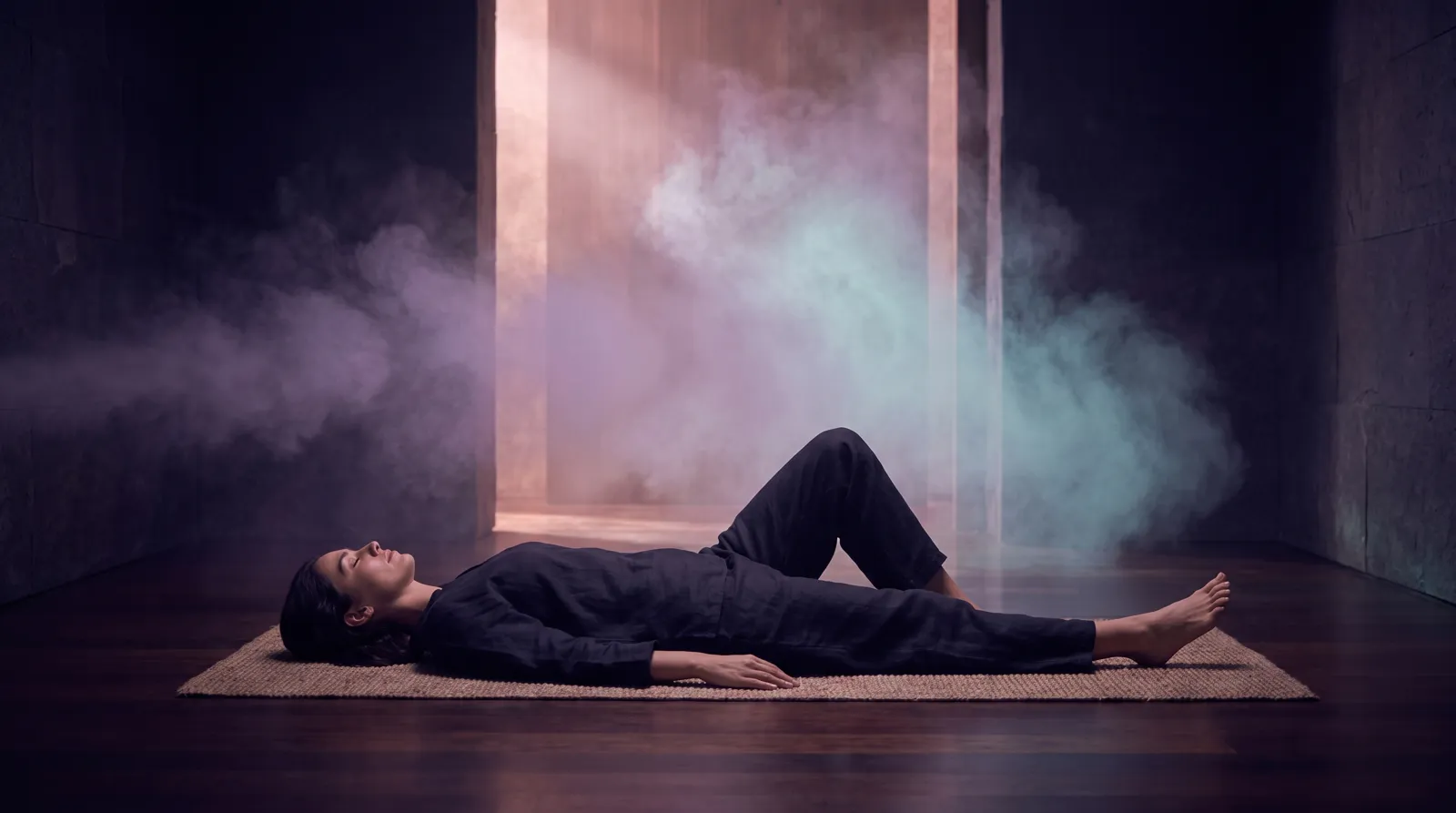
Every few years the wellness industry discovers something monks figured out centuries ago, gives it an acronym, and sells it back to us as biohacking. The current champion is NSDR: non-sleep deep rest. Podcasters swear by it, tech guys schedule it between meetings, and my feed insists it 'replaces sleep,' which it does not. Here's the twist, though. Underneath the branding sits a practice with a real lineage, a plausible mechanism, and some actual evidence. So let's do what we do here: strip the hype, keep what works.
What NSDR actually is
NSDR is a name coined by a Stanford neuroscientist for a family of practices where you lie down, stay awake, and deliberately steer your body toward a deeply relaxed, sleep-adjacent state. In practice, almost every NSDR protocol is a lightly rebranded yoga nidra: you lie on your back, follow a guided voice through slow body scanning, long exhales, and passive attention, usually for ten to twenty minutes. You're not trying to fall asleep. You're hovering in the drowsy borderland just above it, on purpose, and then coming back.
That's it. No device, no supplement, no subscription required. Which, frankly, is a point in its favor.
The rebrand, and why it worked
Why did yoga nidra need a new name? Because 'non-sleep deep rest' sounds like a protocol and 'yogic sleep' sounds like something your aunt does at a retreat. I'm on record as allergic to mysticism, and I'll admit the rebrand did me a favor: it let me try the thing without the incense. If a clinical-sounding acronym is what gets a skeptical, over-caffeinated person to lie on the floor and breathe for fifteen minutes, fine. The floor doesn't care what you call it. We have a full guide to the original practice in our yoga nidra piece if you want the tradition with its history intact.
The floor doesn't care what you call it.
What the evidence says
The honest summary: promising, not miraculous. The most useful recent data point is a study of a short, 11-minute yoga nidra practice tested on a large and diverse sample of over a thousand adults across several weeks. Compared with controls, practitioners reported lower stress, better sleep quality, and improved well-being, with effects that held across age groups and experience levels (Moszeik, von Oertzen, & Renner, 2022, Current Psychology). That's self-reported outcomes, not brain scans, and short-protocol research is still young. But 'eleven minutes of lying down, measurably less stressed' is a decent return on investment for something free.
What NSDR will not do is replace sleep. Resting deeply while awake does not run the overnight maintenance your brain does during actual sleep cycles. Think of it as recovering some daytime function when you're running on a bad night, not as a substitute for the night itself. Anyone telling you otherwise is selling something, probably a course.
How to actually do it
Here's the no-frills version I use on the floor of my apartment, where there is exactly enough room to lie down if I angle myself diagonally. Lie on your back, somewhere you won't be stepped on. Legs uncrossed, arms loose, eyes closed. Breathe in through your nose, then make each exhale slower than the inhale; a long sigh works. Then walk your attention slowly through your body: toes, feet, calves, knees, and so on up to your scalp, spending a few unhurried seconds at each stop. When you notice you've drifted into planning or replaying, and you will, just return to wherever you left off. Ten minutes is a real session. Twenty is a luxury. A guided track makes it nearly effortless, because following a voice gives your brain one job instead of none.
Timing matters less than people claim, but two slots work especially well: the early-afternoon slump, where NSDR functions like a nap without the grogginess or the commitment, and the evening after a brutal day, as a buffer between work-brain and sleep-brain. If you're using it before bed, I like pairing the lead-in with something visually quiet; a few minutes watching a slow, dark texture in Feelsy with the sound low gets my nervous system halfway down before I'm even horizontal, and the 4-7-8 breathing exercise built into the app covers the slow-exhale part if counting on your own feels like work.
NSDR vs. napping, since everyone asks
A nap gives you actual sleep, with actual sleep's benefits and risks: real restoration if you keep it short, sleep inertia if you don't, and trouble falling asleep that night if you take it late. NSDR gives you a shallower but more controllable dose of recovery: no grogginess, no evening blowback, and it works even for people who can't nap on command, which is most of us. On a truly wrecked day I'll take a 20-minute nap if I can get one. On a normal tired day, NSDR wins on logistics alone. You can do it wired on coffee, mid-afternoon, and be upright and functional ninety seconds after it ends.
The skeptic's bottom line
NSDR is yoga nidra in a lab coat, and that's okay. The practice is free, low-risk, takes fifteen minutes, and has early evidence for reducing stress and improving sleep quality, with a mechanism, deliberate downshifting of the nervous system, that doesn't require believing anything exotic. It will not replace sleep, melt anxiety permanently, or optimize you into a different person. It will reliably make a tired afternoon less terrible. In this economy, I'll take it.
Feelsy is a wellness product, not medical advice. If stress, anxiety or sleep problems persist, please speak with a qualified professional.
References
- Moszeik, E. N., von Oertzen, T., & Renner, K.-H. (2022). Effectiveness of a short Yoga Nidra meditation on stress, sleep, and well-being in a large and diverse sample. Current Psychology, 41, 5272-5286.
Frequently Asked Questions
What does NSDR stand for?
NSDR stands for non-sleep deep rest. It's a modern name for practices where you lie down, stay awake, and deliberately guide your body into a deeply relaxed, sleep-adjacent state for ten to twenty minutes, usually by following a guided voice through slow body scanning and long exhales. In practice, most NSDR protocols are closely based on yoga nidra.
Is NSDR the same as yoga nidra?
Essentially yes. NSDR is a rebranded, secular framing of yoga nidra: lying on your back while a guide walks your attention through the body as you hover just above sleep. The acronym was coined to make the practice approachable for people put off by spiritual language, but the structure and the mechanism are the same.
Does NSDR actually work?
Early evidence is promising but modest. A study of an 11-minute yoga nidra practice in a sample of over a thousand adults found lower stress, better sleep quality, and improved well-being compared with controls. These are self-reported outcomes, so the research isn't definitive, but the practice is free and low-risk, which makes it a reasonable bet.
Can NSDR replace sleep?
No. Resting deeply while awake doesn't perform the overnight maintenance your brain carries out during real sleep cycles. NSDR is best used to recover some daytime function after a short night, or as a wind-down buffer before bed, not as a substitute for sleeping.
Is NSDR better than a nap?
They do different jobs. A short nap delivers actual sleep and deeper restoration, but risks grogginess and can disturb your night if taken late. NSDR is shallower but more controllable: no sleep inertia, no evening blowback, and it works even for people who can't fall asleep on command. Many people use NSDR on normal days and save naps for genuinely wrecked ones.

About the author
Contributing writer
Kurt is a New York based writer covering the practical science of stress, sleep and focus. He is the resident sceptic of the Journal: if a technique cannot survive a crowded subway commute and a deadline week, he is not interested in it.
Feel it for yourself.
Feelsy turns reading about calm into practising it. Two minutes of a slow texture is often the whole difference.


Related reading
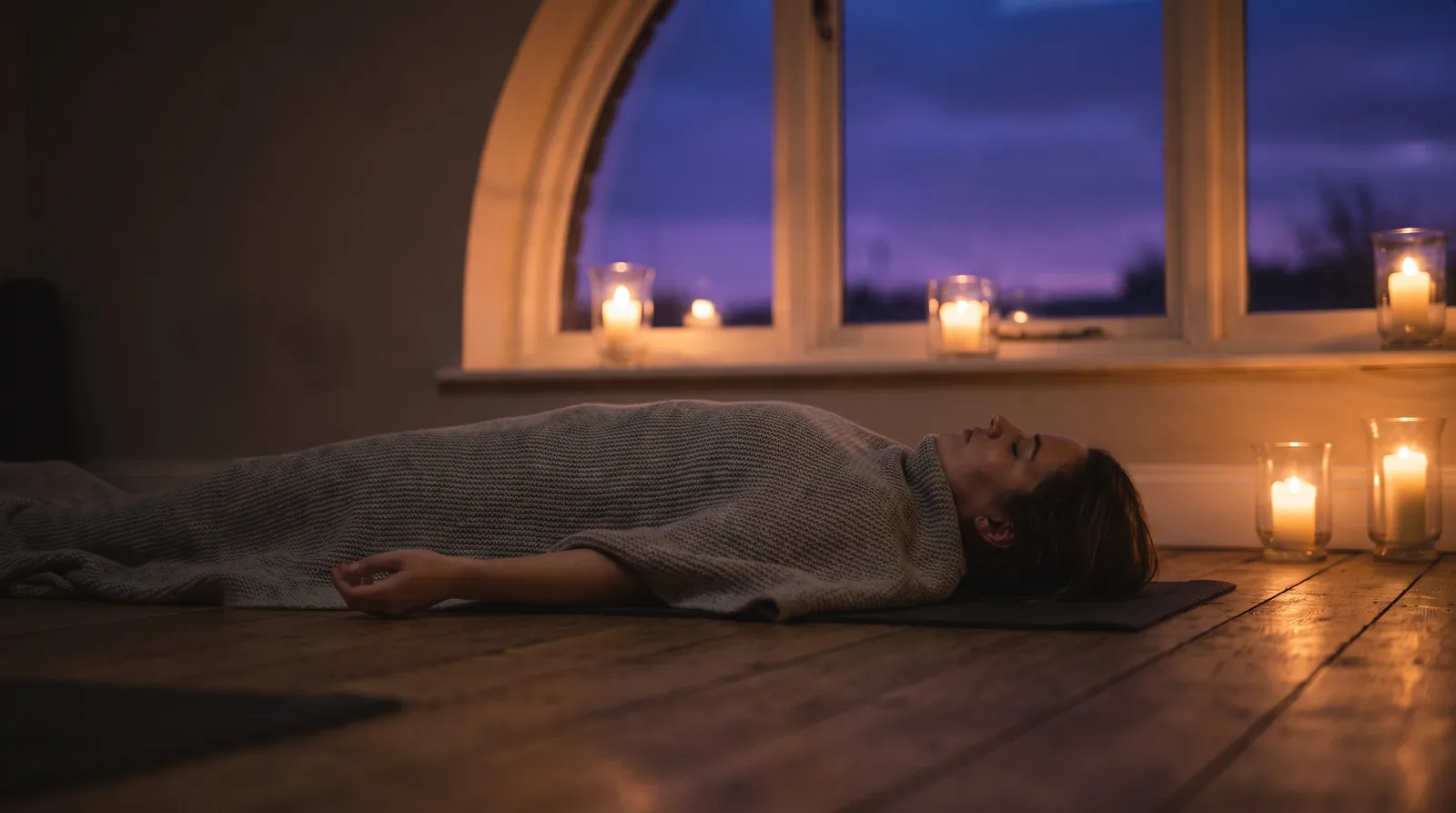 Ancient Wisdom
Yoga Nidra: A Guide to Conscious Rest
Yoga Nidra is one of the oldest and most forgiving relaxation practices. Here is what it is, why it works, and how to try your first 20-minute session.
 Sleep
How Long Should a Nap Be? The Science of Waking Up Better
Ten minutes, twenty, ninety? Nap length decides whether you wake up sharp or wrecked. Here's what sleep research says about the ideal nap, and how to time it.
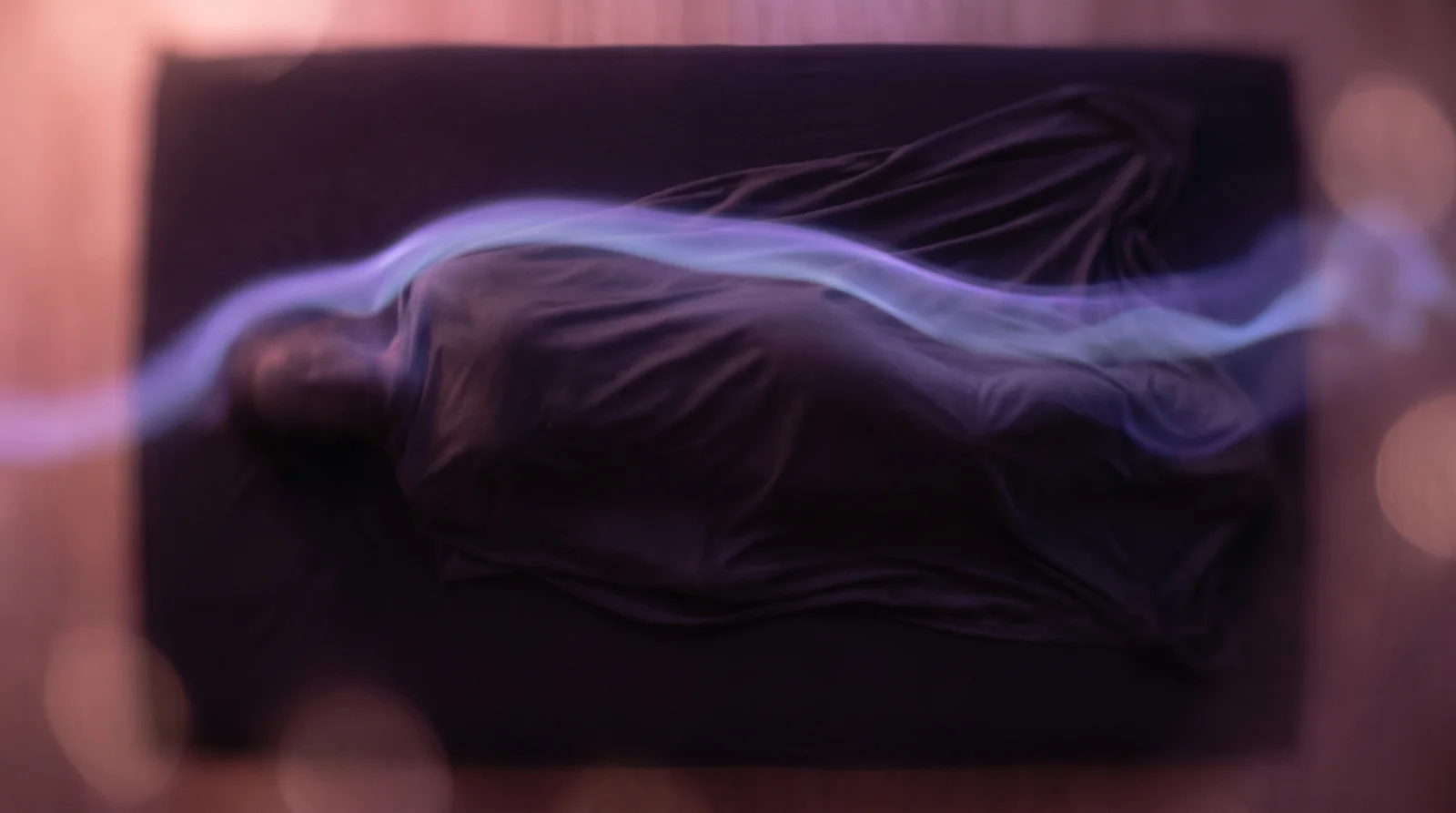 Breath & Body
Body Scan Meditation: A Guided Tour of Your Own Weight
Learn how to do a body scan meditation step by step: what it is, why moving attention through the body calms the mind, and how to practise it tonight.
 Breath & Body
Time Blocking: The Calendar Trick That Makes Your To-Do List Tell the Truth
Time blocking puts your to-do list on the clock, where it has to be honest about your day. Why the method works, the research behind it, and how to start.
 Breath & Body
The Two-Minute Rule: The Only Productivity Trick I Haven't Quit
The two-minute rule says if a task takes under two minutes, do it now. Why this tiny rule beats fancy systems for procrastination and mental clutter.
 Breath & Body
Why You Work Better Under Pressure (and Why That's Half a Lie)
Deadline pressure really does sharpen focus, and it quietly costs you. The science of arousal, procrastination and borrowing urgency without panic.