Scratching ASMR: Why Fingernails on Fabric Put the Internet to Sleep
Scratching is one of ASMR's biggest trigger families: fabric, wood, mic covers. Why dragging fingernails across texture calms so many brains, explained.
By Kurt Woleret
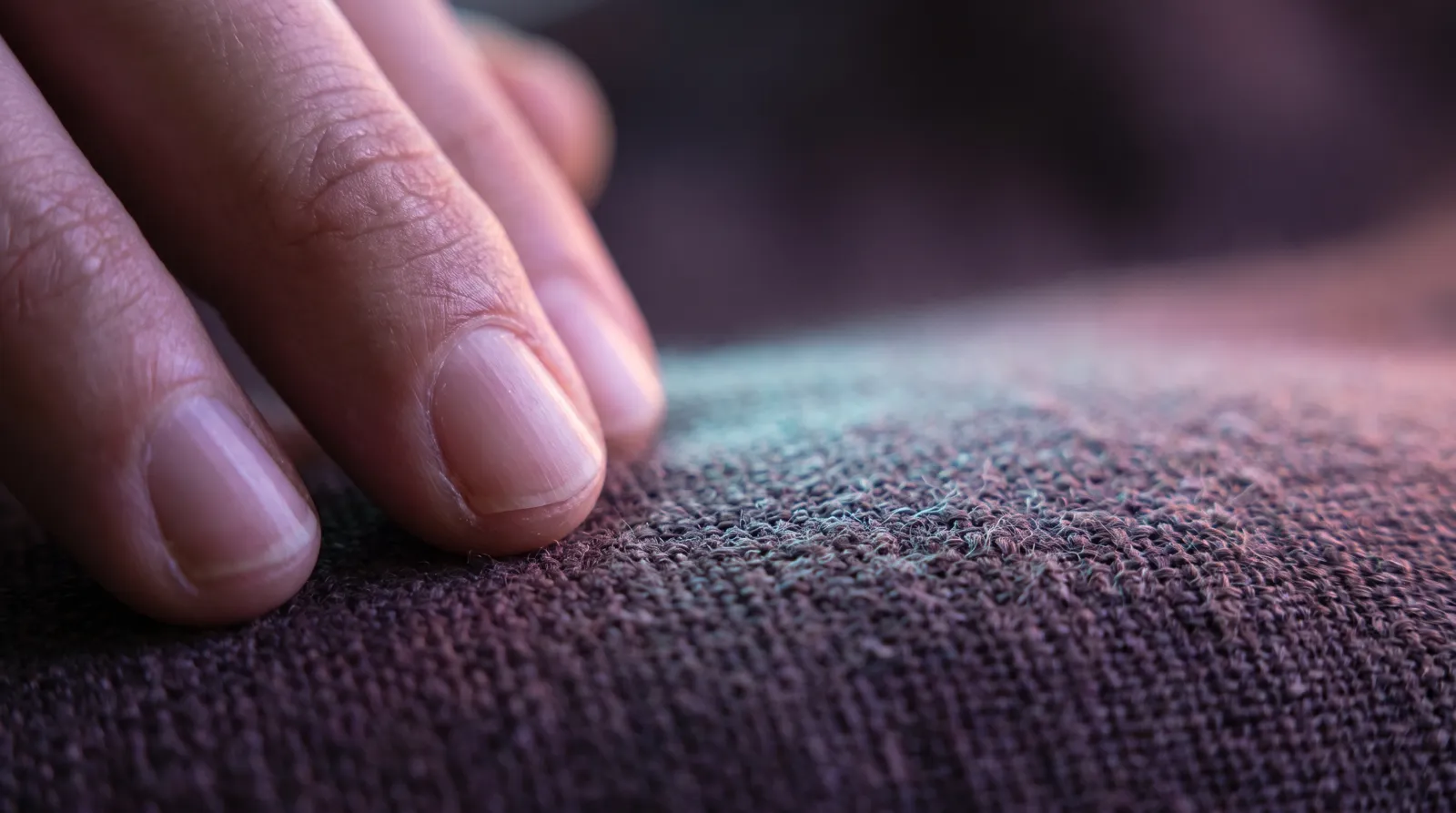
Every ASMR listener has a moment where they catch themselves and think: I am watching a stranger drag their fingernails across a throw pillow, and it is the most relaxed I've felt all week. Scratching is tapping's scruffier sibling. Same close-mic'd intimacy, same tiny repetitive sounds, but where tapping is discrete little events, scratching is continuous texture: a slow drag across linen, denim, a wicker basket, a foam mic cover, the dust jacket of a book. It looks even more absurd from the outside than tapping does, and it's one of the most reliable triggers in the catalog. As the house skeptic, I think it deserves an actual explanation.
A majority taste, not a weird corner
First, the base rates, because scratching gets treated like a niche when it isn't. In the first peer-reviewed survey of the ASMR community, crisp sounds, the trigger family covering tapping, crinkling, and scratching-type textures, set off the response in roughly 64 percent of nearly 500 respondents, putting it in the same league as whispering and personal attention (Barratt & Davis, 2015). And the calm this stuff produces isn't just self-report theater: a later study found that people who experience ASMR showed reduced heart rate while watching ASMR videos, alongside the increased skin-conductance excitement of the tingles themselves (Poerio et al., 2018). Slower heart, pleasant buzz. That's a strange and specific combination, and scratching delivers it for an enormous number of people.
What scratching is, acoustically
Put on headphones and listen to what a slow fabric scratch actually is: a continuous broadband rustle, high frequencies rolling in a steady rhythm set by the hand, with micro-variation from every individual fiber. It's noise, technically, but noise with a narrative: your brain can feel the path the fingers take. That puts scratching in a sweet spot between two things we already know are soothing. It has the steadiness of rain or static, the stuff that masks the world and gives your attention a floor. But it also has agency: a human hand is making it, unhurried, up close, careful. Rain says nothing is happening. Scratching says someone calm is here, and nothing is happening. For a social species, that second message is warmer.
The close-mic part isn't decoration either. Scratching only works recorded nearly inside the sound, which places the source in your personal space. Quiet, near, unhurried sounds are the acoustic signature of safety; it's the same reason whispering works, minus the words. Your nervous system does the math on volume, distance, and tempo, and concludes it's off duty.
Rain says nothing is happening. Scratching says someone calm is here, and nothing is happening.
The skin connection
Here's my favorite part of the scratching puzzle: many listeners report feeling it, not just hearing it. The scratch on the mic cover registers as a faint phantom touch on the scalp or back, which is where the tingles live. That mirrors how ASMR seems to work generally, borrowing the machinery of gentle touch, the slow-stroke grooming signals that calm mammals from an actual caress, and triggering it through sound and watching alone. Scratching may be especially good at this because it's the most touch-shaped of sounds: it's literally the sound of texture being touched, at the speed a comforting touch moves. When someone scratches a knitted blanket an inch from the microphone, your brain gets a secondhand but weirdly convincing report of what that blanket feels like. Some people get goosebumps' friendly cousin; some get nothing; both are normal, and no amount of exposure seems to convert the immune.
A field guide to scratches
As with tapping, the variation is the catalog. Surface is the big variable: fabric scratching is soft and woolly; wood grain adds a dry rasp; wicker and rattan give you structure, almost a rhythm section; foam mic covers produce that deep, directly-in-your-head fuzz that people either adore or find unbearable. Speed matters just as much: slow drags read as calm and deliberate, fast scratching tips into agitation. Nails versus fingertip pads changes the brightness of the sound entirely. And scratching sits closer to the misophonia border than most triggers; the same frequencies that delight one brain read as nails-on-chalkboard to another. If scratching makes your shoulders climb toward your ears, that's real, skip it, the rain people have plenty of material for you.
Using it without doomscrolling for it
The standard Kurt advice applies, so I'll keep it brief. Decide what you're listening to before you're horizontal, keep the volume at barely-there, and use headphones, since the close-up spatial detail is most of the magic. The failure mode is the hunt: forty minutes of auditioning scratching videos is a stimulation session, not a wind-down. I handle it by making the choice once: in Feelsy I'll put a soft textural soundscape under one of the slow-moving visuals, set autoplay, and park the phone face-down; the texture keeps scratching along, so to speak, without ever asking me to pick the next thing. However you set it up, the principle is the same: let the sound run, stop auditioning, and give the strange little lullaby of fingernails on linen a chance to do its extremely specific job.
Feelsy is a wellness product, not medical advice. If stress, anxiety or sleep problems persist, please speak with a qualified professional.
References
- Barratt, E. L., & Davis, N. J. (2015). Autonomous Sensory Meridian Response (ASMR): a flow-like mental state. PeerJ, 3, e851.
- Poerio, G. L., Blakey, E., Hostler, T. J., & Veltri, T. (2018). More than a feeling: Autonomous sensory meridian response (ASMR) is characterized by reliable changes in affect and physiology. PLOS ONE, 13(6), e0196645.
Frequently Asked Questions
Why is scratching ASMR so relaxing?
Scratching combines the steadiness of rain-like background noise with the warmth of a human source: a calm, unhurried hand making quiet sounds up close. Recorded close to the microphone, it carries the acoustic signature of safety, and for many listeners it also evokes a faint phantom sense of touch, borrowing the calming machinery of gentle physical contact.
Is scratching a common ASMR trigger?
Yes. In the first peer-reviewed ASMR survey, crisp sounds, the trigger family that includes scratching and tapping textures, triggered the response in about 64 percent of nearly 500 respondents, comparable to whispering and personal attention. Preferences within the family vary a lot: surface, speed, and nails versus fingertips all change the effect.
Does ASMR actually lower your heart rate?
There's evidence it can. A study found that people who experience ASMR showed reduced heart rate while watching ASMR videos, alongside increased skin conductance, suggesting a state that is simultaneously calming and pleasantly tingly. People who don't experience ASMR didn't show the same pattern.
Why does scratching ASMR annoy some people?
Scratching sits close to the misophonia border: the same high-frequency, repetitive textures that relax one brain genuinely irritate another, and neither reaction is a choice. If scratching sounds make you tense, skip the trigger rather than pushing through; steadier sounds like rain, hums, or soft tapping deliver similar calm for many people.

About the author
Contributing writer
Kurt is a New York based writer covering the practical science of stress, sleep and focus. He is the resident sceptic of the Journal: if a technique cannot survive a crowded subway commute and a deadline week, he is not interested in it.
Feel it for yourself.
Feelsy turns reading about calm into practising it. Two minutes of a slow texture is often the whole difference.


Related reading
 ASMR
ASMRTapping ASMR: Why Fingernails on a Glass Jar Can Outperform a Lullaby
Tapping is one of the most popular ASMR triggers on earth. Here's why rhythmic little sounds calm your brain, and how to find the taps that work for you.
 ASMR
ASMRASMR Triggers: A Field Guide to the Tingles
From whispers and tapping to slime and slow hands: the most common ASMR triggers, how to find yours, and why some people never feel tingles at all.
 ASMR
ASMRWhy You Don't Get ASMR Tingles (and Whether It Matters)
Watched hours of whispering and felt nothing? You may not be wired for tingles, and that may not matter. What research says about ASMR immunity.
 ASMR
ASMRHow to Get a Song Out of Your Head: The Science of Earworms
Why songs get stuck in your head and how to evict them: what earworm research says about playing it through, chewing gum, and why fighting back misfires.
 ASMR
ASMRTibetan Singing Bowls: Why an Old Bronze Bowl Calms a Modern Mind
Why Tibetan singing bowls calm the nervous system: their Himalayan history, what a small study measured about mood and tension, and how to begin at home.
 ASMR
ASMRWhy the Sound of Pouring Water Is So Soothing
Why the sound of pouring water is so soothing: what tea pourers have always known, what research says about water sounds, and how to listen on purpose.