Why the Sound of Pouring Water Is So Soothing
Why the sound of pouring water is so soothing: what tea pourers have always known, what research says about water sounds, and how to listen on purpose.
By Mei Lin
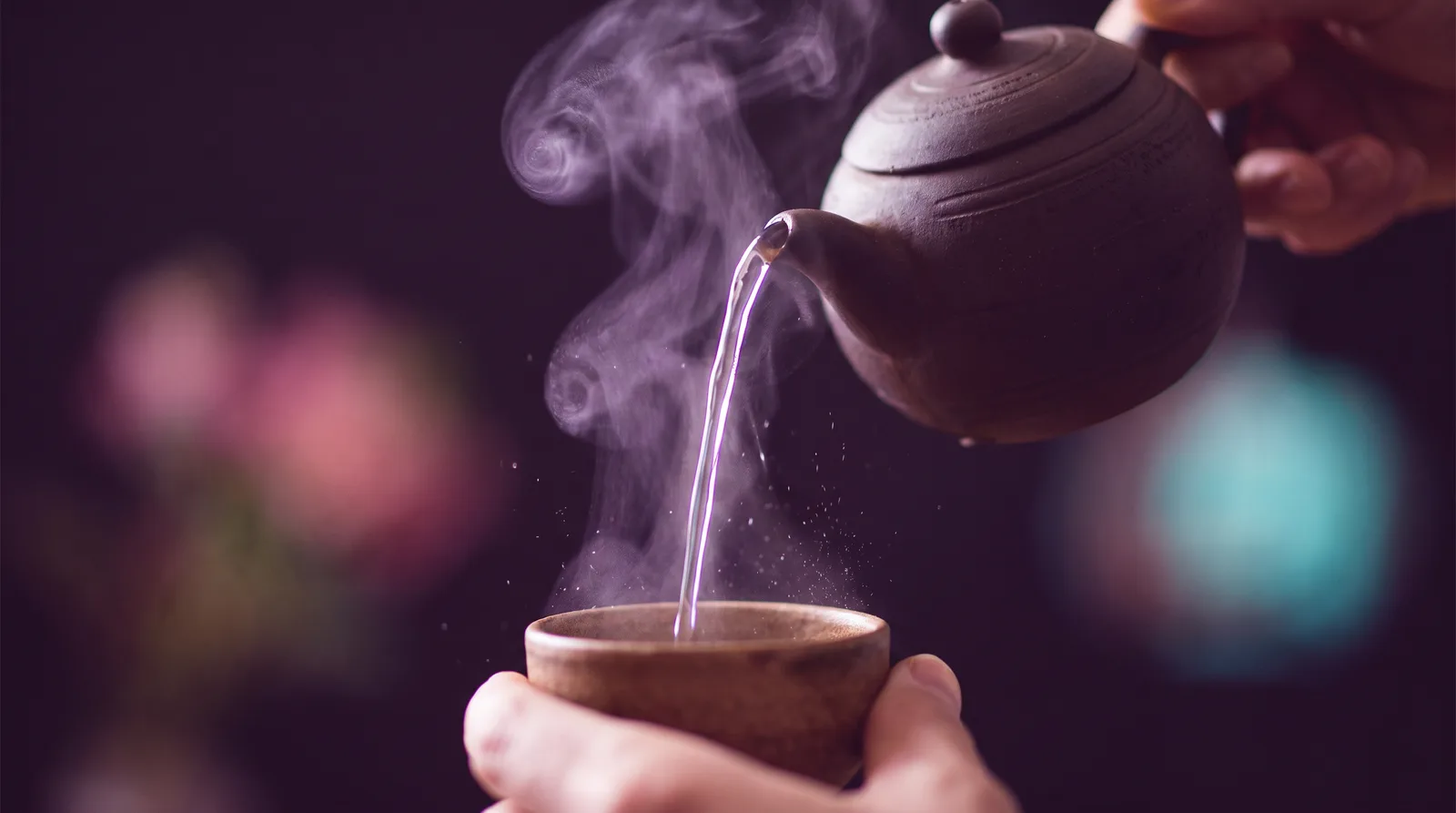
At a gongfu tea table, there is a moment when conversation reliably falls away, and it is not when the tea is tasted. It is when the water is poured. The kettle lifts, the stream thins to a bright thread against the clay, and the sound changes pitch as the pot fills, climbing a little scale that everyone at the table hears and no one comments on. People stop talking mid-sentence for a pour. I grew up assuming this was politeness. I now think it is acoustics.
The sound of pouring water may be one of the most quietly loved sounds in the world. It is the reason tea ceremonies begin in silence, the reason ASMR creators fill and refill glasses for millions of viewers, the reason a watering can in a garden at dusk feels like a benediction. It is rain's domestic cousin: the same soft, broadband wash of sound, but with a shape, a purpose and an end.
What the ear is actually hearing
Poured water is physically busy in a way the ear finds rich. A falling stream drags air under the surface, and each captured bubble rings briefly at its own pitch before it bursts; a pour is thousands of tiny bells arriving so fast they blur into texture. The pitch of the whole event slides too: as a vessel fills, its column of air shortens and the sound climbs, which is why you can pour a cup blind and know by ear when to stop. The sound is broadband and smooth, like rain or static, but it is not static at all. It has a beginning, a swelling middle, a rising note of completion and a clean end.
That shape matters. Endless natural soundscapes, rain and surf and rivers, calm us partly because nothing in them demands tracking. A pour offers something slightly different: a soft event with an arc, short enough to follow from start to finish without effort. The mind loves a completed shape. In a day of interrupted tasks and half-read messages, a fifteen-second sound that begins, rises and resolves is a miniature of the completion we are starved of.
A pour is rain with intention: the same soft static, given a beginning, a middle and an end.
The evidence on water sounds
Researchers have tested the calming reputation of water directly. In one experiment, adults were first put through a stressful mental arithmetic task, then sat with different sounds while their physiology recovered. Sympathetic nervous system arousal, the body's mobilised stress activity measured through the skin, settled back toward baseline faster during nature sounds, dominated by a fountain's moving water mixed with birdsong, than during traffic or ambient noise (Alvarsson et al., 2010, International Journal of Environmental Research and Public Health). It was a small laboratory study, and the differences were modest; but it points the same direction as several decades of findings on natural sound, and the researchers chose moving water as their emblem of nature for a reason.
There is a warmer layer on top of the acoustics. For as long as anyone has been cared for, the sounds of pouring have meant someone is tending to someone: water into the teapot, soup into the bowl, a bath being drawn down the hall. The sound arrives pre-loaded with the memory of being looked after. When an ASMR artist pours water slowly near a microphone, half the effect is the sparkle of the bubbles, and half is that unmistakable signature of care, the audible fact of a person doing something gentle, carefully, for you.
Listening on purpose
The practice I would offer is embarrassingly simple: pour something, and listen to the whole pour. Tea is the classical instrument, and a slow high pour into a small cup gives the longest melody, but a glass of water poured slowly at the kitchen counter works. Treat the sound as the point rather than the by-product. Listen for the pitch climbing as the cup fills, and try to stop exactly when the note tells you to. One mindful pour takes fifteen seconds and interrupts nothing; even a deadline can spare it.
- Morning: pour the first cup of the day slowly, from higher than usual, and let the sound be the day's first deliberate thing.
- At the desk: refill a glass as a genuine break, eyes closed for the seconds of the pour, instead of scrolling between tasks.
- Evening: a watering can among houseplants at dusk is a pour lengthened into a small ceremony, and the plants approve.
If you want to go further, do what tea people do and change the height. A low pour close to the cup is nearly silent; a high pour turns the stream into a bright ribbon of sound. My grandmother poured hot water over her glass of leaves from a full arm's height every morning, and I am fairly sure the theatre of it was for her own ears. The pour was her bell: the day did not begin until she had heard it.
Water you can watch
Sound carries the pour, but the eyes love it too: the thread of the stream, the rings widening in the cup, steam rising off the surface. This pairing of slow liquid motion and soft liquid sound is exactly the register Feelsy works in, textures that flow and fold like poured cream while layered water sounds run underneath, and autoplay will keep the stream unbroken for as long as you want to sit with it. On nights when the kitchen is closed and the teapot is drying on the rack, a few minutes of watching liquid move on a dim screen is the same small mercy in another form: something gentle, poured slowly, asking nothing back.
Feelsy is a wellness product, not medical advice. If stress, anxiety or sleep problems persist, please speak with a qualified professional.
References
- Alvarsson, J. J., Wiens, S., & Nilsson, M. E. (2010). Stress Recovery during Exposure to Nature Sound and Environmental Noise. International Journal of Environmental Research and Public Health, 7(3), 1036-1046.
Frequently Asked Questions
Why is the sound of pouring water so relaxing?
A falling stream drags air under the surface, and each tiny bubble rings briefly at its own pitch, so a pour is thousands of small bell-like sounds blurring into a soft, broadband texture the ear finds rich but undemanding. Unlike endless rain, a pour also has a shape, a beginning, a rising middle and a clean end, and following a soft event through to completion is quietly satisfying for a distracted mind.
Do water sounds actually reduce stress?
There is some laboratory evidence that they help. In one study, adults recovering from a stressful task showed faster settling of sympathetic nervous system arousal while listening to nature sounds dominated by a fountain and birdsong than while listening to traffic or ambient noise. The study was small and the differences modest, but it points in the same direction as a wider body of research on natural sound and recovery.
Why can you hear when a cup is full?
As a vessel fills, the column of air above the liquid gets shorter, and the pitch of the pouring sound climbs steadily. Experienced tea pourers stop by ear rather than by eye, ending the pour when the rising note tells them the cup is nearly full. Listening for that little scale is also a pleasant one-pour mindfulness practice in itself.
Why is pouring water such a popular ASMR trigger?
Partly acoustics and partly meaning. The sparkle of bubbles gives the ear a rich, gentle texture, while the act itself carries an old signature of care: pouring sounds have always meant someone is tending to someone, whether filling a teapot or drawing a bath. When a creator pours water slowly and deliberately near a microphone, listeners get both the soothing sound and the audible sense of being looked after.

About the author
Contributing writer
Mei grew up in Shanghai around tea that could not be hurried and grandmothers who considered stillness a skill. She writes about slow hands and sensory ritual: tea, calligraphy, qigong, and the quiet crafts that taught the world how to pay attention.
Feel it for yourself.
Feelsy turns reading about calm into practising it. Two minutes of a slow texture is often the whole difference.


Related reading
 ASMR
ASMRWhy the Sound of Rain Is So Calming (and So Good for Sleep)
Why rain sounds help you sleep: the acoustics of rainfall, what research says about natural sound and stress, and how to use rain well at bedtime.
 Ancient Wisdom
Tea Meditation: The Slow Ritual of Gongfu Cha
How to turn tea into meditation: the Chinese gongfu tea ritual, why warm slow ritual calms the nervous system, and a ten-minute practice for any mug.
 Visual Meditation
Why Watching Waterfalls Is So Calming: The Science of Falling Water
Why does watching a waterfall calm the mind so fast? The science of soft fascination, blue space and falling water, and how to borrow the effect indoors.
 ASMRNew
Tibetan Singing Bowls: Why an Old Bronze Bowl Calms a Modern Mind
Why Tibetan singing bowls calm the nervous system: their Himalayan history, what a small study measured about mood and tension, and how to begin at home.
 ASMR
ASMRPsithurism: Why the Sound of Wind in the Trees Calms the Mind
Psithurism is the whispering sound of wind through leaves. Here is why this natural broadband sound soothes the nervous system, and what research says about it.
 ASMR
ASMRVisual ASMR: Why Some People Get Tingles With the Sound Off
Slow hands, slime folds, drifting light: visual ASMR calms some people with no audio at all. Here's what research says about watching your way to relaxed.