Why You Get a Second Wind Right Before Bed
Exhausted all evening, wide awake at 11pm? That burst of energy before bed is your brain's wake maintenance zone. Here's the science and how to beat it.
By Kurt Woleret
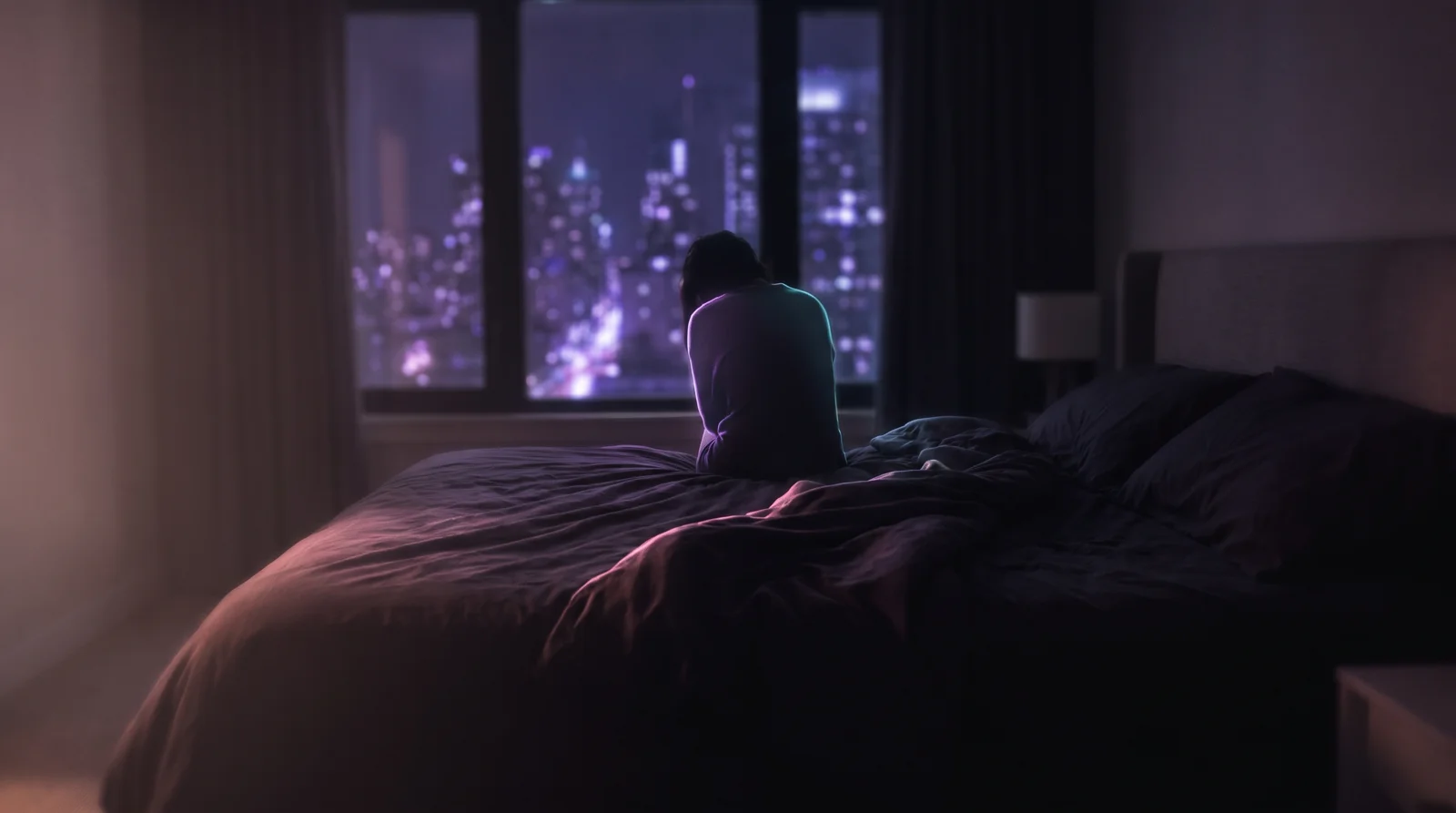
It's 9:45 on a Tuesday. You've been useless since dinner. You dozed off twice on the couch during a show you picked. Then you brush your teeth, get into bed, and your brain flips on like a bodega fridge: bright, humming, open all night. Suddenly you're replaying a conversation from 2019 and drafting emails you'll never send. That's the second wind, and if it feels like your body is trolling you, I have news: it sort of is.
But it's not random, and it's not a character flaw. Sleep researchers have known about this stretch of the evening for decades. For roughly two to three hours before your habitual bedtime, your brain is biologically worse at falling asleep than at almost any other point in the day. Climb into bed early inside that window and you'll lie there wide awake, wondering what's wrong with you. Nothing's wrong with you. You just showed up during the forbidden zone.
The forbidden zone is a real finding, not a vibe
In the 1980s, sleep researcher Peretz Lavie ran a delightfully strange experiment: he put people on an ultrashort sleep schedule, asking them to try to sleep for seven minutes out of every twenty, around the clock, then measured when they actually could (Lavie, 1986, Electroencephalography and Clinical Neurophysiology). The results mapped the day into terrain. There were 'gates' where sleep came easily, and 'forbidden zones' where it barely came at all. The most stubborn forbidden zone sat right before habitual bedtime. In other words: the hours when you assume you should be able to drift off early are, for your brain, some of the hardest hours of the entire day to fall asleep in.
Researchers now call this stretch the wake maintenance zone. It's the shift in the evening when your internal clock is actively propping your eyes open, right before it changes its mind and swings the gate wide.
Why your body pulls this stunt
Two systems run your sleepiness. The first is sleep pressure: the longer you're awake, the more it builds, like a meter running all day. If sleep pressure were the only force, you'd get steadily sleepier from breakfast onward and face-plant into dinner. The second system is your circadian clock, which sends out an alerting signal that rises through the day specifically to cancel out that mounting pressure and keep you functional.
Here's the design quirk: that alerting signal doesn't fade out politely at sunset. It peaks in the mid to late evening, firing one last flare to keep you upright through the end of the day. For an hour or two, the alerting signal is winning against a full day of sleep pressure. That's your second wind. Then melatonin rises, the alerting signal stands down, and the sleep gate opens, usually not long before your regular bedtime. It's like an express train that blows past your stop and then, three stations later, finally opens the doors.
You didn't miss your window. Your body fired its last flare before letting you land.
The couch nap makes it worse
About that 9pm couch doze. Even ten or fifteen minutes of it burns off a chunk of the sleep pressure you spent all day building. So when you finally get to bed, you're in the worst of both worlds: reduced pressure, and an alerting signal that may still be idling. The couch nap felt like a preview of sleep. It was actually a withdrawal from the account you needed full at 11pm.
How to work with the zone instead of against it
- Keep your bedtime boringly consistent. The sleep gate is anchored to habit; every night you keep roughly the same schedule, the gate learns to open at the same time.
- Don't get into bed before you're actually sleepy. If the second wind hits, do something low-stakes in low light: fold laundry, tidy one shelf, read something mild. Save the bed for when your eyelids get heavy.
- Dim the lights for the last hour. Bright overhead light in the evening feeds the alerting signal exactly when you want it to stand down.
- Skip the couch doze. If you feel yourself going under at 9pm, stand up, stretch, wash the dishes. Protect the sleep pressure you built.
- Build a wind-down ramp instead of a hard stop. Ten minutes of something slow and undemanding tells your body the flare is over. I use a slow-drifting texture in Feelsy with a rain layer underneath and let autoplay carry it; the 4-7-8 breathing exercise in there works too if your head is still loud.
Night owls: your zone runs late, and that's the whole problem
If you're an evening person, your entire circadian program is shifted later, which means your wake maintenance zone is too. Forcing a 10pm bedtime as a night owl puts you square in the middle of your own forbidden zone, which is why 'just go to bed earlier' is such spectacularly useless advice on its own. If you need to shift, do it gradually: move bedtime and wake time by fifteen to thirty minutes every few days, and get bright light in the morning, so the whole program slides earlier and the gate moves with it.
The two-week test
Here's the pragmatic version. For two weeks: same bedtime and wake time daily, no evening couch naps, lights low after dinner, bed only when sleepy, a short wind-down ramp before it. You're not fighting the second wind anymore; you're scheduling around it. Most people find the surge shows up smaller and earlier once the gate stabilizes. Your brain was never broken. It was just running a schedule nobody showed you.
Feelsy is a wellness product, not medical advice. If stress, anxiety or sleep problems persist, please speak with a qualified professional.
References
- Lavie, P. (1986). Ultrashort sleep-waking schedule. III. 'Gates' and 'forbidden zones' for sleep. Electroencephalography and Clinical Neurophysiology, 63(5), 414–425.
Frequently Asked Questions
Why do I get a burst of energy right before bed?
Your circadian clock sends out an alerting signal that rises through the day to counteract building sleep pressure, and that signal peaks in the mid to late evening rather than fading at sunset. For an hour or two it wins against a full day of tiredness, which you feel as a second wind. Once melatonin rises and the signal stands down, the sleep gate opens, usually near your regular bedtime.
What is the wake maintenance zone?
The wake maintenance zone is the stretch of roughly two to three hours before your habitual bedtime when your brain is biologically worst at falling asleep. Sleep researcher Peretz Lavie mapped it in the 1980s using ultrashort sleep schedules and called these stretches forbidden zones for sleep. If you try to go to bed early inside that window, you'll usually lie awake even when you're exhausted.
Should I go to bed early if I'm exhausted?
Usually not much earlier than your normal bedtime. Going to bed inside your wake maintenance zone tends to mean lying awake, because your internal alerting signal is still active. It works better to wait until you're actually sleepy, keep your bedtime consistent so the sleep gate stabilizes, and shift your schedule gradually in fifteen to thirty minute steps if you want to sleep earlier long term.
How do I stop getting a second wind at night?
You can't delete it, but you can shrink it and schedule around it. Keep a consistent bedtime and wake time, avoid evening couch naps that burn off sleep pressure, dim the lights for the last hour, stay out of bed until you're sleepy, and use a short wind-down ramp such as slow breathing or a calm visual with soft sound. Over a couple of weeks the surge typically arrives smaller and earlier.

About the author
Contributing writer
Kurt is a New York based writer covering the practical science of stress, sleep and focus. He is the resident sceptic of the Journal: if a technique cannot survive a crowded subway commute and a deadline week, he is not interested in it.
Feel it for yourself.
Feelsy turns reading about calm into practising it. Two minutes of a slow texture is often the whole difference.


Related reading
 Sleep
SleepRevenge Bedtime Procrastination: Why You Won't Go to Sleep
Revenge bedtime procrastination is staying up late to steal back your day. Here's why exhausted people do it, and how to stop without giving up your evening.
 Sleep
SleepHow to Fix Your Sleep Schedule (Without Wrecking a Whole Week)
Your sleep schedule drifted and now bedtime is a rumor. Here's how to reset your body clock with light, timing, and patience instead of willpower.
 Sleep
SleepNight Owl vs Early Bird: The Science of Chronotypes
Night owl or early bird isn't a personality flaw or a virtue. It's a chronotype. Here's what the science says about your body clock and how to work with it.
 Sleep
SleepWhy You Wake Up Right Before Your Alarm Goes Off
Waking up minutes before your alarm isn't spooky. Your body clock predicts the morning and preps you in advance. Here's the science of pre-alarm waking.
 Sleep
SleepBiphasic Sleep: Is Sleeping in Two Shifts Actually Natural?
Biphasic sleep splits the night into two blocks with quiet time between. Here's what history and sleep research say about two-shift sleep, and who it suits.
 Sleep
SleepHow to Wake Up Early (Without Hating Your Life)
Want to become a morning person? Here's how to wake up early using light, timing and consistency, based on what circadian science actually shows.