Night Owl vs Early Bird: The Science of Chronotypes
Night owl or early bird isn't a personality flaw or a virtue. It's a chronotype. Here's what the science says about your body clock and how to work with it.
By Kurt Woleret
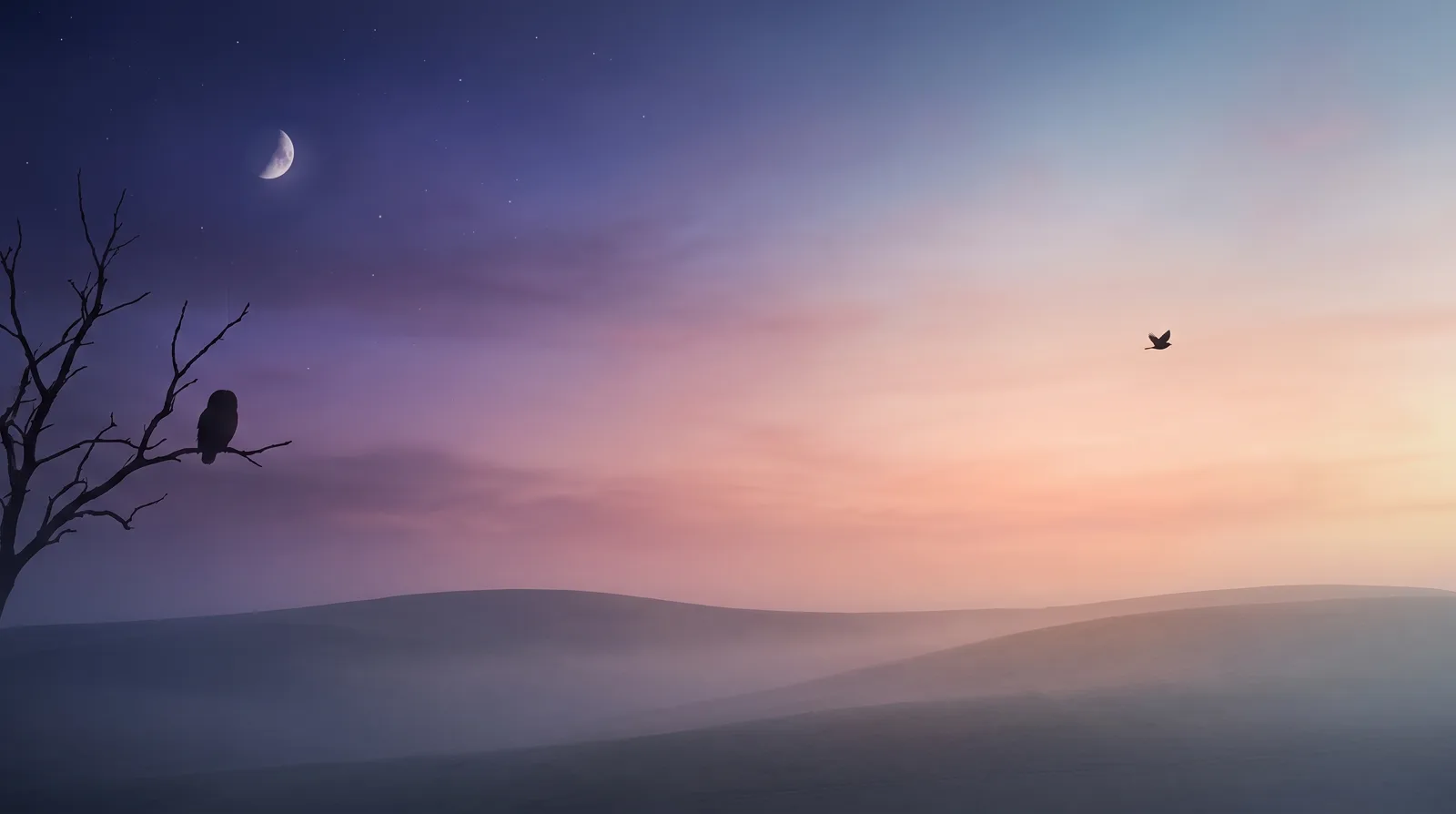
Every office has one of each. The person who's answered twelve emails by 7 a.m. and starts sentences with 'when I was at the gym this morning.' And the person, hi, it's me, who sends their best work at 11:40 p.m. and treats any meeting before ten as an act of aggression. For most of my life I assumed this was a character issue: early risers were disciplined, and I was a raccoon with a laptop. Turns out it's biology, it has a name, and the discipline framing is mostly nonsense. Let's talk about chronotypes.
What a chronotype actually is
Your chronotype is the timing your internal clock prefers: when your body wants to sleep, wake, eat and concentrate, if nobody's making it do otherwise. It's driven by your circadian system, the roughly 24-hour cycle run by a cluster of neurons behind your eyes that takes its cues from light. The clock's period and its sensitivity to light vary from person to person, partly for genetic reasons, which is why some people's internal night starts at 9:30 p.m. and other people's starts closer to 2 a.m. Chronotype isn't two boxes, owl and lark; it's a spectrum, and most people sit somewhere in the unremarkable middle with a lean one way or the other.
It also moves across your lifespan. Kids are larks, teenagers swing hard toward owlhood (which is why first-period high school classes are a crime against neurology), and the clock drifts earlier again from your twenties onward. So the college student who can't sleep before 2 a.m. and the retiree up at 5:30 aren't displaying different moral fiber. They're at different points on the same curve.
Want to know yours? Skip the online quizzes and look at your own behavior on vacation. After a few days free of alarms and obligations, when do you naturally fall asleep and wake up? The midpoint of that free-day sleep is a decent stand-in for your chronotype, and it's roughly the measure researchers use. If your untethered self drifts to a 2 a.m. to 10 a.m. schedule, congratulations, you're an owl, and no amount of motivational content changes the setting.
Social jetlag: the owl tax
The trouble isn't being an owl. It's being an owl in a world scheduled by larks. Researchers coined the term 'social jetlag' for the gap between your body's preferred sleep window and the one your alarm clock enforces, and they meant the jetlag part literally: living several hours off your internal time is like commuting weekly between time zones without going anywhere (Wittmann et al., 2006, Chronobiology International). An owl who works 9 to 5 sleeps against their clock all week, then 'flies home' on the weekend by sleeping in, then flies back Monday morning.
That chronic misalignment shows up in the data as more than grogginess. In a large survey dataset, greater social jetlag was associated with higher body weight and more smoking and caffeine use, independent of sleep duration (Roenneberg et al., 2012, Current Biology). Association isn't destiny, and owls aren't doomed. But it does mean the Monday-morning fog some people call laziness is better understood as a scheduling injury. You can't fix a time-zone problem with willpower.
The problem isn't being a night owl. It's being a night owl in a world scheduled by larks.
Can you change your chronotype?
Partially. You can't file paperwork to become a lark, but the clock is adjustable at the edges because it's set by light. Bright light early in the day pulls your clock earlier; bright light late at night pushes it later. Most owls are unknowingly doing owl-reinforcement therapy every evening, dim mornings indoors followed by a phone two inches from their face at midnight. Reversing that pattern, light in the morning, dimness at night, consistent wake times, can shift your rhythm earlier by a meaningful amount and makes the schedule you're stuck with hurt less. What it won't do is turn a true owl into a person who enjoys 6 a.m. That hardware ships from the factory.
If you want to work with your clock instead of against it:
- Anchor your wake time first, seven days a week if you can manage it. A consistent anchor does more than any gadget.
- Get outside light within an hour of waking, even ten cloudy minutes. Morning light is the strongest lever owls have.
- Dim the evening. Lower the lights after dinner and keep late screens small, dim and boring.
- Schedule your hardest thinking for your peak, not your employer's. Owls tend to sharpen in the late afternoon and evening; use that.
- Protect the wind-down. Whatever your chronotype, the last half hour before bed should ask nothing of you. Slow visuals, slow breathing, low light.
A truce with your own clock
Here's the reframe that helped me: your chronotype is a fact about you, like height. You can optimize around it, but resenting it is a waste of an evening. I stopped trying to become a morning person and started managing the edges instead: real light with my coffee, dimmer apartment after nine, and a fixed wind-down where I put on a slow Feelsy texture, run the 4-7-8 breathing exercise, and let autoplay carry the screen so I don't have to. My clock still runs late. But it runs late on schedule now, and Monday stopped feeling like an international arrival.
So the next time an early bird tells you the morning is when the day is won, remember that they're not disciplined and you're not broken. You're both just obeying different clocks, and only one of you gets to feel smug about it because the schedule happens to be printed in their time zone.
Feelsy is a wellness product, not medical advice. If stress, anxiety or sleep problems persist, please speak with a qualified professional.
References
- Wittmann, M., Dinich, J., Merrow, M., & Roenneberg, T. (2006). Social jetlag: Misalignment of biological and social time. Chronobiology International, 23(1-2), 497-509.
- Roenneberg, T., Allebrandt, K. V., Merrow, M., & Vetter, C. (2012). Social jetlag and obesity. Current Biology, 22(10), 939-943.
Frequently Asked Questions
What is a chronotype?
Your chronotype is the sleep and wake timing your internal body clock naturally prefers, when work and alarms aren't overriding it. It's driven by your circadian system, varies from person to person partly for genetic reasons, and sits on a spectrum from strong morning types to strong evening types, with most people somewhere in the middle.
What is social jetlag?
Social jetlag is the gap between when your body wants to sleep and when your schedule makes you sleep. Living hours off your internal time works like weekly jet travel without the trip: you sleep against your clock all week, catch up on weekends, then snap back on Monday. Research has linked larger social jetlag to higher body weight and heavier caffeine and tobacco use.
Can a night owl become a morning person?
Only partly. The clock is set by light, so bright mornings, dim evenings and a consistent wake time can shift your rhythm meaningfully earlier and make early schedules more livable. But a true evening type won't be rebuilt into someone who loves 6 a.m.; the underlying tendency is biological, changes with age on its own, and responds to management better than to willpower.
Is it unhealthy to be a night owl?
Being an owl isn't unhealthy by itself. The risks documented in research come mostly from the mismatch, sleeping against your clock because of early obligations, rather than from the chronotype. An owl with a schedule that fits, or one who manages light and keeps a steady wake time, can sleep as well as any lark.
Why are teenagers night owls?
Chronotype shifts across the lifespan, and adolescence pushes the clock latest of all. Children tend toward early timing, the rhythm swings sharply later through the teenage years, and it then drifts earlier again from the twenties onward. A teen who can't fall asleep at 10 p.m. is following a normal developmental pattern, not defying it.

About the author
Contributing writer
Kurt is a New York based writer covering the practical science of stress, sleep and focus. He is the resident sceptic of the Journal: if a technique cannot survive a crowded subway commute and a deadline week, he is not interested in it.
Feel it for yourself.
Feelsy turns reading about calm into practising it. Two minutes of a slow texture is often the whole difference.


Related reading
 Sleep
SleepHow to Fix Your Sleep Schedule (Without Wrecking a Whole Week)
Your sleep schedule drifted and now bedtime is a rumor. Here's how to reset your body clock with light, timing, and patience instead of willpower.
 SleepNew
How to Wake Up Early (Without Hating Your Life)
Want to become a morning person? Here's how to wake up early using light, timing and consistency, based on what circadian science actually shows.
 Sleep
SleepRevenge Bedtime Procrastination: Why You Won't Go to Sleep
Revenge bedtime procrastination is staying up late to steal back your day. Here's why exhausted people do it, and how to stop without giving up your evening.
 Sleep
SleepCan't Sleep? Why Getting Out of Bed Is the Counterintuitive Fix
Lying awake trying harder is the one thing that makes insomnia worse. Here's the 20-minute rule, the science of stimulus control, and how to use it.
 Sleep
SleepHow to Get Over Jet Lag: A Body-Clock Owner's Manual
Jet lag isn't ordinary tiredness, it's your body clock running on the wrong city. Here's how light, timing and a little planning reset it faster.
 Sleep
SleepHow Much Sleep Do You Actually Need? An Honest Look at the Numbers
Eight hours is the number everyone quotes and almost nobody sourced. Here's where the official sleep recommendations come from and how to find your range.