Sleep Divorce: Why Sleeping Apart Might Save Your Nights
More than a third of Americans have tried a sleep divorce. What sleeping apart actually does for rest and relationships, and how to trial it without drama.
By Kurt Woleret
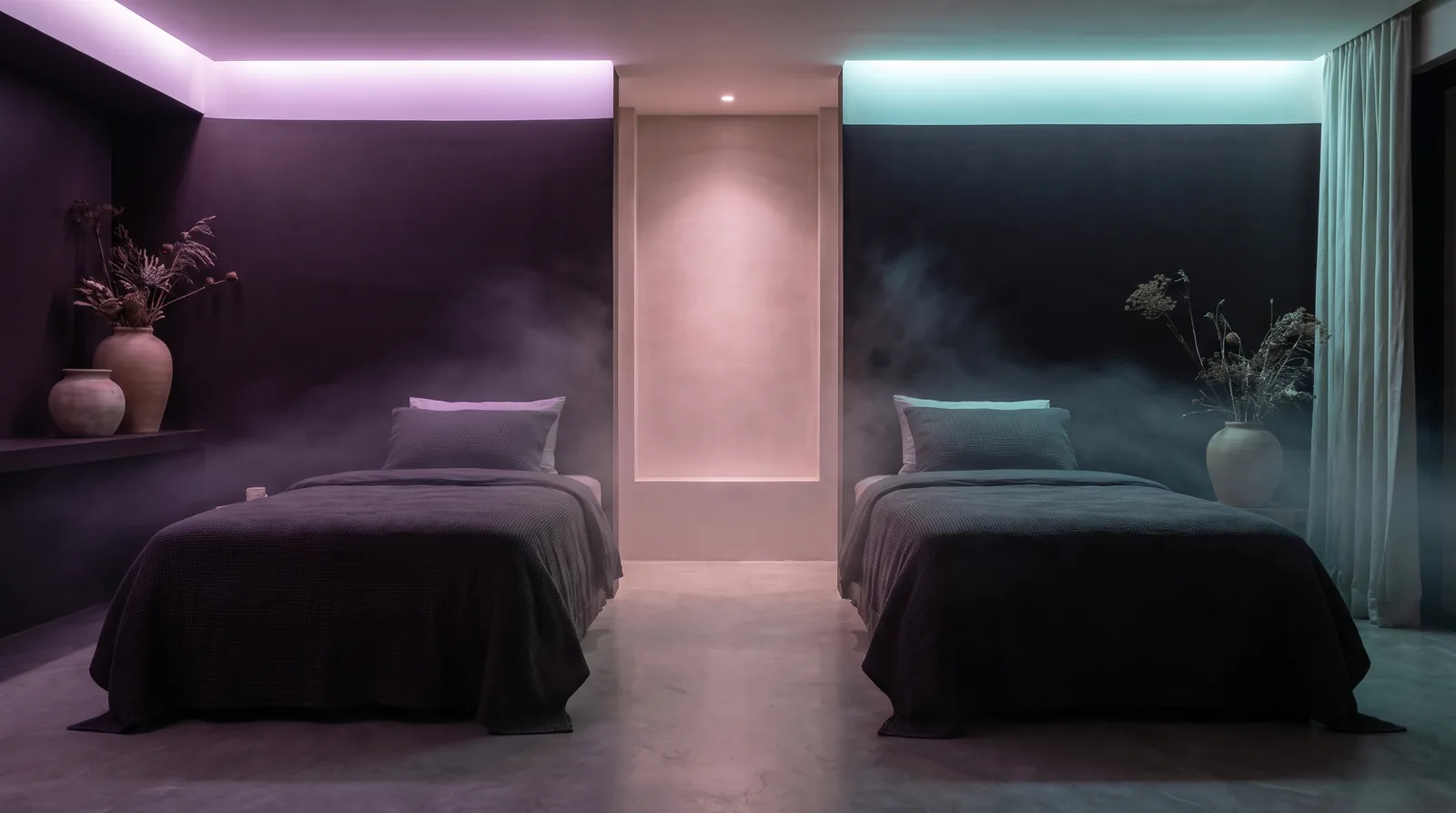
Somewhere around 2 a.m., in bedrooms everywhere, a quiet negotiation fails. One person is snoring like a window unit in August. The other is lying on the far edge of the mattress doing resentment math: if I fall asleep right now I get four hours. In New York this negotiation happens eighteen inches apart, because that's the clearance our bedrooms allow. Eventually somebody takes a pillow to the couch, and in the morning nobody mentions it, because sleeping apart is supposed to mean something is wrong.
Here's the thing: it's extremely common, and it has a terrible name. "Sleep divorce" sounds like a filing at the county clerk's office. What it actually describes is two people who like each other deciding to stop ruining each other's sleep. A survey by the American Academy of Sleep Medicine found that more than a third of Americans say they occasionally or consistently sleep in another room to accommodate a partner (AASM, 2023). That's not a fringe arrangement. That's a third of the country quietly doing the practical thing and feeling weird about it.
Why sharing a bed is objectively hard
Strip away the romance and a shared bed is a logistics problem. Two bodies with different thermostats, different chronotypes, different mattress preferences and different relationships with the top sheet are trying to be unconscious in the same small rectangle. One of you runs hot. One of you gets up at 6 to run, on purpose. One of you snores, which is involuntary, and scrolls until 1 a.m., which is not.
Sleep researchers have been pointing at this politely for years. A review of the research on couples' sleep concluded that sleep and relationship quality travel together in both directions: bad nights strain the relationship, and relationship strain wrecks the nights (Troxel et al., 2007, Sleep Medicine Reviews). Interestingly, studies in that literature found that people often say they sleep better together while objective measures show more movement and disturbance when sharing. The company is real. So is the kicking.
A sleep divorce isn't a verdict on the relationship. It's a verdict on the snoring.
What sleeping apart actually fixes
Separate sleeping works on the mechanical problems: snoring you can't unhear, schedules that are two time zones apart, a partner whose turning radius requires FAA clearance, insomnia that turns one person's bad night into two people's bad night. Remove the nightly collision and both people often stop dreading bedtime, which matters more than it sounds; dread is terrible sleep hygiene.
What it doesn't fix is anything actually wrong between you. If the distance is emotional, a second bedroom just gives it square footage. And one honest flag: chronic loud snoring with gasps or pauses isn't a quirk to engineer around, it's worth a conversation with a doctor about sleep apnea before you redecorate around it.
How to run the experiment like adults
The couples who make this work treat it as a sleep arrangement, not a separation. A few ground rules help:
- Frame it as a trial with a date to compare notes, two weeks is plenty, so nobody feels sentenced to the guest room forever.
- Keep a shared wind-down: bedtime routine together, lights-out apart. The goodnight still happens; only the unconscious hours relocate.
- Make both sleep spaces real beds with real bedding. If one person gets the bedroom and the other gets a couch and a sense of exile, you've built resentment, not rest.
- Reserve the right to visit. Separate sleep is a default, not a border.
If a second room isn't on the menu, and in my zip code it usually isn't, half-measures still help: two duvets so the blanket war ends, earplugs or a steady masking sound for the light sleeper, staggered lights-out so the scroller scrolls elsewhere. On the nights my upstairs neighbor rediscovers furniture, I put on a low slow loop in Feelsy with autoplay running and let it blur the chaos into texture; the same trick covers a snoring human about as well as a radiator.
The verdict
Couples slept apart routinely for centuries, and separate beds were standard issue in plenty of happy households; the one-mattress-forever rule is more recent than we think. The real measure of a sleeping arrangement is how the two of you feel at breakfast. If sharing works, share. If it doesn't, two well-rested people who chose their setup on purpose beat two exhausted people performing closeness for eight unconscious hours. Nobody's awake for the cuddling at 3 a.m. anyway. You're just both losing REM over a floor plan.
Feelsy is a wellness product, not medical advice. If stress, anxiety or sleep problems persist, please speak with a qualified professional.
References
- Troxel, W. M., Robles, T. F., Hall, M., & Buysse, D. J. (2007). Marital quality and the marital bed: Examining the covariation between relationship quality and sleep. Sleep Medicine Reviews, 11(5), 389-404.
- American Academy of Sleep Medicine (2023). Sleep prioritization survey: more than a third of Americans report occasionally or consistently sleeping in another room to accommodate a partner.
Frequently Asked Questions
What is a sleep divorce?
A sleep divorce is when a couple chooses to sleep in separate beds or separate rooms so both people can actually rest, usually because of snoring, mismatched schedules, restlessness or temperature wars. Despite the dramatic name, it's a sleeping arrangement, not a relationship verdict, and surveys suggest more than a third of Americans have done some version of it.
Is sleeping in separate beds bad for a relationship?
Not by itself. Research on couples' sleep shows that poor nights and relationship strain feed each other in both directions, so removing a nightly source of friction can genuinely help. What separate beds won't fix is an emotional problem; if the distance isn't about snoring or schedules, the second bedroom just gives it square footage.
How do you suggest a sleep divorce without hurting feelings?
Frame it as a two-week experiment about sleep, not distance: keep a shared wind-down routine together before lights-out, make sure both spaces have a real bed, and set a date to compare notes. When it's a trial with an end point and the goodnight ritual survives, it reads as problem-solving rather than rejection.
What if we don't have a spare room?
Half-measures recover a lot of the benefit: two separate duvets end the blanket war, earplugs or a steady masking sound protect the lighter sleeper from snoring, and staggered bedtimes keep the night owl's scrolling out of the bedroom. A bigger bed, if the room allows it, also buys surprising peace per inch.
When is snoring a medical issue rather than an annoyance?
Loud chronic snoring with gasping, choking sounds or pauses in breathing can be a sign of sleep apnea, which deserves a doctor's attention rather than just a separate bedroom. If the snorer also wakes unrefreshed and fights sleepiness all day, get it checked before engineering around it.

About the author
Contributing writer
Kurt is a New York based writer covering the practical science of stress, sleep and focus. He is the resident sceptic of the Journal: if a technique cannot survive a crowded subway commute and a deadline week, he is not interested in it.
Feel it for yourself.
Feelsy turns reading about calm into practising it. Two minutes of a slow texture is often the whole difference.


Related reading
 Sleep
SleepWhy You Wake Up at 3 AM (and How to Get Back to Sleep)
Waking at 3 AM isn't a curse or a sign something's broken. Here's the sleep science behind those small-hours wake-ups, and what actually gets you back down.
 Sleep
SleepThe Best Temperature for Sleep (and Why Your Bedroom Runs Hot)
What's the best temperature for sleep? Why cooler rooms help you fall asleep faster, what the research says about heat, and how to fix a hot bedroom.
 Sleep
SleepHow Much Sleep Do You Actually Need? An Honest Look at the Numbers
Eight hours is the number everyone quotes and almost nobody sourced. Here's where the official sleep recommendations come from and how to find your range.
 SleepNew
Chamomile Tea Before Bed: An Old Remedy, Gently Examined
Does chamomile tea really help you sleep? What the research actually shows, what the evening ritual itself does, and how to brew a cup worth slowing down for.
 SleepNew
Sleep Hygiene: What Actually Matters (and What's Just Decor)
Sleep hygiene gets preached more than practiced. Here's which habits actually move the needle for sleep, which ones are decor, and where to start tonight.
 Sleep
SleepWhy Rocking Lulls You to Sleep: From Cradles to Hammocks
Why gentle rocking helps adults fall asleep faster and sleep more deeply: the science of the swaying bed, hammocks and trains, and how to use it at night.